

Tesla (TSLA) investors just got an unexpected reality check. The electric vehicle (EV) giant reported another quarter of strong revenue growth and record deliveries, but those headline numbers weren't enough to calm Wall Street as earnings missed by a wide margin.
Another big news item that investors focused on was a major change in Tesla's long-term roadmap. The company removed language that had previously pointed to volume production of Cybercab, Semi, Megapack 3, and Optimus in 2026, saying it now needs to prioritize ramping 4680 battery production instead.
Don’t Miss a Day: From crude oil to coffee, sign up free for Barchart’s best-in-class commodity analysis.
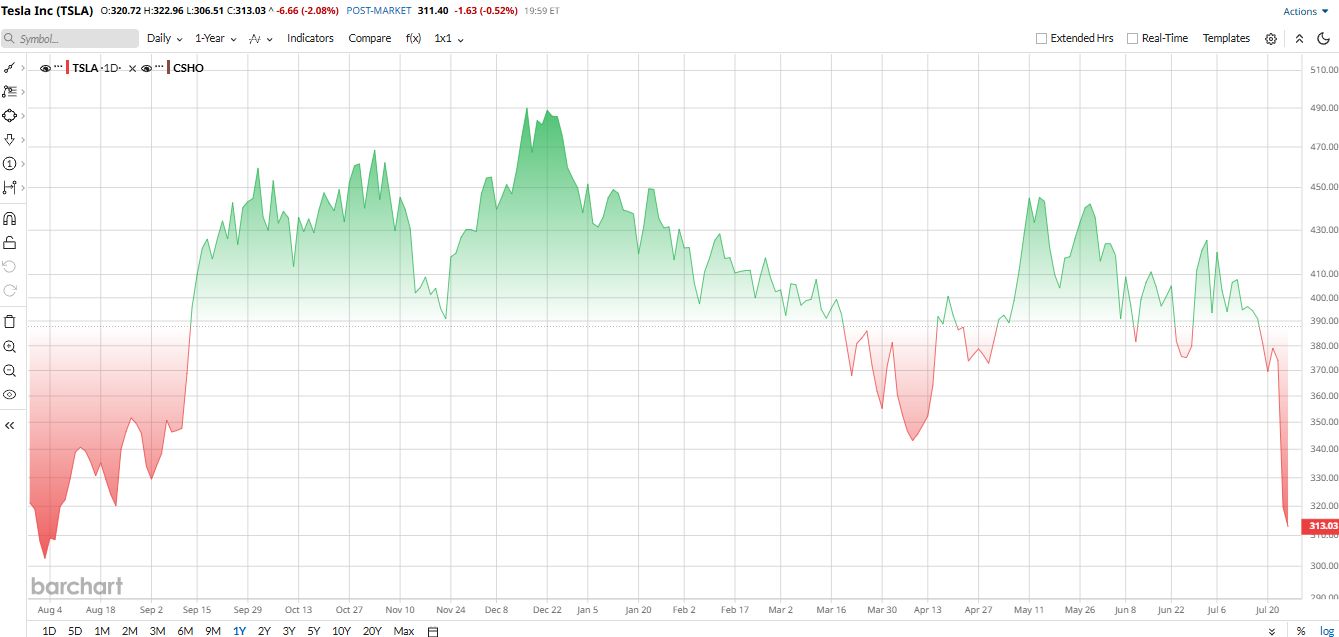
The market reacted quickly. TSLA stock suffered one of its sharpest declines in years, plunging more than 14% after earnings. Giving up previous gains, Tesla stock is down nearly 32% year-to-date (YTD).
Now, investors are asking one question: Is this just a temporary manufacturing delay, or does it signal bigger execution risks for Tesla's AI and robotics ambitions? Let's take a closer look.
 www.barchart.com
 Tesla's Battery Focus Changes the Story
Earlier this year, management suggested that Cybercab, Semi, Megapack 3, and Optimus would enter volume production during 2026. That language has now disappeared. Instead, Tesla says its immediate priority is scaling production of its 4680 battery cells before expanding manufacturing of those next-generation products.
That may sound like a small wording change, but it carries significant implications. Battery production remains the foundation of Tesla's entire ecosystem. Without enough battery capacity, the company cannot manufacture Cybercabs, Semi trucks, or Megapack systems at the scale investors have been expecting. CEO Elon Musk also acknowledged that Optimus could become Tesla's most difficult manufacturing challenge, reinforcing that commercialization may take longer than many investors had hoped.
For growth investors, this shifts expectations. Tesla's biggest future opportunities remain intact, but the timeline has become less certain.
Strong Revenue Couldn't Offset Weak Profitability
Tesla's second-quarter results reflected the same story. Revenue increased 26% year-over-year (YOY) to $28.24 billion, beating analyst estimates of roughly $25.8 billion. Vehicle deliveries reached a record 480,126 units, while the automotive, services, and energy businesses all posted healthy growth.
However, earnings told a different story. Adjusted EPS came in at $0.33, well below Wall Street expectations of approximately $0.51. Non-GAAP net income declined 17% YOY, operating margin narrowed to just 1.4%, and free cash flow turned negative as capital expenditures more than doubled YOY to $5.79 billion.
The weak profitability wasn't caused by slowing demand. Instead, Tesla is spending aggressively on artificial intelligence (AI), robotics, manufacturing capacity, and battery production. Management expects capital spending to exceed $25 billion during 2026 as Tesla accelerates investments designed to support long-term growth.
Tesla Still Trades at a Premium Valuation
The latest selloff has made Tesla cheaper than it was earlier this year, but it still commands one of the richest valuations in the auto industry. Tesla stock currently trades at roughly 347 times trailing earnings and about 235 times forward earnings. Its price-to-sales (P/S) ratio sits near 13 times, far above traditional automakers that typically trade at forward earnings multiples between 15 times and 20 times.
That premium shows investors' high expectations that Tesla will eventually become much more than an EV manufacturer.
Management continues investing heavily in robotaxis, Optimus humanoid robots, AI infrastructure, and advanced battery production. The company has expanded Robotaxi operations into several U.S. cities, is building additional battery and materials facilities, and continues increasing 4680 cell production to support future products.
Those initiatives could create entirely new revenue streams, but they also require enormous upfront investment before meaningful profits arrive.
What Does Wall Street Think of TSLA Stock?
Wall Street has become more cautious after Tesla's weaker-than-expected Q2 results.
JPMorgan lowered its price target to $445 from $475 while maintaining a “Neutral” rating, citing a sharp earnings miss and pressure on profitability. Morgan Stanley also cut its target to $400 from $417, keeping its “Equal Weight” rating after Q2 EBIT came in below consensus and automotive gross margin slipped to 16.8%. Analysts also pointed to rising research and development spending and uncertainty around near-term returns from Tesla's AI and autonomous driving investments.
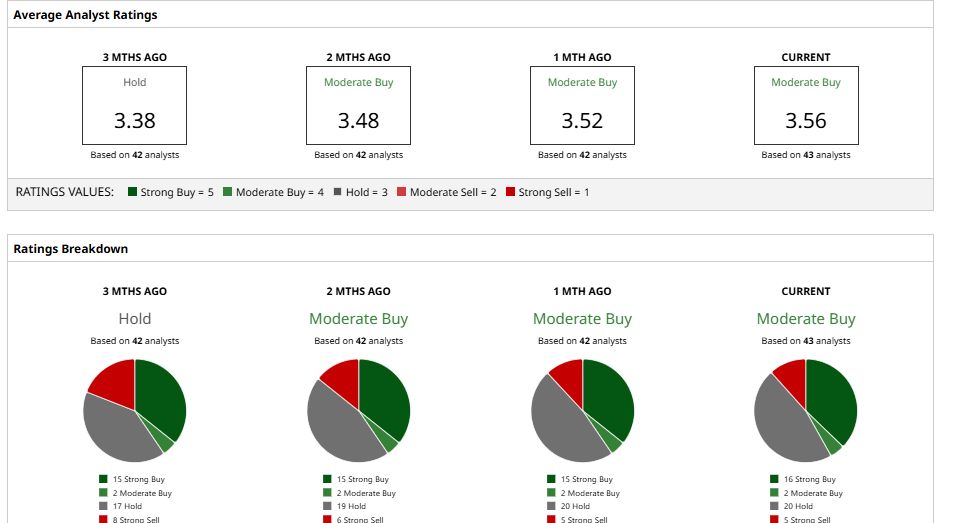
Tesla stock carries an overall “Moderate Buy” consensus rating from 42 analysts with coverage. The average price target of $405.40 implies roughly 32% potential upside from current trading levels.
 www.barchart.com
 The Bottom Line
While Tesla's recent decision was due to production delays, it serves as a reminder that it will take a considerable amount of time and capital to build the company's next generation of businesses — and more than some investors may have initially anticipated.
Tesla's fundamentals continue to be mixed. Revenue is still rising at a remarkable rate, deliveries are breaking records, and Tesla is moving forward in AI, robotics, robotaxis, battery storage, and battery production. Meanwhile, margins continue to decline, free cash flow has become negative, and investor uncertainty around production volume ramp-ups for Cybercab, Semi, Megapack 3, and Optimus has increased.
The investment case for TSLA stock now hinges on whether management can make a success of its big spending now and profitable growth tomorrow. Perhaps today's weakness will turn into a blip on the radar if Tesla follows through. But if battery production and manufacturing schedules hit further delays, investors could be in for a far bumpier ride reaching the company's lofty goals.
On the date of publication, Nauman Khan did not have (either directly or indirectly) positions in any of the securities mentioned in this article. All information and data in this article is solely for informational purposes. For more information please view the Barchart Disclosure Policy here.
More news from Barchart
Dear Apple Stock Fans, Mark Your Calendars for July 30 CORZ Stock Alert: Core Scientific Strikes AI Infrastructure Deal With AMD Ahead of SoFi Earnings, Here's What Barchart Data Says Comes Next for SOFI Stock Amkor Has a Fresh Catalyst With a New Nvidia Deal. How to Play AMKR Stock Here.