


Nvidia (NVDA) CEO Jensen Huang recently stated that cybersecurity would be the next major area of growth for AI. Specifically, he said that firms would more frequently utilize the technology to identify software vulnerabilities and defend against cyberattacks.
Among the companies that are well-positioned to benefit from the trend identified by Huang are Palo Alto Networks (PANW) and IBM (IBM).
More Top Stocks Daily: Go behind Wall Street’s hottest headlines with Barchart’s Active Investor newsletter.
Also helping cybersecurity firms now are many companies' efforts to bolster their defenses after Anthropic's Mythos tool identified “thousands of previously unknown security vulnerabilities.”
 www.barchart.com
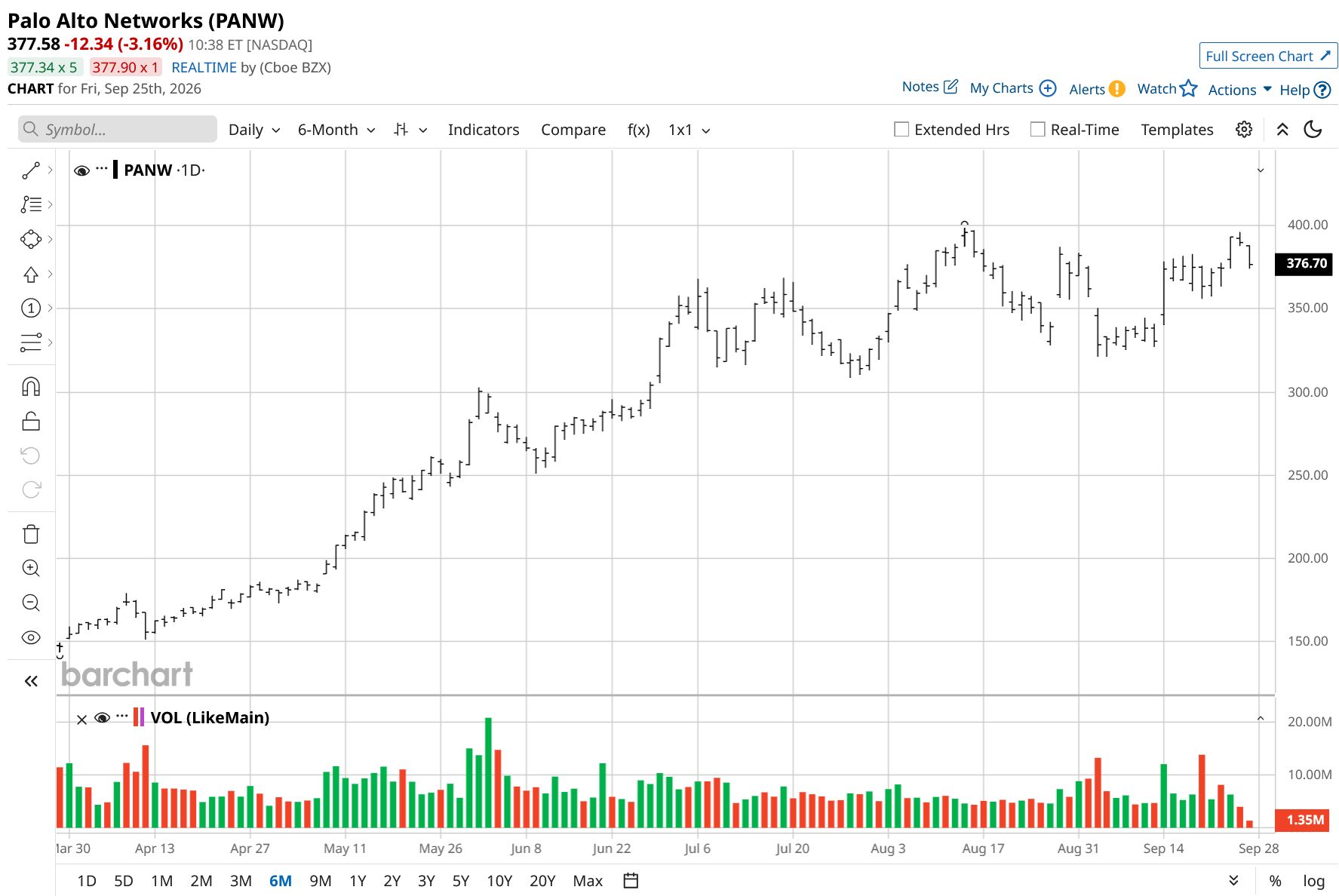
 Palo Alto Networks (PANW)
The company extensively utilizes AI to enhance its products and has done so for many years. Specifically, the firm reports that its proprietary AI system, called Precision AI, has incorporated Machine Learning for more than a decade. Additionally, Palo Alto is using deep learning techniques to identify security threats, and it utilizes generative AI (GenAI) to simplify its products' communications with humans.
Another factor that makes PANW stock appealing to investors is its multiple other tools that should enable it to benefit from the rapidly growing need to prevent AI systems from being hacked. (And of course, the number of AI-powered products is multiplying exponentially.)
CyberArk, which Palo Alto acquired last February and rebranded to Idira in May of this year, has an identity security platform that is adept at protecting AI agents. That's because the product provides “dynamic security,” which defends these agents exceptionally well, and its “tools for dynamic secure access and machine identity offerings” also help it effectively protect AI agents. Tech instructor Gil Adda, who provides information to major companies including Microsoft (MSFT), has stated that CyberArk's products excel at combating the biggest threats that AI agents face.
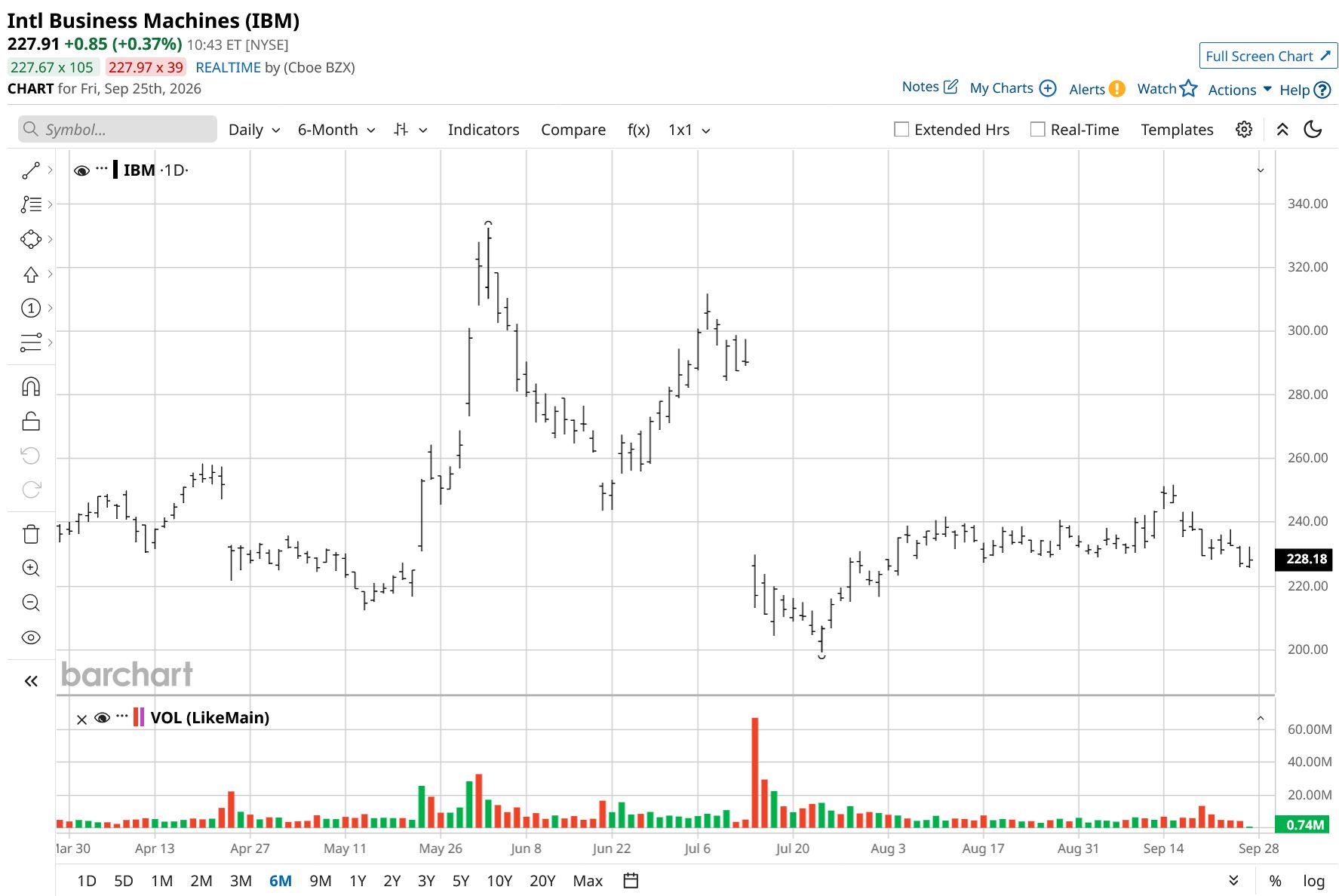
IBM (IBM)
The tech giant's Lightwell product utilizes “a generative AI-powered remediation engine with human engineering expertise to identify, validate, and remediate vulnerabilities across critical software dependencies,” IBM has reported. The company has invested $5 billion and deployed over 20,000 engineers to develop the product.
As I noted in a previous column, IBM has performed well under CEO Arvind Krishna, who has been at the helm for nearly five and a half years. The company's earnings per share soared from $6.23 in 2020 to $11.17 in 2027, and its stock price rose almost 2.5 times since Krishna became CEO. Further, the firm has become a leader in the AI space, while its Red Hat unit has grown tremendously since 2020.
Given these points, along with IBM's ability to sell Lightwell to its many gigantic clients, I believe that the product is likely to become a big winner for the firm.
The company's extensive efforts in the very promising field of quantum technology, along with its low forward price-to-earnings ratio of 19, also make IBM stock attractive.
 www.barchart.com
 On the date of publication, Larry Ramer did not have (either directly or indirectly) positions in any of the securities mentioned in this article. All information and data in this article is solely for informational purposes. For more information please view the Barchart Disclosure Policy here.
More news from Barchart
How to Trade Qualcomm Stock Near Multi-Month Highs Nvidia’s CEO Expects AI-Powered Cybersecurity to Boom. These 2 Companies Are Poised to Get a Big Boost From the Trend. This Cancer Drug Is Already Working. Now Its Nvidia-Backed Maker Is Going Public: Here’s What You Need to Know About Its IPO BlackRock’s CEO Is Backing a $1.5 Trillion Social Security Fund That Needs 75 Years to Work. CBO Projects the Trust Fund Runs Short In 2032.