


Tesla (TSLA) has been the weakest performer among the Magnificent 7 stocks this year, with shares down more than 17% year-to-date. The stock is also trading roughly 25% below its 52-week high, reflecting growing investor concerns about the company’s growth trajectory and pressure on its profit margins.
Despite the recent decline, Tesla stock does not appear attractive at its current valuation. The company still trades at a significant premium, and the lack of meaningful near-term catalysts could limit the potential for a sustained recovery in the share price.
More Top Stocks Daily: Go behind Wall Street’s hottest headlines with Barchart’s Active Investor newsletter.
Tesla Faces Challenges In the Short Term
Tesla faces challenges, especially on the earnings front in the short term. Notably, Tesla reported stronger-than-anticipated vehicle deliveries in Q2. However, its profitability took a hit, and the trend is likely to continue.
During the second quarter, Tesla delivered 480,126 vehicles, surpassing Wall Street’s expectations. Deliveries also exceeded production for the quarter, easing concerns around the slowdown in demand.
Tesla’s revenue increased 26% year over year, supported by higher vehicle deliveries, continued expansion of the Services business, and stronger contributions from the Energy Generation and Storage segment. However, the revenue growth was accompanied by a meaningful deterioration in operating profitability.
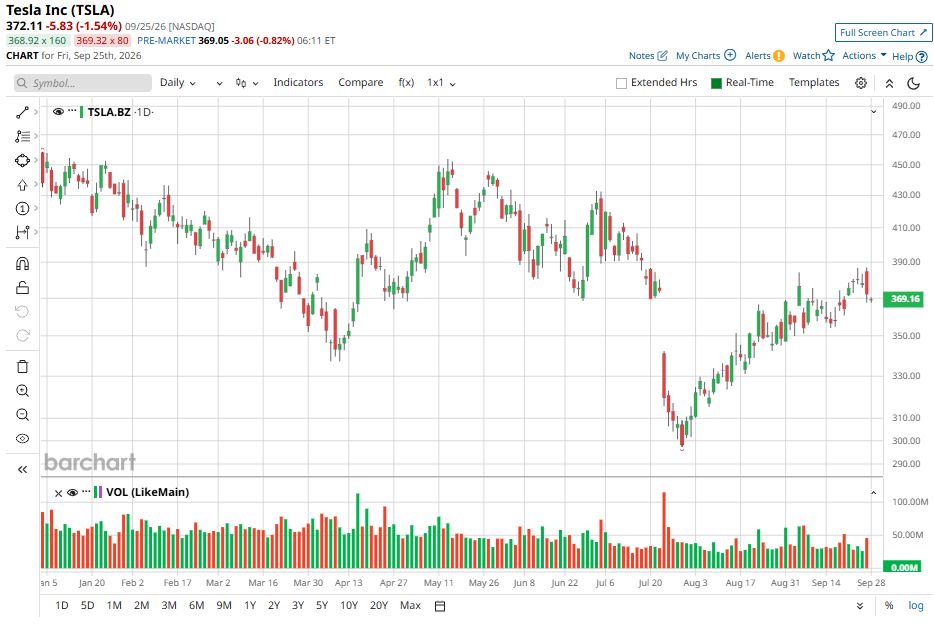 www.barchart.com
 Tesla’s adjusted EBITDA margin declined 353 basis points year over year, while its operating margin contracted to 1.4%, compared with 4.1% in the year-ago quarter and 4.2% in the preceding quarter.
Looking ahead, Tesla continues to commit substantial resources to artificial intelligence (AI), autonomous driving, and other technology initiatives. Spending related to AI, Robotaxi, and the Optimus humanoid robot remains strategically important to Tesla’s longer-term growth ambitions. However, they require substantial capital and operating investment today, and their financial contribution may take considerable time to materialize. Consequently, these investments could continue to weigh on near-term earnings and free cash flow.
Near-term demand trends also warrant monitoring. Goldman Sachs lowered its third-quarter delivery estimate for Tesla after identifying weaker sales trends across Tesla’s largest markets. If softer demand persists, Tesla could face additional pressure to support vehicle volumes through pricing or incentives, potentially creating further headwinds for automotive margins.
Tesla Stock Lacks Near-Term Catalysts
Tesla currently lacks near-term catalysts that could drive a sustained increase in its share price. In Q2, the company made progress across several areas, including increased adoption of FSD (Supervised), greater customer uptake of subscriptions, the expansion of its Robotaxi activities in the U.S., and the start of construction at its Fremont Factory to support future Optimus production.
Over the longer term, these developments could support Tesla’s transition from a conventional automobile manufacturer into a more diversified technology and mobility company. If successfully commercialized, areas such as autonomous transportation, humanoid robotics, and AI could provide Tesla with substantial additional revenue opportunities. Nevertheless, these businesses remain at relatively early stages of development and currently contribute little to the company’s overall financial performance. Consequently, investors may need to wait several years for these initiatives to impact Tesla’s revenue and earnings meaningfully.
Tesla’s Valuation Remains High
While Tesla faces near-term challenges and lacks near-term catalysts, its valuation remains significantly high. TSLA is currently valued at approximately 431.11 times forward earnings, a significant premium compared with automobile manufacturers and large technology firms. This exceptionally high multiple suggests investors have already priced in substantial future growth into Tesla’s share price.
At the same time, Tesla’s near-term earnings remain under pressure. Analysts anticipate a 19.3% decline in earnings during 2026, which makes its valuation hard to justify. Although earnings are expected to recover strongly thereafter, with consensus estimates indicating roughly 56% EPS growth in 2027, much of this projected improvement is already reflected in the company’s current valuation.
Tesla Stock Still Not a Buy
Tesla’s long-term growth opportunities in AI, autonomous driving, Robotaxi, and robotics remain significant. However, the near-term investment case appears less compelling. The company is facing margin pressure as capital expenditures rise, while intensifying competition could weigh on demand and growth. At the same time, Tesla continues to trade at a substantial valuation premium, making it increasingly difficult to justify at current levels.
These factors suggest investors should remain cautious and wait for a more attractive entry point.
Given the near-term challenges and elevated valuation, most analysts covering Tesla stock are not assigning it a Buy rating.
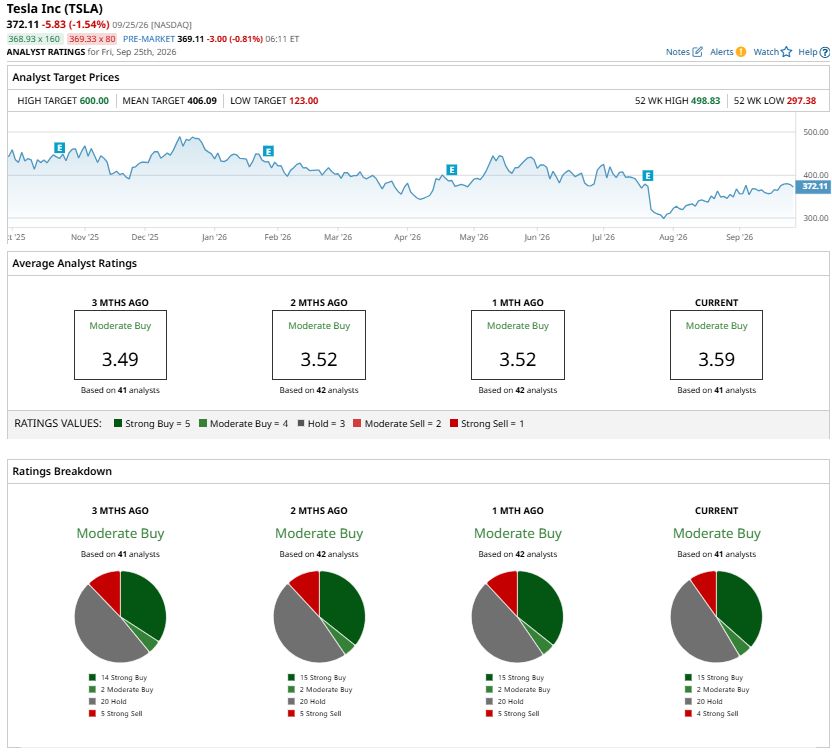 www.barchart.com
 On the date of publication, Amit Singh did not have (either directly or indirectly) positions in any of the securities mentioned in this article. All information and data in this article is solely for informational purposes. For more information please view the Barchart Disclosure Policy here.
More news from Barchart
Why Tesla Stock Is Still Not a Buy The $1.45 Billion Question Facing Vertiv Investors 3.4 Million Reasons to Buy Meta Platforms Stock 3 AI Stocks That Could Surprise Investors by 2029