

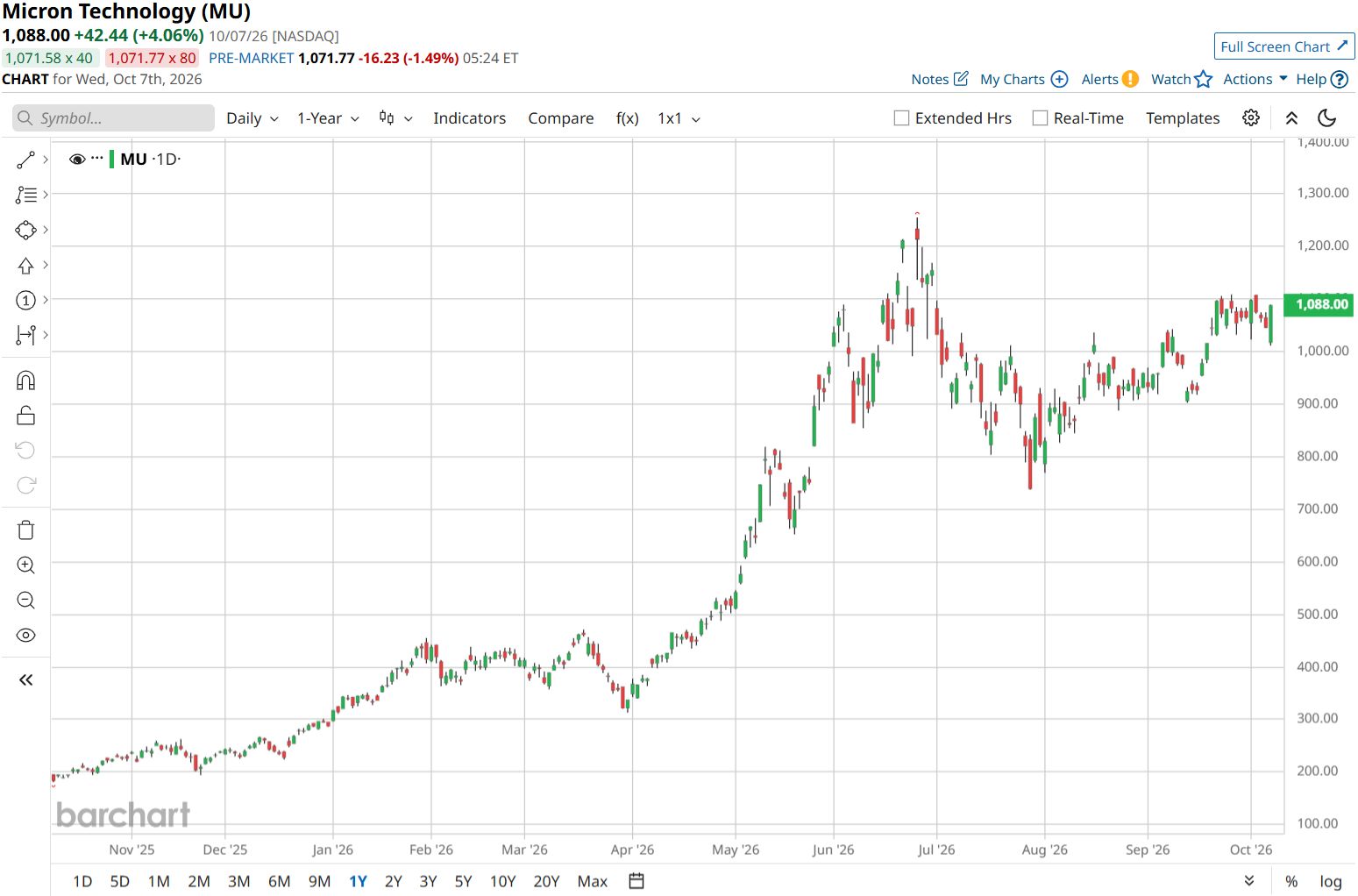
Micron Technology (MU) has benefited from the growing demand for DRAM and high-bandwidth memory (HBM) as companies build more data centers. The stock has gained 281.21% this year, while fiscal third-quarter revenue climbed to $41.46 billion from $9.3 billion a year earlier.
 www.barchart.com
 Now, Micron Technology faces a labor issue in Taiwan. A union representing workers at its Taoyuan operations received authorization to strike over a dispute about bonuses. Of the workers who voted, 1,994, or 99%, supported the move. The union has not set a strike date, but it is using the vote to push Micron for a permanent profit-sharing plan tied to operating income.
More Top Stocks Daily: Go behind Wall Street’s hottest headlines with Barchart’s Active Investor newsletter.
MU fell when the news first emerged, but closed Oct. 7 at $1,088, up 4.06% for the day. Investors do not appear to be pricing in a major disruption yet. Still, if the dispute turns into an actual work stoppage, could it slow Micron Technology’s strong run? Let’s take a closer look.
From Bonus Dispute to Strike Authorization
Micron Technology is facing a sharper labor dispute in Taiwan after workers moved from threatening a strike to formally approving one. The disagreement is over Micron's Incentive Pay Plan. Unions at the company’s Taoyuan and Taichung plants want a one-time fiscal 2026 bonus equal to about 83 months of salary. They also want quarterly bonuses funded with 15% of operating profit starting in fiscal 2027.
Micron offered Taiwan employees a NT$1 million($31,386) cash payment as part of a package worth at least NT$1.7 million ($53,356) per worker. The Taoyuan union rejected it because the proposal did not include permanent profit sharing. The unions want a system similar to those used by Samsung Electronics and SK Hynix (SKHY), where employees share in company profits.
Mediation ended without a deal in September. On Oct. 7, almost all Taoyuan union members authorized a strike action. No date has been set, though the union has said it could call a surprise walkout if talks fail. It has also asked workers to attend an Oct. 19 rally, which it says will not be a strike. The Taichung union is scheduled to return to mediation with Micron on Oct. 22.
For now, the vote puts more pressure on Micron Technology, but it does not mean production has been affected. The real risk begins only if workers walk out and interrupt operations in Taiwan, Micron's largest manufacturing base.
Micron’s Fundamentals Beyond the Labor Dispute
Micron Technology’s fiscal fourth-quarter results, reported Sept. 30, showed how strong the memory market has become. Micron earned $33.42 per share on $54.23 billion in revenue, ahead of Wall Street’s estimates of $31.72 per share and $51.49 billion. Revenue jumped 379% from $11.32 billion a year earlier, while gross margin reached about 86%. For the full fiscal year, revenue rose to $133.19 billion from $37.38 billion. Operating cash flow reached $43.97 billion, and management forecast $61.5 billion in fiscal first-quarter 2027 revenue, above the $57.4 billion analysts expected. Cloud memory revenue nearly doubled from the prior quarter to $16.28 billion.
Micron has also moved to support future demand. In June, it signed an agreement with Anthropic, the company behind Claude, covering work on memory and storage products and a supply arrangement for Micron Technology’s data-center portfolio. More recently, Micron settled its patent dispute with Netlist (NLST), agreeing to pay $600 million over five years, or $30 million per quarter, for licenses covering server DIMM and HBM technology. The deal adds a $120 million annual expense, but it removes a legal overhang and gives Micron Technology access to the relevant patents.
Analyst Expectations and the Road Ahead
Micron Technology’s next earnings report is due Dec. 16. Analysts expect the company to earn $37.93 per share for the November quarter, up from $4.61 a year earlier. That would represent 722.78% growth. For fiscal 2027, analysts expect Micron to earn $175.82 per share, up 134.90% from $74.85 in fiscal 2026.
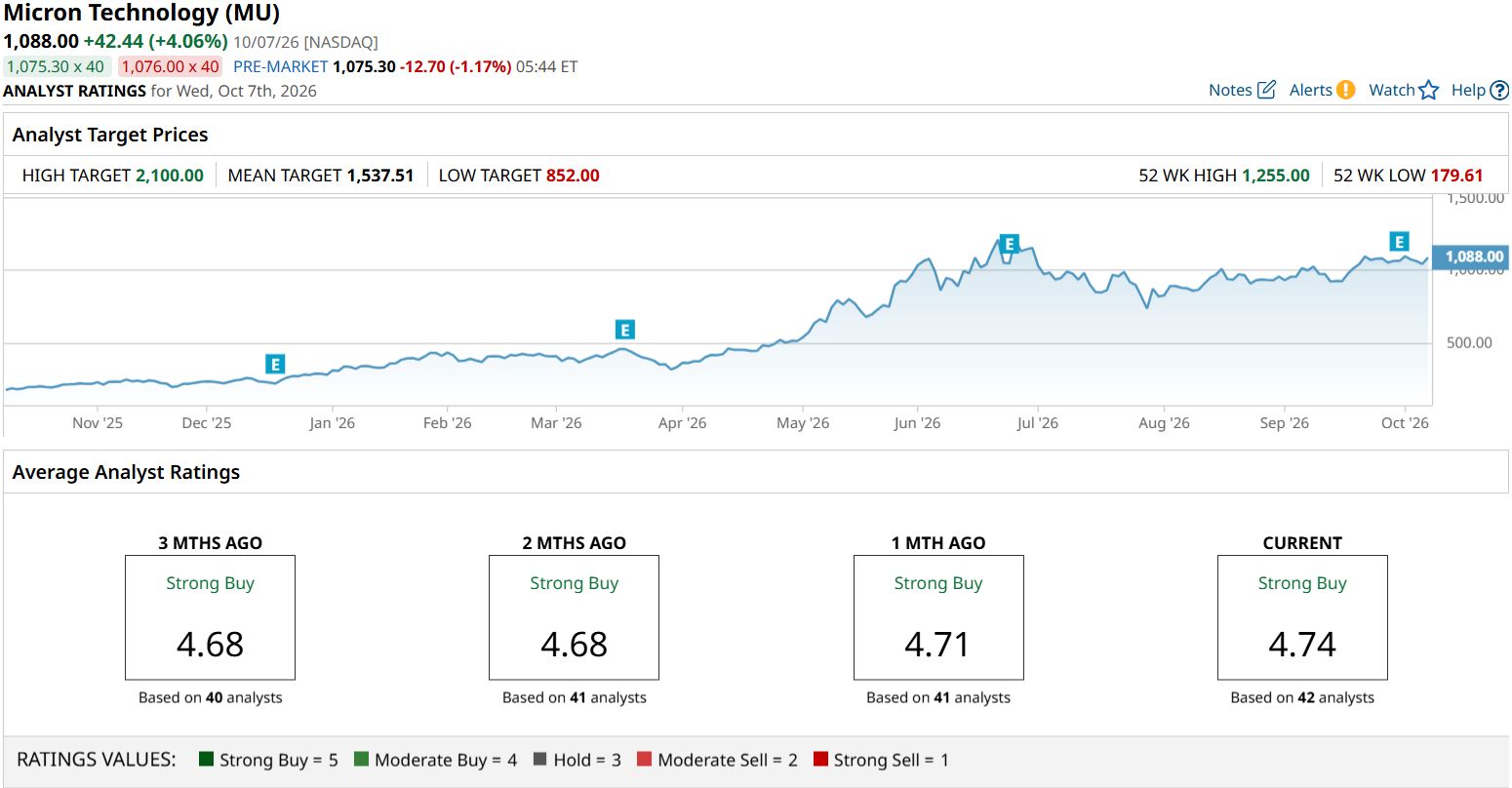
Analysts remain bullish on the stock. On Oct. 7, D.A. Davidson’s Gil Luria kept a “Buy” rating and raised his price target from $2,100 to a Street-high $3,000. He expects large cloud companies to keep locking in memory supply as demand stays ahead of available capacity through 2028. Baird’s Tristan Gerra also reiterated an “Outperform” rating and raised his target from $1,280 to $1,520. He pointed to rising demand for AI systems, slower DRAM supply growth in 2027, and the chance for stronger HBM margins.
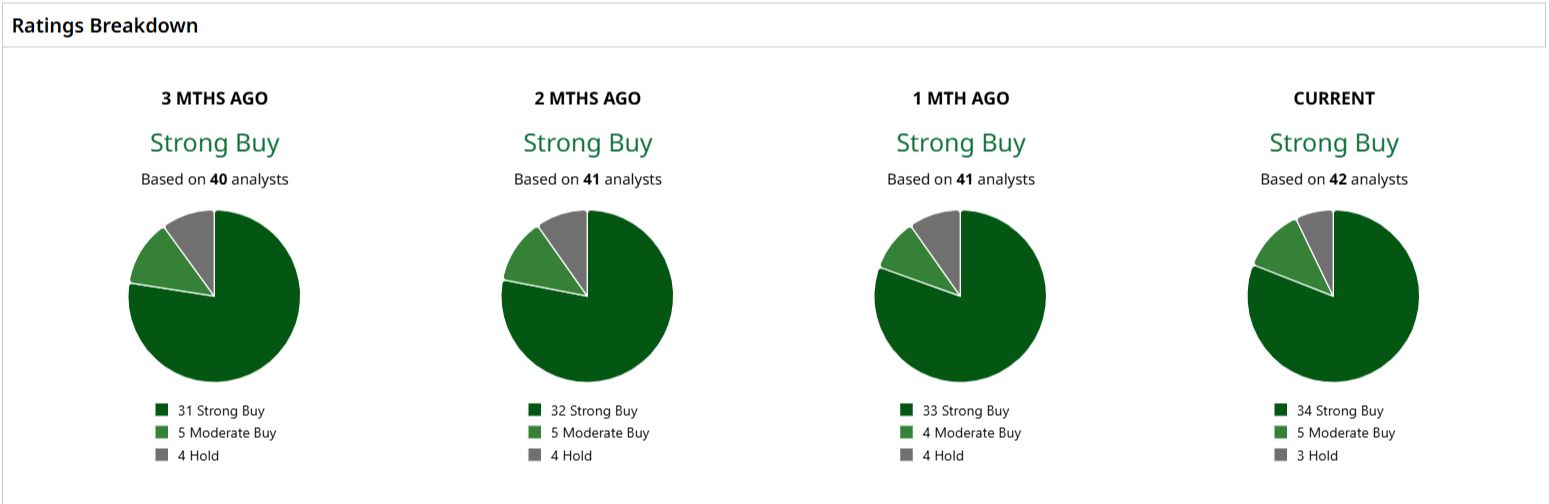
Overall, all 42 analysts surveyed rate MU a consensus “Strong Buy”, with an average price target of $1,537.51. That suggests about 41.3% upside from current levels.
 www.barchart.com
 Conclusion
For now, the strike authorization looks more like a negotiating tool than a confirmed hit to Micron’s output or earnings. The risk would change quickly if the Taoyuan union calls an actual walkout and it disrupts production at a time when AI customers are competing for scarce memory supply. Still, Micron’s record earnings, strong fiscal 2027 estimates, Anthropic supply agreement, and bullish analyst targets suggest the underlying investment case remains intact. Shares could stay volatile as negotiations unfold, but absent a prolonged disruption, MU appears more likely to follow its AI-driven growth trajectory than suffer a lasting reversal.
On the date of publication, Ebube Jones did not have (either directly or indirectly) positions in any of the securities mentioned in this article. All information and data in this article is solely for informational purposes. For more information please view the Barchart Disclosure Policy here.