

Alphabet (GOOGL) shareholders had two major developments to weigh on Oct. 28. Shares of the company finished the regular trading day up by 1.3% after Google unveiled Gemini 4 Carbon, its newest frontier artificial intelligence (AI) model. After the closing bell, however, third-quarter results took center stage and pushed GOOGL stock lower in after-hours trading. The stock fell 13% the next day, Oct. 29, as well as more than 1% on Oct. 30.
Revenue rose about 25% year-over-year (YOY) to $127.6 billion in Q3, with Google Cloud delivering a 103% YOY jump to $30.7 billion. Still, revenue fell slightly short of Wall Street’s expectations, while net income also declined. With another model arriving so soon after the release of Gemini 4 Argon in September, Google has more to prove than whether Carbon is technically better.
More Top Stocks Daily: Go behind Wall Street’s hottest headlines with Barchart’s Active Investor newsletter.
Can the latest model help win customers and deliver stronger returns, giving investors another reason to own Alphabet stock? Let’s find out.
How Alphabet’s Business Is Holding Up
Based in Mountain View, California, Alphabet operates Google Search, YouTube, cloud computing services, and the Gemini AI platform. With a market capitalization of approximately $3.47 trillion, the company's businesses connect advertising customers, enterprise technology buyers, and consumers across products that offer potential distribution channels for new models such as Carbon.
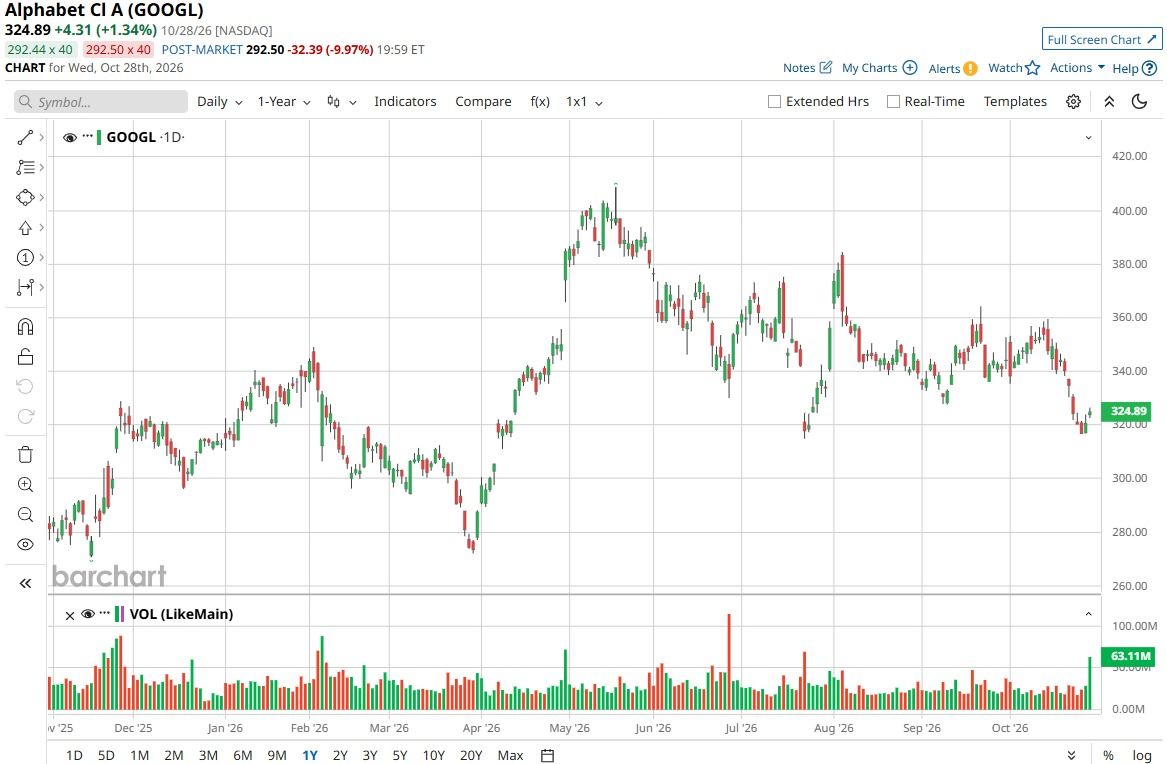
Alphabet stock is now down 11% year-to-date (YTD), and less than 1% for the past 52 weeks. Shares closed at $279.84 on Oct. 30.
 www.barchart.com
GOOGL stock's valuation multiples of 16.9 times trailing earnings and 9.8 times sales exceed sector medians of about 14.2 times and 1.1 times. That places greater pressure on continued growth.
Alphabet released Q3 results on Oct. 28, reporting revenue of $127.6 billion, up 25% YOY but lower than the $127.9 billion expected by analysts. The company's GAAP earnings reached $2.12 per share against consensus estimates of $3.01 — a nearly 30% shortfall — with net income totaling $26.2 billion.
That miss partly reflected an $8.7 billion equity-securities loss versus a $10.7 billion gain a year earlier, separating investment fluctuations from operating performance. Advertising commissions reduced reported revenue to $111.2 billion, below the $111.8 billion analyst forecast.
Google’s recent quantum breakthrough offers a useful distinction. Its Willow processor reportedly reduced errors by 40-fold in specially prepared quantum states, but commercially useful systems remain years away.
Meanwhile, management reported 1 billion Gemini app users as of Q3 and anticipates significantly higher 2027 capital expenditures, with details promised during the Q4 earnings call.
Inside Google’s Gemini 4 Carbon Launch
Google introduced Gemini 4 Carbon on Oct. 28, positioning its latest frontier model around software engineering and cybersecurity. Beyond generating code, Carbon is designed to handle extended, multistep assignments, including tracing bugs through large software systems and producing fixes. Google says its internal teams have seen the model work for days on complex engineering tasks.
The reported improvements give shareholders something concrete to assess. Carbon scored 59 to lead the updated Artificial Analysis Intelligence Index, while Google’s internal testing showed more than twice Argon’s success rate at generating secure code. These results suggest potential value for enterprise customers, although benchmark performance does not establish commercial demand.
Availability is the immediate constraint. Google is initially granting access to selected cybersecurity defenders through its Fairwind Program while gathering feedback and refining safeguards. Broader access for developers, businesses, and consumers has no firm announced date. Introductory pricing is $2 per million input tokens and $10 per million output tokens, but pricing will double after the introductory period.
The launch therefore represents progress toward potentially valuable paid workloads, not an established earnings driver. Better coding and security tools could encourage adoption, but the investment case still needs evidence of customer usage, revenue contribution, and profitable delivery at scale.
What Do Analysts Expect From Alphabet?
Wall Street expects Alphabet’s earnings to keep growing, with average earnings of $3.21 per share expected for the quarter ending December 2026, up from $2.82 a year earlier. That translates into projected growth of 14% YOY.
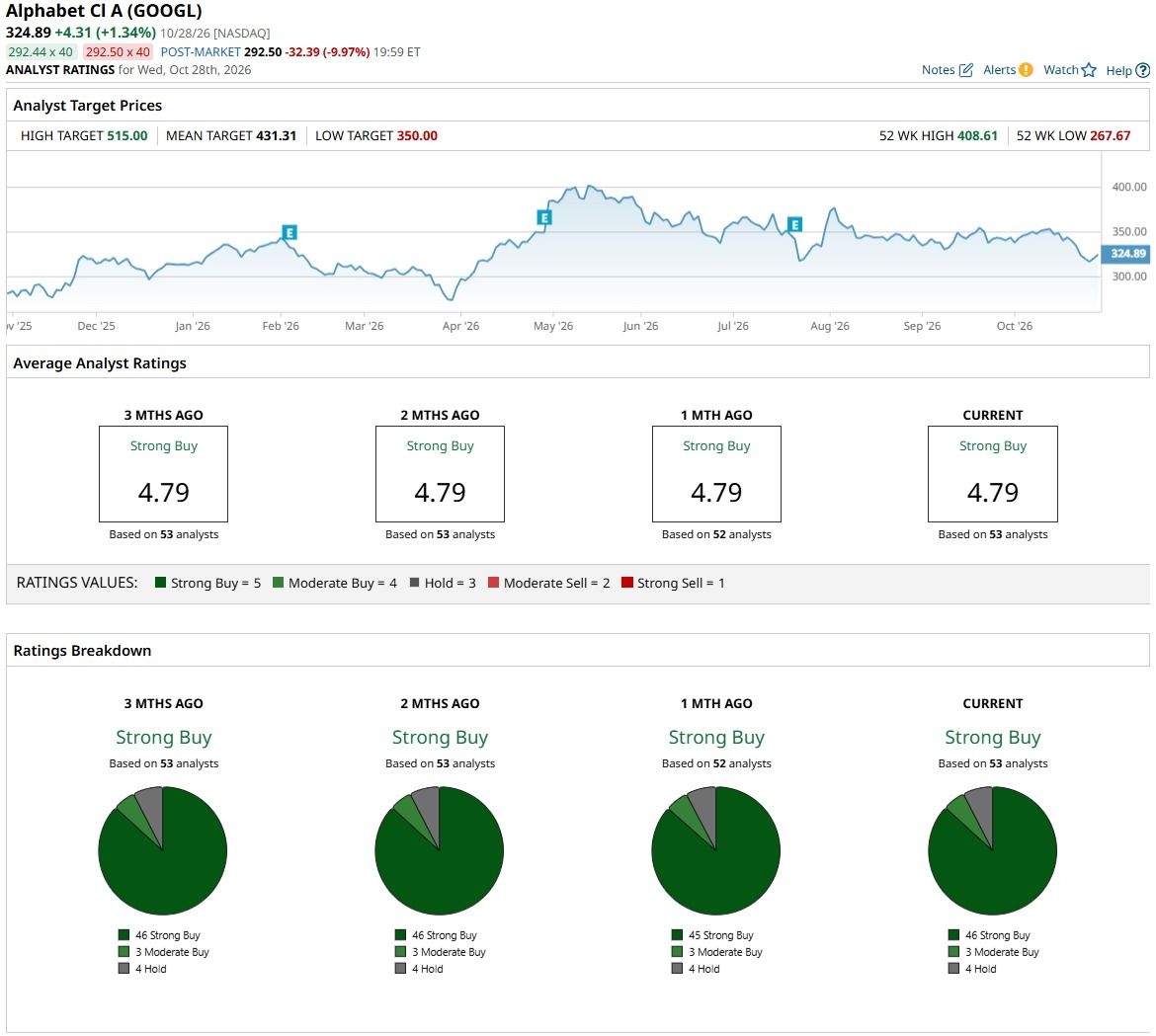
Alphabet stock has a consensus “Strong Buy” rating across 53 analysts with coverage. The average price target of $410.04 implies potential upside of approximately 47% from current levels. Those expectations give the Carbon launch a financial benchmark.
 www.barchart.com
Conclusion
Gemini 4 Carbon gives Alphabet another way to win business, but it isn’t a reason to rush into GOOGL stock. Google still needs to turn better technology into paying customers and a stronger cash flow. The outlook leans bullish over the next year, provided earnings keep growing and heavy spending delivers better returns. Alphabet shares could move higher as results emerge, though the launch alone is unlikely to sustain a rally. Carbon strengthens the story, but customer adoption and financial performance will decide whether shareholders have more to celebrate from here.
On the date of publication, Ebube Jones did not directly have a position in any of the securities mentioned in this article. All information and data in this article is solely for informational purposes. For more information please view the Barchart Disclosure Policy here.
More news from Barchart
What to Expect From AMD’s Q3 Earnings How Investors Should View the Launch of Alphabet's Gemini 4 Carbon ASML vs. Applied Materials: One Is Growing Twice as Fast, but I’d Buy The Other Instead Why Dumping Uber Stock Before Q3 Earnings May Not Be the Smartest Move