


There's an interesting situation developing among the biggest technology companies in the world. Nobody wants to be the first to stop spending money on artificial intelligence (AI). It’s like a big game of chicken, only with hundreds of billions of dollars at stake.
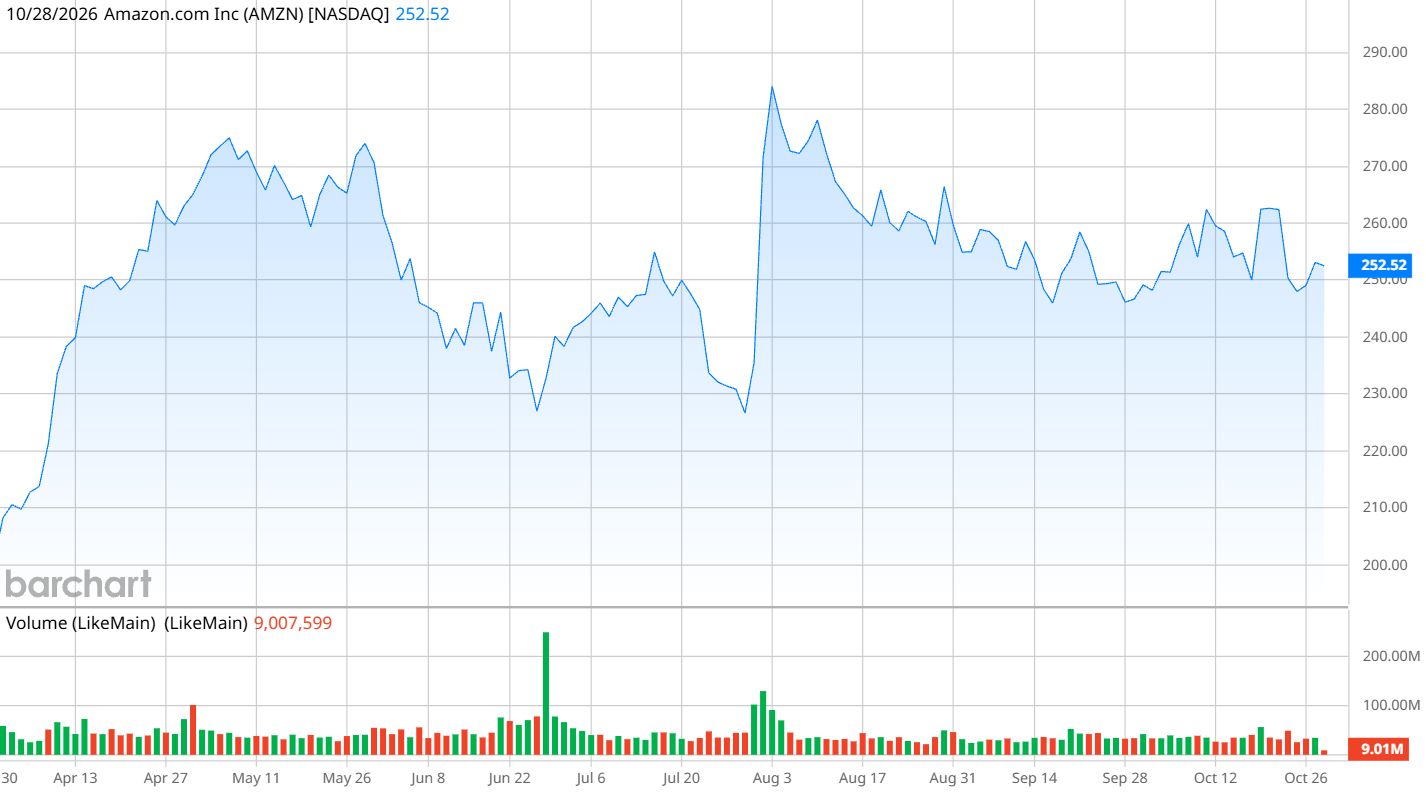
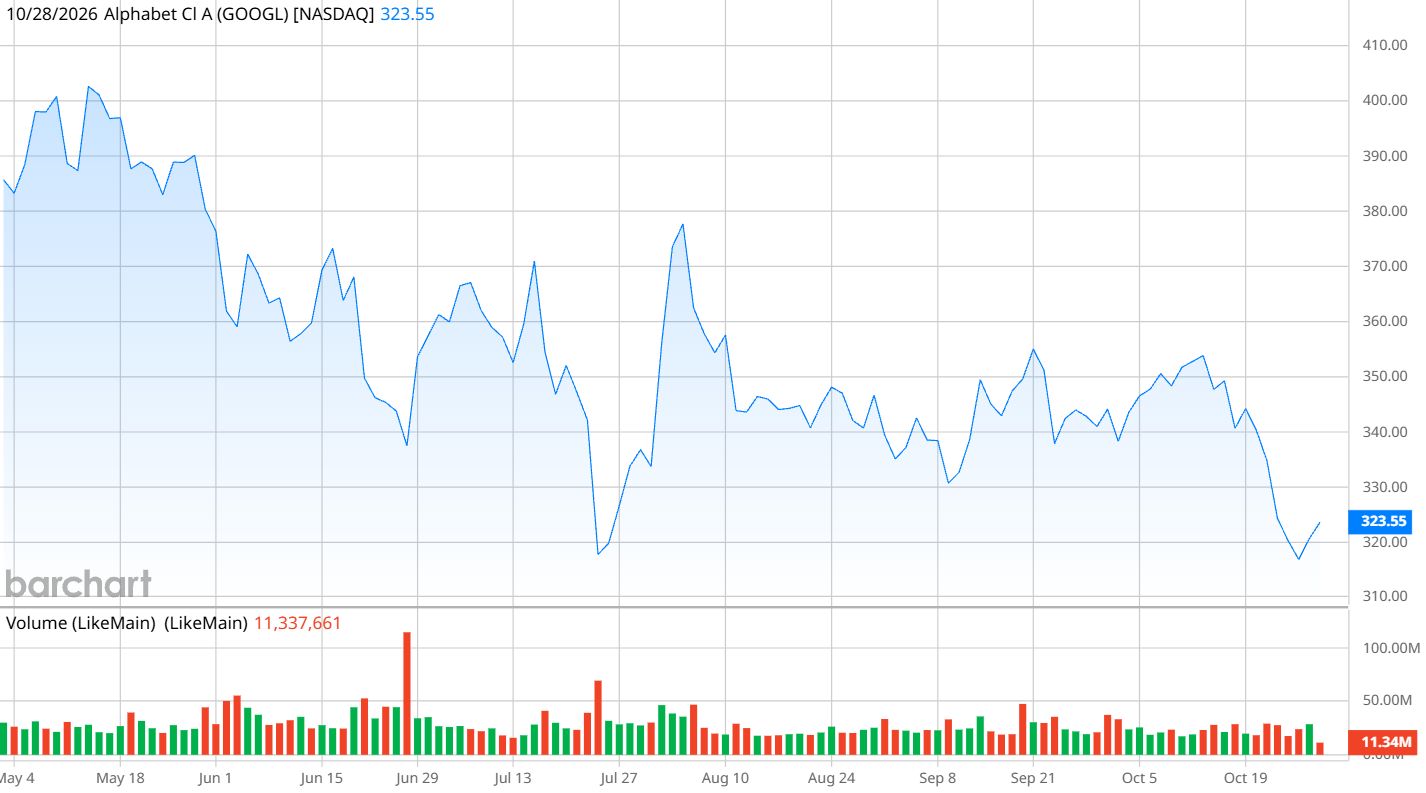
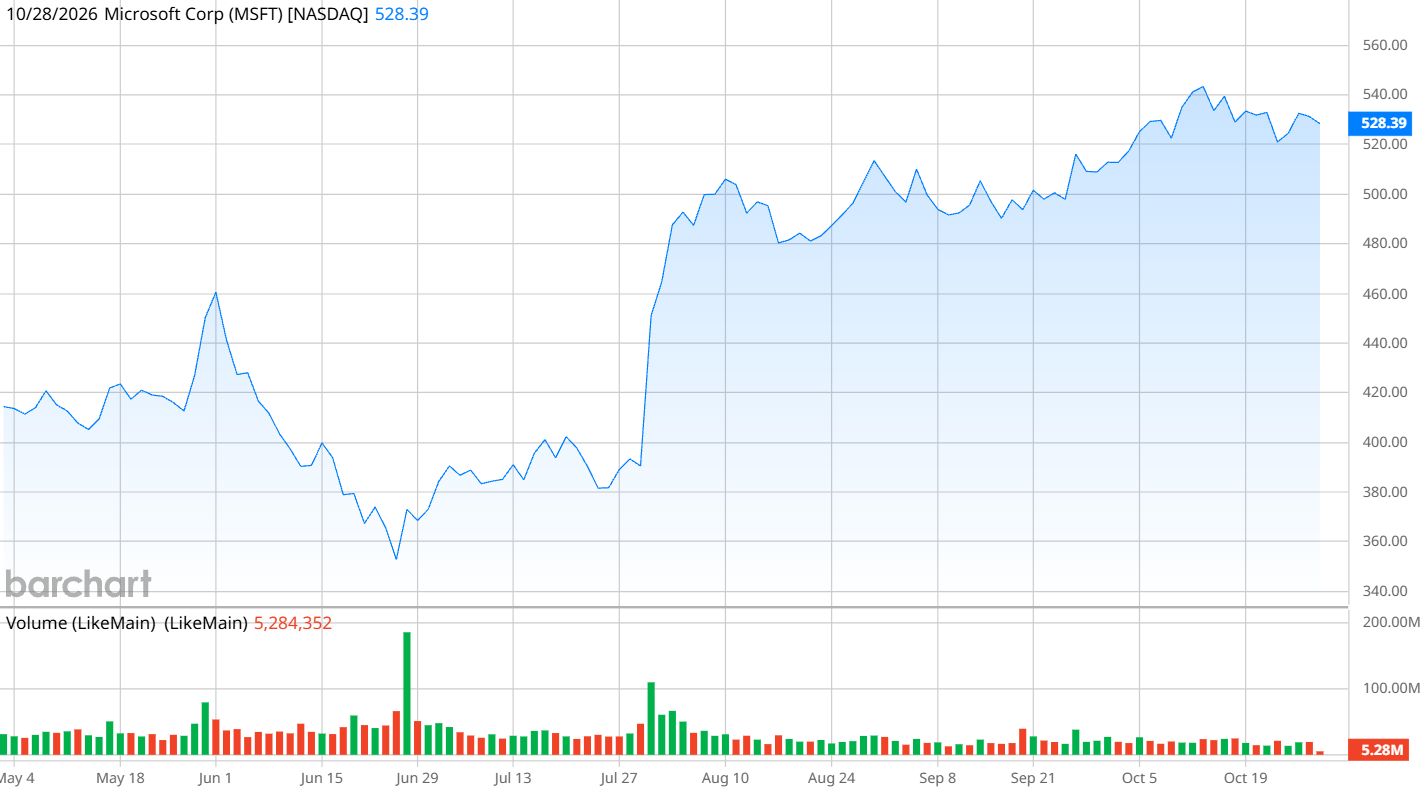
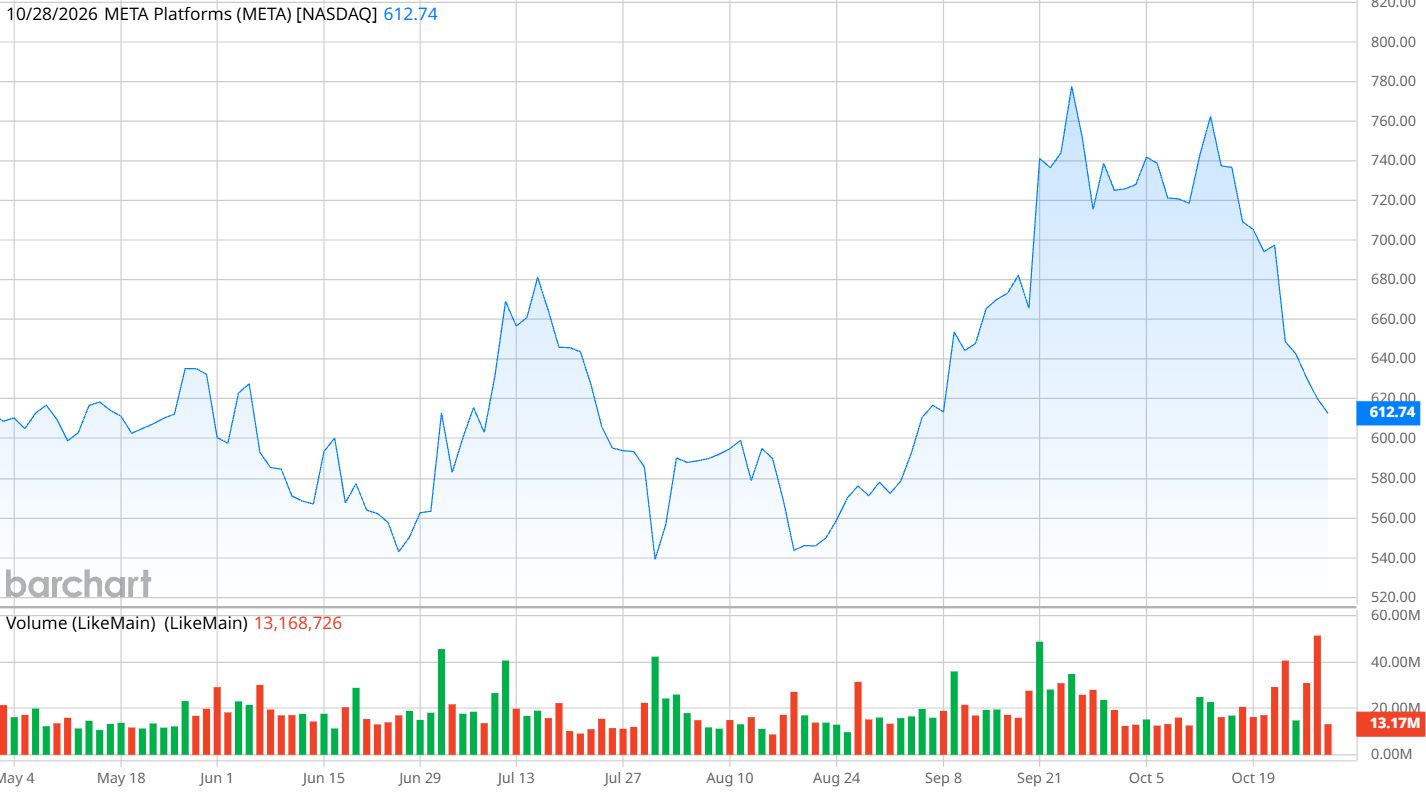
Amazon (AMZN), Microsoft (MSFT), Alphabet (GOOG) (GOOGL), and Meta Platforms (META) are investing heavily in data centers, chips, and other AI infrastructure needed to build out AI. They keep opening their checkbooks, even as analysts (and investors) start to question whether that spending will pay off.
More Top Stocks Daily: Go behind Wall Street’s hottest headlines with Barchart’s Active Investor newsletter.
GF Securities analyst Henry Huang has a name for what's happening—the “AI Red Queen Effect”—in reference to Lewis Carroll's “Through the Looking-Glass,” where the Red Queen tells Alice that it takes all the running you can do just to stay in the same place, and if you want to get somewhere, you need to go twice as fast.
For the hyperscalers, that means spending enormous amounts of money simply to keep up with their competitors. And Huang argues that they're more willing to risk spending too much than risk falling behind.
 www.barchart.com
Nobody Wants to Lose the AI Race
The executives running these companies aren't exactly hiding their intentions.
Amazon CEO Andy Jassy made his position clear in April when he defended his company’s capex plan. “We're not going to be conservative in how we play this,” Jassy wrote in his annual shareholder letter.
Meta CEO Mark Zuckerberg has been even more direct. In a September 2025 interview, Zuckerberg acknowledged that an AI bubble was possible. But he said the risk of spending too much was less concerning than missing an opportunity to lead the next generation of technology.
“If we end up misspending a couple of hundred billion dollars, I think that that is going to be very unfortunate, obviously,” Zuckerberg said.
Microsoft CEO Satya Nadella also defended AI infrastructure spending at Morgan Stanley's technology conference in March. Nadella argued that software improvements, better equipment utilization, and a diverse customer base could help Microsoft generate attractive returns on its investments.
Alphabet isn't sitting on the sidelines, either. Google’s parent company plans to spend $200 billion this year—double its capex budget in 2025. “The competition in AI infrastructure is the most critical and also the most expensive part of the AI race,” Amin Vahdat, Google’s infrastructure lead, said in November.
 www.barchart.com
The AI Red Queen Has an Expensive Appetite
Amazon, Microsoft, and Alphabet operate the world's largest cloud computing businesses. Their customers need access to increasingly powerful AI systems, and those systems require substantial computing capacity.
If Microsoft cannot provide enough capacity, customers could turn to Amazon or Google. The same problem works in reverse.
Meta isn't selling cloud infrastructure on the same scale, but it's investing in AI models and products that could influence the future of its advertising and social media businesses, as well as its Muse AI assistants.
Huang, of GF Securities, projects capital expenditures among the five largest U.S. cloud service providers will grow 85% in 2026, another 53% in 2027, and 20% in 2028.
And while GF Securities expects the hyperscalers to maintain healthy balance sheets, having enough money to keep spending doesn't necessarily mean every investment will generate an attractive return.
 www.barchart.com
What Should Investors Make of the AI Spending Race?
There are already signs that the spending is producing results.
Amazon reported that AWS generated $42.23 billion in second-quarter revenue. And Microsoft has demonstrated that AI services are contributing to the growth of its Azure cloud platform.
But building data centers is expensive, and those facilities must generate enough revenue to justify their construction and operating expenses. AI chips also become outdated as newer, more powerful hardware arrives.
That's why the Red Queen comparison is so interesting. Each company may have a perfectly reasonable argument for increasing its own spending. But if everyone builds capacity faster than customers can use it profitably, some of those investments could disappoint.
The biggest technology companies can afford to participate in this race. Whether shareholders will be happy with the eventual returns is another matter. Investors should remember that the most important number may not be how much these companies spend on AI but how much profit they can generate from all that spending.
 www.barchart.com
On the date of publication, Patrick Sanders did not directly have a position in any of the securities mentioned in this article. All information and data in this article is solely for informational purposes. For more information please view the Barchart Disclosure Policy here.
More news from Barchart
Ahead of On Semiconductor Earnings, Here's What Barchart Data Says Comes Next for ON Stock The AI Red Queen Effect: Why Big Tech Can’t Afford to Stop Spending If Taiwan Semi Raises Prices, It Could Be Bad News for Intel Stock. Here’s Why. Why Wedbush Is Betting Big on SK Hynix Stock After Earnings