


I asked if soybean futures can remain in the teens in a September 10, 2026, Barchart article, where I concluded with the following:
Time will tell if beans remain in the teens. If distillate fuel prices remain high over the coming weeks and months, the odds of higher soybean futures prices will rise.
Don’t Miss a Day: From crude oil to coffee, sign up free for Barchart’s best-in-class commodity analysis.
Nearby soybean futures were trading at $13.12 per bushel on September 9, and have moved lower in November. Meanwhile, crude oil and distillate fuel prices fell after soybeans began to decline. Soybeans, a primary ingredient in biodiesel, have led energy prices in recent weeks.
Soybeans decline
After reaching a 2026 high of $13.3525 per bushel on September 11, nearby CBOT soybean futures lost upward momentum.
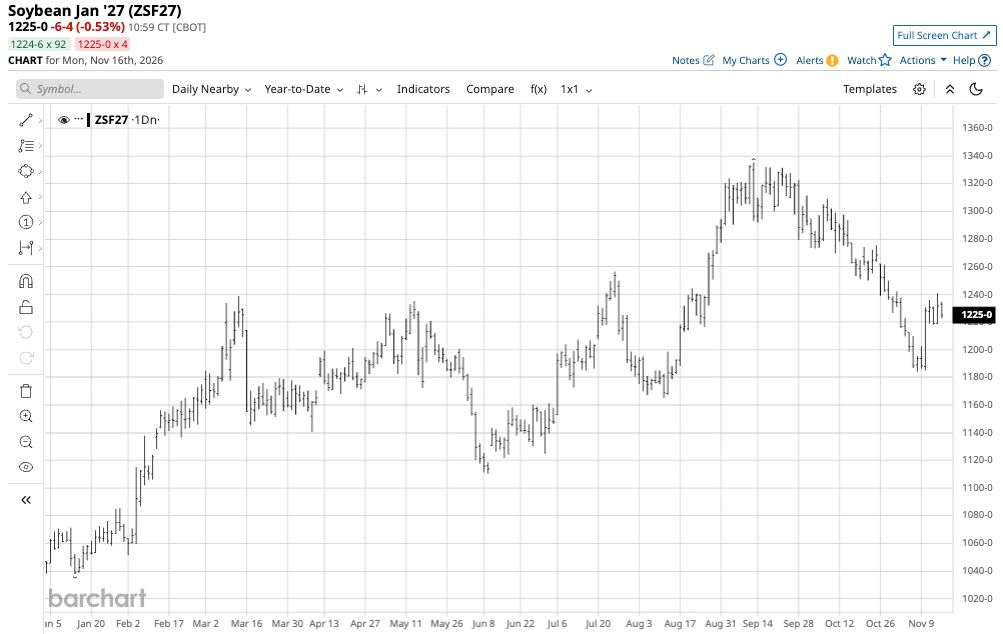
The continuous contract year-to-date chart shows the pattern of lower highs and lower lows since the September 11 high. Soybeans rallied into the teens for the first time since late 2023, but only traded above $13 per bushel from September 1 through October 8.
Crude oil and the distillate proxy fell after the beans
Crushing raw soybeans produces two products. Soybean meal, the solid, is a primary ingredient in high-protein animal feed. Soybean oil, the liquid, is used for cooking oil, salad dressings, processed foods, and marinades, but it is also the primary ingredient in biodiesel.
The wars between Russia and Ukraine and the U.S. and Iran have pushed oil and oil product prices higher in 2026.
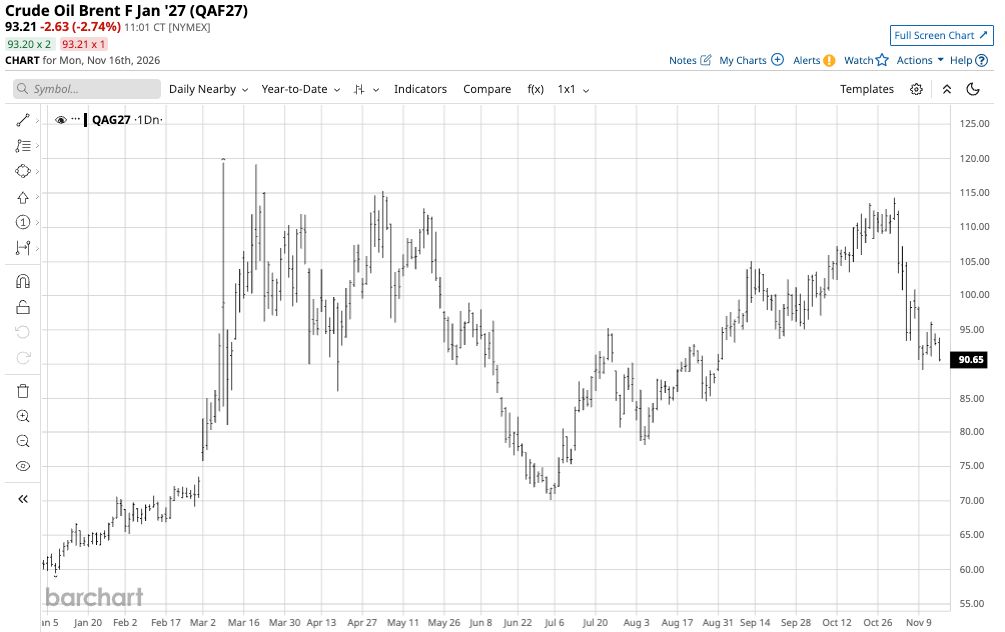
Brent crude oil futures rose to over $114 per barrel on October 30, nearly $55 above the 2026 low and only $5.11 below this year’s high. Brent is the benchmark for approximately two-thirds of the world’s crude oil and the pricing mechanism for oil from Europe, Russia, Africa, and the Middle East. Brent is a light, sweet crude oil with slightly higher sulfur content than WTI crude oil, the other petroleum benchmark. WTI’s lower sulfur content makes it ideal for processing into gasoline, while Brent’s slightly higher sulfur content makes it best suited for processing into medium distillates, including heating oil, jet, and diesel fuels. Brent futures have declined in November, reaching a low of $89.15 on November 10 and trading just above $90 on November 16.
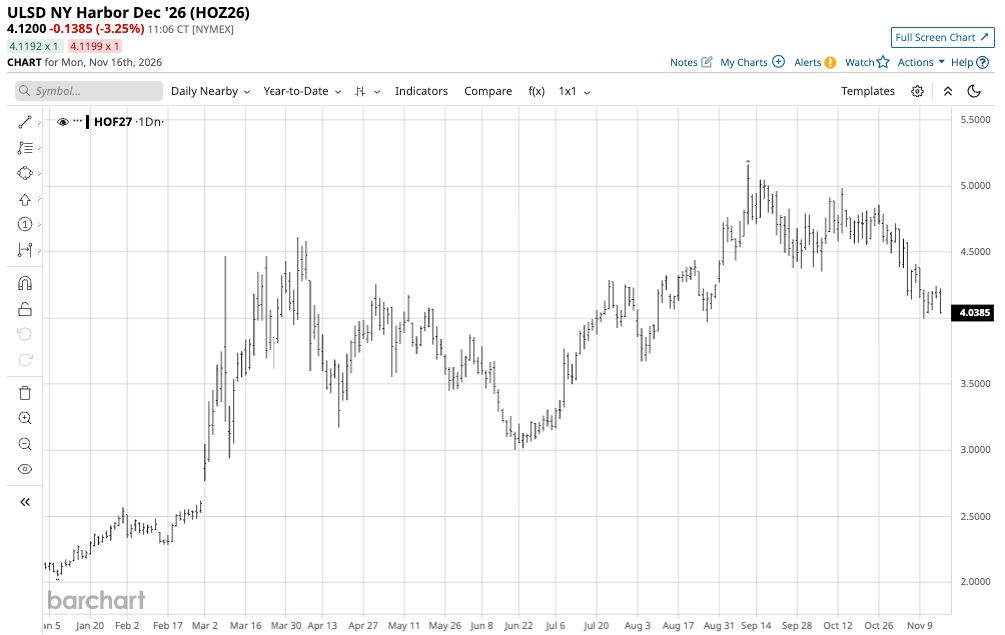
The continuous contract daily chart of NYMEX heating oil futures, a medium-distillate proxy for jet and diesel fuel prices, has soared in 2026, reaching a record high of $5.1619 per gallon wholesale on September 10. Since then, the price has dropped by over $1 per gallon.
Since soybean oil is the primary ingredient in biodiesel, higher distillate prices have put upward pressure on soybean oil prices in 2026 and likely pushed beans into the teens.
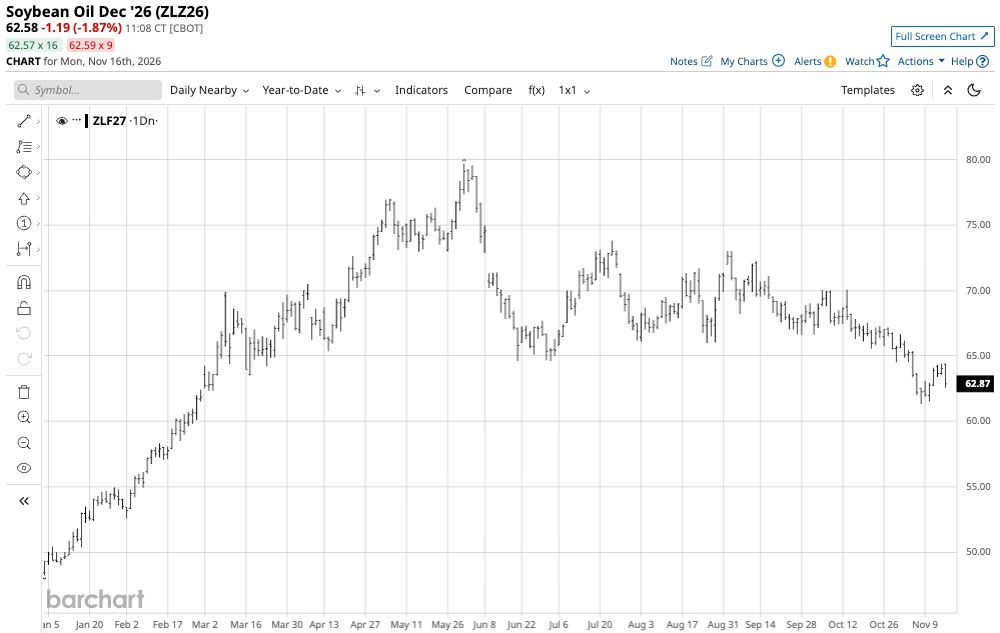
The continuous contract daily soybean oil chart shows prices rising steadily from the end of 2025 to the June 1 high. Since then, the soybean oil futures have traded in a range at far higher prices than at the start of 2026.
Higher crude oil and distillate prices had put upward pressure on soybean oil and, in turn, soybean prices in 2026. Meanwhile, as the 2026 crop year ended, soybean and soybean product prices declined before crude oil and distillate prices fell.
The November WASDE report was not bearish
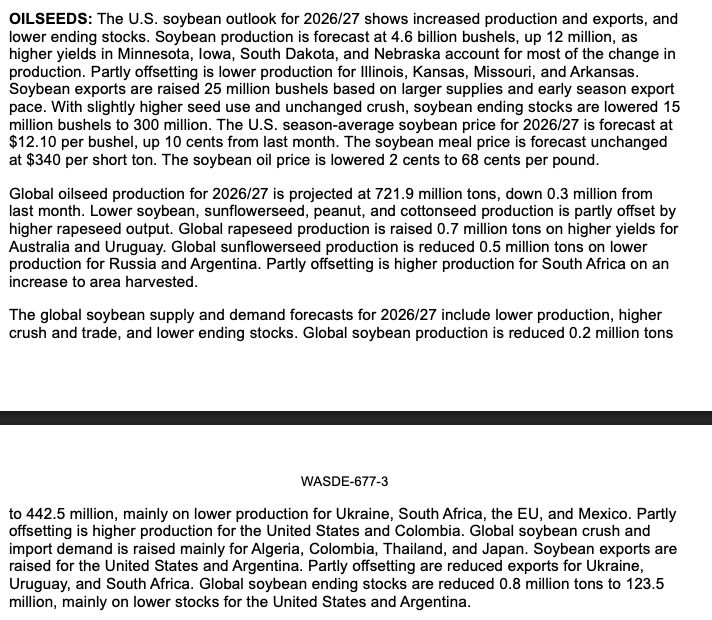
The USDA’s latest November World Agricultural Supply and Demand Estimates Report was not bearish for the soybean market.
 Source: USDA November WASDE Report
The WASDE reported that U.S. production rose and global production slightly decreased. U.S. and global ending stockpiles declined. The USDA raised its November price forecast by 10 cents to $12.10 per bushel. The USDA left the soybean meal price forecast unchanged, while lowering its soybean oil price forecast by 2 cents from October.
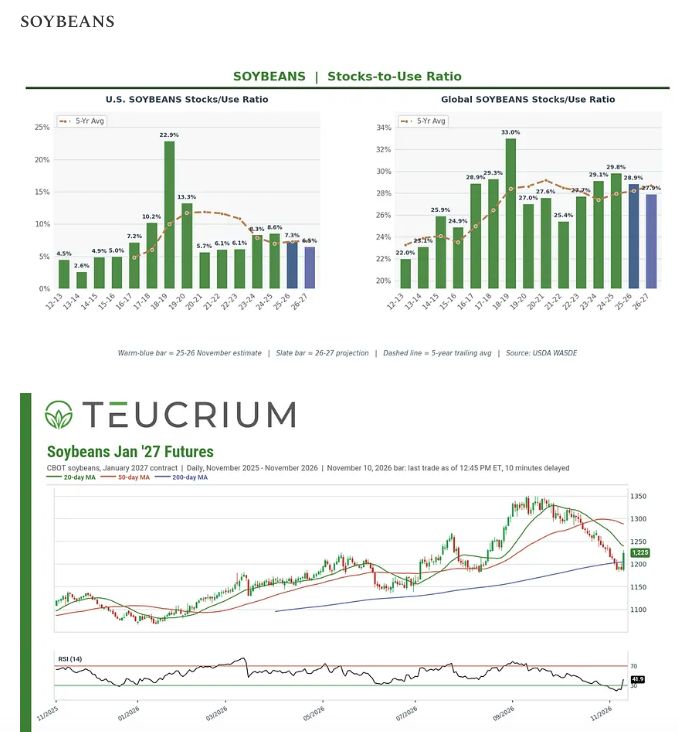
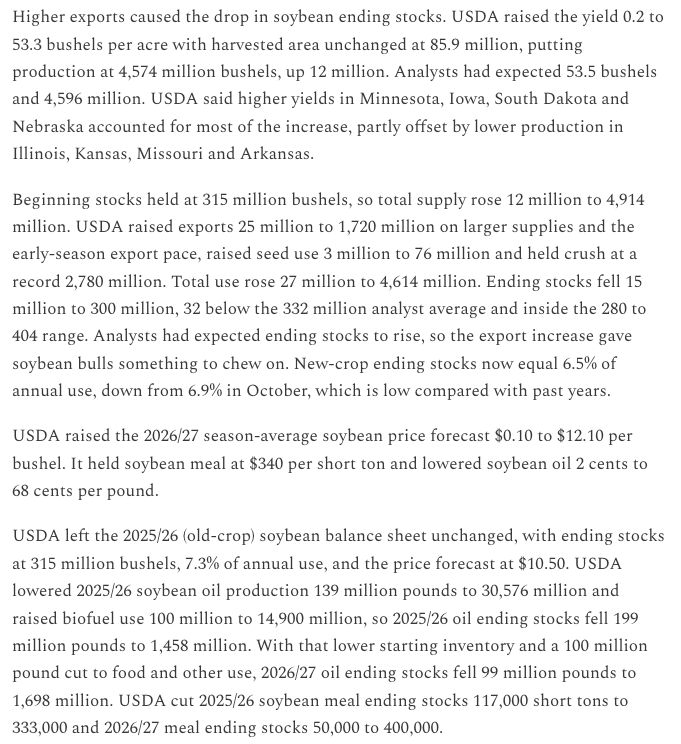
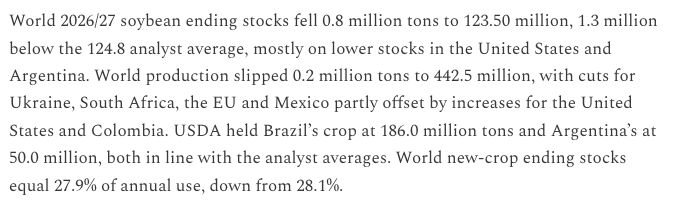
I reached out to Jake Hanley at the Teucrium family of grain and sugar ETFs, including the SOYB product that tracks soybean futures prices. Jake’s comprehensive take on soybeans from the November WASDE was as follows:
 Source: Teucrium
While there are plenty of soybeans to meet global demand over the coming months, 2027 could be a completely different story.
Lower soybean prices could be an opportunity, as a weather event could send them back to the teens
Brazil and the U.S. are the leading soybean-producing countries.
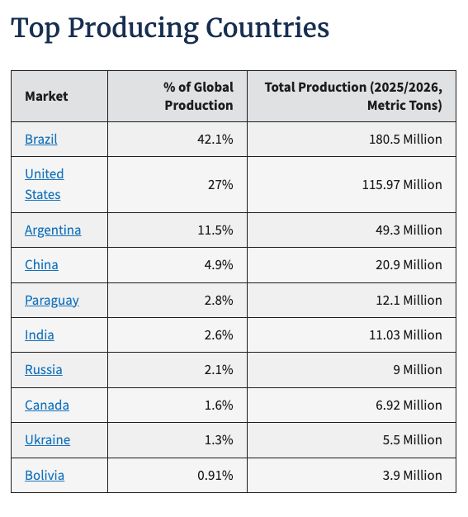 Source: USDA
Since Brazil is below the equator and the U.S. is above it, soybeans can be grown year-round.
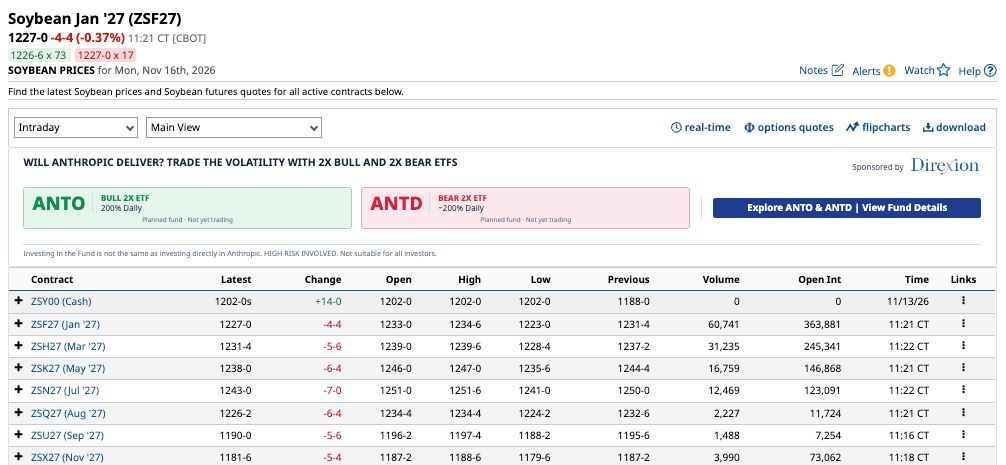
The soybean futures curve out to the 2027 crop year shows that prices are between $11.80 and $12.43 per bushel. Meanwhile, the weather conditions in Brazil and the United States, the countries that combine for nearly 70% of annual soybean production, will determine the 2027 crop and prices.
Two factors could have an explosive potential for oilseed and oilseed product prices. A continuation and escalation of wars in Ukraine/Russia and the Middle East that impact oil and product production could send soybean oil prices soaring, pushing soybean prices higher as consumers seek alternatives such as biodiesel. Meanwhile, a Super El Niño weather event that causes floods, droughts, and other disasters that reduce soybean supplies could have the most significant and explosive effect on soybean prices. Weather is always critical for agricultural commodity supplies and prices, and 2027 could be a year when weather causes significant supply issues.
The SOYB ETF tracks a portfolio of CBOT soybean futures prices
The most direct route to soybean market exposure is CBOT futures and futures options. Futures involve margin, leverage, and specialized trading accounts. The Teucrium Soybean ETF (SOYB) owns a portfolio of three actively traded, liquid CBOT soybean futures contracts, excluding the nearby contract to minimize roll risk. Because most volatility occurs in the nearby contract due to speculative activity, SOYB tends to underperform the active-month futures on the upside and outperform during downside corrections on a percentage basis.
At $25.80 per bushel, SOYB had $38.955 million in assets under management. SOYB trades an average of 39,657 shares per day and charges a 0.63% management fee. The most recent rally in CBOT nearby soybean futures pushed prices 14.6% higher, from $11.6525 on August 11, 2026, to $13.3525 per bushel on September 11, 2026. The recent correction took the beans 11.3% lower to $11.8400 per bushel on November 6, 2026.
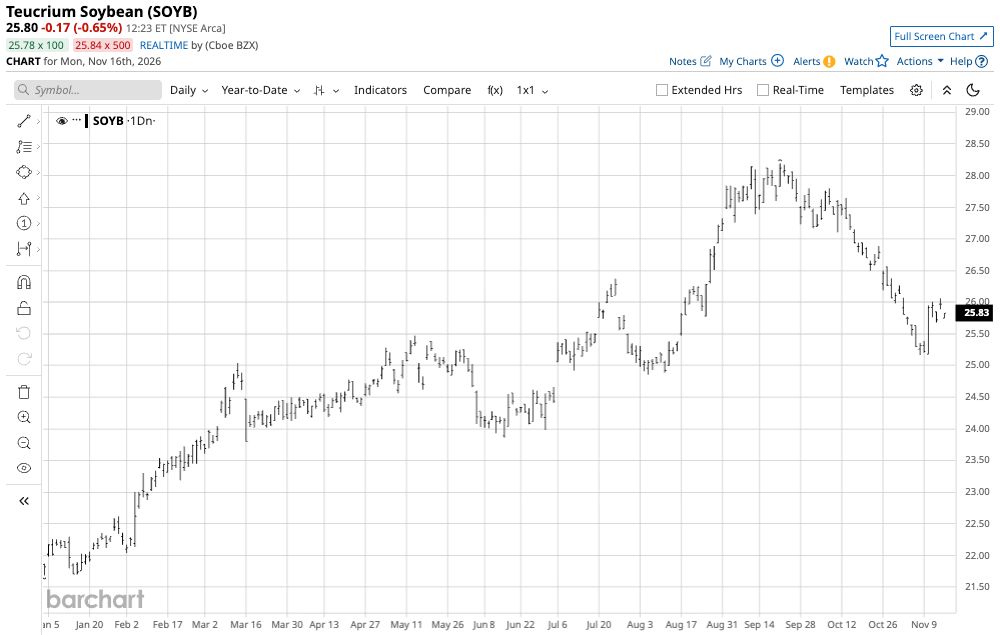
Over a similar period, SOYB rose 13.26% from $24.89 to $28.19 per share, before correcting 10.71% to $25.17 per share. SOYB marginally underperformed the soybean futures during the rally and slightly outperformed during the correction.
Any significant selloff in soybeans over the coming weeks and months could create a golden buying opportunity for 2027. A continuation of wars in Eastern Europe and the Middle East, along with the potential for a devastating Super El Niño, could return beans to the teens and push them to higher highs in 2027.
On the date of publication, Andrew Hecht did not directly have a position in any of the securities mentioned in this article. All information and data in this article is solely for informational purposes. For more information please view the Barchart Disclosure Policy here.