


For traders, the current stock market is both a blessing and a curse. There’s plenty of volatility. That’s the good part.
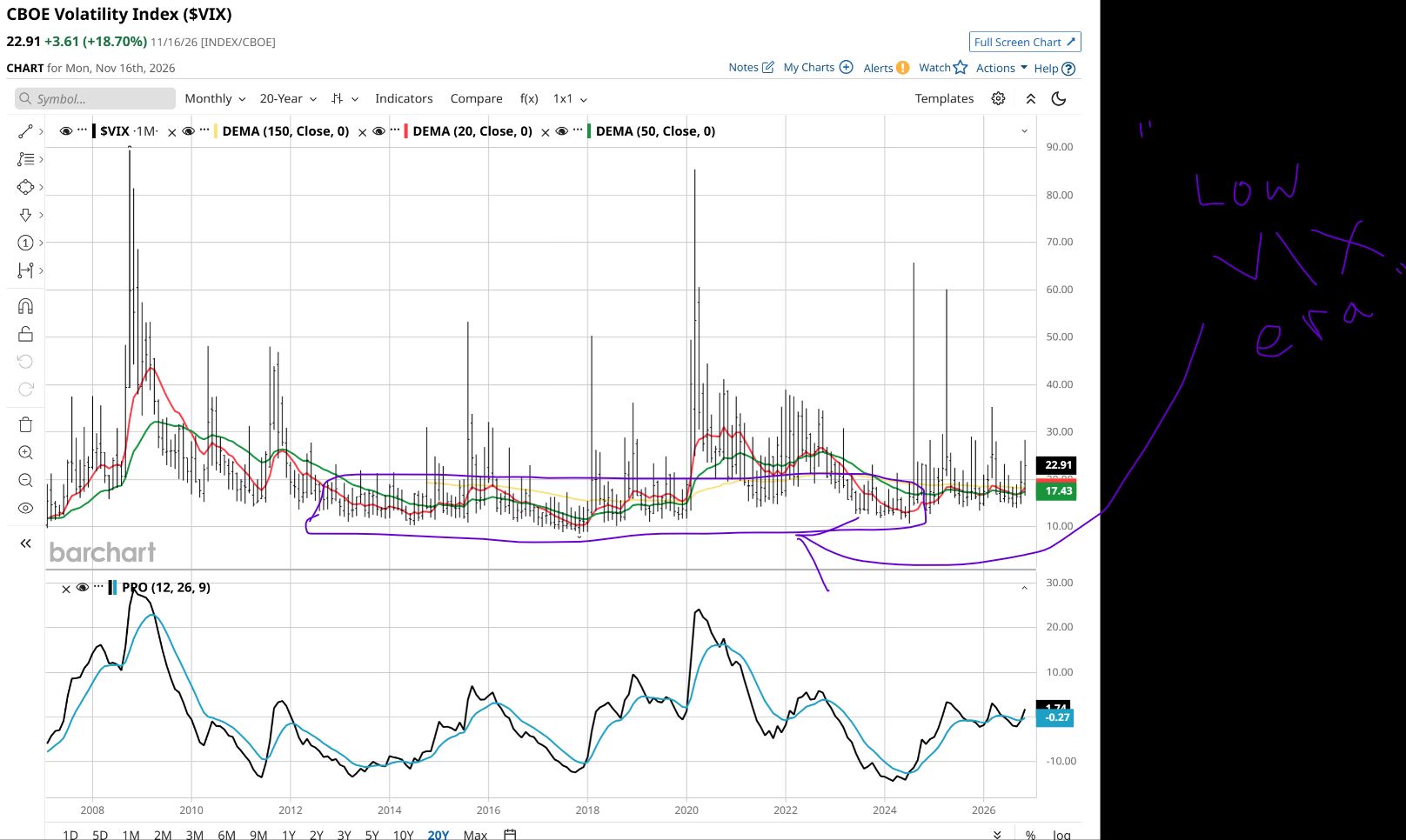
If you are old enough to remember what I’ve labeled here as the “Low VIX Era,” you’ll recall the market period from 2012-2024. It was the time following the Global Financial Crisis and before the recent spike in the AI trade. That’s when the CBOE Volatility Index ($VIX) spent most of its time in the 10-15 range.
Can’t Get Enough Options?: Join the list for Barchart’s daily unusual options report, delivered free.
 www.barchart.com
While sharp rises in the VIX occur at some point in most calendar years, 2026 has started to see more frequent VIX spikes, like the one we have now, as the market’s go-to fear gauge closed near 23 on Monday.
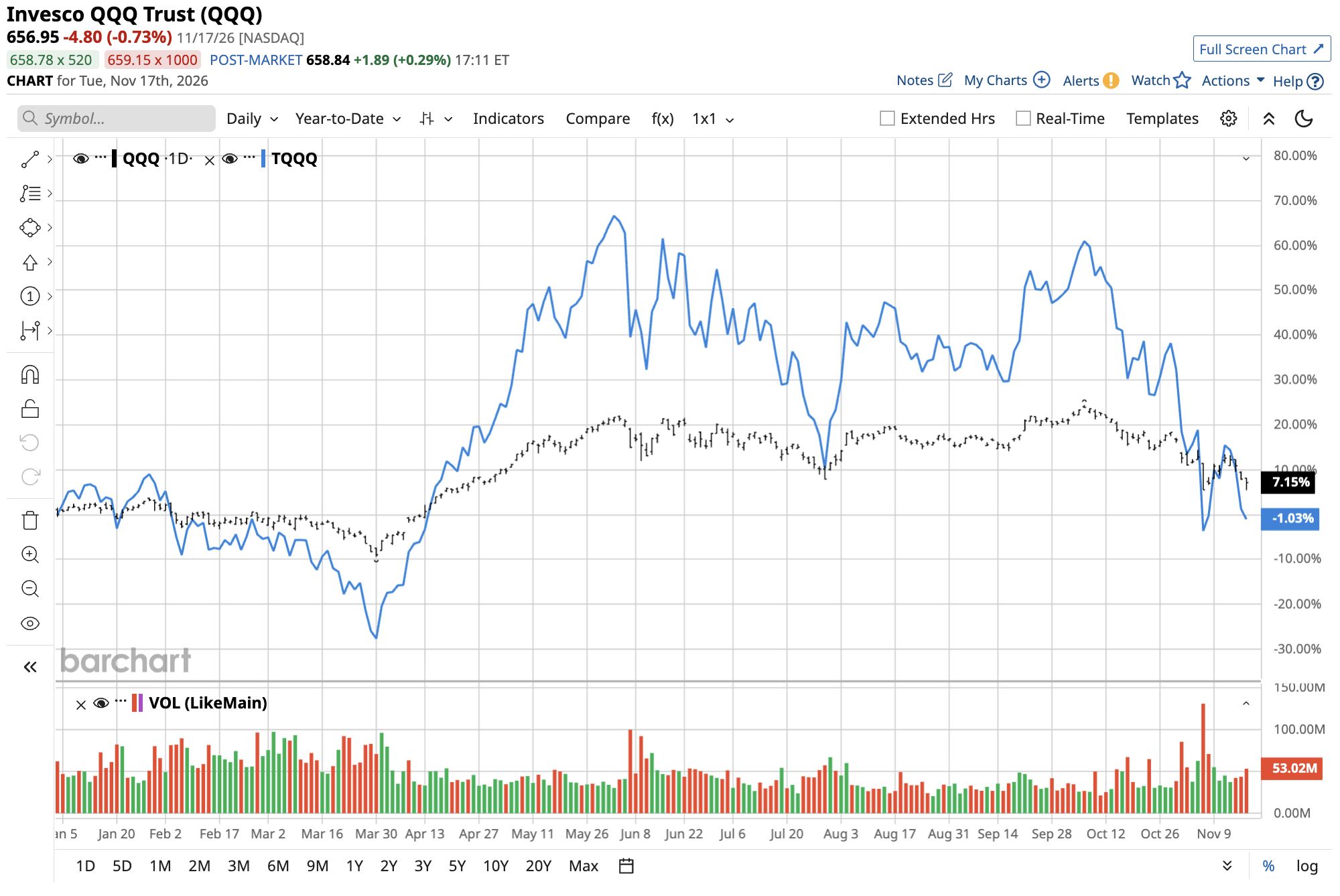
Those higher swings align with what we're seeing here from the Invesco QQQ Trust, Series 1 ETF (QQQ) and the ProShares UltraPro QQQ ETF (TQQQ). The latter is the same as the former; it just trades 3 times faster.
 www.barchart.com
These are the two ETFs I’ve traded most frequently this year, often through put and call options, but I've also bought and sold plenty of shares.
However, it is getting tougher to use the options. Volatility has been too elevated for too long — it is starting to take a bite out of the practice and discipline of buying and selling options.
As shown above, 10% moves up and down for QQQ over a 10-day period have been occurring regularly. For TQQQ with that 3x leverage, it becomes more like 25-30% each way.
A small position in either ETF is, to me, a better way to try to squeeze the juice left in this stock market upcycle compared to options.
As opposed to getting this handed to you.
 www.barchart.com
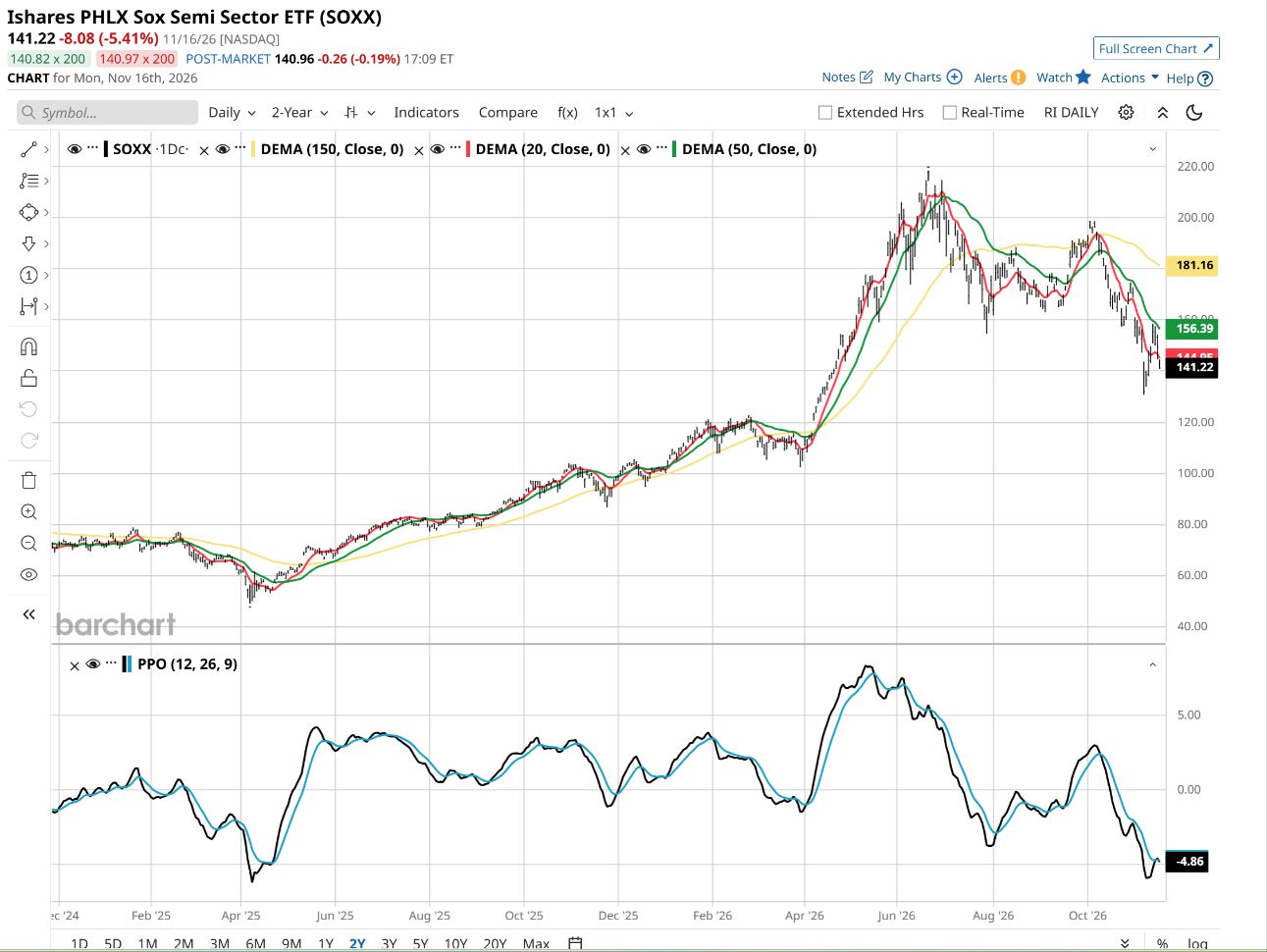
This is a two-year chart for the iShares Semiconductor ETF (SOXX). Despite a 100% move higher earlier this year, in just about six weeks’ time, it has given way to a 35% drop since June.
And to me, it looks like it could go lower. Maybe much lower. That’s OK if you have the guts to hang in there with an inverse or even leveraged inverse position in this ETF or some of its components. But as with QQQ, the best opportunities to risk very small amounts of money to get outsized returns have already passed.
That doesn’t mean there won’t be tremendous downside profits to go after from here forward. I think there will be. However, I’ll have to put up more capital than options require in order to try to produce similar percentage profits.
Now, those who sell covered calls and/or sell put options on ETFs and stocks may be the beneficiaries of this higher volatility. However, the latter is fraught with danger in a market like this.
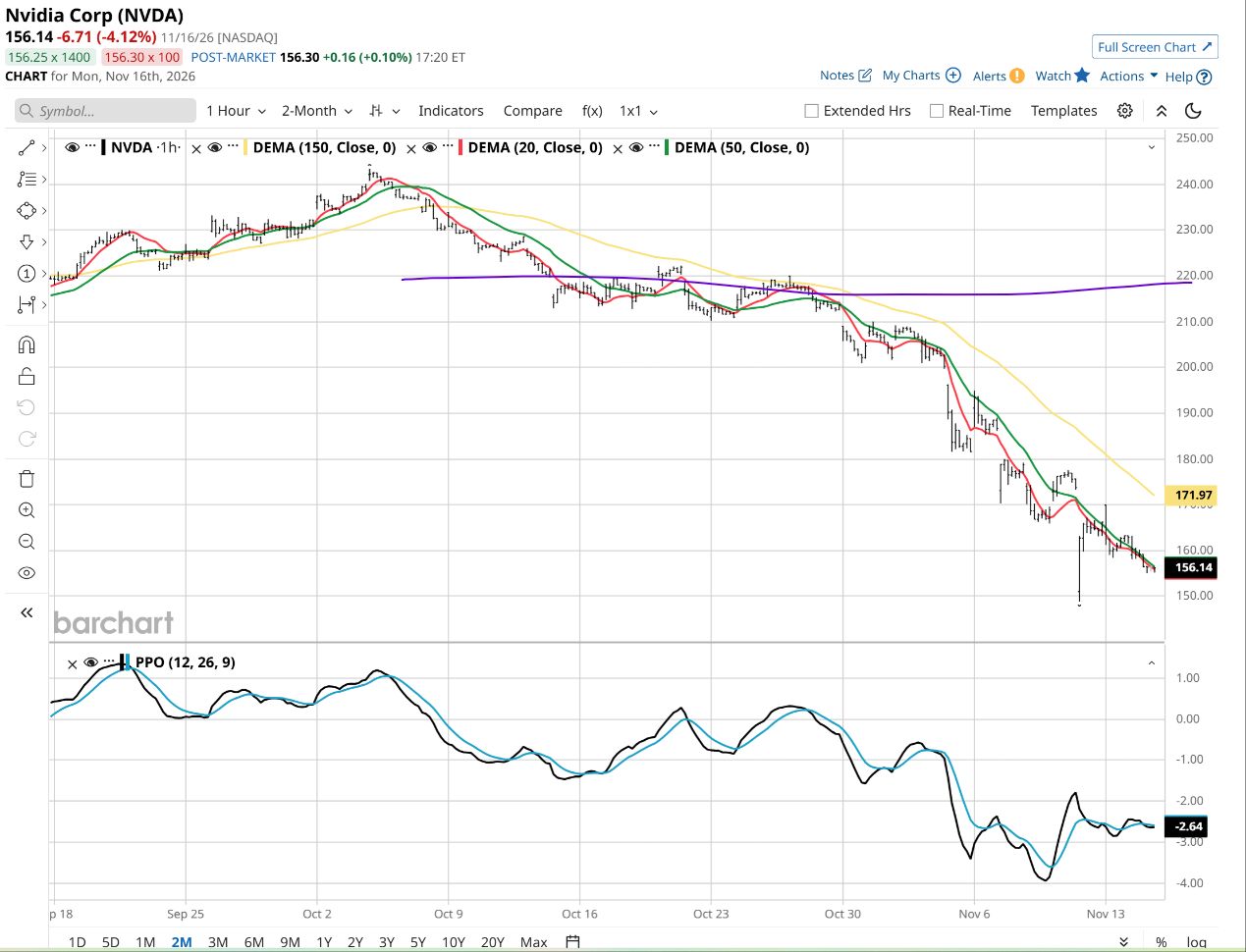
For example, maybe you would have felt like you were getting free stuff, or getting away with something, if you had sold $220 put options on Nvidia (NVDA) out to 12/31/2026 back in early October, when the stock was trading around $240. That’s a gift, right?
 www.barchart.com
Not when the stock falls through to $156. That’s a world of hurt, unless you had the foresight to sell it when it was up around $220. And in that case, you probably were not sufficiently bullish on the stock to have taken the risk of selling puts.
Where this leads me
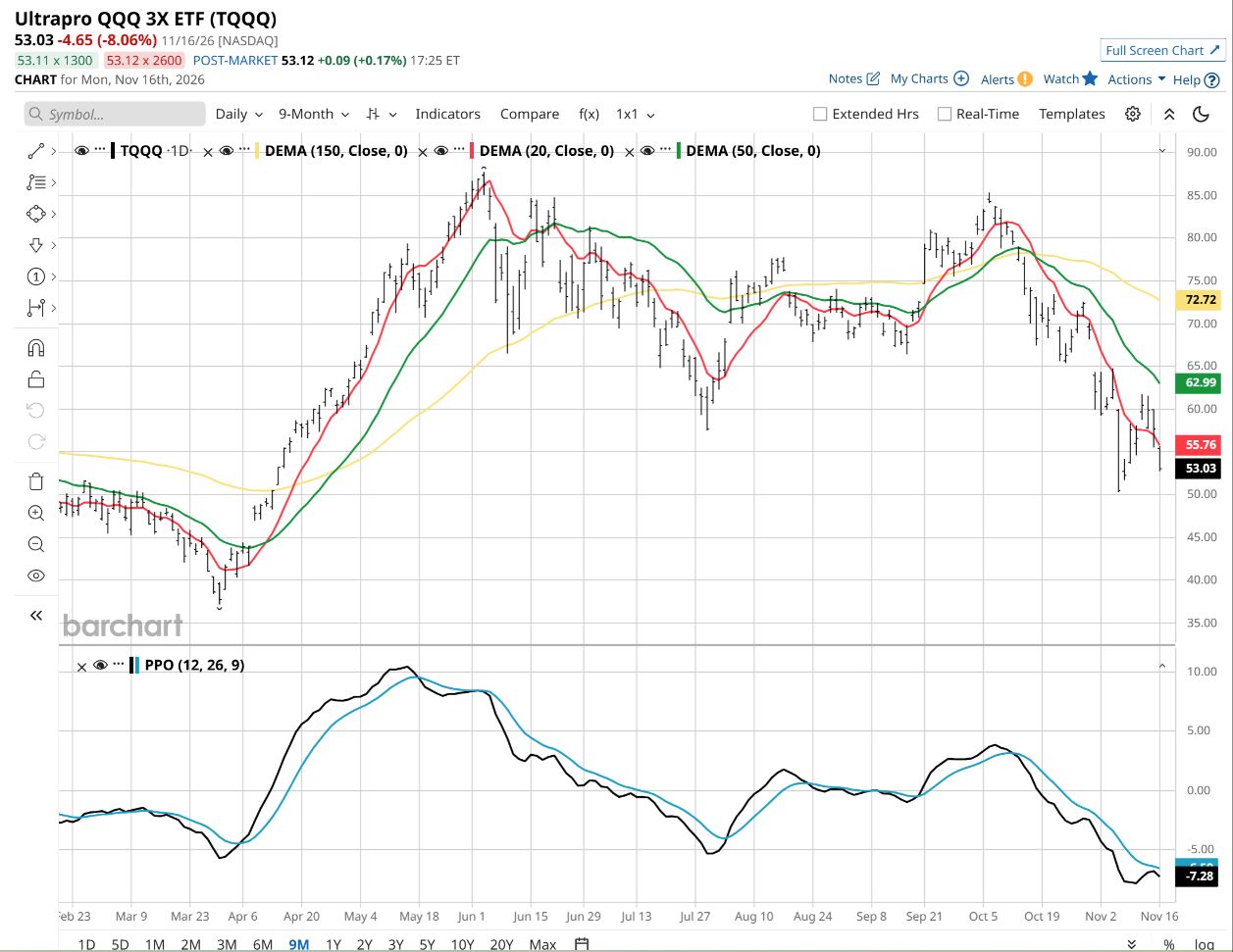
Personally, I’m likely to start replacing a lot of my option trading in equity indexes with leveraged ETFs. Tripling the daily price movement of QQQ with shares of TQQQ has its risks for sure. But if you keep position sizes reasonable and think of these speculative vehicles similar to how you view options, it may make more sense.
 www.barchart.com
Above, we see that TQQQ has been from below $40 to more than $85 and back down to $50 recently. All of that in just nine months’ time.
That’s not the kind of volatility you see with the shorter-term options I’ve been using a lot this year. However, it is not too different from “LEAPS,” which are longer-dated options. In other words, the leveraged ETFs may actually be a relatively soft landing for those of us who like to, as I like to say, “take big shots with small amounts of capital” within a larger portfolio.
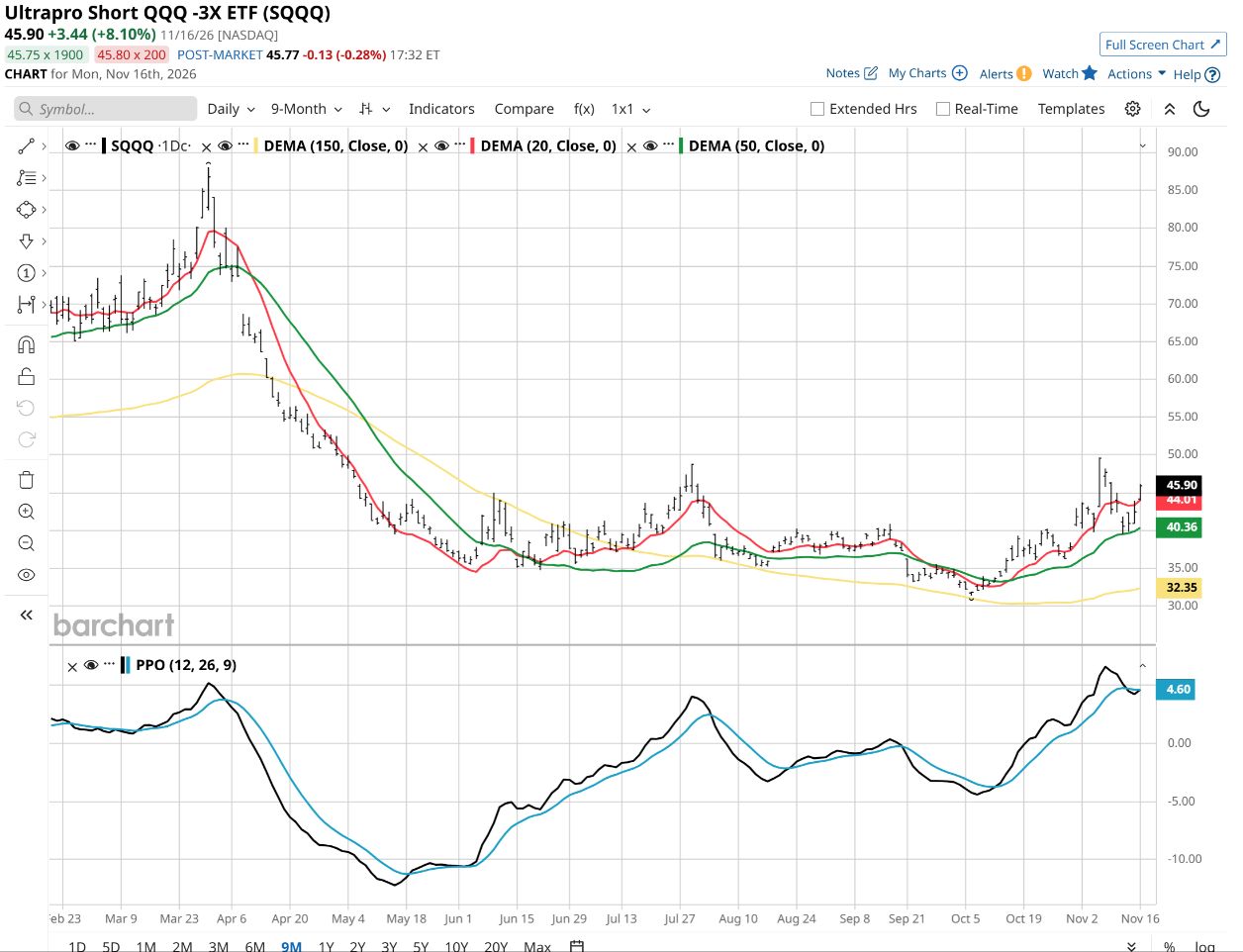
And, since most major ETFs like QQQ have a 3x long ETF (TQQQ) and a 3x inverse ETF (SQQQ), there’s a case to be made for those vehicles being cousins of call and put options on QQQ, respectively.
 www.barchart.com
Here’s SQQQ above. Note that the math of investment loss is on display here. That is, if you hold this too long without the underlying QQQ dropping significantly, you risk value erosion, even if QQQ's price remains flat. But of course, (PSQ) is a single inverse ETF versus QQQ, which means you can tailor your dollar exposure.
Volatility and leverage are entirely separate ways to approach equity trading versus picking stocks. Tread carefully and start small, but understand that modern markets now cater more to this type of portfolio and risk management than in the past. You can thank that higher volatility!
Rob Isbitts created the ROAR Score, based on his 40+ years of technical analysis experience. ROAR helps DIY investors manage risk and create their own portfolios. For Rob's written research, check out ETFYourself.com.
On the date of publication, Rob Isbitts did not directly have a position in any of the securities mentioned in this article. All information and data in this article is solely for informational purposes. For more information please view the Barchart Disclosure Policy here.
More news from Barchart
Higher Volatility Just Took the Fun Out of Buying Options. It Might Be Time to Shift to Leveraged ETFs The Dow Tests Its 200-Day Moving Average Ahead of Nvidia Earnings. 5 More Levels to Watch for the Blue-Chip Benchmark. How to Invest Like a Cockroach in the Stock Market’s AI Era History Shows the QQQ ETF Could Plunge 50%-70%, But Modern Investors Have New Tools to Protect Themselves and Still Profit