


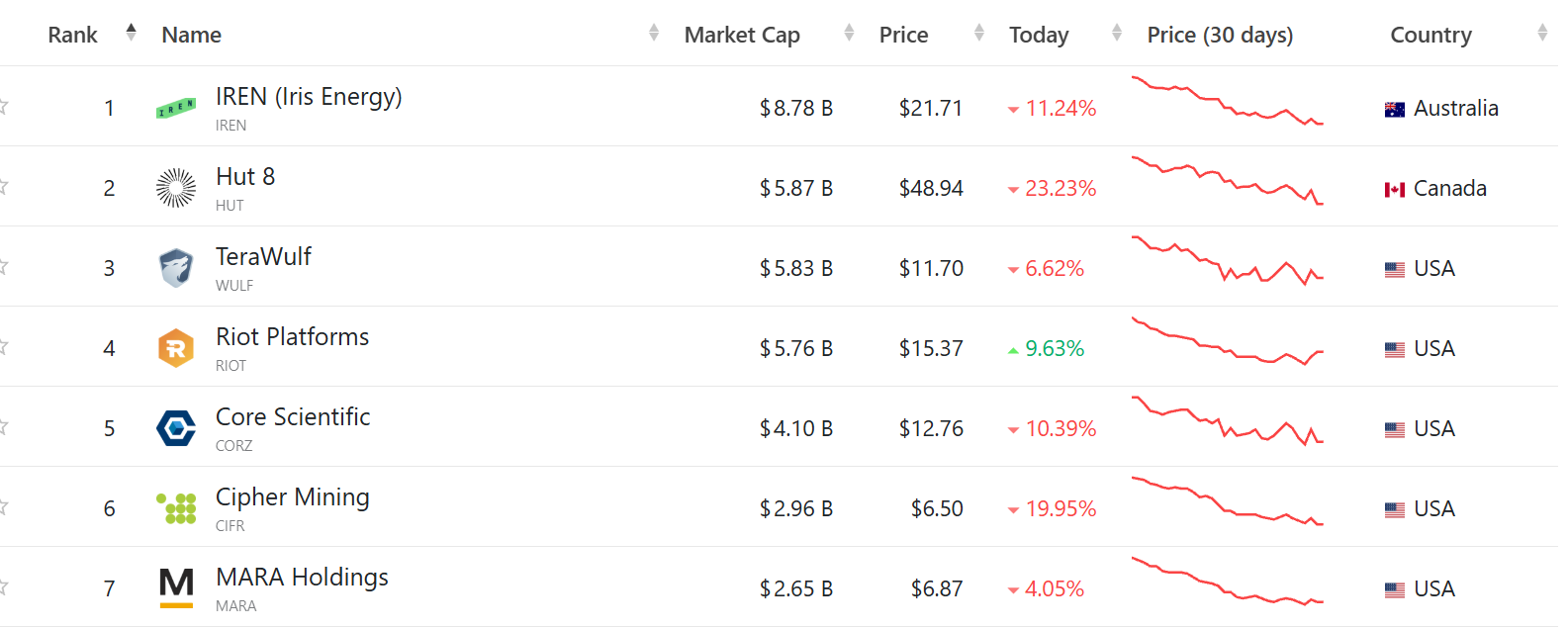
Bitcoin mining stocks expanding into AI data center infrastructure dropped an average of 35% in October. VanEck believes the selloff was excessive, arguing that market fears have pushed valuations below what existing business fundamentals would justify.
Concerns surrounding rising borrowing costs at AI computing companies spread to Bitcoin miners, despite no reported cancellations of signed lease agreements. Limited electricity capacity and lengthy grid connection delays could give miners a competitive advantage as demand for AI computing infrastructure increases.
VanEck views the recent decline as a potential buying opportunity rather than evidence that the industry’s AI expansion strategy is failing.

Bitcoin mining companies that have expanded into artificial intelligence infrastructure may be facing an overly pessimistic stock market valuation, according to investment manager VanEck.
The firm’s latest assessment comes after publicly traded mining companies pursuing AI data center opportunities recorded an average share price decline of approximately 35% throughout October.
Despite the sharp correction, VanEck believes the market reaction does not accurately reflect the underlying condition of these businesses. Instead, concerns about financing across the broader AI infrastructure sector appear to have triggered a wave of selling that also affected companies with different business models and revenue structures.
AI Financing Concerns Trigger Heavy Selling Across Bitcoin Mining Stocks
One of the main factors behind October’s decline was growing investor anxiety about the cost of financing AI infrastructure projects.
According to VanEck, these concerns spread beyond GPU rental businesses and affected Bitcoin miners supplying the electricity and facilities needed to support AI workloads.
The selloff was also influenced by broader economic uncertainty, including a hotter-than-expected US consumer price index reading for September and concerns surrounding the November midterm elections. However, VanEck argues that investors treated companies with different business models as though they faced identical financial risks.
This distinction is important because Bitcoin miners transitioning into AI infrastructure do not necessarily carry the same exposure as companies that primarily finance and rent expensive GPU equipment.
Electricity Capacity Could Give Bitcoin Miners a Competitive Advantage
A central part of VanEck’s bullish argument is the growing scarcity of electricity capacity suitable for large-scale AI computing operations.
As demand for artificial intelligence services increases, data center operators require access to substantial amounts of reliable electricity. However, securing new grid connections can take considerable time, creating an infrastructure bottleneck.
Bitcoin mining companies may already possess an important advantage because they have spent years developing facilities, securing energy agreements, and establishing connections to power networks.
These resources could become increasingly valuable as technology companies compete for the electricity needed to operate AI systems.
VanEck argues that available power, rather than demand for computing services, represents the more significant constraint on AI infrastructure expansion.
The investment manager also pointed out that no signed lease agreements were cancelled during the October selloff. This suggests that concerns about financing have not yet translated into a widespread breakdown of existing commercial agreements.
VanEck Sees Potential Opportunity After October’s Market Correction
The recent decline has raised questions about whether Bitcoin miners can successfully transform themselves into major players in the AI infrastructure market.
However, VanEck maintains that the October correction may have created an attractive entry point for investors willing to look beyond short-term market sentiment.
The firm’s assessment is based on several factors, including existing lease agreements, limited electricity capacity, delays in grid connections, and the potential for long-term contracted revenue.
Still, the outlook is not without risks. Companies must secure sufficient financing, complete infrastructure projects, and meet the operational requirements of their AI customers.
For now, VanEck believes the 35% decline in mining-related AI infrastructure stocks may have gone further than the available business fundamentals justify. Whether the sector can recover will largely depend on how successfully these companies convert their existing power infrastructure into sustainable AI-related revenue.