

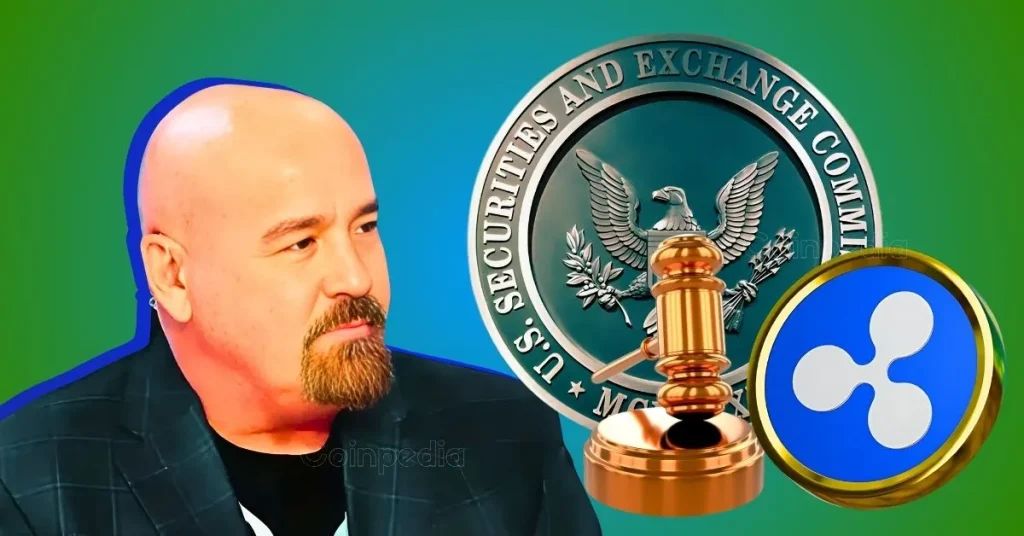
The post XRP Co-Creator David Schwartz Donates XRP to John Deaton’s Senate Campaign appeared first on Coinpedia Fintech News
Ripple’s Chief Technology Officer David Schwartz, known online as JoelKatz, has sent an undisclosed amount of XRP to support attorney John Deaton’s US Senate campaign. The move quickly gained attention across the XRP community, not just because of who made the donation but because of the history between the two men.
Schwartz is one of the three original architects of the XRP Ledger. Deaton is the lawyer who led 75,000 XRP holders in an independent legal fight against the SEC that helped produce one of the most significant rulings in crypto legal history.
What Deaton Said About It
Deaton did not take the gesture lightly. In a post on X he described Schwartz as a “legit genius” and laid out exactly why the contribution meant something beyond a standard campaign donation.
He reminded his followers that before building the XRP Ledger, Schwartz worked as a contractor for the NSA developing encrypted cloud storage and enterprise messaging systems. He then contributed to Bitcoin’s codebase in 2011 before joining forces with Jed McCaleb and the famously private Arthur Britto to co-create the XRP Ledger from scratch.
The ledger they built in 2011 and launched in 2012 settles payments in three seconds, handles 1,500 transactions per second, and contained the world’s very first decentralised exchange built directly into its protocol. Deaton called it a technology that helped lead the crypto revolution alongside Bitcoin and Ethereum.
“Three legends. One ledger. And it is an honor for one of them to help me try and bring commonsense-based, nonpartisan leadership to the US Senate,” Deaton wrote.
The Legal History Behind the Moment
The significance of Schwartz supporting Deaton goes beyond mutual respect between crypto figures. The two are connected by one of the most consequential legal battles the cryptocurrency industry has ever seen.
Deaton and 75,000 XRP holders took on the SEC completely independently of Ripple’s own legal defence. He submitted amicus briefs, made oral arguments in the LBRY case that were later cited by the judge in the Ripple ruling, and submitted 4,000 XRP holder affidavits directly into the case record.
When Judge Analisa Torres ruled that XRP in and of itself is not a security, she cited Deaton’s work directly in her opinion. The ruling that now forms the legal backbone of the CLARITY Act’s treatment of XRP was shaped in part by a lawyer who is now running for Senate.