


We’re still in a negative gamma regime on the Invesco QQQ Shares (QQQ) exchange-traded fund (ETF), after a major bearish breakdown in last week’s trading.
This popular ETF, which proxies the tech-dominated Nasdaq-100 Index ($IUXX), reached the 38.2% Fibonacci level in a week.
Can’t Get Enough Options?: Join the list for Barchart’s daily unusual options report, delivered free.
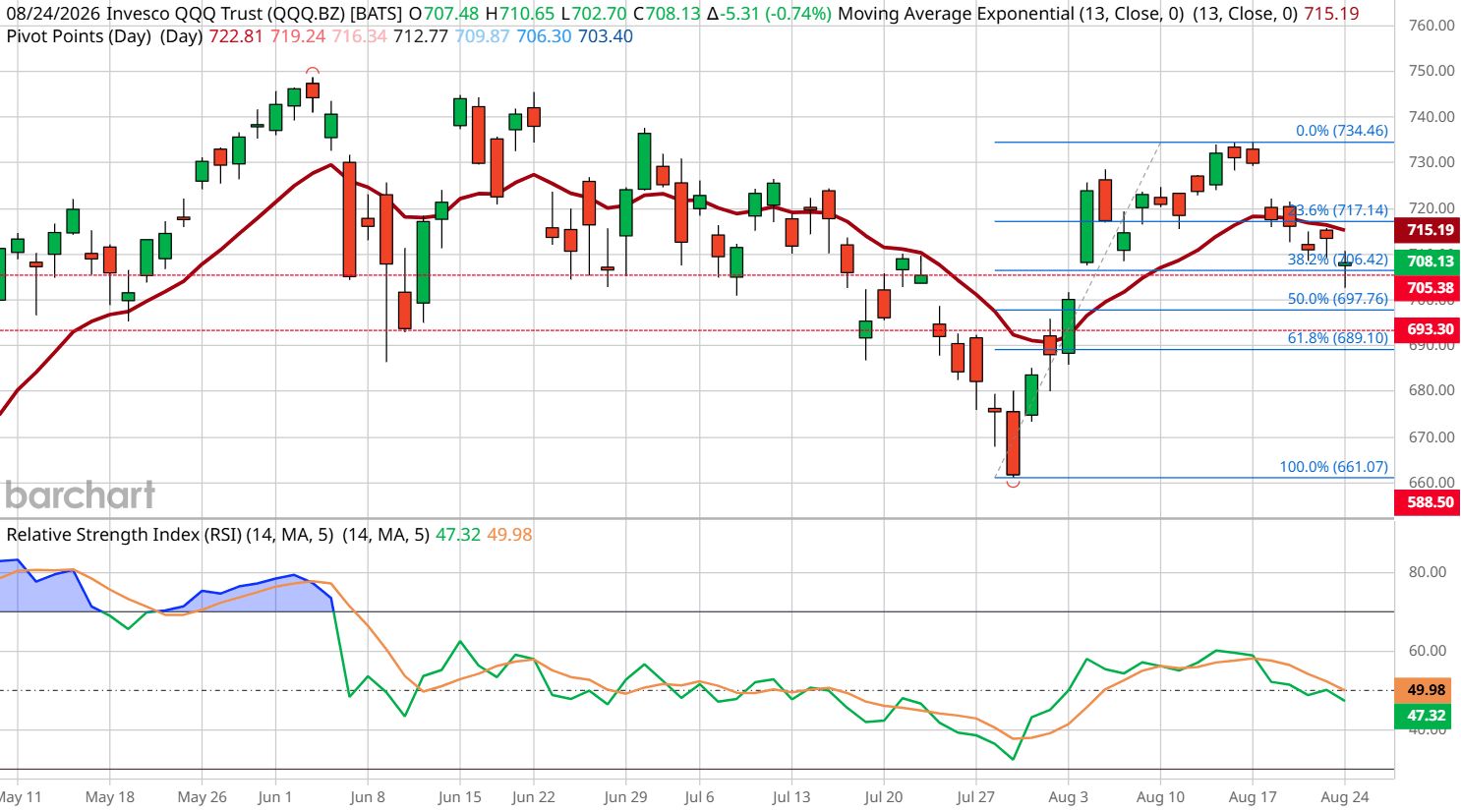 QQQ with RSI and Fibonacci levels.
That puts the 50% level into play at 697.75, just below 700 – which happens to be the largest put open interest strike (a “put wall”), and would represent a gap fill from the way up on Aug. 3.
This could act as a level of support, both technical and psychological.
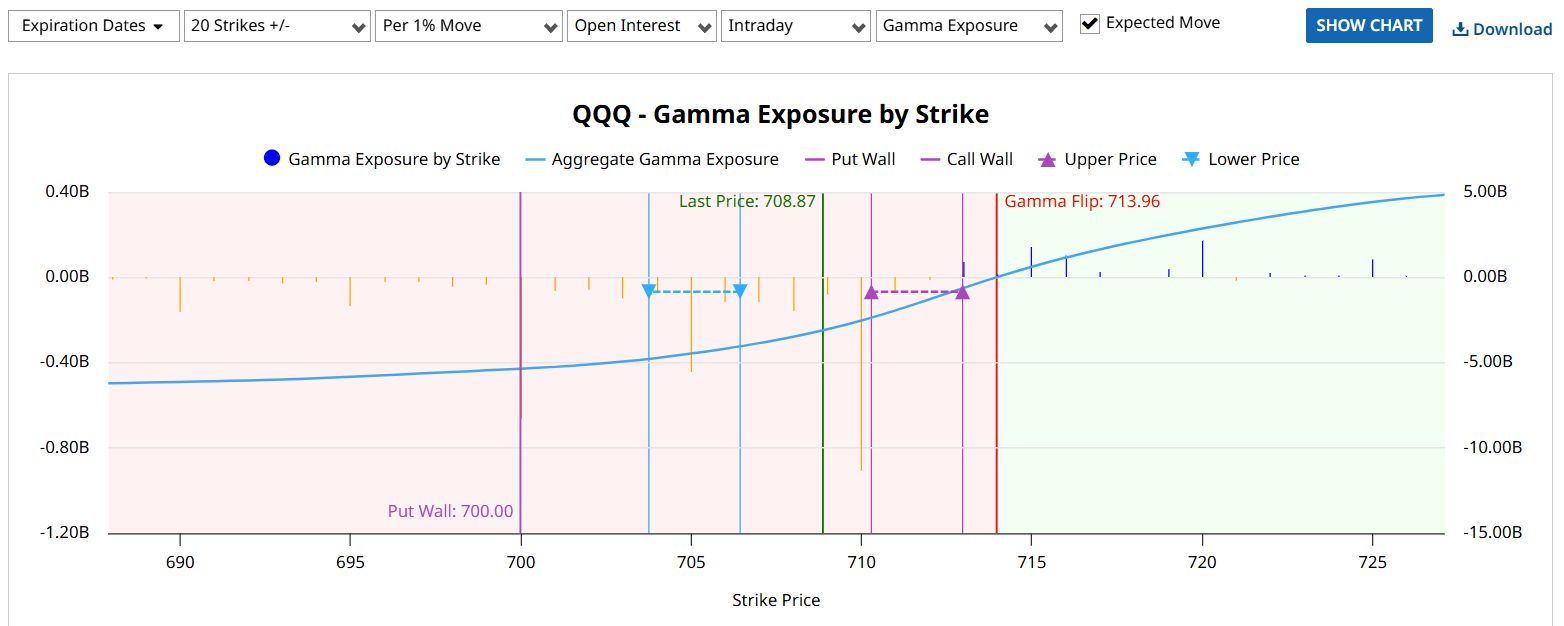 QQQ gamma exposure by strike.
Other notable points include the Relative Strength Index (RSI) crossing into bearish territory and QQQ opening today below its 50-day moving average, located at approximately 713.24.
With this technical and options context in mind, it’s worth considering that we just highlighted another Hindenburg Omen signal during Friday’s “Market on Close” livestream.
Watch my conversation with “Twitter Tom” below:
– John Rowland, CMT, is Barchart’s Senior Market Strategist and host of Market on Close.
On the date of publication, Barchart Insights did not have (either directly or indirectly) positions in any of the securities mentioned in this article. All information and data in this article is solely for informational purposes. For more information please view the Barchart Disclosure Policy here.
More news from Barchart
QQQ is Still in a Negative Gamma Regime. Here’s How a ‘Put Wall’ and Fibonacci Support Could Come Into Play. Why Investing in IPOs Has Become a High-Stakes Coin Flip Most Tech Stocks Are More Correlated Than You Think. Don’t Let That Wreck Your Trading Plan. The Bond King Goes Bananas Over Nvidia's $500 Billion Move. How It May Be Affecting Your Portfolio.