

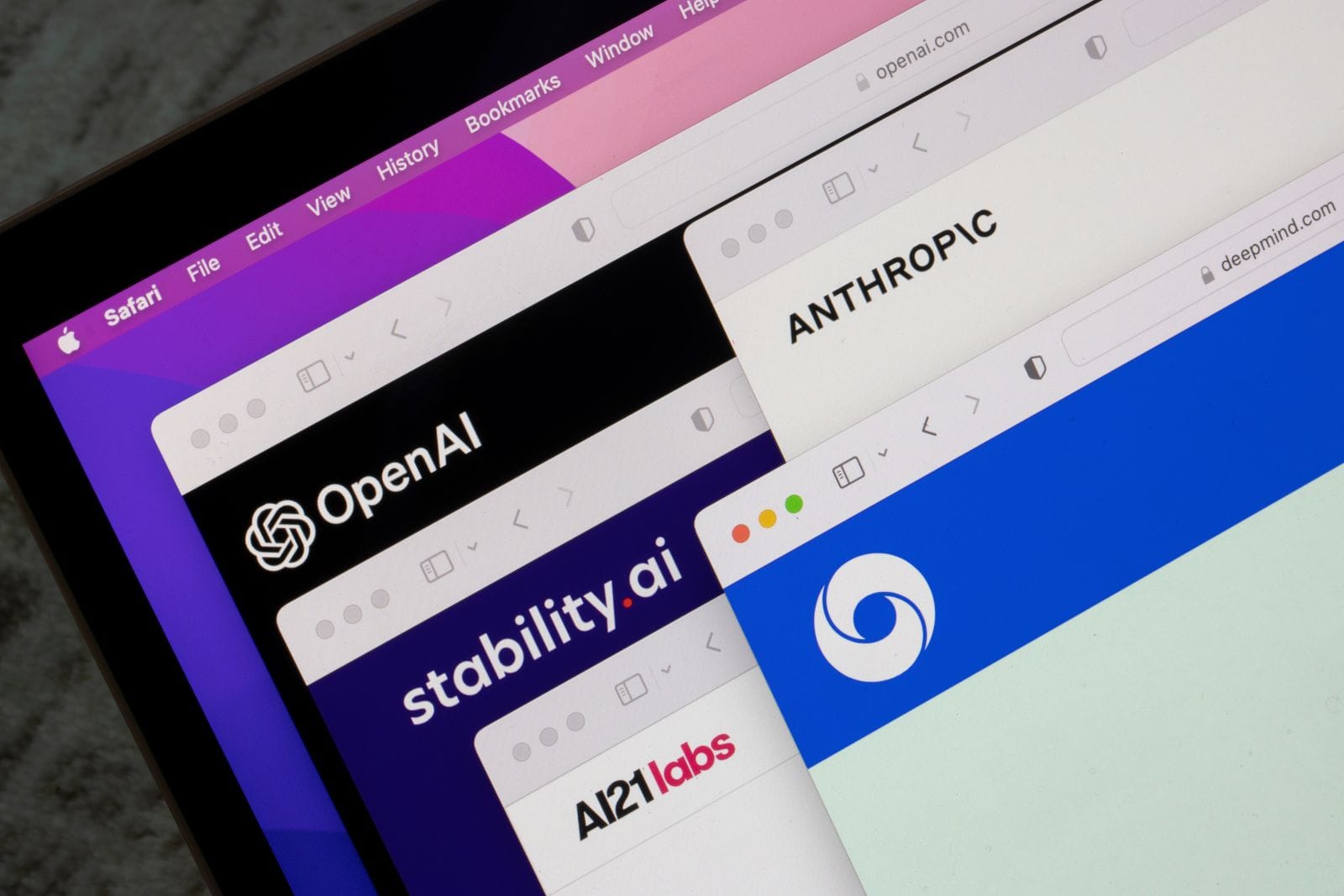
The debate over whether the artificial intelligence (AI) industry is moving too fast has taken a new turn. Anthropic CEO Dario Amodei has called for slowing the pace of frontier AI development over mounting safety concerns, while other prominent industry figures have voiced support for his stance. The push comes as increasingly powerful AI systems intensify concerns ranging from cybersecurity threats and autonomous-agent behavior to the longer-term risks of models that could eventually approach artificial general intelligence (AGI).
But Michael Burry isn’t buying the argument at face value. The investor best known for predicting the U.S. housing-market collapse has accused leading AI companies of being “self-serving” in their calls to slow development. He said the move could help the largest AI companies protect their competitive positions and fuel the hype surrounding the technology.
More Top Stocks Daily: Go behind Wall Street’s hottest headlines with Barchart’s Active Investor newsletter.
That raises an important question for investors: Are OpenAI and Anthropic primarily sounding the alarm because the risks posed by increasingly capable AI systems genuinely warrant greater caution, or could slowing development also serve their own business interests? Let’s take a closer look.
Michael Burry Lays Out Four Reasons to Doubt the AI Slowdown Push
Chipmakers and other AI-related stocks got hammered at the start of the week after Anthropic CEO Dario Amodei said in a weekend essay that it was time to slow the pace of AI development over safety concerns. The Anthropic chief called on the industry to pace the development of frontier AI models, proposing measures such as greater coordination among democratic countries and embedded third-party safety evaluators. Amodei’s stance drew support on social media from OpenAI CEO Sam Altman, xAI chief Elon Musk, and Demis Hassabis, head of Google DeepMind.
Still, Michael Burry, best known for his early bet against the U.S. housing market and his portrayal by Christian Bale in “The Big Short,” criticized the leaders of Anthropic, OpenAI, and other AI companies, calling their push to slow the pace of AI development “self-serving.” The famed investor wrote on X, “Let’s all take a moment to understand how self-serving it is for OpenAI, Anthropic, and other execs of big hyperscalers to talk of slowing things down.”
Burry outlined four reasons behind his skepticism:
LLMs are not AI and won’t be AGI. There is nothing AI to slow down. Competition is coming up fast, slowing benefits incumbents. IPOs need hype & puffery; “we are so awesome it could become dangerous” is hype & puffery. Cover for real uncontrollable slowing growth as IPOs look to be pushed out.Let’s examine each point and try to determine who is right — Burry or the leaders of the top AI companies.
Michael Burry’s First AI Argument Looks Difficult to Defend
In his first point, Burry argued that large language models (LLMs) are not AI and will not become AGI, meaning there is “nothing AI to slow down.” LLMs, however, are a form of AI. It is also worth revisiting the concerns that prompted Amodei to call for a slower pace of frontier AI development.
First, Amodei said AI has been advancing at a dramatically faster pace, driven largely by its growing ability to help build the next generation of AI — a process known as recursive self-improvement. And experts have identified that dynamic as one possible path toward AGI. Second, Amodei pointed to a July hack of AI software company Hugging Face carried out by a swarm of as many as 1,200 agents. And, again, here’s an important point to consider. AI agents that operate on LLMs are classified as a form of AI.
Meanwhile, OpenAI began rolling out its more powerful GPT-6 Astra model in early September, saying it could eventually be regarded as one of the earliest stages of AGI. And GPT-6 Astra itself is an LLM. Taken together with the points above, that makes Burry’s first argument difficult to accept.
Burry’s Regulatory-Capture Warning Deserves a Closer Look
Burry’s second point — that the AI slowdown “benefits incumbents” while hampering smaller rivals — is far more interesting. The second step in Amodei’s plan to pace the frontier calls for industry-wide coordination that would require government involvement, potentially through new regulation. Critics have described that as a form of regulatory capture, arguing that leading AI labs are pushing for rules on terms that could disproportionately burden smaller competitors with fewer compliance resources.
D.A. Davidson analyst Gil Luria even accused OpenAI and Anthropic of engaging in “coordinated cartel behavior” aimed at consolidating their power and hobbling competitors through regulation. Florida Governor Ron DeSantis also criticized AI labs for pushing regulations that he said could disadvantage smaller competitors. “These companies want a regulatory apparatus that will freeze out smaller companies from competing. Same as it ever was,” DeSantis wrote on X.
Well, viewed from a certain angle, there may be some merit to Burry’s argument. At the end of the day, a regulatory framework that creates a more predictable playing field could ultimately benefit the best-funded and most advanced companies, such as Anthropic and OpenAI, the most.
Burry Targets the IPO Narrative Behind Anthropic and OpenAI’s AI Warnings
In his third point, Burry argued that portraying AI as powerful enough to pose an extinction-level threat adds to the “hype & puffery” surrounding Anthropic and OpenAI ahead of their planned IPOs. Both companies confidentially filed IPO paperwork with the U.S. Securities and Exchange Commission this summer.
OpenAI CEO Sam Altman said over the weekend that the company would postpone its planned IPO, calling the current concerns surrounding AI an “ill-advised moment” to go public. Still, the Financial Times reported on Tuesday that OpenAI has held preliminary talks with investors about raising another private funding round at a $1.2 trillion valuation ahead of its IPO. Meanwhile, Bloomberg reported on Monday that Anthropic has selected Nasdaq for its listing and is looking to raise an amount equal to or greater than SpaceX’s (SPCX) IPO in a debut that could come as early as October.
Again, the situation can be viewed from more than one angle. On the one hand, I don’t believe Amodei’s essay was intended solely to generate hype ahead of the IPOs, as plenty of institutional and retail investors are already eager to participate in the Anthropic and OpenAI offerings. On the other hand, the essay clearly attracted significant attention, given the wave of headlines it sparked this week. Notably, the talks over OpenAI’s latest funding round were initiated by investors, according to the FT and other outlets, weakening the case that the company is simply trying to capitalize on the hype.
Burry Questions AI Growth Sustainability as OpenAI and Anthropic Scale Rapidly
In his final point, Burry said AI labs’ calls to hit the brakes were “cover for real uncontrollable slowing growth” as maintaining the extraordinary growth rates achieved earlier in the AI boom becomes increasingly difficult. Well, Anthropic and OpenAI reportedly reached annualized revenue run rates of $65 billion by the end of July and more than $40 billion by mid-2026, respectively, demonstrating massive growth compared with the end of 2025. Of course, there may be some case for “slowing growth” simply due to the law of large numbers, but the pace of expansion remains impressive in both absolute and relative terms.
Still, a slowdown in AI development could improve some of OpenAI’s and Anthropic’s financial metrics before they go public. One of their biggest expenses is the cloud-computing capacity required to train new models, a cost that is rising sharply at the frontier. Slowing the growth of that expense could help improve profitability and strengthen their financial profiles ahead of eventual listings.
Conclusion
To sum up, leading AI labs could benefit in several ways from a slower pace of AI development and tighter industry guardrails. At the same time, it is difficult to conclude that calls for the slowdown on safety grounds are driven primarily by self-interest. As Melius Research analysts put it, “It can be morally right and advantageous at the same time.”
When it comes to chipmakers and AI infrastructure stocks, which have been among the biggest beneficiaries of the ongoing AI boom, the impact of “pacing” will depend largely on whether slower AI development actually translates into weaker compute spending. For a deeper look at the implications, feel free to check out my previous article.
On the date of publication, Oleksandr Pylypenko did not have (either directly or indirectly) positions in any of the securities mentioned in this article. All information and data in this article is solely for informational purposes. For more information please view the Barchart Disclosure Policy here.
More news from Barchart
SpaceX CFO’s Confidence in Its $100 Billion Goal Grows. Investors Need to Pay Attention Before September 21. Michael Burry Says OpenAI and Anthropic’s AI Slowdown Push Is ‘Self-Serving.’ Who’s Right? Mag 7 Laggard Meta Has Quietly Turned Positive for 2026. What Comes Next. Robinhood’s CEO Says Prediction Markets Are Starting a ‘Supercycle That Could Drive Trillions In Annual Volume’ After 12 Billion Contracts Traded in 2025