

Comeback stories can be some of the most interesting and perplexing setups in the stock market.
That is especially true in tech, where yesterday’s leaders can quickly look outdated once the next big trend takes over. AI has already reshaped investor attention, but not every opportunity has to come from the newest or fastest-growing name. For dividend investors, an established company that can adapt, improve its growth profile, and keep rewarding shareholders can offer a very different kind of opportunity.
More Yield, Less Trap: Sign up free to get Barchart’s daily Dividend Investor newsletter straight to your inbox.
That's exactly what makes International Business Machines (IBM) worth looking at today. The storied stock has struggled this year, but parts of the business are starting to change, so much so that the potential for a grand comeback is becoming harder to ignore.
IBM Is Betting on AI and Hybrid Cloud for Its Comeback
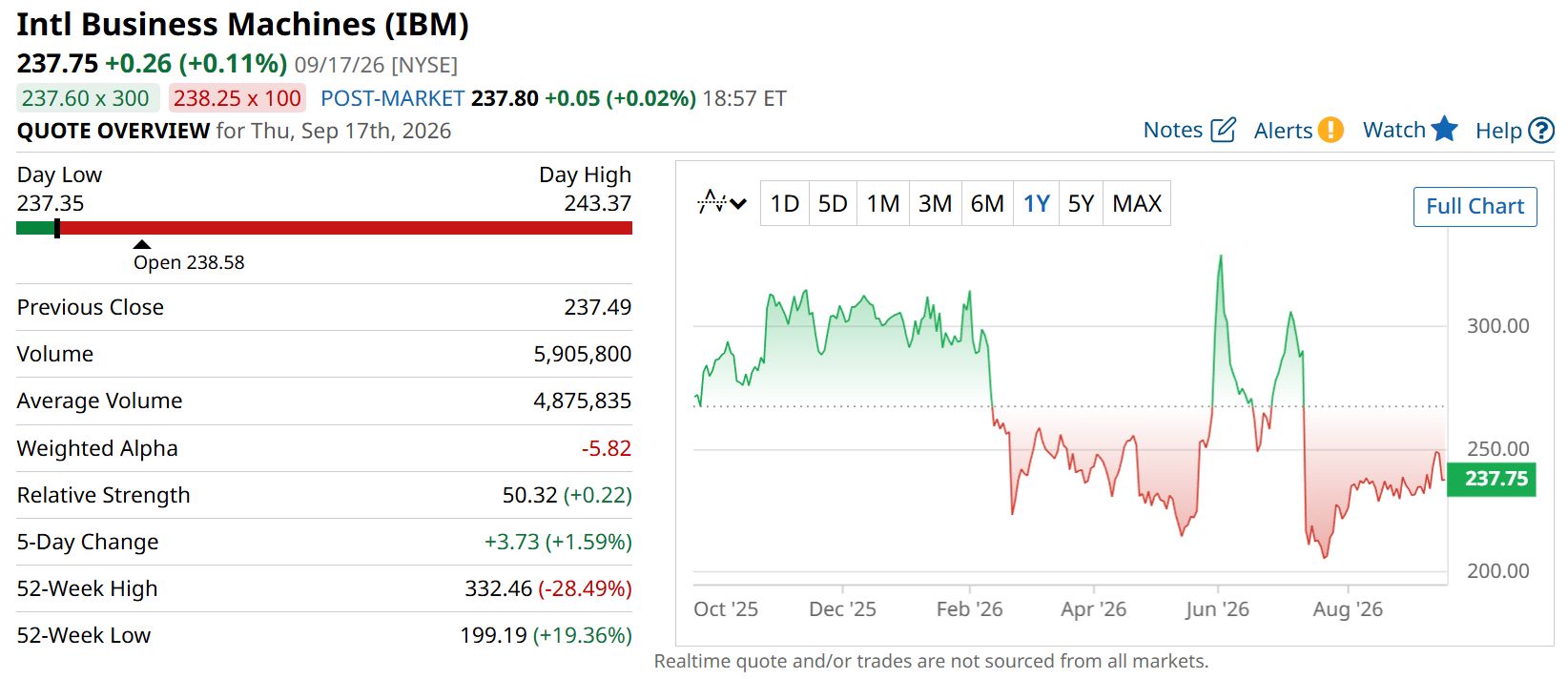 Screenshot courtesy of www.barchart.com
 International Business Machines is one of the oldest names in tech. At one point, IBM was almost synonymous with business technology, as its computers became a backbone for many large companies. It sold mainframes, business minicomputers, office equipment, and eventually personal computers.
In fact, during its heyday, the company held the position that Nvidia (NVDA) occupies today. It was that big.
But a lot has changed since then. After losing traction in the personal computer space and struggling to adapt to new software trends, the mighty "Big Blue" lost its spot and watched competitors capture the market share it once controlled.
Today, IBM is trying to make a comeback by repositioning itself in the new era of technology. The company’s software business is once again catching investors' attention, and Red Hat is a big reason why.
Red Hat gives IBM a better position in the hybrid cloud. Many companies run their applications across private systems and public clouds. Its OpenShift platform helps businesses integrate applications across these environments, which is becoming more important as large companies expand their AI workloads.
IBM is now taking that strategy a step further by combining Red Hat with its own AI tools and infrastructure. This gives the company a bigger role in helping businesses build and manage AI across increasingly complex IT systems.
That gives IBM a clearer path to growth, but the real test is whether that strategy is translating into stronger financial performance.
Why Did IBM Stock Fall?
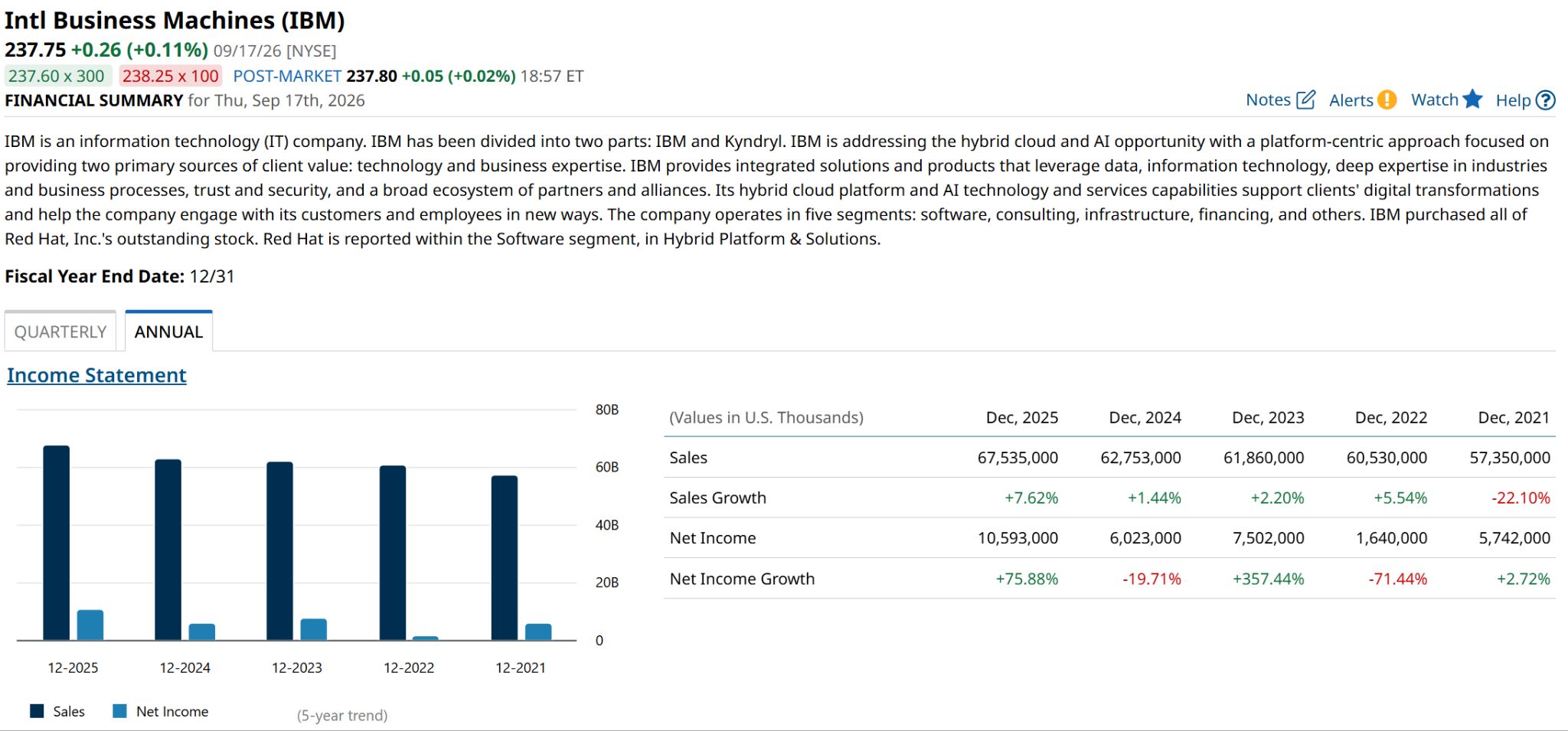
Let’s start with IBM’s annual performance snapshot.
 Screenshot courtesy of www.barchart.com
 So far, it’s been looking good. Revenue grew around 8% in its latest annual report, while net income has improved significantly by 76%.
 Screenshot courtesy of www.barchart.com
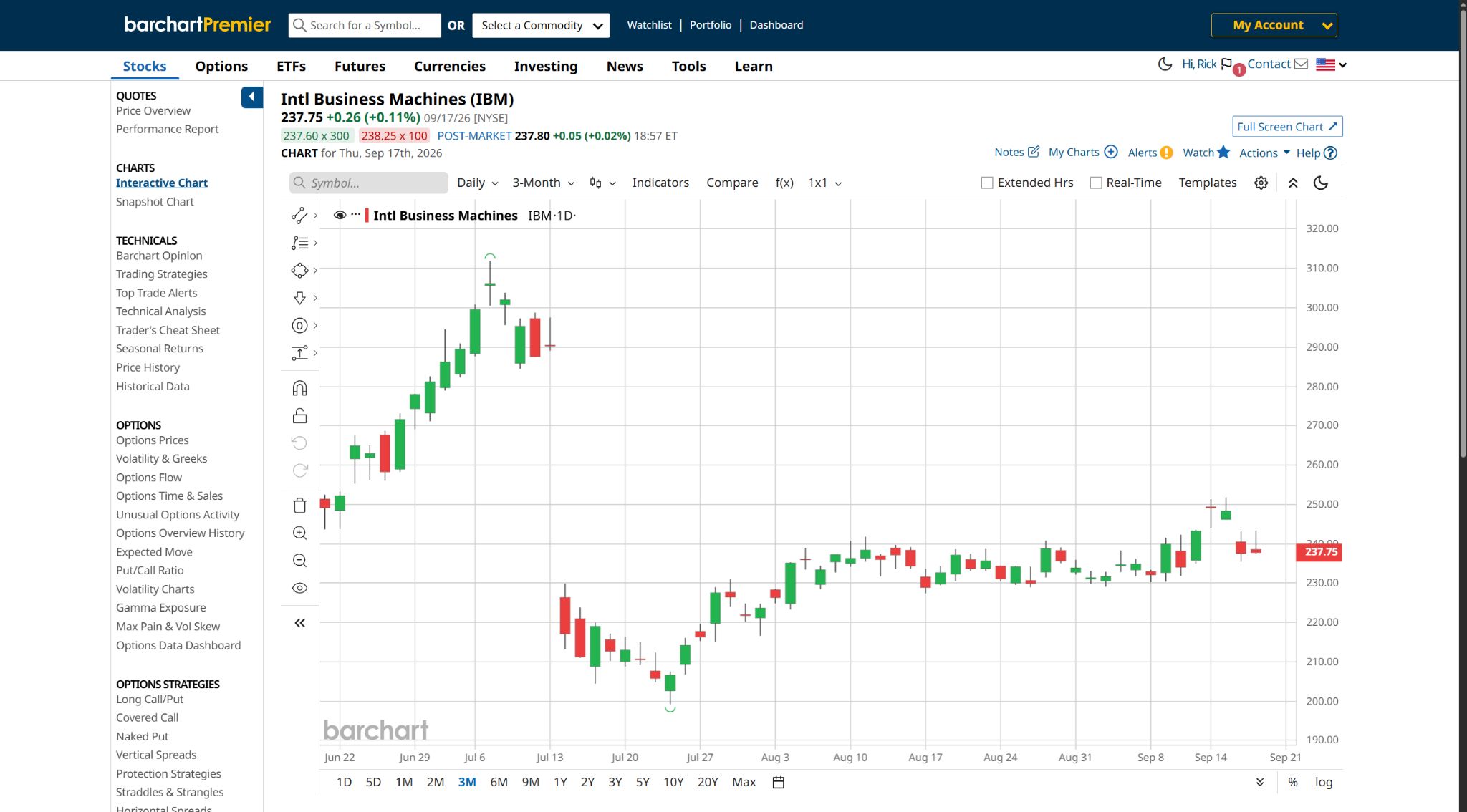
 However, the chart above shows a massive sell-off around July 2026, and the reasons are in the company’s 10-Q for the second quarter of 2026.
First, IBM expected a year-over-year decline because the z17 mainframe launch back in June 2025 set the bar too high. But it was worse than expected, as Infrastructure segment revenue and segment profit fell 7.4% and 13.4%, respectively.
Second, management admitted that several large deals didn’t close on schedule, while some clients have shifted spending toward servers, storage, and memory to lock in supply-constrained hardware before expected price increases. That helped IBM's Distributed Infrastructure business, which grew 37% for its best quarter on record, but it pulled money away from the more lucrative mainframe deals.
Overall, management says that Q2 performance was “below their expectations," disappointing market experts. And so, the stock fell more than 25% after the report.
But the recovery case isn’t entirely gone.
Why IBM’s Recovery Narrative Is Still Intact
According to management, the Q2 problems stem from deal timing and its own execution.
Crucially, the clients that are paying for its services are still there. IBM’s business is built around large enterprises that often have lengthy sales cycles, complex deployments, and multiyear technology commitments. So as long as those relationships remain intact, revenue recovery will be a matter of time. Right now, it’s just being shuffled further out in the year.
And, again, Red Hat remains a big part of this recovery strategy. OpenShift helps IBM compete in hybrid cloud, while its AI tools give customers another reason to keep using the company's services.
So, yes, this quarter’s optics were bad, but it could be worse, and the recovery narrative is still in play as long as IBM can turn its existing customer relationships and AI and cloud businesses into real revenue growth. Ultimately, this quarter is either just a temporary speed bump or a sign of things to come. We’ll have to see.
The Dividend Growth Case for IBM
IBM's recovery may still be uneven, but the dividend gives investors something more consistent to work with.
The company pays a forward annual dividend of $6.76, which translates to a current forward yield of approximately 2.72%. But its dividend payout ratio is only around 55%, meaning just over half of its earnings go to dividends, leaving plenty of room for reinvestment and dividend growth.
Speaking of dividend growth, the company has raised its dividends for 31 consecutive years, making it a Dividend Aristocrat and giving income investors a long track record of growing payouts. Overall, the company’s consistent shareholder returns add another layer to IBM’s comeback story, especially as the rest of the business continues to find its footing.
Wall Street Rating and Valuations
Based on the numbers, even Wall Street is taking IBM’s recovery more seriously.
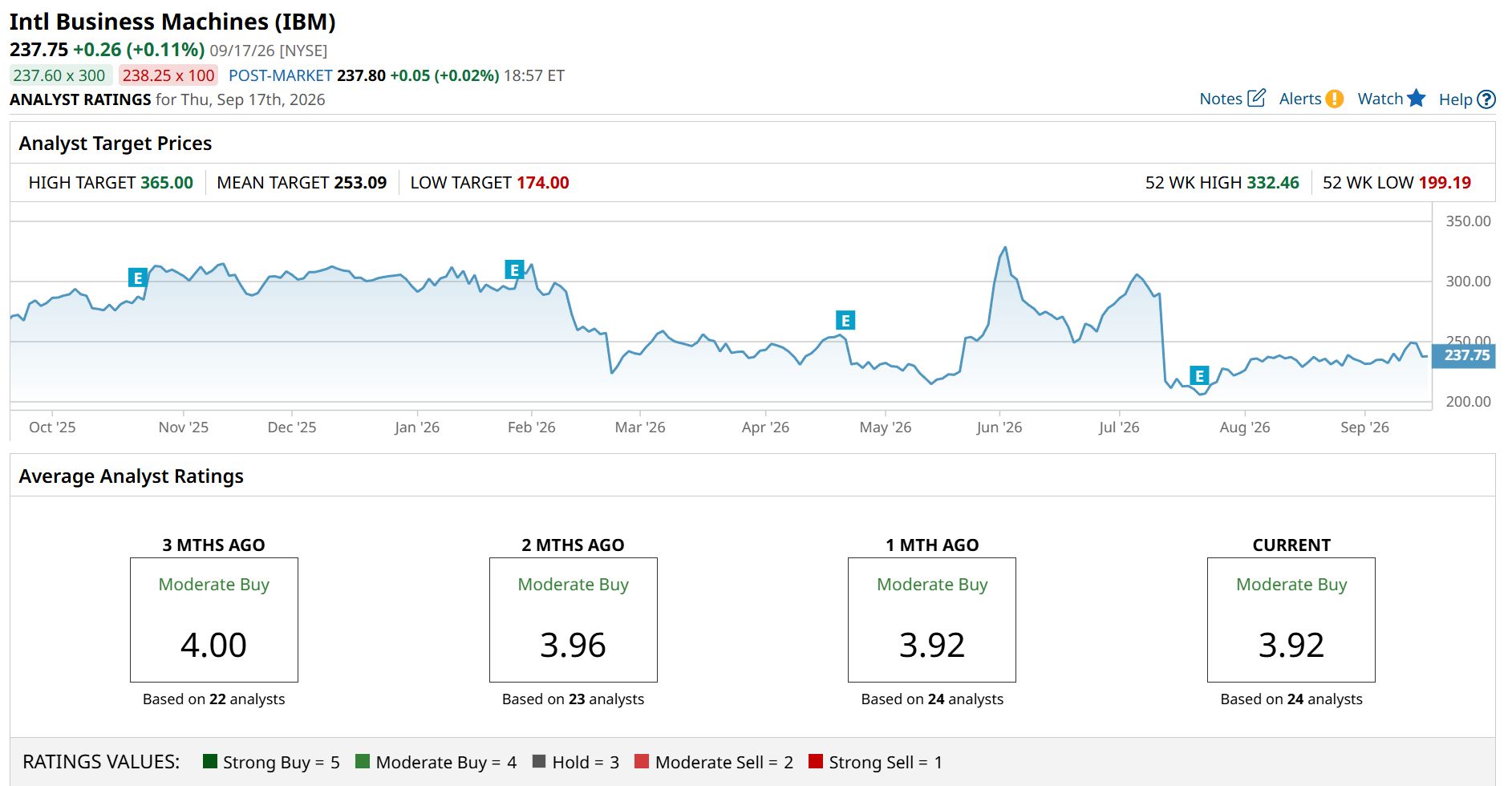 Screenshot courtesy of www.barchart.com
 A consensus among 24 analysts rates IBM stock a “Moderate Buy”, with as much as 54% upside over the next year. Even through the Q2 crash, analysts have maintained an overall buy rating, meaning they see the recent setbacks as temporary.
Better yet, IBM stock is now trading at just 20x forward price-to-earnings. Compared with the sector median of 28x, IBM looks cheap.
Final thoughts
IBM’s comeback still needs time to play out, but the case for owning it is becoming increasingly interesting. The company is rebuilding around areas where it already has deep relationships with large businesses and where demand is still growing. That’s a viable business model, and one that can sustain tremendous growth if everything plays out right.
That makes IBM a fascinating recovery story to watch. If the company can keep improving without losing its income appeal, the stock could become increasingly difficult for investors to ignore.
On the date of publication, Rick Orford did not have (either directly or indirectly) positions in any of the securities mentioned in this article. All information and data in this article is solely for informational purposes. For more information please view the Barchart Disclosure Policy here.
More news from Barchart
IBM Once Held Nvidia's Spot as Tech's Biggest Name. The Stock Just Crashed 25%. Here's the Comeback Case. Why DataMEDS’ Acquisition Does Not Seem to Be Very Bullish for MEDS Stock at This Point This Analyst Just Downgraded Array Technologies. Here's Why. Coinbase Leads Crypto Stocks Higher as Bitcoin Crosses $80,000