


The obesity-drug market is now moving to a much more complicated phase. The first major battle was largely fought between two obesity injectable GLP-1 drugs, Eli Lilly's (LLY) Zepbound and Novo's (NVO) Wegovy. But this next round is increasingly becoming about oral treatments, higher-dose formulations, and next-generation drugs that could extend the market well beyond today's blockbuster therapies.
For investors, it is no longer simply about which company sells the most weight-loss injections now. It is about which business has the stronger chance of winning the next phase and benefits investors over the long haul.
More Top Stocks Daily: Go behind Wall Street’s hottest headlines with Barchart’s Active Investor newsletter.
The Case for Novo (NVO)
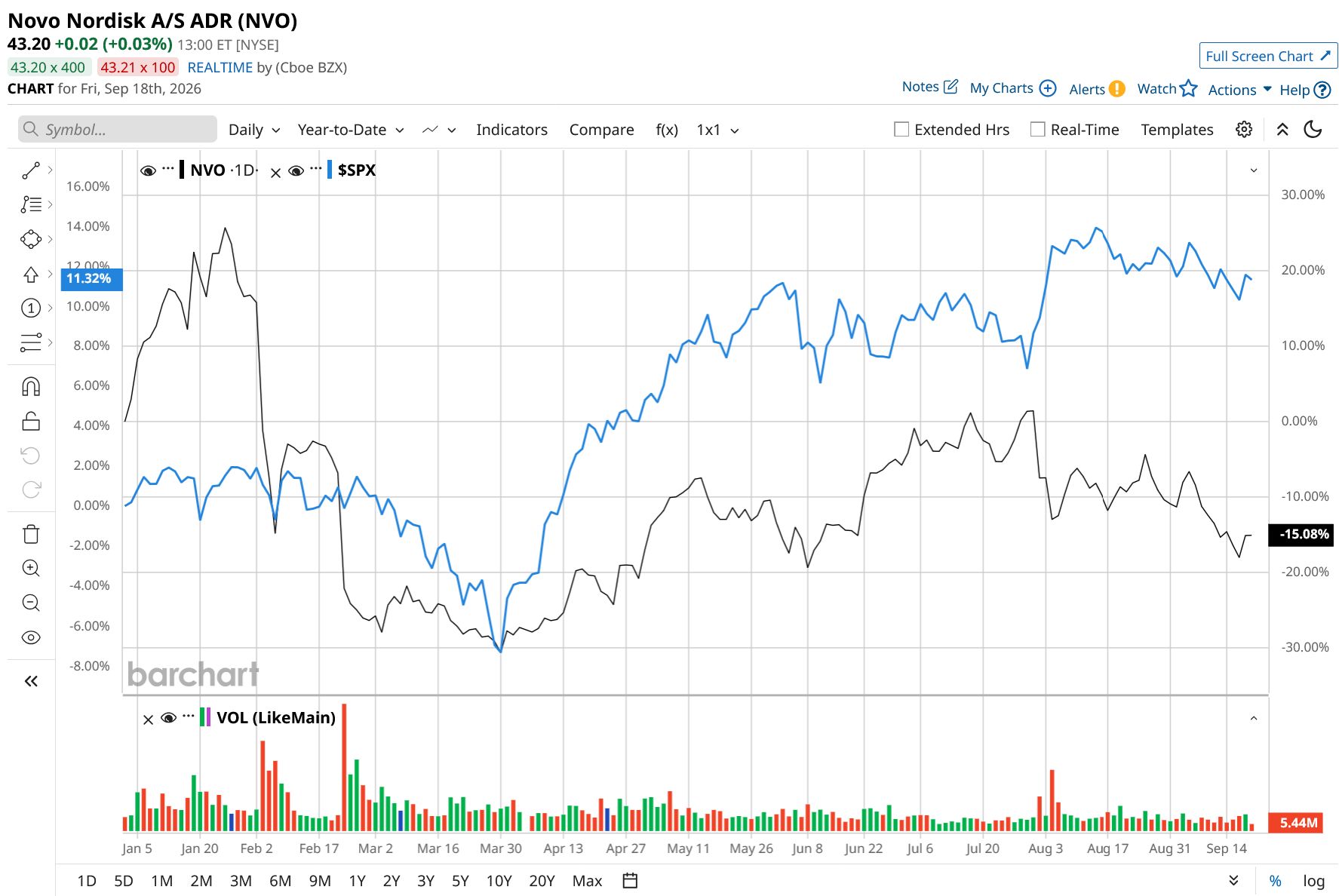
Novo, which recently rebranded dropping the “Nordisk” in its name, had built one of the world's most recognizable obesity franchises before Eli Lilly even entered the market with Zepbound. The company now serves over 46 million people with obesity and diabetes. As of second quarter, the company said it is treating almost 70% more people with obesity than it did a year earlier.
 www.barchart.com
 The Wegovy pill is the centerpiece of Novo's growth story. Just within six months of U.S. launch, the company had surpassed 5 million prescriptions. Wegovy also maintained around 60% market share based on new patient prescriptions in July. In the second quarter, international GLP-1 sales grew 13%, while the obesity franchise grew 37%.
Nonetheless, the financial picture is where Eli Lilly has an edge over Novo. In the second quarter, Novo’s adjusted sales rose 7% to DKK 78.5 billion. Yet, adjusted gross margin declined to 78.2% from 82.7% a year earlier. Novo is responding by cutting costs and redirecting resources toward growth. The company said it was already ahead of schedule on its plan to generate DKK 8 billion in savings through workforce reduction.
In the obesity race, Novo also has a meaningful pipeline. CagriSema, an injectable medication, produced a 15.2% weight loss and a 1.9-percentage-point A1C reduction at 68 weeks in the REIMAGINE 4 head-to-head study against 15-milligram tirzepatide. Novo now expects a U.S. decision on CagriSema in obesity at the end of 2026, with a potential launch in 2027.
While demand remains huge for Novo’s obesity treatments, its short-term remains under pressure. Novo cited intensifying competition, lower realized prices, reduced Medicaid obesity coverage, and the impact of its agreement with the U.S. administration as factors affecting the U.S. outlook for fiscal 2026. It doesn’t make Novo’s long-term case unattractive, but while Novo is trying to restore growth, Lilly is using its exceptional growth to fund the next generation of products.
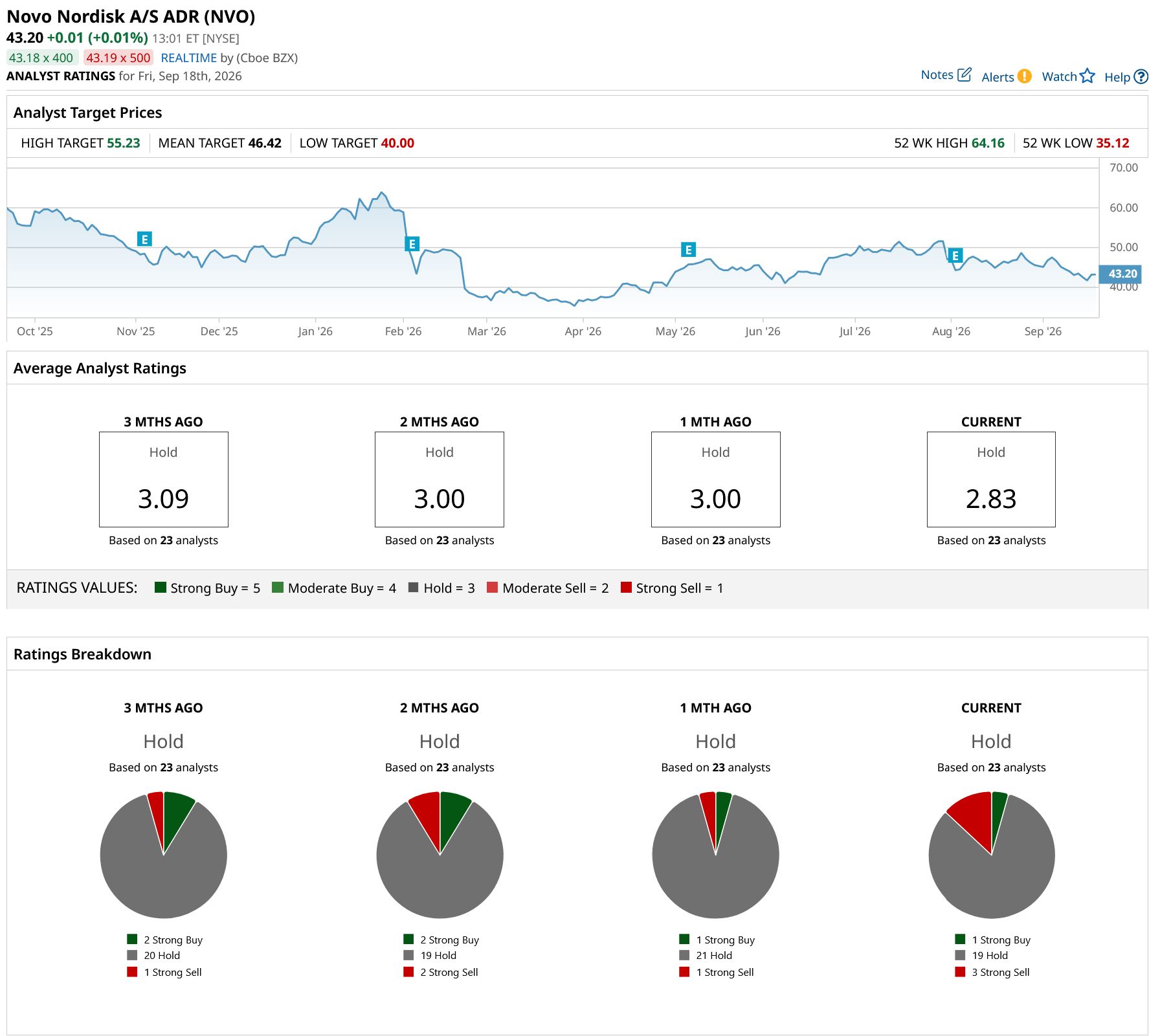
On Wall Street, NVO stock has a consensus “Hold” rating. Of the 23 analysts who cover NVO, one rates it a “Strong Buy,” 19 rate it a “Hold,” and three say it is a “Strong Sell.” The average analyst price target of $46.42 suggests a 7% increase from current levels. Furthermore, the Street-high estimate of $55.23 implies that the stock could rally by up to 28% over the next year.
 www.barchart.com
 The Case for Eli Lilly (LLY)
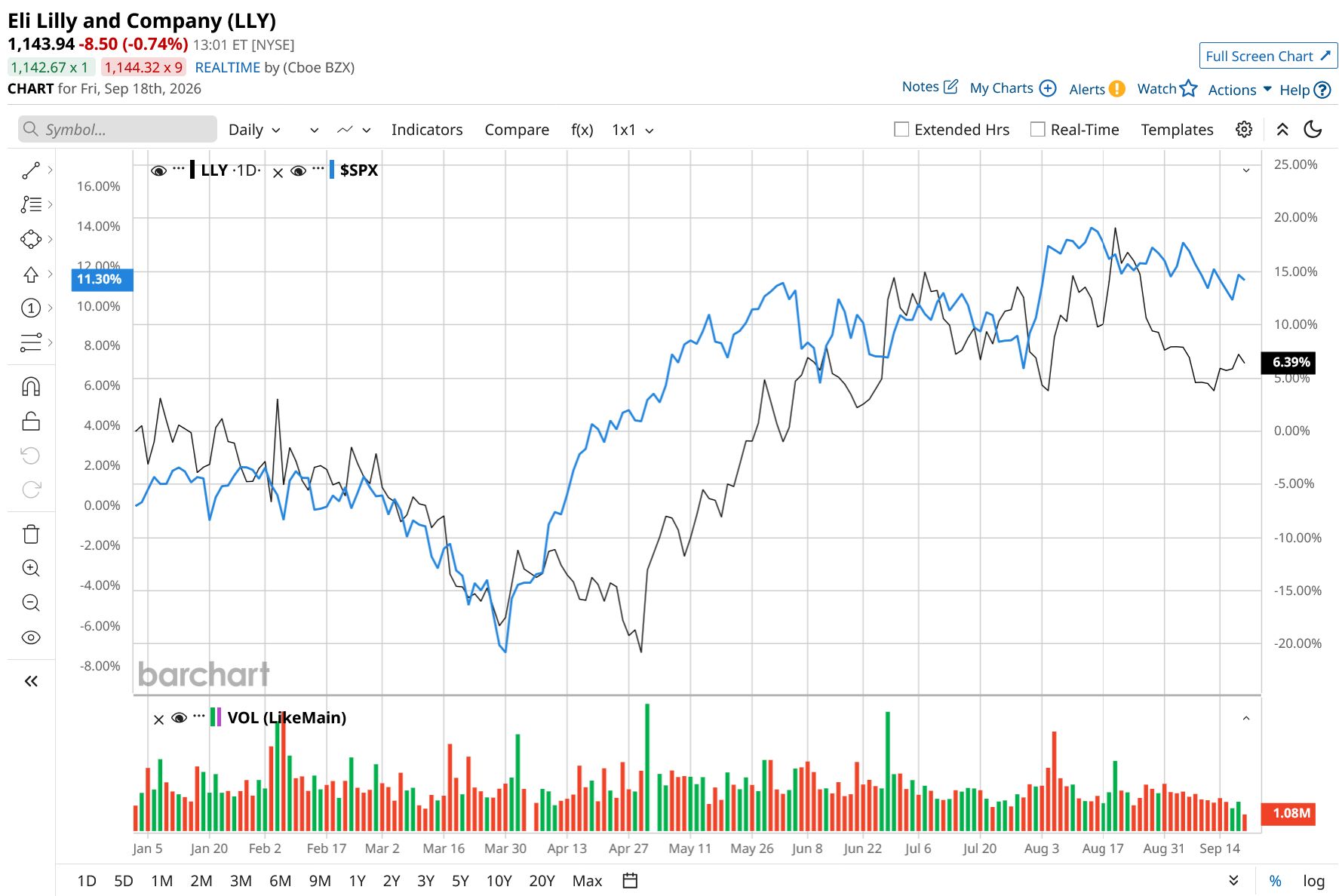
Eli Lilly’s strongest argument starts with its numbers. In the second quarter, the company generated 48% year-over-year (YoY) growth in revenue to $23 billion. Mounjaro and Zepbound, its two obesity drugs, together contributed roughly $15 billion in revenue. Total prescriptions for obesity incretin drugs increased 78% in Q2 from the prior year. According to management, Lilly medicines accounted for roughly 60% of all prescriptions and about 70% of injectable prescriptions.
 www.barchart.com
 The U.S. incretin analog market itself grew 31%. In other words, the injectable market remains enormous even as oral treatments begin to emerge. And Lilly has exposure to both parts of that transition. Lilly's oral GLP-1 Foundayo launch has been progressing well. Lilly expects a global rollout in 2027. The biggest reason to trust that Lilly’s long-term case is stronger is retatrutide, which is not merely another formulation of an existing obesity drug. Instead, it marks a different stage in incretin development, as it is a triple agonist that targets 3 pathways: GLP-1, GIP, and glucagon. Lilly reported positive Phase 3 results across three trials covering obesity, obesity with type 2 diabetes, and severe obesity with preexisting cardiovascular disease. Management said the highest retatrutide doses produced weight-loss results approaching levels seen with bariatric surgery. The company plans to submit the drug in the U.S. in the first quarter of 2027.
That said, Lilly’s long-term investment case is not exclusively tied to obesity, even though obesity and diabetes currently provide the most visible growth. The company also has 40 active Phase 3 programs in its broader pipeline. Lilly's gross margin reached 86.3%, while its adjusted earnings per share (EPS) climbed 33% YoY to $8.38. The company raised its 2026 revenue outlook to a new range of $85 billion to $87 billion and adjusted EPS to land in the range of $35.50 to $36.50. Although the company is generating robust revenue and earnings growth, it hasn’t stalled its pipeline. Lilly continues to spend aggressively to support new launches and expand its pipeline rather than simply harvesting its existing products.
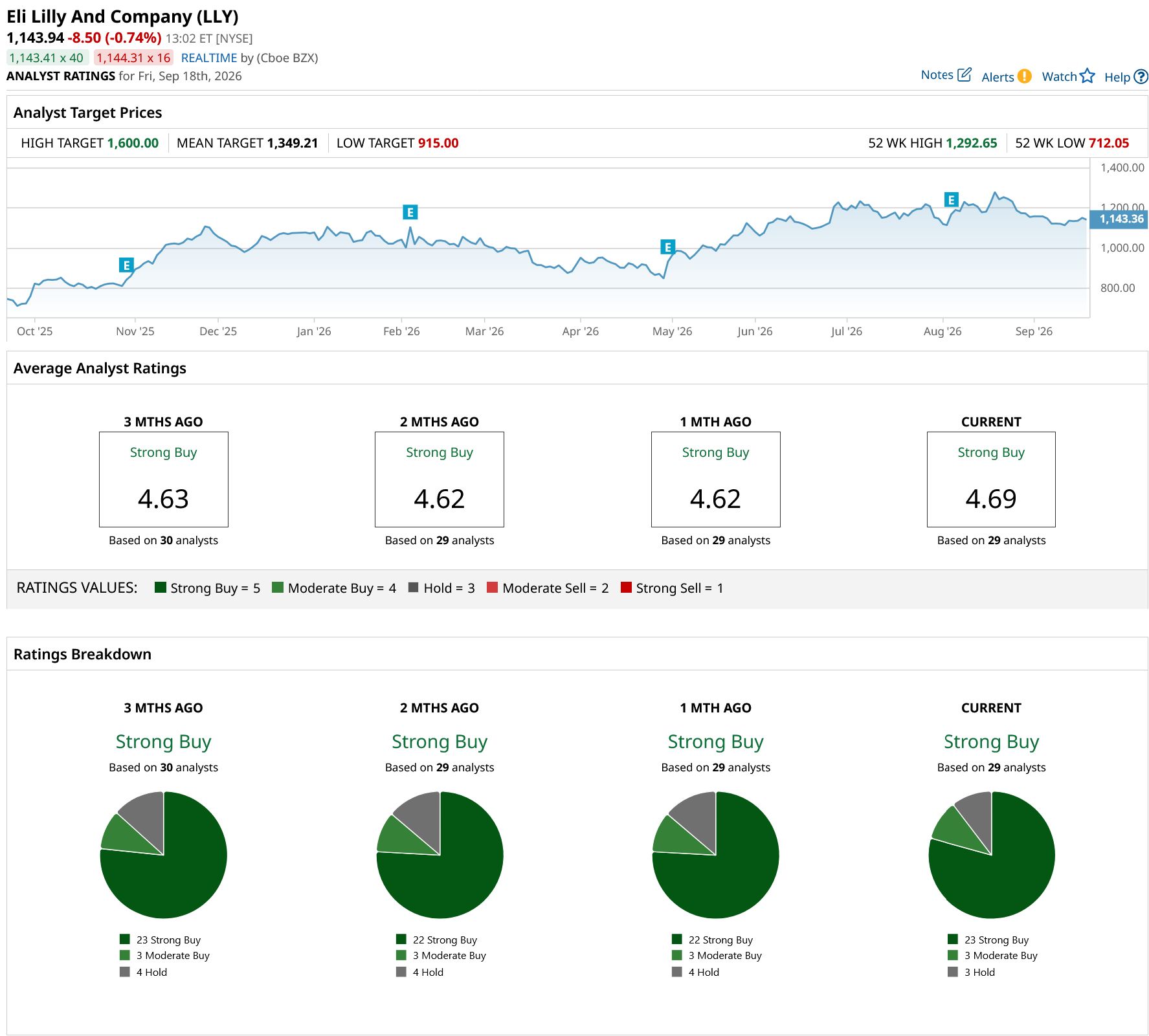
On Wall Street, LLY stock has earned a consensus “Strong Buy” rating. Of the 29 analysts who cover the stock, 23 rate it a “Strong Buy,” three rate it a “Moderate Buy,” and three recommend a “Hold.” The average analyst price target of $1,349.21 suggests an 18% increase from current levels. Furthermore, the Street-high estimate of $1,600 implies that it could rally by up to 40% over the next year.
Which Is the Better Long-Term Buy?
Overall, for the long term, Eli Lilly has the more compelling case. Mounjaro and Zepbound are already generating tremendous growth, while oral Foundayo and retatrutide could be the next major growth engine. Above that, Lilly has another 40 active Phase 3 trials in the pipeline. The cherry on the top is, besides the stronger growth-and-pipeline story, Lilly is also a dividend stock with an 11-year track record of dividend growth.
 www.barchart.com
 On the date of publication, Sushree Mohanty did not have (either directly or indirectly) positions in any of the securities mentioned in this article. All information and data in this article is solely for informational purposes. For more information please view the Barchart Disclosure Policy here.
More news from Barchart
Eli Lilly vs. Novo: The Obesity-Drug Battle Is Entering Its Next Round U.S. Stock Futures Climb as Oil Falls, Optimism Builds Ahead of Trump-Xi Summit Apple Wants to Enter the AI Inference Market. It Will Have to Swallow Its Pride First. A Longtime Bear on FuelCell Energy Stock Just Turned Bullish. Here’s What Changed.