

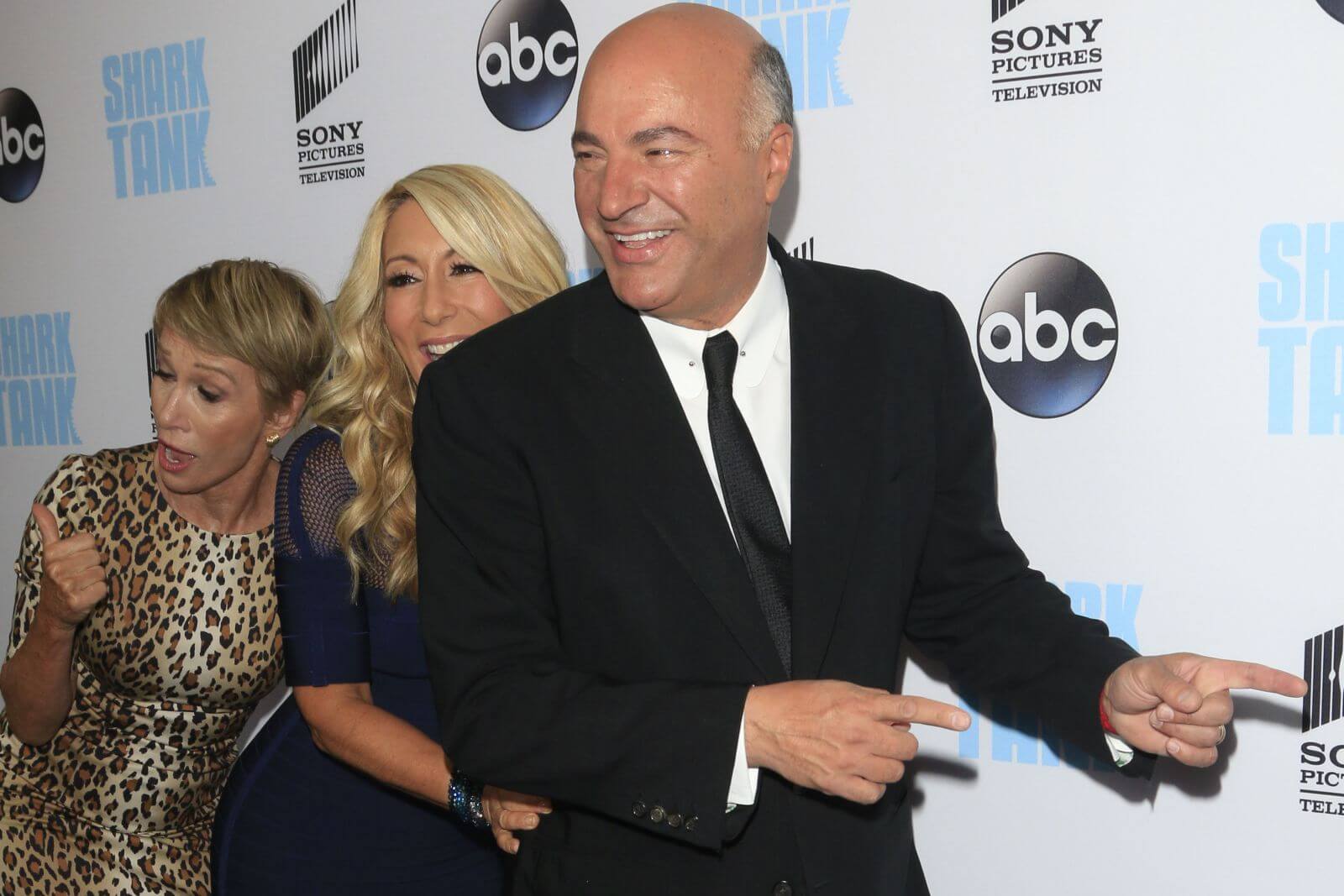
“If you make $68,000 a year, the average salary, and you do this your entire life, just 15% of your paycheck, you'll end up a millionaire at retirement at 65,” Kevin O'Leary said in an Instagram video Fortune reported in March. It is the kind of claim that invites a reality check, and most of the ones published since have checked the wrong number.
His arithmetic is simple enough to verify in a line. Fifteen percent of $68,000 is $10,200 a year, or about $850 a month. Run that forward, and it's roughly $5.3 million at a 10% annual return and roughly $2.2 million at 7%. The $68,000 is an approximation rather than an official statistic, and Fortune notes national estimates for an average salary run from about $66,000 to $69,000.
More Top Stocks Daily: Go behind Wall Street’s hottest headlines with Barchart’s Active Investor newsletter.
The objection every outlet has raised is affordability, and it is a fair one. O'Leary has his own answer on the record. “The best piece of advice I can give anybody: don't buy stuff you don't need. Invest it instead,” he said, and of the habit itself: “Don't spend it. Save it. Invest it. Let it compound. That's the gift the market gives you.” For context, the U.S. personal saving rate was 3% of disposable income in July 2026, so 15% is roughly five times what Americans currently save on average.
Sponsored Content: The Flying Car Market Could Reach $9 Trillion — Here’s One Way to Invest Early
The number nobody has tested is the return. Ten percent is a long-run average, and no saver actually receives the average. They receive whatever the forty years they happen to live through hand them. So Barchart ran his exact prescription, $850 a month, through the real record rather than an assumption.
The method: $850 invested at the start of every month into the S&P 500 with dividends reinvested, using the annual total-return series maintained by NYU Stern's Aswath Damodaran, converted to a monthly equivalent within each calendar year. This gives 59 complete forty-year windows, from 1928 through 1967 to 1986 through 2025. The total contributed in each case is $408,000. Because the series is annual, within-year timing is smoothed rather than exact, and every figure below is nominal and before tax or fees.
The result isn't what the framing of this piece would lead you to expect. All 59 windows cleared a million dollars, and none of them came close to failing. The worst forty-year stretch on record, 1935 through 1974, finished at about $4.11 million. The second worst, 1969 through 2008, was about $4.38 million. The median window produced about $6.33 million; the best, 1960 through 1999, produced about $12.22 million; and the most recent complete forty years, 1986 through 2025, produced about $6.15 million. Against Fortune's $5.3 million at a flat 10%, the actual record sits comfortably above it more often than below.
The reason is that the assumption is sturdier than it sounds. Even the worst forty-year window compounded at about 9.68% a year once dividends are counted, which is within a point of the figure he is implicitly using. The much-quoted long-run number, 10.69% a year nominal with dividends reinvested since 1957, is less a rosy estimate than a description of a range that has been narrow over spans this long.
What does not survive contact is purchasing power. All of the above is in the dollars of the year the window ends. A 25-year-old starting today finishes in 2066, and at 3% annual inflation a dollar then is worth about 31 cents now. On that assumption, the median $6.33 million becomes roughly $1.94 million in today's money, and the million-dollar target itself becomes about $307,000, which is a comfortable retirement rather than the word the headline uses. That is Barchart's illustration on a stated inflation assumption, not a forecast.
The other fragile part is behavioral, not mathematical. Forty years without a gap requires never pausing through a layoff, a divorce, a medical bill, or a house, and never selling in the two windows above that included 1974 and 2008. O'Leary himself is an imperfect advertisement for spending restraint, having told an interviewer he rotates a collection of watches worth close to $1 million, and he has also publicly revised a judgment he got wrong about Tesla (TSLA).
On the arithmetic, though, the record is on his side, and by a wider margin than he claimed. The rule doesn't require a market that cooperates. It is forty years of a person who does.
On the date of publication, Caleb Naysmith did not have (either directly or indirectly) positions in any of the securities mentioned in this article. All information and data in this article is solely for informational purposes. For more information please view the Barchart Disclosure Policy here.
More news from Barchart
‘Don’t Spend It. Save It. Invest It. Let It Compound’: Kevin O’Leary’s Millionaire Rule Needs $850 a Month, and the Worst 40 Years on Record Still Produced $4.1 Million Trump's Former AI Czar David Sacks Slams A New York Bill That Will Cost Families '$664 More Per Year' According to a Group Amazon Gave $5 Million Big Tech Needs Power. Constellation Just Found a $1 Billion Buyer in Google. Uber’s ezCater Acquisition Looks Like a Smart Move to Diversify Revenue Streams