

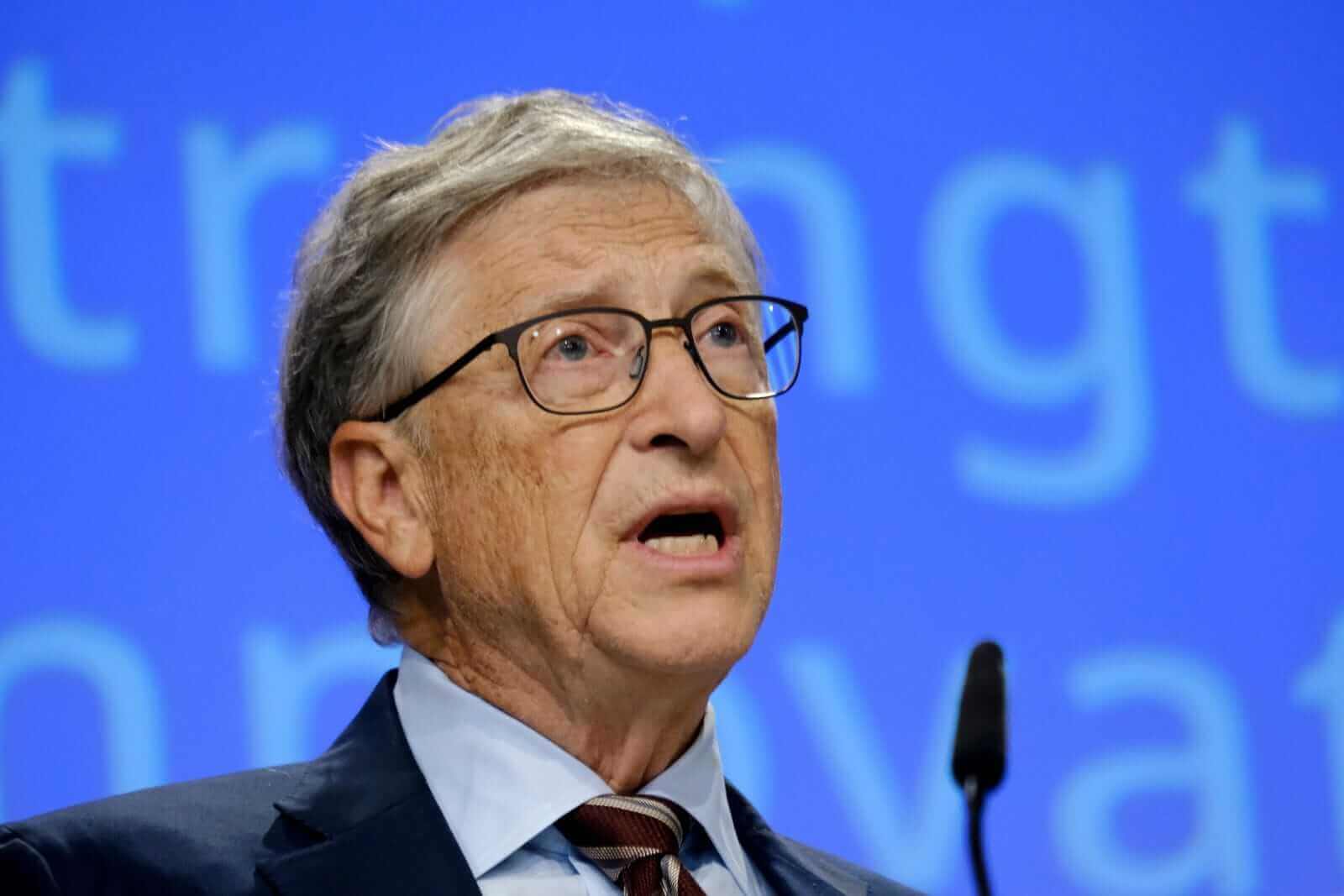
On stage at the New York Times DealBook conference, Bill Gates was asked about Elizabeth Warren's wealth tax and answered by pointing to his own ledger. "I've paid over $10 billion in taxes. I've paid more than anyone in taxes," the Microsoft (MSFT) co-founder told interviewer Andrew Ross Sorkin. "If I had to pay $20 billion, it's fine. But when you say I should pay $100 billion, then I'm starting to do a little math about what I have left over." He added, a beat later: "Sorry, I'm just kidding."
The joke had a target. Warren was then running for the Democratic presidential nomination on an "Ultra-Millionaire Tax": a 2% annual levy on household net worth above $50 million, with a top rate she had raised that same month to 6% on fortunes above $1 billion to help pay for Medicare for All. Gates said he was not going to "make political declarations," and then made one anyway about the senator herself: "I'm not sure how open-minded she is. Or that she'd even be willing to sit down with somebody who has large amounts of money."
More Top Stocks Daily: Go behind Wall Street’s hottest headlines with Barchart’s Active Investor newsletter.
Sponsored Content: A $9 Trillion Flying Car Market Is Taking Shape. This Company Is Open to Investors.
Warren answered the next morning on Twitter. "I'm always happy to meet with people, even if we have different views," she wrote. "@BillGates, if we get the chance, I'd love to explain exactly how much you'd pay under my wealth tax. (I promise it's not $100 billion.)"
She was right about the $100 billion, at least on the first year's bill. Forbes and Bloomberg estimated Gates's fortune in November 2019 at around $107 billion. At a 6% top rate, Barchart's arithmetic puts the first annual payment near $6.4 billion, and the taxable fortune would shrink each year after that. At that pace, it would have taken well over a decade to reach the $100 billion he floated, before counting any investment gains on what remained. That is an estimate on a plan that was never enacted, and it is only as good as the net-worth figure it starts from.
The number Gates eventually chose to part with was larger than either of the ones he had joked about. On May 8, 2025, in a post on his Gates Notes blog titled "The last chapter of my career," he announced that the Gates Foundation would spend about $200 billion over the following two decades and close its doors on December 31, 2045. "People will say a lot of things about me when I die, but I am determined that 'he died rich' will not be one of them," he wrote. He said his own net worth would fall by 99% by the closing date. Bloomberg's Billionaires Index put that net worth at $108 billion the day of the announcement.
The two numbers sit uneasily next to each other, and Gates has not tried to reconcile them in public. One was a tax, set by a legislature, collected on a schedule he did not choose. The other is a gift, on his own timetable, through a foundation he controls, to causes he picked. He has also said the tax side of the ledger should be heavier. At the end of 2019, weeks after the DealBook exchange, he wrote on Gates Notes that he believed he should have paid more in taxes than he did, and set out the changes he would support, including taxing capital gains at the same rate as ordinary income and a stronger estate tax.
The wealth-tax idea Warren was campaigning on did not die with her campaign. It has moved to the states, and the reaction from the people it would touch has not softened. When California proposed a wealth tax on its billionaires, Coinbase (COIN) chief executive Brian Armstrong called it the kind of thing third-world countries do and said he might leave the state. Gates, who stepped down from Microsoft's board in 2020 and has no operating role at the company, has not weighed in on the state proposals.
What he did say, in 2019, has aged into a kind of price list. Ten billion paid. Twenty billion fine. One hundred billion is where the math starts. Instead, he chose to do the math on his own schedule, and 99% of the fortune is gone.
On the date of publication, Caleb Naysmith did not have (either directly or indirectly) positions in any of the securities mentioned in this article. All information and data in this article is solely for informational purposes. For more information please view the Barchart Disclosure Policy here.
More news from Barchart
Domino's Pizza Releases Earnings Pre-Market on Tuesday, Oct. 13 - What's the Best DPZ Play? How Broadcom’s $42 Billion ‘Loan’ to Anthropic Is a Bet on a $2 Trillion IPO Dear Johnson & Johnson Stock Fans, Mark Your Calendars for October 13 ‘When You Say I Should Pay $100 Billion, Then I’m Starting To Do A Little Math’: Bill Gates Said He’d Happily Pay ‘Over $10 Billion In Taxes’ But Some Are Asking Too Much