


On October 19, 1987 I, along with the rest of the world, watched US stock markets fall like never before, a key turning point for yours truly.
Fast forward 39 years, and the focus is on the big three autocrats divvying up the rest of the world.
Don’t Miss a Day: From crude oil to coffee, sign up free for Barchart’s best-in-class commodity analysis.
Grains were generally quiet early Monday morning with clear harvest weather expected for another day.
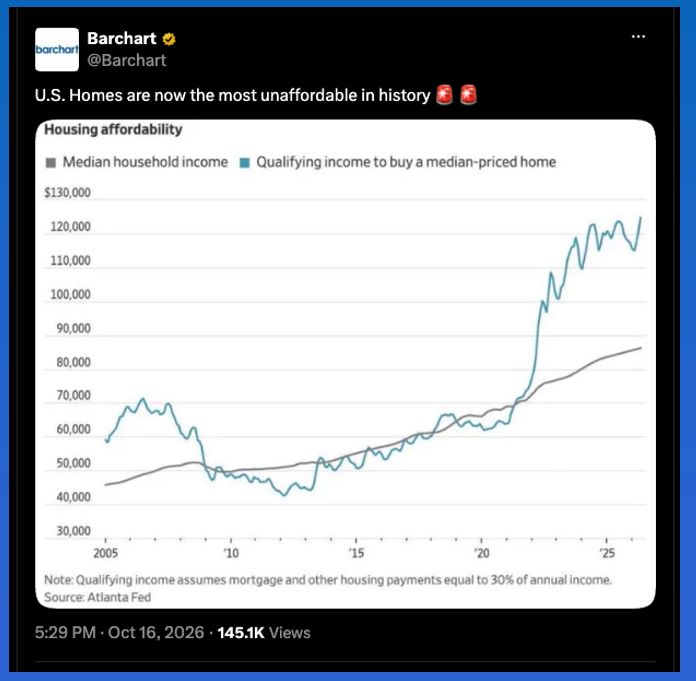
Morning Summary: Somehow we made it through the weekend to Monday morning, meaning the US president did not hit the nuclear launch code – at least not that I’ve heard or seen – and that we can take a moment or two to remember Black Monday 1987. That’s right, we made it to October 19, 2026 (somehow), the 39-year anniversary of the day the Dow Jones plunged 508 points, or 22.6%, what “remains the largest single-day percentage decline in U.S. stock market history – surpassing even the crash of 1929”. As for today’s markets, the lead headline on the financial news page won’t surprise anyone who has stuck with me this past decade, “Putin reportedly proposes three-way summit with Trump and Xi on Ukraine war – without Zelenskyy”. And there it is. Three autocrats – or as I’ve called them in past The Three Amigos – continuing their plan to divvy up the world as best they can amongst themselves, reaping the riches along the way. I also want to mention a social media post by Barchart from this weekend that read, “U.S. homes are now the most unaffordable in history”. Does this mean the U.S. has been made great again? It’s getting hard to tell.
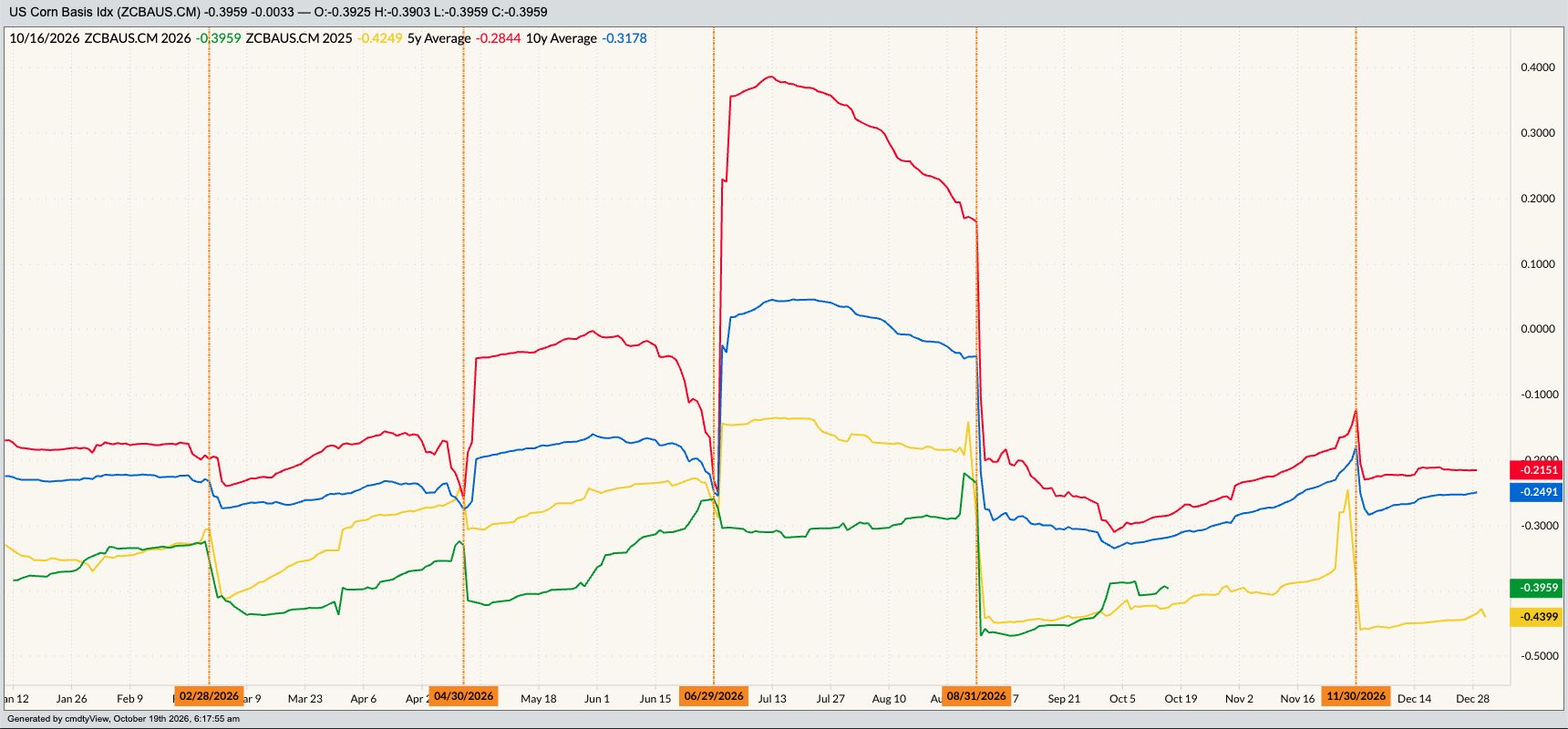
Corn: The corn market was quietly lower overnight through early Monday morning. The December issue (ZCZ26) posted a trading range of 2.0 cents, all of it below unchanged, on trade volume of 20,000 contracts and was sitting 1.5 cents in the red at this writing. The overnight low was $4.72 as Dec crept closer to its post-USDA Keno game mark of $4.7025, challenging the technical analysis conclusion that Dec26 is in the process of moving to a short-term uptrend. The path could be made more difficult by a favorable harvest forecast for Monday (slide 5). As Ben drove south from Omaha to Kansas City Sunday afternoon he reported combines were running along the I-29 corridor/Missouri River Valley fast and furiously. He also mentioned he passed only one semi loaded with corn on interstate, with my interpretation being the newly harvested corn is being tucked away on-farm. We can see this with the trend of calculated full commercial carry covered by the Dec-March futures spread as it jumped from 48% on Friday, October 9 to 41% at last Friday’s close. On the other hand, national average basis remains weak meaning there is still ample supplies being delivered to town to meet demand. As for funds, the latest Commitments of Traders report showed the noncommercial net-long futures position decreased by 94,100 contracts.
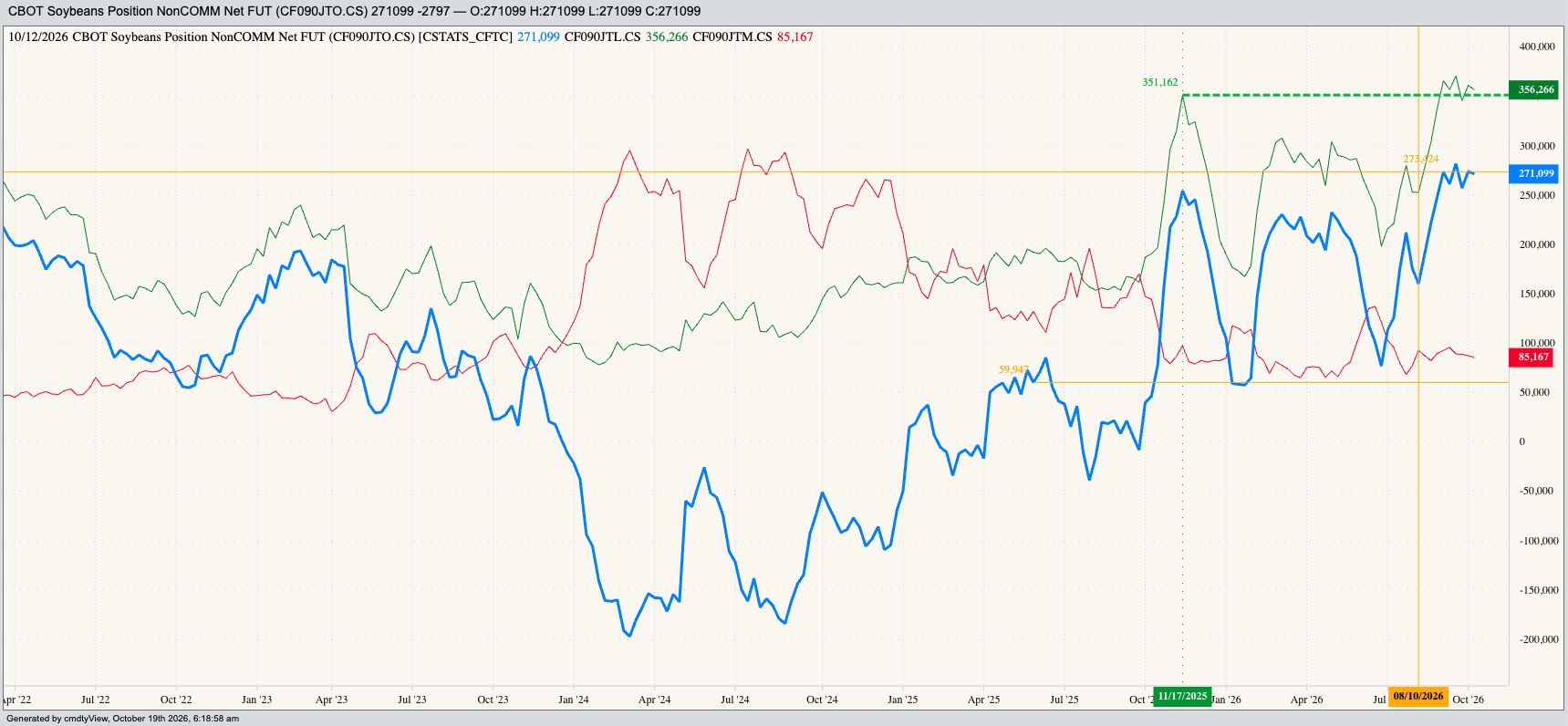
Soybeans: The oilseed sub-sector was mixed to start the week with canola and soybean oil in the red while soybean meal and soybeans showed small gains pre-dawn. One of the things Ben and I discussed as we watched Sunday night’s open was the pressure in the Energies sector despite increasingly damaging drone strikes by Ukraine on refineries in Russia. A look at the Energies sector early Monday shows all but natural gas in the red, with diesel fuel (HOX26) down 3.0 cents at this writing. Over in soybeans, the November issue slipped back to unchanged while the more heavily traded – by open interest – January issue (ZSF27) was up 0.75 cent. January gained and lost as much as 4.25 cents overnight on trade volume of 25,000 contracts. As for November, last Friday’s national average basis calculation came in at 60.0 cents under November futures as compared to the previous Friday’s final figure of 58.0 cents under with the previous 5-year average weekly close at 58.75 cents under November. On the noncommercial side, Friday’s Commitments of Traders report showed the net-long futures position to be 271,100 contracts, a decrease of 2,800 contracts but still within sight of the recent high mark of 281,580 contracts from Tuesday, September 22.
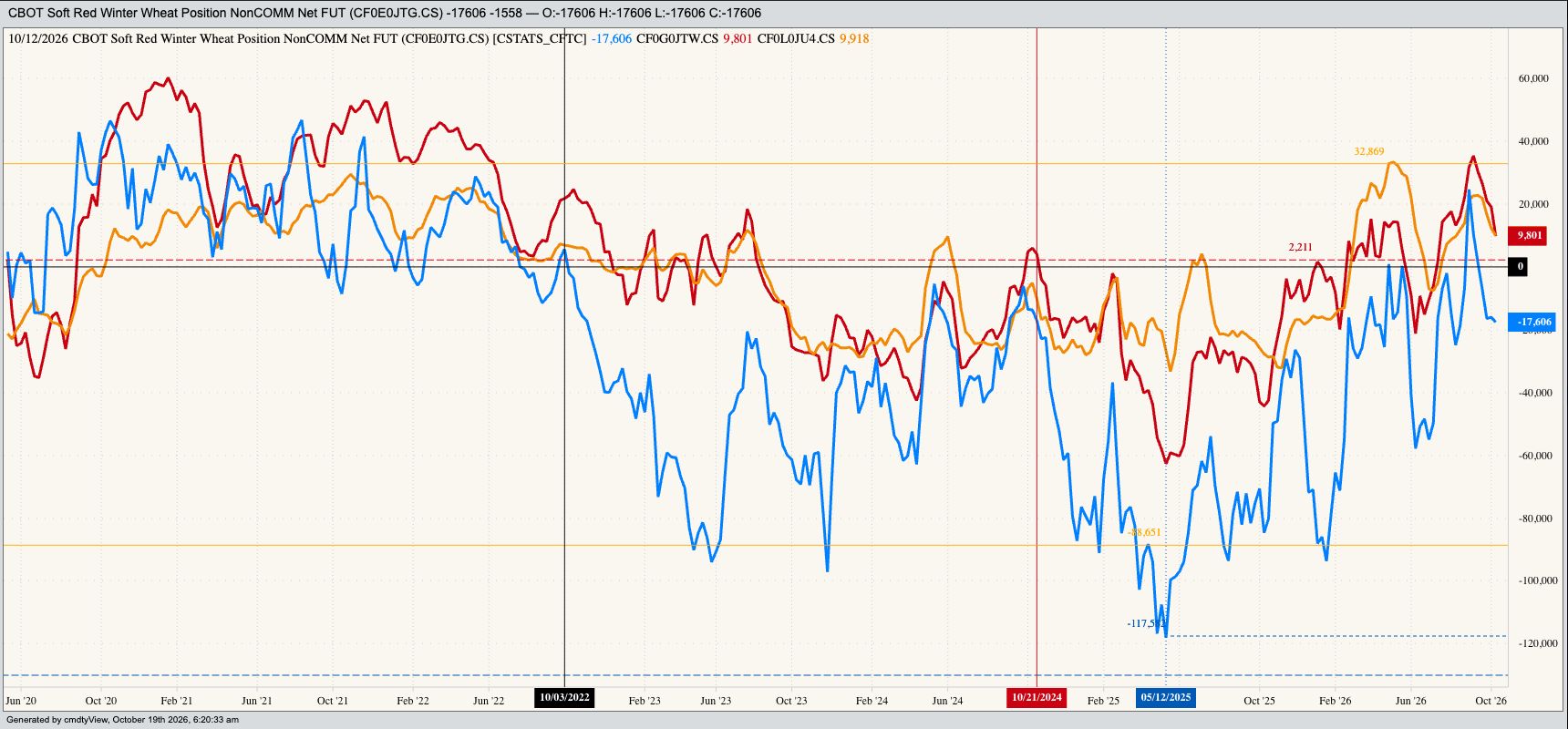
Wheat: And then there’s the wheat sub-sector, with all three markets in the green to start the day. What do I make of this? Nothing. It’s Monday morning, meaning there is a lot of week left until we get to Friday’s close. And we are talking about wheat, markets that could change direction half a dozen times by the time we get to intermission in a couple hours. Fundamentally wheat hasn’t changed much with the two winter market December-March futures spreads covering 60% (SRW) and 48% (HRW) calculated full commercial carry at last Friday’s close. The Dec-March HRS spread covered 57.5%. As for Watson, the latest Commitments of Traders report held now surprises with noncommercial net-long futures positions in HRW and HRS decreased by 9,270 contracts and 2,430 contracts respectively, while the net-short futures position in SRW increased by 1,560 contracts. If there was a number that stood out to me with all that, it would be HRW. Given the December issue (KEZ26) lost 44.0 for the previous Tuesday-to-Tuesday positioning week, I thought there might be a chance the noncommercial would be closer to par than the reported 9,800 contracts. As for SRW, the 17,600 contracts were the largest net-short since 18,765 contracts on August 18.
On the date of publication, Darin Newsom did not have (either directly or indirectly) positions in any of the securities mentioned in this article. All information and data in this article is solely for informational purposes. For more information please view the Barchart Disclosure Policy here.
More news from Barchart
Black Monday - Plus 39 Years U.S. Copper Stockpiles Have Surged: Could the 2025 Price Collapse Repeat? What Were Markets Telling Us at Friday's Close? Where Is the Stock Market Heading in the Final Months of 2026?