

Wednesday’s unusual options activity included 50 call LEAPS (Long-Term Equity Participation Securities) with Vol/OI (volume-to-open-interest) ratios ranging from 21.47 for Uber Technologies’ (UBER) Jan. 21/2028 $115 strike to CrowdStrike Holdings’ (CRWD) Jan. 19/2029 $300 strike at 1.33.
Among the 50 calls, the two that stand out for me are Diageo’s (DEO) Jan. 21/2028 $40 call and McDonald’s (MCD) Jan. 19/2029 $250 call.
Can’t Get Enough Options?: Join the list for Barchart’s daily unusual options report, delivered free.

While neither stock’s Vol/OI ratios are anything to write home about, both consumer stocks are badly beaten down -- DEO has lost 53.5% of its value over the past five years while the Golden Arches has managed to eke out just a 0.3% return -- so the contrarian in me looks at these LEAPS as possible rebound bets.
In recent weeks, my unusual options activity commentary has gone deep into the weeds with options strategies that I would never do myself, so I thought it was time to return to a simpler bet where the businesses under consideration were easy to understand, and the options strategies used weren’t difficult for the average DIY options investor to pull off.
Who doesn’t understand what McDonald’s and Diageo do? They sell fast food and alcoholic beverages. Both have been under attack in the past 12-18 months as inflation has cut into consumers' discretionary spending.
I think both businesses can recover from what ails them. These deep ITM (in-the-money) or slightly OTM (out-of-the-money) calls let you bet without giving away the farm.
Diageo’s Troubles Are Less Easy to Fix
If you spend a lot of time online reading business news about the booze industry, it’s hard not to feel negative about it. Everywhere you look, articles say the world has slowed or eliminated its alcohol consumption. The horse-and-buggy industry, it isn’t. People have consumed alcohol for thousands of years. That’s not going to end.
So, before condemning the world’s largest producer of alcoholic beverages to a doomed future, let’s consider how we got to where we’re at on this front.
Three things have happened in the past six years that have seriously affected how Diageo makes money.
1) According to an article I found online at the National Library of Medicine from 2021, the amount of beer, wine, and liquor sales, known as BWLS, between March 2020 and September 2020, increased by 20% year-over-year at U.S. off-premise locations to $41.9 billion, while on-premise sales at restaurants and bars decreased by 27%.
Covid changed how people drank.
Distributors, who didn’t want to miss out on the increase in off-premise demand for BWLS products, pushed forward orders, fearing supply chain issues caused by Covid would leave them high and dry at a time of record demand. Manufacturers like Diageo boosted production to meet demand from distributors.
According to the U.S. Federal Reserve, the Beer, Wine and Spirits Wholesale Inventories-to-Sales Ratio hit a record high of 1.71 in May 2025. That means that for every bottle sold, wholesalers bought 1.71, a surefire recipe for overstocking. Today, that’s slightly lower at 1.66, but still an issue, since that ratio had never been higher than 1.41 until 2020.
It’s been nearly five years since the height of Covid cases (January 2022) in the U.S., and the booze business is still not back to historically normal inventory levels.
2) At the same time as distributors overloaded their warehouses, legal cannabis became more prevalent in the U.S.
According to New Frontier Data, legal adult-use cannabis sales in the U.S. were $5.8 billion in 2019; by the end of 2022, they’d grown to $12.6 billion and were estimated at $16.0 billion in 2025.
Forget about younger people drinking less. Increased cannabis use had just as big an impact on alcohol sales.
3) Probably the biggest impact on booze sales in the past five years has been inflation and higher prices. The chart below speaks volumes. Americans have had less to spend on discretionary items like Johnnie Walker Blue at $220 a pop. That has cut into Diageo’s sales.
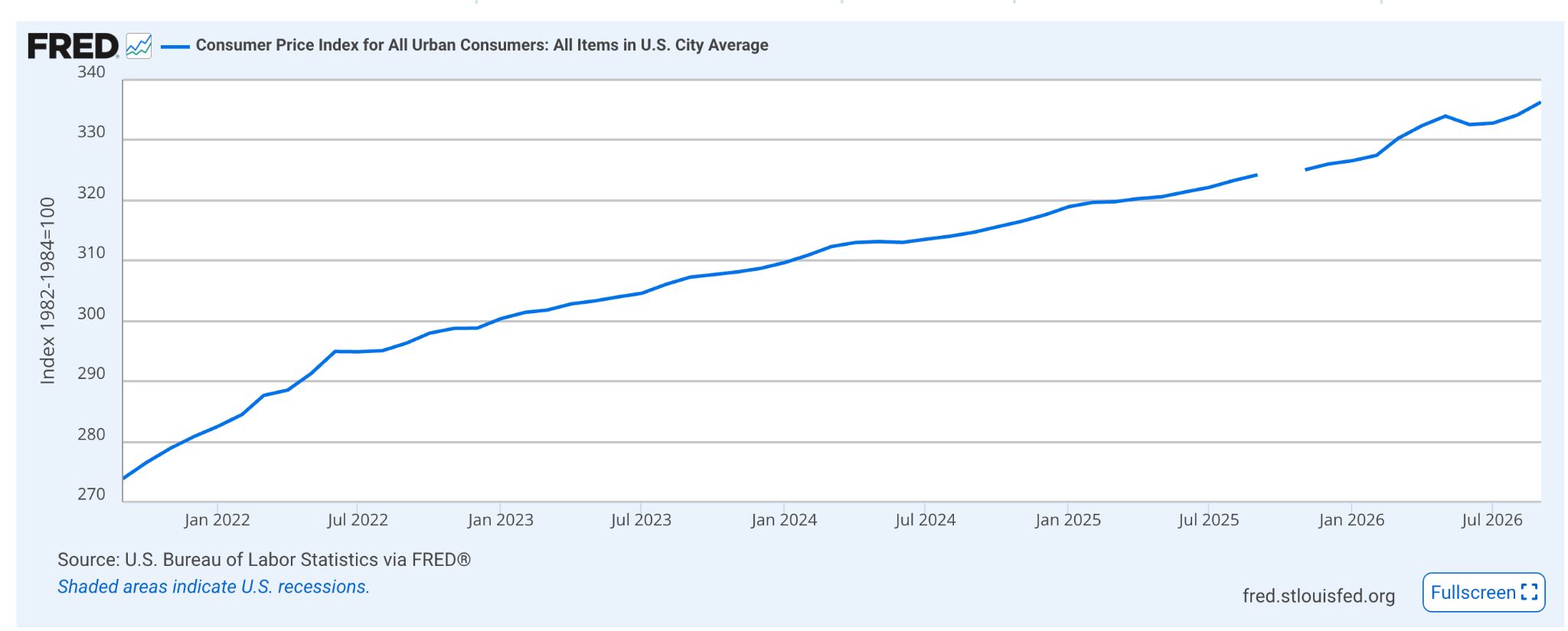
The first issue, overstocking, is a hard lesson learned. I doubt you will see this happen again anytime soon. The second is unavoidable. Diageo and its BWLS peers won’t be able to hide from cannabis competition, but competition has rarely been a problem for the maker of Johnnie Walker. Lastly, and perhaps Diageo's toughest challenge, is inflation. Once it takes hold, it’s awfully hard to shake off. Just ask Latin America.
The Golden Arches Lose Their Lustre
Even with dividends, McDonald’s total annual return over the past five years is just 2.94%. That isn’t what I’d call getting paid to wait.
McDonald’s CEO Chris Kempczinski has led the company since Nov. 3, 2019. Its shares have gained 19% during his tenure, while the S&P 500 is up 156%.
A couple of years ago, it looked as though Kempczinski was righting the ship. If you ask Wall Street, it’s not a sure thing. Of the 36 that cover MCD, only 19 rate it a Buy (3.94 out of 5), with a $296.88 target, 19% above its current price.
In September, the company laid out its NEXT plan to remain the dominant global fast food franchise. It plans to provide $5 billion in rent relief and capital support for its franchisees through 2030 and another $3.5 billion between 2031 and 2036. That’s no small amount.
The modernization, technology deployment and operational improvements it is asking of its franchisees are expected to generate an additional $100,000 in annual cash flow per restaurant.
As for systemwide sales, it sees its NEXT plan adding 2.5% growth in 2027 and moderating to 2% in 2030, still a valuable contribution.
Through top-line sales growth and improved restaurant-level efficiency and profitability, the company’s operating margin could reach 50% or higher by 2030. For context, McDonald’s highest operating margin in the 1990s was 25.9%; 28.8% in the 2000s; 41.9% in the 2010s; and 46.1% so far in the 2020s.
I’ve always found that when McDonald’s gets knocked down, it rallies. This plan will help because without the franchisees, it’s nothing.
The Bottom Line on Both LEAPS
Originally, I planned to discuss only the Diageo call, but the McD call caught my attention despite being slightly OTM (out-of-the-money).
Here’s how the long calls look in Thursday morning trading.


As you can see, despite the extra 12 months on the McDonald’s call, the Diageo call has a much higher likelihood of making money for the investor, nearly 50%, 15 percentage points higher, primarily because it only needs a 2.14% gain over the next 15 or so months, while the expected move is 10.99%.
What caught my attention in the MCD call is that it’s barely OTM. The 0.5808 delta means that you could potentially double your money by selling to close before expiration if the share price rose by $71.88 (28.9%) over the next 26 months [$41.75 ask price / 0.5808 delta = $71.88 / $248.79 share price].
Unfortunately, the expected move is only 14.05%. If you think that’s too low, MCD’s annual total return over the past 10 years, including dividends, has been above 14.05% only three times: 2017, 2021, and 2023.
While the Diageo call’s net debit of $5,730 is 37% higher than the McDonald’s call, I like its risk/reward proposition better.
On the date of publication, Will Ashworth did not have (either directly or indirectly) positions in any of the securities mentioned in this article. All information and data in this article is solely for informational purposes. For more information please view the Barchart Disclosure Policy here.
More news from Barchart
Unusual Options Activity: LEAPS Offer Low-Cost Rebound Bets on 2 Beaten-Down Consumer Stocks Get Paid to Wait: Buy NU Holdings at a Discount or Earn Options Income Unusually Heavy Options Trading in UBER Ahead of Earnings - Are Investors Bullish on UBER? Covered Call Screener: The Best Setups for October 21