

Nvidia (NVDA) and Broadcom (AVGO) both benefit from the surge in AI data center spending, but each one captures different parts of the buildout.
Now, imagine a world where a technology company prepares to spend billions of dollars on its next AI data center buildout. It can buy Nvidia’s GPUs and networking systems that are built on software many AI developers already use. Or it can work with Broadcom to create custom processors for specific workloads.
More Top Stocks Daily: Go behind Wall Street’s hottest headlines with Barchart’s Active Investor newsletter.
Big decision, right? That choice will shape performance, power use, time to market, and how much engineering the company has to handle itself.
The question is whether custom silicon will pull enough business away from general-purpose GPUs to reshape the profit pool, or will demand grow so fast that both models keep expanding for years?
Well, here’s a clue: Nvidia sells a flexible computing platform. Broadcom, on the other hand, works with a smaller group of large buyers to design custom accelerators, while also selling the networking components and software that connect and run chips and enterprise infrastructure. And the difference between the two models is striking.
Nvidia’s AI data center revenue grew 117% last quarter. Broadcom’s grew nearly twice as fast, up 221%. That gap alone suggests how fast the ground is shifting beneath this rivalry, but it doesn’t say who’s actually winning.
Ultimately, the answer depends on how customers balance flexibility, efficiency, and the cost of building and running each AI system.
To see how those trade-offs play out, it helps to start with what each company actually sells.
How Nvidia and Broadcom Sell AI Chips
Nvidia sells GPUs, chips designed for a broad market rather than one customer’s specific need. Its GPUs can train AI models, run inference, and handle other workloads that benefit from parallel computing.
The company also sells CPUs, complete server systems, NVLink technology that connects processors at high speed, and InfiniBand and Ethernet networking. In short, customers can buy complete AI computing systems rather than assembling a data center from unrelated components.
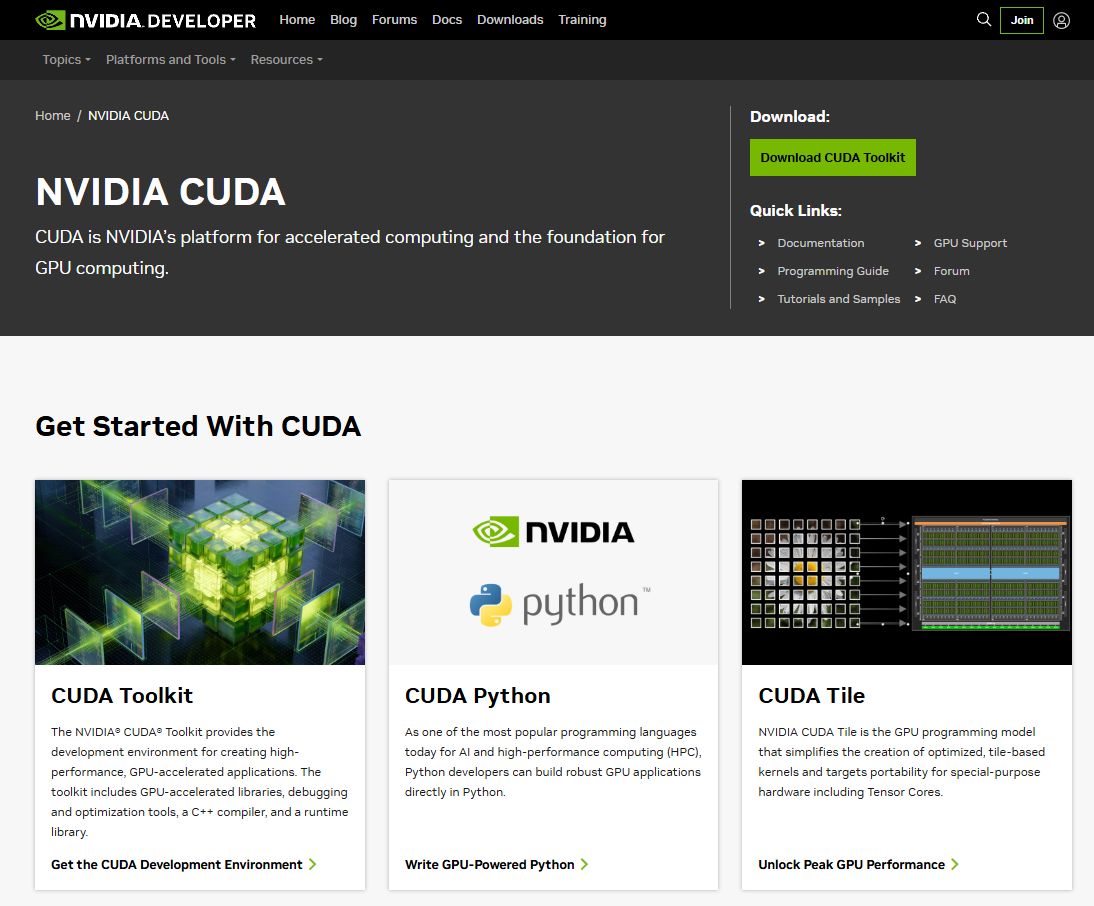
But a chip is only as useful as the software running on it. That's where the CUDA software platform comes in, which includes programming tools, libraries, and optimizations that developers have relied on for years.
 Screenshot courtesy of www.nvidia.com
CUDA makes switching away from Nvidia harder, even if another chip looks cheaper on paper. Moving to a different processor can mean rewriting code, retesting applications, retraining staff, and living with uncertainty about performance. That’s a lot of hassle, and it adds up fast.
Broadcom, though, takes a more tailored approach. Its custom AI accelerators, or XPUs, are application-specific chips that are designed alongside customers to meet specific computing, power, and cost goals.
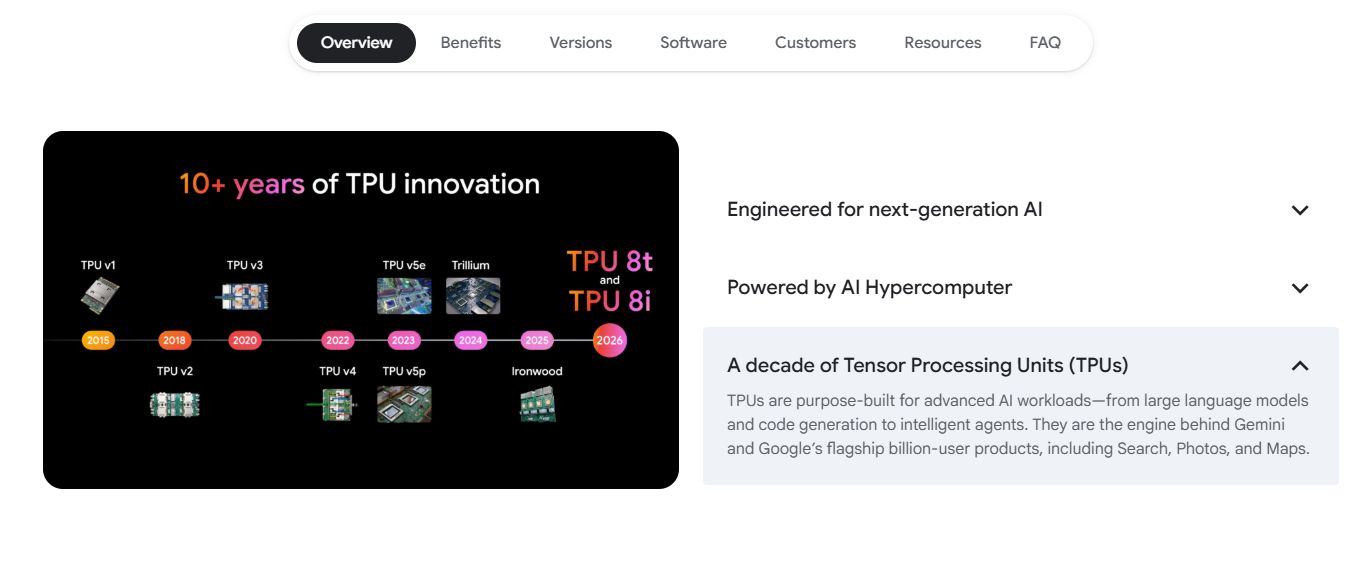
A good example of Broadcom's XPU in the field is Google's Tensor Processing Units, custom silicon developed with Broadcom for Alphabet's (GOOG) (GOOGL) business unit. Broadcom’s role also extends to packaging, connectivity, and networking, giving customers access to the technologies needed to build and connect AI systems.
 Screenshot courtesy of www.cloud.google.com
One could say the difference between a GPU and an XPU would be similar to buying a well-tailored suit off the rack (GPU) and commissioning one bespoke (XPU). Nvidia offers a proven platform that can serve many types of work; Broadcom helps a customer build a chip around work it expects to do at enormous scale.
The custom design can be more efficient, but it requires engineering resources and offers less flexibility if requirements change. Only sustained volume can justify the added design cost over time.
Broadcom also sells Ethernet switches and optical links that connect servers and accelerators, helping data move through large AI clusters. These products give Broadcom another way to benefit as AI infrastructure expands, even when its custom processors are not supplying all the computing power.
So which model is capturing more of the spending today? Nvidia’s latest numbers offer one answer.
Why Nvidia’s Whole-System Approach Gives It an Edge
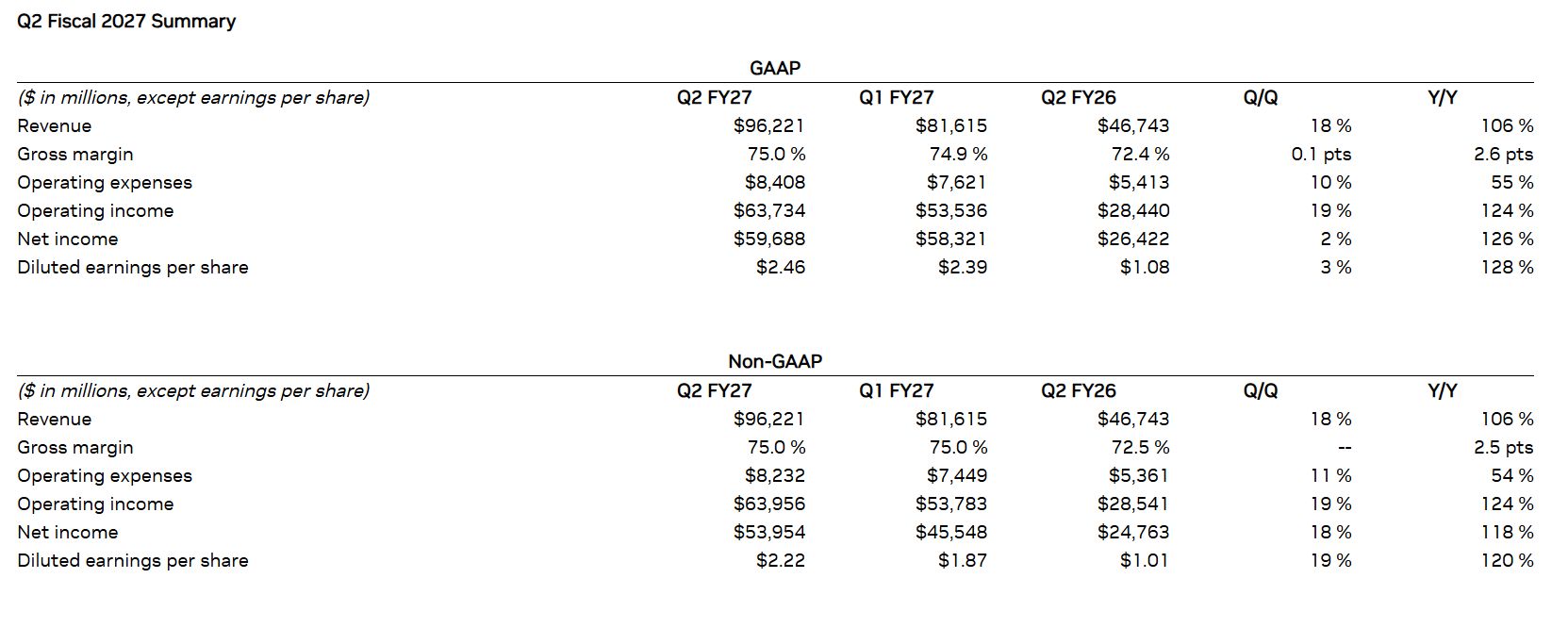
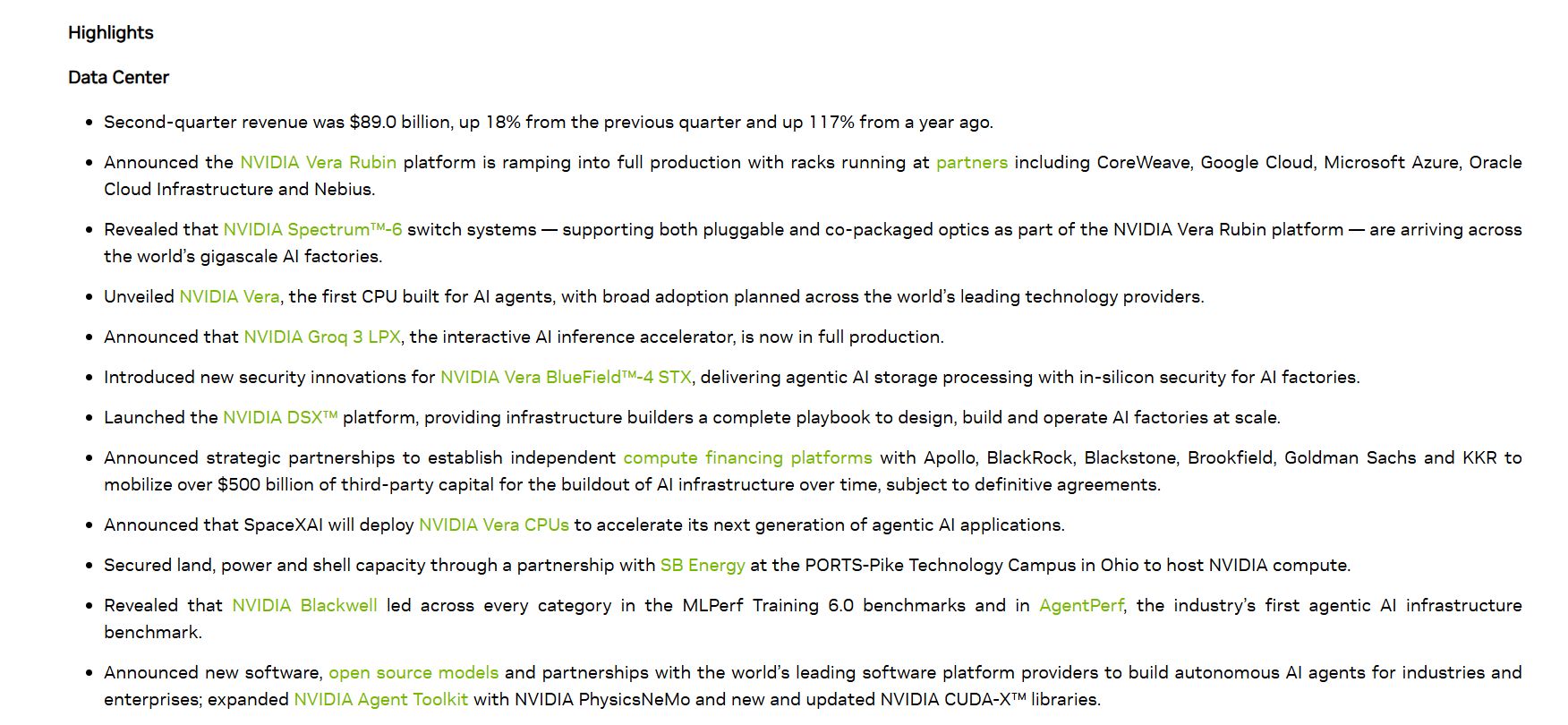
Nvidia’s revenue rose 106% year over year to $96.2 billion in its fiscal second quarter of 2027. On top of that, Data Center revenue increased 117% to $89 billion, while GAAP gross margin reached 75%. These results show how quickly AI infrastructure demand is turning into sales, even at Nvidia’s enormous scale.
 Screenshot courtesy of www.nvidia.com
 Screenshot courtesy of www.nvidia.com
Looking ahead, the outlook for the fiscal third quarter is $108 billion in revenue, plus or minus 2%. This points to further growth from an enormous base, while gross margin is expected to remain around 74%.
 Screenshot courtesy of www.nvidia.com
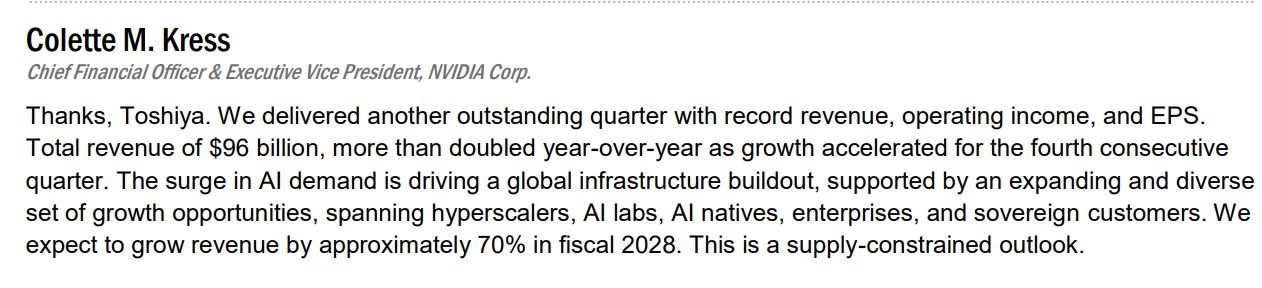
Further out, Nvidia’s preliminary fiscal 2028 outlook points to roughly 70% revenue growth, though available supply caps how much it can ship. Hitting that number also depends on memory supplies, advanced packaging capacity, and customers having the funding and completed data centers needed to install the systems.
 Screenshot courtesy of www.nvidia.com
Nvidia’s next big platform, Vera Rubin, began ramping up to full production in May 2026 and started shipping in August 2026. It combines new GPUs, CPUs, networking, and rack-scale systems. Selling these components as one integrated system lets Nvidia capture more spending from each AI data center and makes life easier for customers who’d otherwise have to connect and coordinate the hardware themselves.
But easier deployment isn’t the only perk. Nvidia’s strongest defense against custom chips is flexibility across the whole system. For example, one platform can handle training today, inference tomorrow, and other workloads later.
A GPU cluster bought for one model can often be adapted when software changes or a new application becomes popular. Plus, improvements to CUDA and system software can keep older equipment useful, giving customers more ways to earn a return on the same investment.
A custom accelerator may be cheaper and use less power for one mature task. But a buyer must estimate how long that task will remain important and whether the chip can be kept busy. A specialized device that sits idle or becomes less useful when model designs change may fail to deliver the savings its peak benchmark promises.
On top of that, Nvidia is pushing into areas that shrink the space left for rivals. Its open rack and compute-tray designs are being contributed to open infrastructure initiatives, while its Groq 3 LPX inference system targets faster token generation for agentic applications.
Still, there's limits on where Nvidia can sell its most advanced AI chips. The fiscal third-quarter 2027 outlook assumes no compute revenue from China, leaving a major market constrained by U.S. export controls.
Of course, Nvidia isn’t the only company riding this wave. So how quickly is Broadcom’s custom-chip business scaling?
How Broadcom’s Custom AI Chips Are Scaling So Quickly
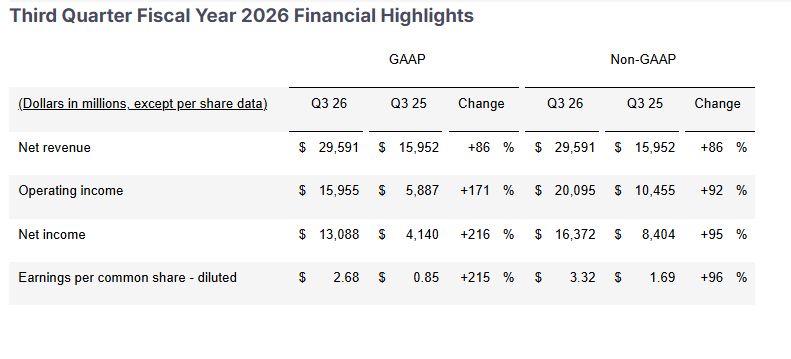
Broadcom’s fiscal third-quarter 2026 results show how fast its AI chip business is growing. Total revenue rose 86% year over year to $29.6 billion.
 Screenshot courtesy of www.broadcom.com
AI chip revenue is the real story, though. It jumped 221% year over year and 54% from the previous quarter, reaching $16.7 billion. And for the next quarter, management projects it will climb 236% year over year to about $21.7 billion.
 Screenshot courtesy of www.broadcom.com
But Broadcom isn’t only a chip company, either. Its infrastructure software business, built around VMware products that help companies manage private clouds and enterprise IT systems, brought in $8.8 billion in quarterly revenue. Think of it as a steady, established business running alongside the fast-growing AI chips.
Meanwhile, XPUs made up about 73% of AI semiconductor revenue, and XPU shipments more than tripled year over year.
So why the shift? Big tech companies are deciding that they can cut costs and boost performance by designing their own processors for workloads that they run repeatedly. This gives Broadcom more business designing the chips that perform AI calculations, not just the networking equipment that connects them.
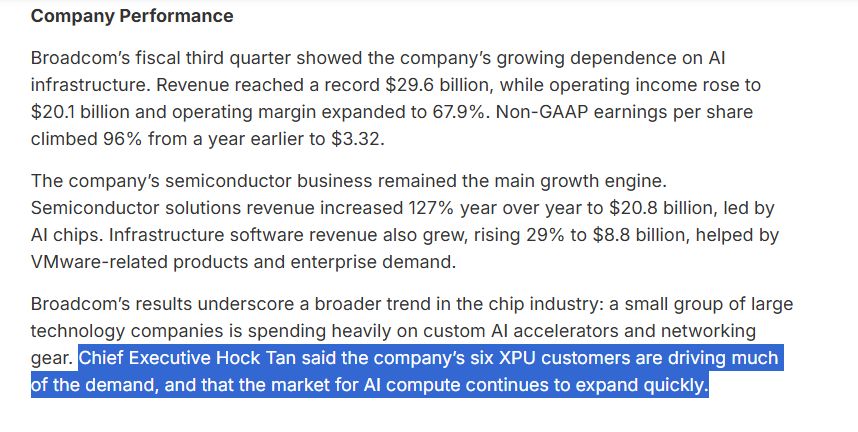
Broadcom currently has six major XPU customers, including Google, OpenAI, Anthropic, and Meta Platforms (META).
The customer list might be small, but it includes some of the biggest players in AI.
 Screenshot courtesy of www.broadcom.com
Google has a long relationship with Broadcom built around its TPU program. OpenAI is developing processors with Broadcom. Anthropic is expanding its use of Google TPU capacity, and Meta has been developing its own MTIA accelerators.
This could mean years of demand. But it also means Broadcom depends on decisions made by just a few buyers.
OpenAI’s custom accelerator, Jalapeño, is one good example. It shipped in the third quarter. Early tests showed improved performance per watt, meaning more work for the same power, on selected inference tasks. For some of those tasks, Jalapeño reportedly beats Grace Blackwell. But this still has to be verified with a full and independent apples-to-apples test.
Now, we need to see if these chips deliver lower total cost per useful AI output once deployed at scale. Workloads, configurations, networking, and system costs differ, so selected benchmarks don't give us the full picture. We still have to see whether those gains hold up across the applications customers run every day.
Broadcom’s networking business strengthens its position, too. AI clusters need fast connections between accelerators, memory, storage, and other servers, and Broadcom’s Tomahawk Ethernet switches and optical components help move data through them.
Then there’s financing. The company’s AI infrastructure financing platform is designed to support more than 20 gigawatts of deployments using Broadcom XPUs and networking through 2028. It launched with a $35 billion financing deal to help fund more than one gigawatt of compute infrastructure for Anthropic.
 Screenshot courtesy of www.broadcom.com
Now let’s look at the targets.
Broadcom’s fiscal 2026 AI semiconductor revenue target is about $58 billion. From there, management says it has secured enough supply to support roughly $115 billion in fiscal 2027 AI semiconductor revenue, with line of sight to $230 billion in fiscal 2028.
But designing a chip is only one part of delivering a working AI system. Customers still need enough power, functioning networks, and data centers equipped to run the hardware. As a result, Broadcom’s growth depends on turning custom-chip designs into fully deployed systems that customers can use at scale.
That raises a bigger question: where do Nvidia’s and Broadcom’s businesses actually run into each other?
Where Nvidia and Broadcom Go Head to Head in AI Computing
Nvidia’s GPUs and Broadcom’s custom accelerators go head to head when customers decide how to handle inference at scale.
Training builds or improves a model using large amounts of data, while inference uses that model to answer questions, generate code, recognize images, and perform other tasks. Nvidia competes in both, since GPUs are flexible and CUDA supports so many workloads.
Custom silicon becomes attractive when a customer knows what a chip must do and expects to run that task at enormous scale. A processor designed for a specific workload can reduce power use and processing costs.
Even a small efficiency gain matters when a data center handles billions of requests. The question is whether inference will account for a growing share of AI computing demand as these applications reach wider use.
But customers do not have to choose one approach for everything. They can use custom chips for predictable, high-volume workloads while relying on Nvidia GPUs for applications that need more flexibility.
The competition also extends beyond the processors themselves to the networks connecting them. Large AI clusters need to move data quickly between thousands of accelerators, or else the expensive hardware will sit idle waiting for information.
Broadcom supplies Ethernet switches such as Tomahawk and optical components that connect these systems. Nvidia, meanwhile, competes through products such as NVLink, InfiniBand, and Spectrum-X Ethernet.
For Nvidia, networking is already a substantial business in its own right.
That said, investors should keep in mind that competition between the two doesn’t necessarily mean one must displace the other. A customer using Broadcom-designed accelerators may still purchase networking equipment from Nvidia and other suppliers, and vice versa.
In fact, I’m pretty sure both companies can win business as AI data centers expand. But what I want to see is whether they can turn that demand into revenue and profits.
On the software side of things, Nvidia’s CUDA ecosystem and its established developer base make it easier for customers to deploy computing capacity without the need to build an entire hardware and software stack from scratch.
Tech giants such as Google's parent, Alphabet, Meta, and OpenAI can spend years developing custom hardware and software. But smaller cloud providers don’t have that option. Most smaller enterprises lack the resources to develop their own chips and supporting software. So for them, Nvidia’s ready-to-use platform can be more practical, even if custom silicon could lower computing costs at a larger scale.
And so, the bottom line becomes clearer: Broadcom could gain ground as more workloads suit specialization, while Nvidia stands to benefit as long as flexibility remains valuable.
But no bet is risk-free, so what could go wrong for each company?
The Biggest Risks Facing Nvidia and Broadcom Investors
For Nvidia, the biggest risk is pleasing everyone's already lofty expectations. The revenue base is already enormous, so eventually triple-digit growth will slow.
Also, the growth outlook is going to depend on Nvidia's ability to deliver advanced packaging, memory supply, and data centers . Any delay could push revenue further out, while inventory and higher component costs could put some pressure on margins.
Then there are the export controls that change almost weekly.
The U.S. restricts Nvidia’s products to China’s advanced AI computing market, and further restrictions could narrow its market opportunity even if demand remains strong elsewhere. This doesn't mean revenue might decline, but it may mean that it doesn't quite grow as much as it did.
Customer concentration is another problem. One unique customer accounted for 16% of Nvidia's quarterly revenue, while major indirect customers also also represented significant portions of sales. Naturally, if any large customer reduces spending, delays deployments, or moves to a competitor, Nvidia could lose substantial revenue.
At the same time, Broadcom also faces similar challenges. They face customer concentration risk, which could push custom-chip work to other suppliers or bring more design in-house. One recent example includes Google's expanded agreement with Marvell Technology (MRVL), which covers inference accelerators, storage controllers, network and memory-interface controllers, and near-memory computing. In other words, Google is broadening its supplier relationships.
There's also financing risks tied to AI infrastructure. In a recent filing, Broadcom describes a backstop with a potential $29 billion liability if associated AI racks are deployed and the customer defaults under specified terms. No payments had been made as of the filing date, so this is a contingent obligation, not an immediate repayment. Still, a default could leave Broadcom struggling to recover the expected value of equipment built around a specific architecture.
Finally, there are shared risks between the two, and the biggest is that AI spending outpaces customer returns. If AI services fail to generate enough revenue or productivity gains, customers could delay deployments or renegotiate funding.
Recent AI debt-market concerns also point to investors questioning whether returns justify this spending and whether the rush to build AI infrastructure is creating a bubble. But strong chip sales alone do not prove customers are earning attractive returns.
So with the risks mapped out, which stock suits which kind of investor?
Which Stock Fits Which Kind of Investor in the AI Buildout
So, for investors trying to pick the better choice, Nvidia has broad exposure to the overall AI buildout. Its GPUs are flexible, and CUDA makes it practical for buyers who lack the resources or time to design their own chips. These factors also make Nvidia accelerators the best choice for ever-changing workload requirements. That said, a multi-year bull run and massive expectations can hit the stock hard at the wrong time.
On the other hand, Broadcom bets that AI workloads will scale enormously in the coming years and that specialized silicon will solve inflated costs. But for now, it still relies heavily on a few big customers, and its financing situation can complicate things.
On the date of publication, Rick Orford did not have (either directly or indirectly) positions in any of the securities mentioned in this article. All information and data in this article is solely for informational purposes. For more information please view the Barchart Disclosure Policy here.
More news from Barchart
Nvidia vs. Broadcom: One Grew AI Revenue 221% Last Quarter. The Other Grew 117%. Micron’s Taiwan Unit Reached a Deal With the Taichung Union. Here’s What to Know. IBM’s CEO Just Issued a Warning Message on AI Spending. He Ended Up Hurting His Own Stock. What the New Class C Share Structure Actually Means for Meta Platforms Stock Investors