


Life insurers had a mixed third quarter. The 12 companies tracked in a recent earnings roundup missed revenue estimates by 4%, but their stocks have gained 1% on average since reporting. Higher investment yields and growing demand for retirement products are helping the industry, while newer insurance technology firms are giving traditional insurers more competition.
Aflac Incorporated (AFL) ranked as the group’s best performer for the quarter. Revenue fell 2.5% from a year earlier to $4.30 billion but beat estimates by 1.9%. Earnings per share and book value per share also topped expectations. Still, the stock has barely moved since the report.
More Yield, Less Trap: Sign up free to get Barchart’s daily Dividend Investor newsletter straight to your inbox.
Days later, Aflac gave shareholders another reason to pay attention by raising its quarterly dividend by 4.9% to $0.64 per share. The dividend is payable March 1, 2027, to shareholders of record on Feb. 17, 2027.
Does that bigger payout make AFL stock worth buying after its earnings beat? Let’s take a closer look.
The Earnings Behind the Higher Payout
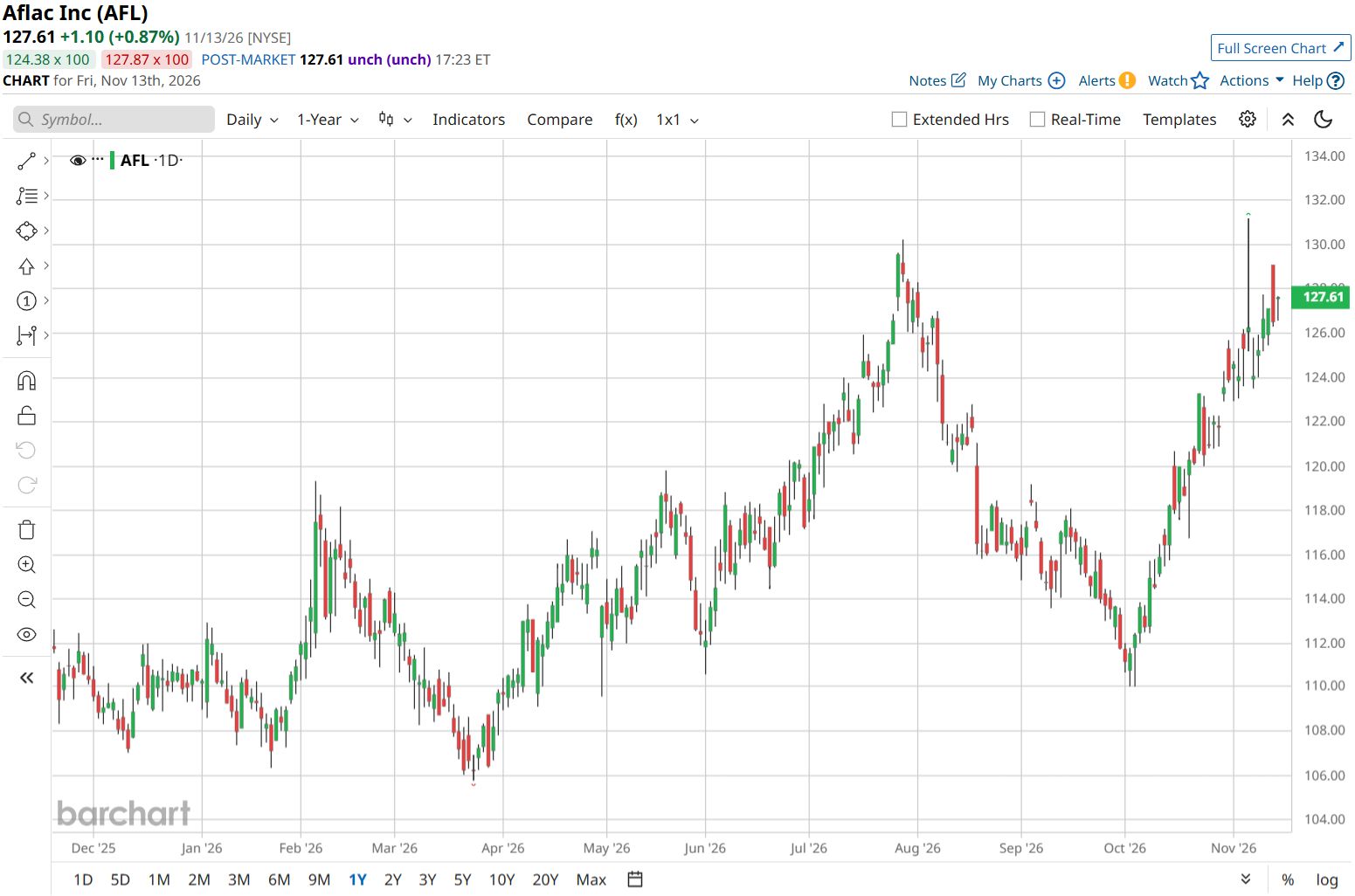
Aflac Incorporated sells supplemental insurance in Japan and the U.S. It collects premiums and invests the money to help pay future claims. Shares have gained 12% over the past 52 weeks and 16% year-to-date (YTD), but they aren’t cheap compared with the sector. AFL stock trades at 17.37x expected earnings, versus the sector’s 11.10x.
 www.barchart.com
Shareholders are getting a 4.9% dividend increase, taking the quarterly payment from $0.61 to $0.64. It is payable March 1, 2027, to shareholders of record on Feb. 17. That works out to $2.56 annually, or a roughly 2.01% yield at a share price of $127.61. Aflac has raised its dividend for 44 straight years. Before this increase, its forward payout ratio was 32.13%, suggesting room for higher payments, though the new yield still trails the financial-sector average of 3.18%.
The latest earnings were less encouraging. Third-quarter revenue fell 31% to $3.27 billion from $4.74 billion. Net earnings dropped 81.5% to $303 million from $1.64 billion, while diluted earnings per share fell 80.2% to $0.61 from $3.08. Changes to the investment portfolio drove much of that decline, with roughly $1.1 billion in net investment losses compared with $275 million in gains a year earlier.
Adjusted earnings held up better, falling 8.5% to $1.21 billion from $1.33 billion. Adjusted earnings per share declined 2.4% to $2.43 from $2.49. Even those results included a $453 million boost from updated insurance reserve estimates, so they don’t tell the whole story of the quarter’s underlying performance.
Where Future Growth Could Come From
Aflac Incorporated is moving some insurance liabilities from its Japanese business to Aflac Re Bermuda. The latest internal reinsurance deal is expected to free up about $1 billion for other uses. So far, about 15% of Japan’s reserves have been transferred, below management’s internal limit of 30%. Further deals could free up more capital to fund growth, but management says they won’t happen on a fixed schedule.
In the U.S., Aflac is selling more group life, disability, and network dental coverage alongside its voluntary benefits. Network dental sales rose 67% in the third quarter, helping total U.S. sales grow 3.5%. Selling more products through workplace benefits gives Aflac another way to grow beyond individual supplemental policies.
In Japan, its savings-type life insurance product, Tsumitasu, made up roughly 20% of sales and is attracting younger customers. Management also sees opportunities in new products and wider distribution but remains cautious about how much capital savings-type policies require.
Aflac is also changing its Japanese investment portfolio to earn higher yields. About $2.3 billion in investment trades are expected to add more than $30 million to annual net investment income. Further trades will depend on available yields and how much capital they require.
Wall Street’s View of What Comes Next
Aflac Incorporated is scheduled to report earnings on Feb. 3, 2027. Analysts expect December-quarter earnings of $1.77 per share, up 12.74% from $1.57 a year earlier. For the full year, though, they expect earnings to fall 1.60% to $7.37 per share from $7.49.
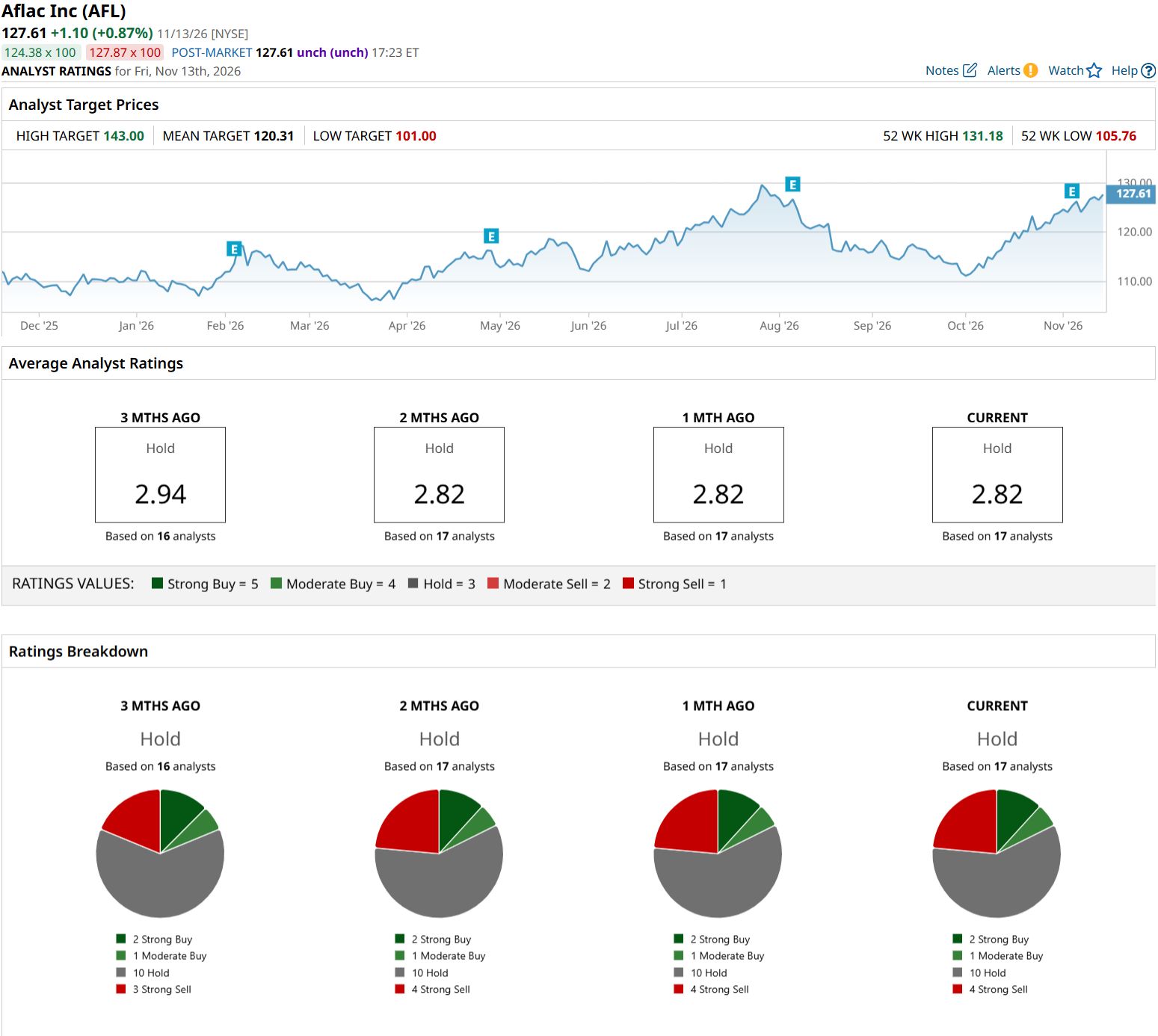
Analysts have different views on AFL stock. Wells Fargo analyst Wesley Carmichael kept his “Equal-Weight” rating after the third-quarter report, with an initial $116 price target. He raised it to $124 on Nov. 12 but kept the rating unchanged. Piper Sandler analyst Paul Newsome is more upbeat. He raised his target from $138 to $143 on Nov. 9, five days after earnings, while maintaining an “Overweight” rating.
Overall, the consensus among 17 surveyed analysts is “Hold.” Their average price target of $120.31 is about 5.7% below Aflac’s recent share price, suggesting limited enthusiasm for buying at current levels.
 www.barchart.com
Conclusion
Aflac’s dividend increase gives income investors another reason to hold, but it does not make the stock an obvious buy. The 4.9% raise extends a 44-year record of dividend increases, reinforcing its appeal to investors who value steadily growing payouts. Still, the premium valuation and softer adjusted earnings leave less room for disappointment. Reinsurance, broader product sales, and higher investment income offer opportunities, but those benefits need to translate into sustained earnings growth. On balance, I see shares trading sideways to slightly lower in the near term rather than rallying sharply. The dividend looks more compelling than the entry price.
On the date of publication, Ebube Jones did not directly have a position in any of the securities mentioned in this article. All information and data in this article is solely for informational purposes. For more information please view the Barchart Disclosure Policy here.
More news from Barchart
This Insurance Stock Just Raised Its Dividend by Roughly 5% IBM Leads 3 Buy-Rated Tech Dividend Stocks as AI Valuations Come Under Pressure Dear Costco Stock Fans, Mark Your Calendars for December 4 Disney Raised Its Dividend by 50% Last Year. Don’t Expect a Similar Bonanza This Time.