

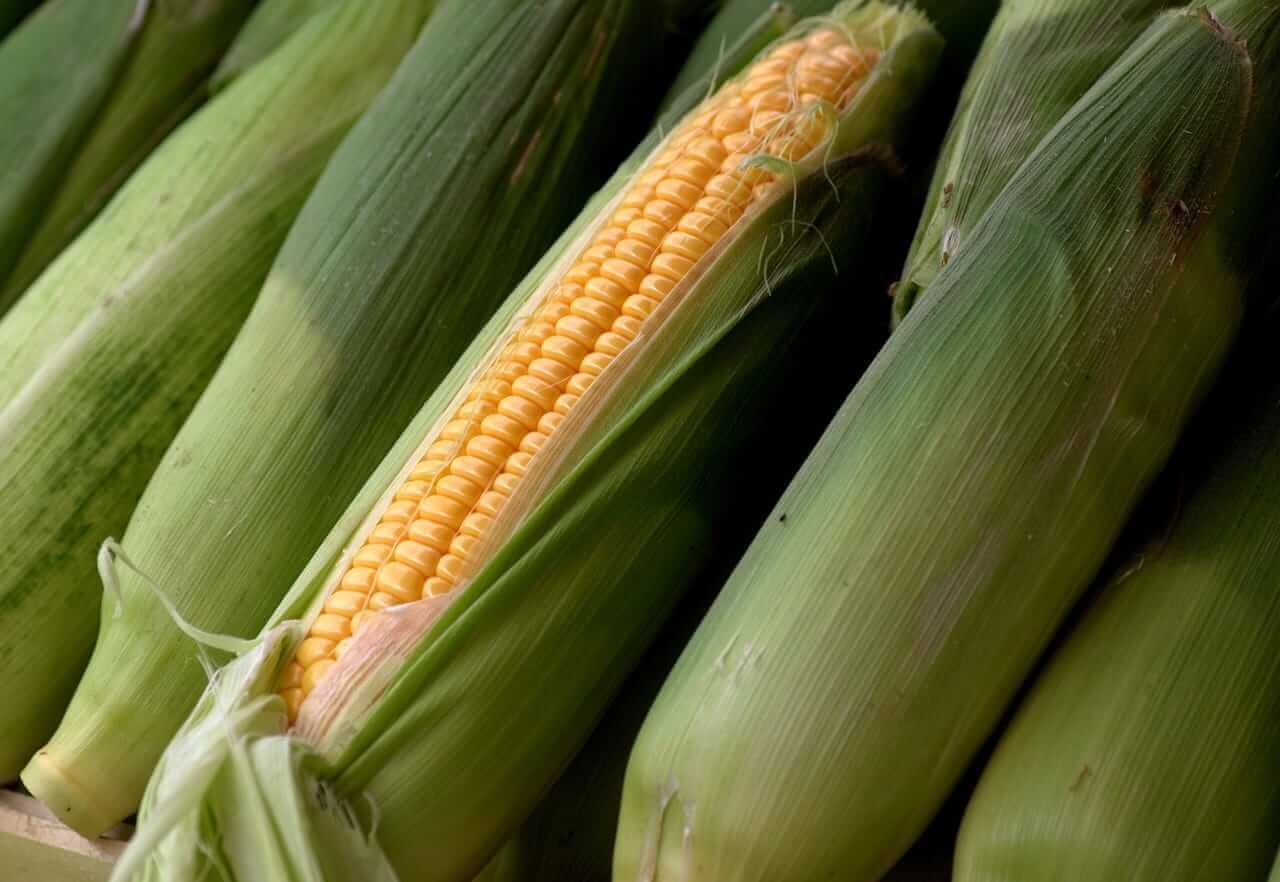
This morning, I spoke with Michelle Rook of Markets Now about the evidence for capitulation in the corn market, the lingering risks from spillover selling in stocks, and the impact of December options expiration. Watch our conversation on YouTube, and read the full transcript below.
Michelle Rook: Welcome to Markets Now. I'm Michelle Rook with Darin Newsom, senior market analyst with Barchart. Grain and livestock futures trade all in the green here as we start Thursday.
Don’t Miss a Day: From crude oil to coffee, sign up free for Barchart’s best-in-class commodity analysis.
Darin, thanks for joining me. Grain market, it was an ugly day down yesterday, especially in the wheat market. The pop that we're seeing today, is it related to the dollar easing off of these 20-month highs, or did we just get overdone yesterday?
Darin Newsom: My thoughts on it, Michelle, is just everything got a little overdone yesterday. When you see wheat contracts down $0.20, $0.25, you've got $0.10 to $0.12 sell-offs in corn. At one point, there was solid double-digit sell-offs in soybeans before they rallied at the end. To me, it just looked like everything got a little bit overdone. There wasn't a lot of commercial support except for soybeans (ZSF27) as we closed out Wednesday's session. That seems to be carrying over into, at least through the early part of Thursday.
Money Flow & Forex Impacts
Michelle Rook: Let's talk about the dollar ($DXY) because of these levels compared to other currencies, including the real, the US is less competitive. This is all about, as well, the fact that there's fear about interest rates going up. Some of it yesterday was just money flow, wasn't it?
Darin Newsom: Yes, I think a lot of it was money flow. I know the old argument about a stronger dollar cutting off demand for that country's commodities, whatever it might be. I think those days have come and gone. I think the global game now is more political than it is economic. You have major buyers not really looking at the price of a currency, but rather, what are the tariffs? What are the trade wars? What are the trade problems that are in place with a particular country? Then they look to source their supplies from other areas.
It doesn't really matter. For example, let's look at China, the US, and Brazil in soybeans. Just because the dollar is firmer, and let's say the real (USDBRL) is weakening, even though it has been firming as well. Let's say those two get out of line. Do you think it's going to change China's buying habits? Absolutely not. The only thing that's going to keep Brazil from being the main supplier to China is weather. It all comes down to weather and what Brazil's production turns out to be. It's not necessarily a game of economics at this point. It's a political game.
Max Pain for Options Traders
Michelle Rook: Yes. The other thing that we should talk about here is we're coming up on December option expiration, and we're also going to see first notice day here at the end of the month for the December contract. Was yesterday part of that liquidation process going into that, you think?
Darin Newsom: Yes. You mentioned December is going into delivery, and that was mostly what we saw. That could have been a big part of what we saw in the corn market. You mentioned option expiration as well. Having watched these things, you and I have watched these things for a number of years. What tends to happen, particularly in the heavier traded markets, is the futures market will drift down to the option strike price level that will cause the most pain. In other words, what's going to cause the most options to go off at zero?
That certainly could have played a role. We saw the Dec corn (ZCZ26) drop below 4.40. I think it got down to a low of something like 4.32 early this morning. I need to go back and check the numbers to see if it's the 4.30 strike that has the most open interest with puts and calls, because I think that's going to come into play as well.
Evidence of Capitulation in Corn Markets
Michelle Rook: The point being, though, you had both the funds and you had farmers selling at the same time, correct?
Darin Newsom: Yes, exactly. Again, it looked like capitulation. This is something, again, an old story that goes back for decades, is that markets will continue to grind lower until everybody just throws in the towel at the same time, and then they collapse. That certainly looked to be the case. It looked to be there was -- we had commercial pressure in corn. We saw the future spreads. We saw the carry and future spread strengthening. We saw funds likely liquidating some more of whatever's left of their net long and long futures position.
This has been a big move over the last, what, 8 to 10 weeks. They've gone from a record-large long and net long, again, just in futures. They've taken something like 400,000 contracts, 400,000-plus, off their net long. This is where most of the downtrend's been coming from. Again, it's led to some commercial pressure as well.
Michelle Rook: We've had a change in ownership in the marketplace, in the grain trade. Do you think it's done? Do you think the bottoms are finally in here? You said, maybe we've capitulated in the corn market.
Darin Newsom: For no reason in particular, I think it could be, until we look at some statistics, and we have to keep in mind algorithms and funds set the trend. A lot of the statistics that are built into algorithms these days could be leaning towards this market's getting close to being done. December corn, or corn, in general, is oversold. We have seen volatility tick up. There's that strike against it. We also still see the amount of calculated full commercial carry still isn't bearish, the spreads are covering. You've got that that could also lead to some buying in here.
It wouldn't surprise me, given how sharp the sell-off has been, given how close we are to contract lows, and so many of these, particularly in the corn contracts, I guess we could say it in the wheat (ZWZ26) as well, that it wouldn't surprise me to see some fund buying start to come back in.
Finding New Demand
Michelle Rook: Well, that would be good news. Going back to talking about the markets going lower to try to find new demand. Obviously, we're transitioning from supply to a demand focus here in the market. Exports this morning on corn, 62.5 million bushels; beans at 55.2; wheat at 12.7 million bushels. Does that indicate to you that demand is starting to be stimulated at these lower price levels?
Darin Newsom: No. No. Again, one of the ways I look at the weekly export sales and shipment numbers is to compare it to what we've normally shipped, what the average is week by week. By doing that, we can create a pace projection. In other words, what are our shipments saying the end number should be when we get towards the end of the marketing year? What we're seeing, particularly in both corn and soybeans, is that similar to last year, everything's front-loaded here in this first quarter of the marketing year, and both pace projection trends are now moving down.
We're seeing them come back to the levels that we've seen the last couple of years. In a week, it's still continuing to run well below what we've seen the last couple of years. I don't see this as stimulating demand. I just see it, everything was front-loaded. The US supplies were bought at harvest lows. We're moving some of them, and now business is dying out.
Michelle Rook: Yes. Just to give those pace projections, the total for corn, we're 28% behind last year. Wheat is 31% behind, and we're 80% ahead of last year on soybeans, but we didn't have China in the market really at that point. That's an unfair comparison.
No Timeline for Tariff Relief
Michelle Rook: The other thing I want to ask you about, is there or was there any disappointment yesterday about the APEC meeting between President Trump and President Xi, and that really there was nothing talked about in terms of agriculture there, any movement? Did anybody expect there to be?
Darin Newsom: Oh, yes. We're talking about US Ag, and they always expect there to be some sort of big announcement, some big deal announced, even though there never is. Even when there is an announcement, it's not necessarily true. Was I disappointed? No, it was exactly as I expected. Seeing the pictures of the three, Mr. Xi, the US president, and Mr. Putin, all walking together, it lived up to everything that I've been saying over the past decade about the relationship between the three. But I wasn't disappointed, and I certainly wasn't expecting anything going into this week's meetings.
Michelle Rook: No. We'll see if we get anything. I think the next time President Trump and Xi meet is the G20 in December. We'll see if we get any movement on those tariffs at that point because that's really what the market wants is those tariffs to be lowered, right?
Darin Newsom: That's what – that's what everyone in agriculture wants. Nothing may happen until we seat a new Congress in January.
Michelle Rook: That is a really good point that you make because there are some Democrats that are already talking about tariff reductions.
Cattle & Feed Roundup
Michelle Rook: OK, so let's talk about the cattle market. We were up yesterday despite the meltdown and everything else, including outside markets like the stock market, seeing some follow-through this morning. Are the funds back in there buying, or is this some anticipation of a bullish cattle and feed report?
Darin Newsom: [laughs] Let's talk about the cattle and feed. These are numbers as of November 1st, and we are at November 19th. It will be released on November 20th. The idea that these numbers are going to catch anybody that matters by surprise, I think, has always been silly, and it always makes me laugh. Does it look like funds are buying? Yes. It did surprise me a bit, given the degree of the sell-off that we've got going on in US stock indexes, with the NASDAQ ($IUXX) long ago moving to a new four-month low, the S&P 500 ($SPX) here this week going to a new four-month low, and the Dow Jones ($DOWI) following suit.
What this tells us is that they've all confirmed long-term downtrends. This should make it more difficult for cattle markets to rally, particularly the live cattle market (LEZ26) to rally. Since the cash markets can't get any grip at this point, it takes forever to get any trade done. The feeder cash indexes (GFY00) are up one day, down the next. There's just really no consistency. To me, funds buying against the grain, against all of these other factors, probably is going to be short-lived. I think the market still has some more risk to the downside.
Spillover Liquidation Risk from Stocks
Michelle Rook: All right. Just quick, Darin, because you just mentioned long-term downtrends in the financial indices, what does this do to money flow in terms of how it impacts the ag sector?
Darin Newsom: In a normal, just smallish sell-off by Dow and the other stock indexes, it would tend to bring money into other markets, just a money flow change. When you start to talk about big sell-offs, and you're starting to look at 20% breaks and these sorts of things, then what you've got is due to margin calls and stock indexes, you've got liquidation in most of the other market sectors, as well as folks move, as investors move over to Treasury, something safe, with the idea that Treasuries are going to go up as interest rates go higher.
This is where we're at right now. I think what it could do and what it should be doing is likely leading to liquidation in the commodity complex as a whole.
Michelle Rook: All right. Thanks so much. Darin Newsom with Barchart and Markets Now.
On the date of publication, Darin Newsom did not directly have a position in any of the securities mentioned in this article. All information and data in this article is solely for informational purposes. For more information please view the Barchart Disclosure Policy here.
More news from Barchart
The Case for Capitulation in the Corn Market 3 Strategies to Play Unusual Options Activity in Norwegian Cruise Line Stock DoorDash (DASH) Stock Is a Tricky Play That Could Lead to a 222% Payout DVN Short Strangle Takes Advantage of High Implied Volatility