


Democratic Senator Richard Blumenthal is increasing his scrutiny of Binance as new questions emerge about the exchange’s handling of Iran-related transactions.
The Connecticut senator has been pursuing the issue since February, when he first launched a formal inquiry into whether the cryptocurrency exchange violated US and international sanctions involving Iran.
On Friday, April 17, Blumenthal took another step by sending two new letters—this time aimed at the US Department of Justice (DOJ) and the Treasury Department’s Financial Crimes Enforcement Network (FinCEN).
Congress Intensifies Binance Probe
The latest letters, which were reported by Fortune, focus on a specific aspect of Binance’s compliance oversight: the status of two monitors that were installed to supervise the company’s compliance operations.
According to the report , Blumenthal asked for details about where the monitors stand and what they are doing to ensure Binance maintains appropriate measures to reform and strengthen its compliance program.
Those monitorships began in 2024. Each monitor separately reports to the DOJ and to FinCEN, with the goal of ensuring Binance implements meaningful upgrades to its compliance framework.
Blumenthal’s correspondence reflects what he described as growing concern over “mounting allegations of dangerously lax anti-money laundering prevention by Binance.”
Silence Amid Document Requests
This renewed investigation also arrives after multiple outlets reported that Binance fired internal investigators who had warned top executives that more than $1 billion had moved through the exchange to wallets linked to Iran .
Binance has said those investigators were dismissed for reasons not connected to their findings about Iranian activity. The company maintains that it has a rigorous compliance program, and it has continued to reject the allegations being raised in Congress.
In addition to pursuing the monitors, Blumenthal previously asked for exact dates for when companies and individuals involved opened Binance accounts, began sending funds to Iranian intermediaries, were reported to US law enforcement, and when those accounts or related activity were suspended or removed.
Blumenthal also demanded explanations for any delays between notification and action, invoking Senate rules and setting a deadline of April 14 for Binance to provide the requested records.
As of this reporting, it has not been disclosed whether those documents were supplied, nor has there been any further public statement from Binance or its executives addressing what the senator requested or whether they complied.
Key Numbers Revealed By The ExchangeDespite these ongoing inquiries, Binance has been consistent in rejecting the allegations even before Blumenthal’s most recent letter. In a February 22 statement, the exchange said it conducted an internal review and found “no evidence of violations of applicable sanctions laws.”
The exchange further stated that since the 2023 settlement, which led to former CEO Changpeng Zhao (CZ) resigning from his position, it had upgraded its compliance processes and supplied several statistics meant to demonstrate progress over time.
Among the metrics Binance highlighted, the exchange said sanctions-related exposure—measured as a share of overall trading volume —fell from 0.284% in January 2024 to 0.009% by July 2025, which it described as a reduction of 96.8%.
The exchange also reported that transaction volume involving four major Iranian crypto exchanges dropped from $4.19 million in January 2024 to $1.1 million by January 2026.
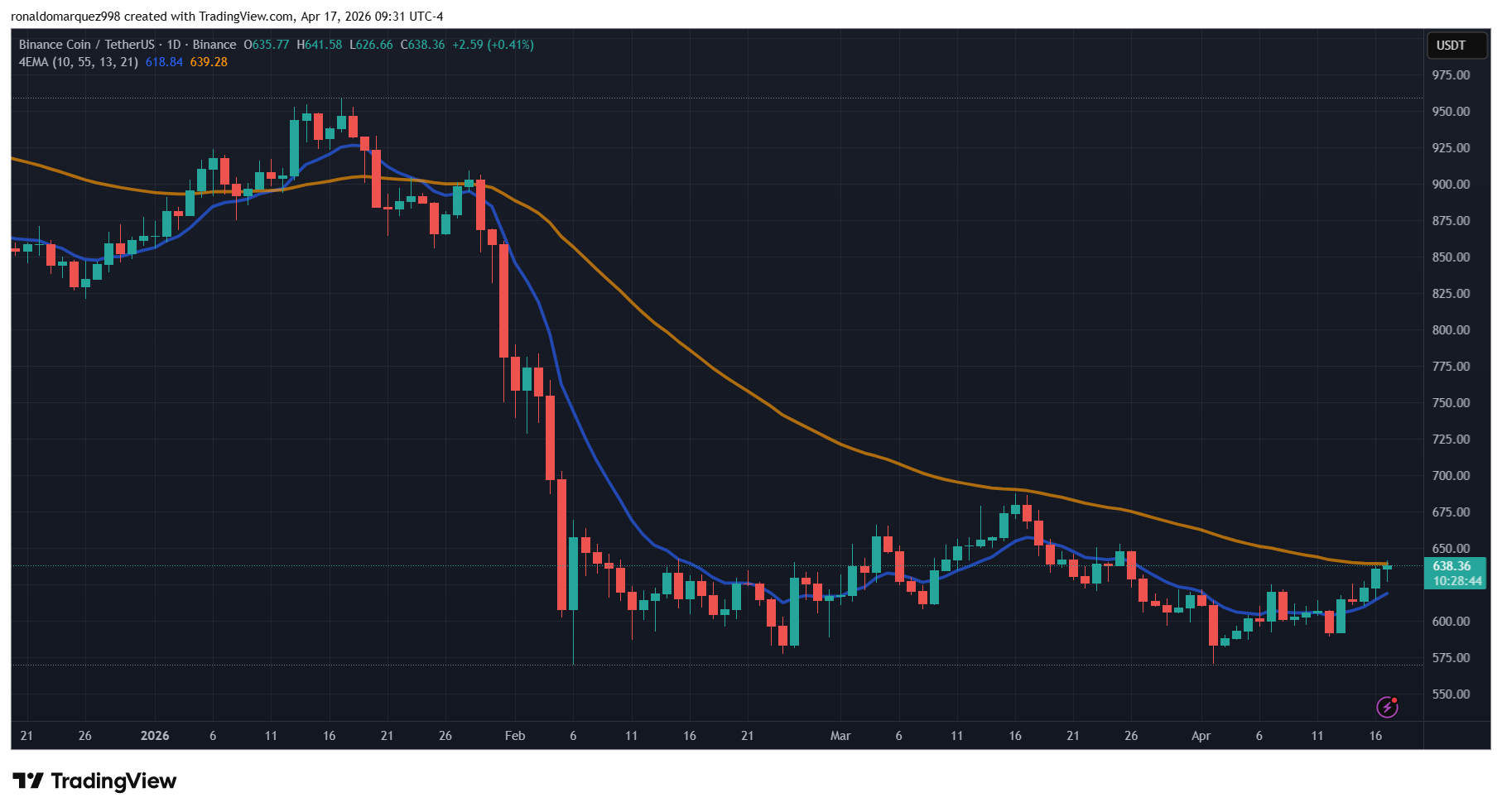
At the time of writing, the exchange’s native token, BNB, was trading at $638, up 4% and 6% over the previous 24 hours and seven days, respectively.
Featured image from OpenArt, chart from TradingView.com