

Advanced Micro Devices (AMD) and Nvidia (NVDA) have had two very different runs this year. On a year-to-date (YTD) basis, AMD stock has nearly doubled, while Nvidia stock is down about 33% over the same period. For much of this year, however, Nvidia had a strong run, reaching an all-time high as recently as October 2026. Since then, though, NVDA stock has plummeted more than 45% on a broader artificial intelligence (AI) selloff and the resignation of former CEO Jensen Huang amid a scandal.
As I covered when the scandal first broke, AMD stock jumped about 13% on Nov. 9 alone while NVDA stock kept falling. The jump came on the back of an Oppenheimer upgrade, but I think it also reflected investors shifting to the next-largest AI chipmaker, wanting AI chip exposure without Nvidia's uncertainty.
More Top Stocks Daily: Go behind Wall Street’s hottest headlines with Barchart’s Active Investor newsletter.
The shift has left AMD stock trading around four times Nvidia's earnings multiple. But that raises a question: Is the gap justified?
AMD Is Picking Up Speed While Nvidia Is Growing Faster From a Larger Base
AMD reported third-quarter results on Nov. 3. Revenue rose 45% year-over-year (YOY) to $13.4 billion, beating the $13.1 billion consensus estimate. The data-center segment grew even more sharply, hitting a record $8.5 billion, up 97% YOY.
AMD guided a strong outlook, too, with Q4 revenue expected to be around $17 billion. "We now expect revenue to grow more than 80% in 2027," said CEO Lisa Su on the Q3 earnings call.
OpenAI and Meta Platforms (META) have each committed to 6 gigawatts of AMD chips, while Anthropic (ANT) agreed to deploy up to 2 GW in July 2026. As I covered after AMD launched Helios, the company can also now sell an entire AI server rack, not just chips. That makes switching from Nvidia's ecosystem easier for customers.
Meanwhile, on Nov. 17, Nvidia posted record revenue of $115.8 billion for Q3 fiscal 2027, up 103% year-over-year (YOY), easily surpassing its own $108 billion guidance and the roughly $109 billion analyst consensus estimate. Data-center revenue alone was $107.6 billion, up 110% YOY and amounting to more than 12 times AMD’s data-center revenue. Non-GAAP gross margin was also 74.9%, far better than AMD's non-GAAP gross margin 56%.
Nvidia expects roughly $130 billion in revenue next quarter, nearly eight times AMD's forecast of $17 billion. So, while AMD's numbers were strong, Nvidia's report was better. The obvious risk for Nvidia is the current leadership uncertainty, with no permanent CEO named for now.
AMD’s Premium Versus Nvidia’s Discount
The valuation gap between these two companies is huge. AMD's forward price-to-earnings (P/E) ratio of 70.6 times sits well above its five-year average of around 40 times. Its price-to-sales (P/S) ratio of 23.1 times is even steeper compared to its average.
The opposite is true for Nvidia. Both its forward P/E ratio of 15.2 times and P/S ratio of 16.2 times come in below its respective five-year averages.
Meanwhile, both firms have impressive EPS outlooks. Analysts expect AMD's earnings to grow about 112% this year and 131% in fiscal 2027. For Nvidia, analysts expect earnings to more than double in fiscal 2027 before growing 70% in fiscal 2028. Additionally, both companies have solid balance sheets with more cash than debt.
So, AMD's numbers and growth outlook are exceptional. But its premium assumes it will keep taking share from Nvidia for years, even though Nvidia is still growing faster from a much bigger base while trading at a lower valuation. As noted before, Nvidia's biggest risk right now is its leadership, while the business itself keeps getting stronger. Cathie Wood believes that Nvidia's engineers should be able to carry the company even without Huang at the helm.
Overall, I think Nvidia is the better AI chip stock to buy today, while AMD investors are paying a lot for growth that's already priced in.
About AMD and Nvidia Stock
AMD and Nvidia are the two biggest AI chipmakers, and they're now competing head-to-head for the same data-center customers. Nvidia's chips and software power most of the world's AI data centers, while AMD makes Instinct GPUs, EPYC server processors, Ryzen PC chips, and Helios AI server racks. Nvidia was founded in 1993 and is currently led by interim CEO Colette Kress, while AMD was founded in 1969 and is led by CEO Lisa Su. Both companies are headquartered in Santa Clara, California.
 www.barchart.com
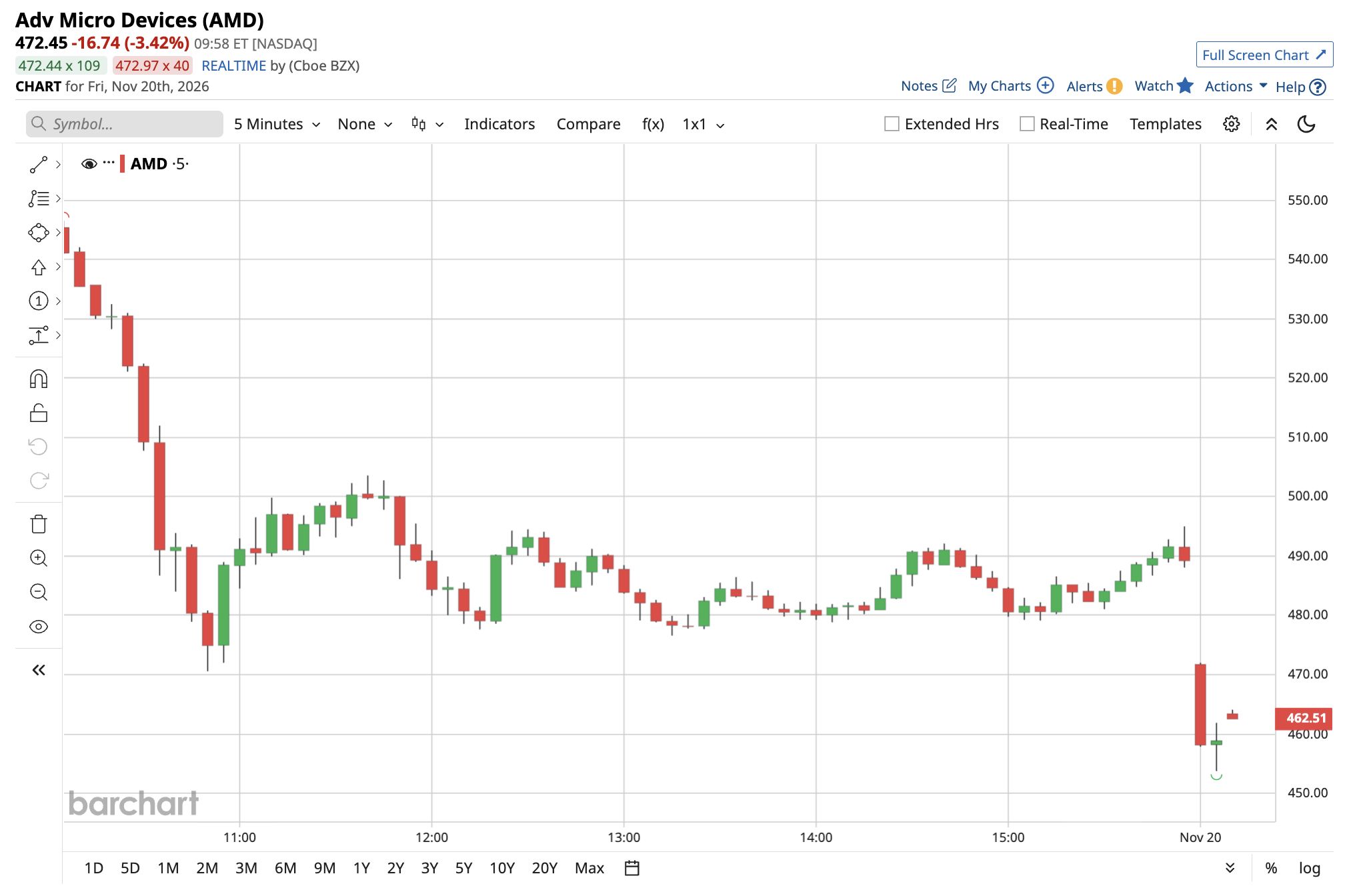
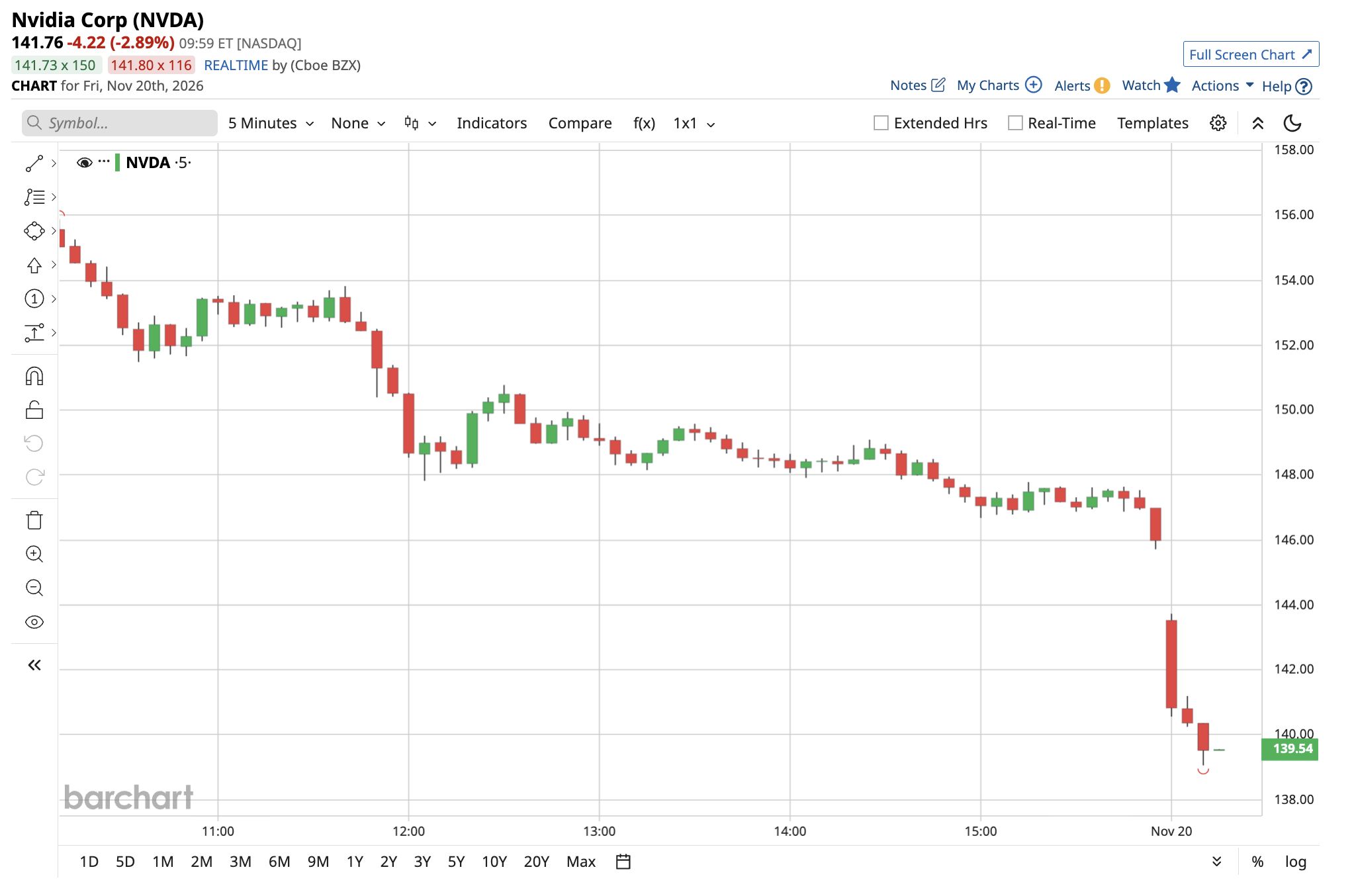
AMD stock has soared 98% so far this year, far ahead of the VanEck Semiconductor ETF's (SMH) gain of 11%. Meanwhile, NVDA stock is down about 33% in the same period. Both Advanced Micro Devices stock and Nvidia stock also hit all-time highs in October 2026.
 www.barchart.com
What Do Analysts Expect for AMD Stock and Nvidia Stock?
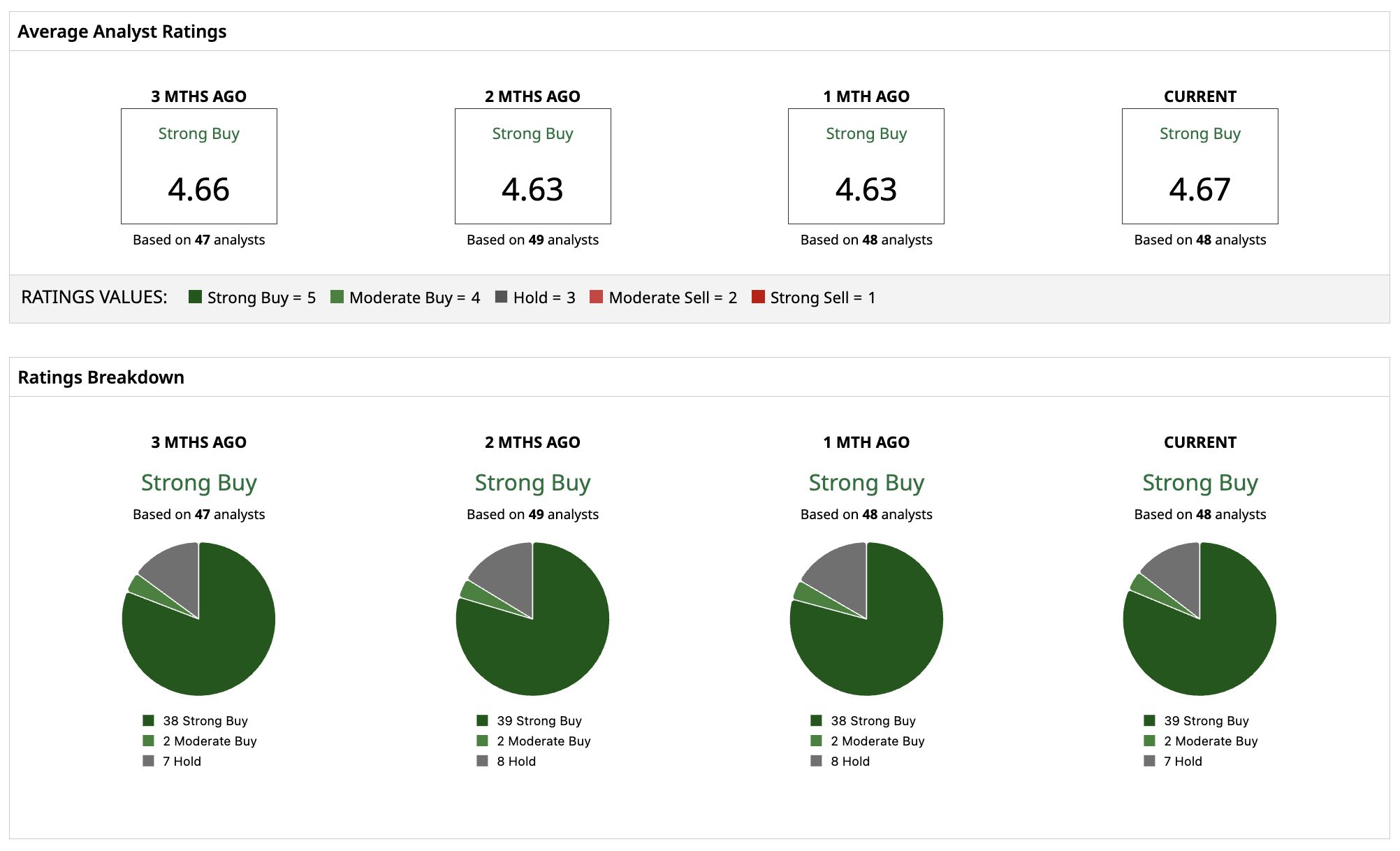
Based on 48 analysts with coverage, AMD stock holds a consensus “Strong Buy” rating on Wall Street. The mean price target of $661.82 indicates potential upside of 56% from current levels. None of the analysts tracked by Barchart suggests selling AMD stock, with even the lowest price target of $525 well above the current share price and suggesting potential upside of 24% from here. So, the market appears to be largely bullish on AMD.
 www.barchart.com
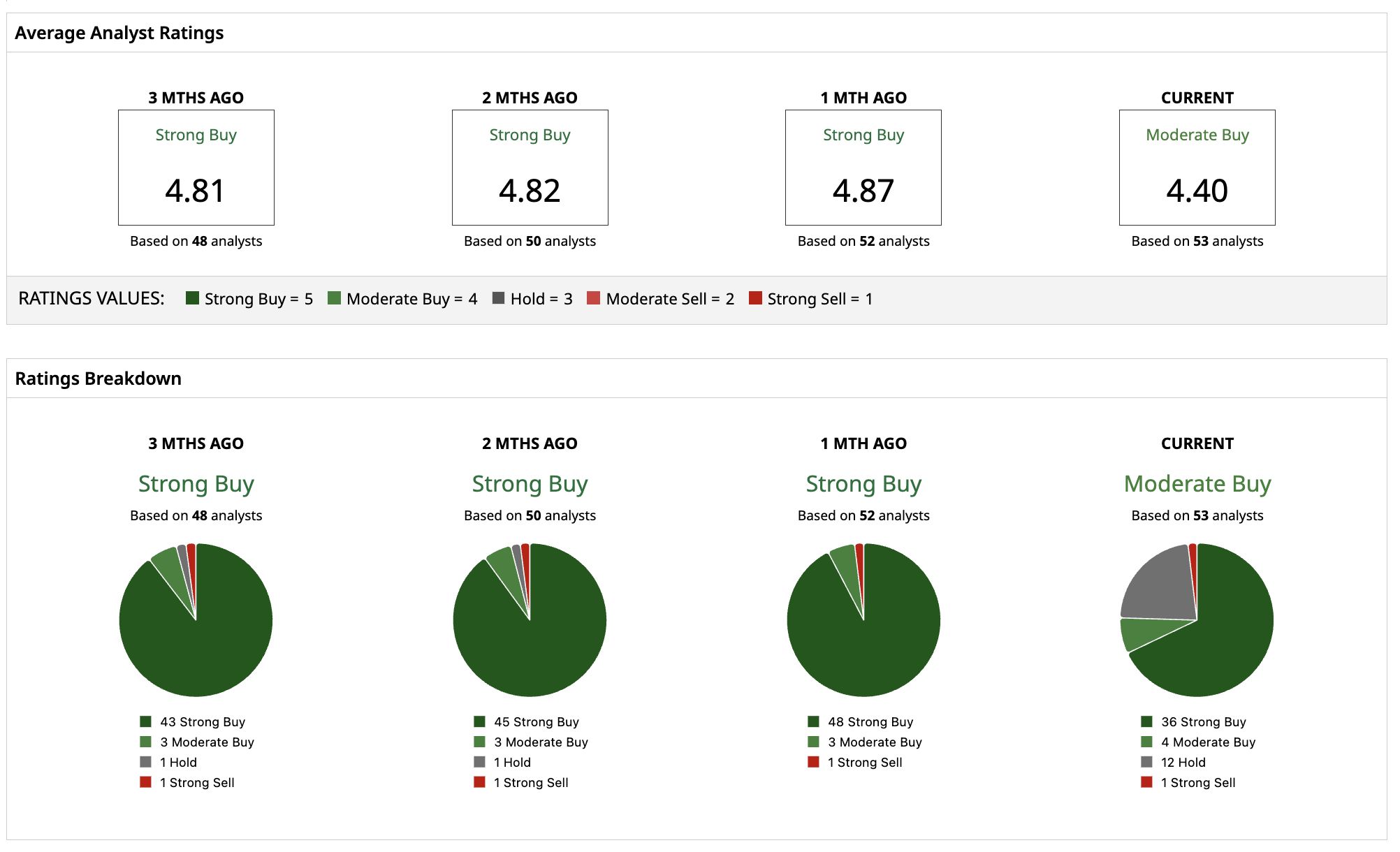
Meanwhile, based on the 53 analysts covering the stock, Nvidia holds a consensus “Moderate Buy” rating on Wall Street. Due to its recent sharp selloff, the average price target of $244.23 indicates huge potential upside of 95% from current levels. Although based on estimates, that's considerably larger potential upside compared to AMD.
 www.barchart.com
On the date of publication, Jabran Kundi did not directly have a position in any of the securities mentioned in this article. All information and data in this article is solely for informational purposes. For more information please view the Barchart Disclosure Policy here.
More news from Barchart
A Stock Down 50% Can Still Be Expensive. Here’s How I Look for a Bottom AMD vs. Nvidia Stock After Jensen Huang’s Exit: 1 Trades at Nearly 4x the Other’s Earnings Multiple. Here’s the AI Chip Stock I’d Buy Now. Microsoft Remains Attractively Valued as Azure and Cloud Drive Growth Why Robinhood’s Outlook Appears to Be Positive Despite the Kalshi Threat