


Brazil is the world’s leading free-market sugarcane-producing country. While the United States, the world’s leading corn-producing country, processes corn into ethanol, Brazilian ethanol is made from sugarcane. The war in the Middle East and explosive price action in crude oil and oil products ignited a bullish fuse in the world sugar futures market.
I asked if sugar’s bearish trend will end in 2026 in a January 23, 2026, Barchart article, where I concluded with the following:
Don’t Miss a Day: From crude oil to coffee, sign up free for Barchart’s best-in-class commodity analysis.
Commodity cyclicality suggests that sugar prices could be closer to a potential low than a high in 2026, making the risk-reward on a long position attractive.
Nearby world sugar futures were trading at 14.96 per pound on January 22, while the Teucrium Sugar ETF (CANE) was trading at $9.66 per share. Sugar futures and the CANE ETF were lower on April 8 after reaching a new 2026 high on March 30.
Brazil is a leading sugar and ethanol producer
Brazil and India are the world’s leading sugarcane producers.
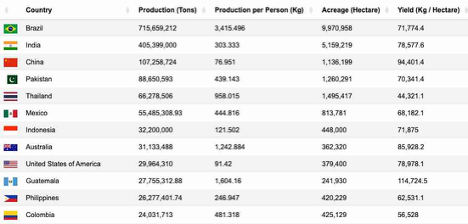 Source: atlasbig.com
 While Brazil and India lead in sugar production, Brazil is by far the leading producer. Sugarcane is the ingredient in Brazilian biofuel.
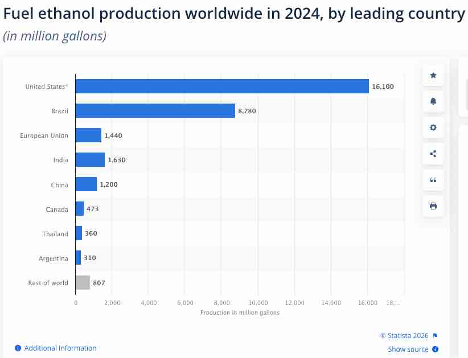 Source: Statista
 The chart shows that Brazilian leadership in sugarcane output makes the country the world’s second-leading ethanol producer, behind the U.S. Corn and sugarcane produce the lion’s share of the world’s ethanol.
Higher oil and oil product prices increase ethanol demand
The February 28, 2026, U.S. and Israeli attack on Iran and Iran’s retaliatory strikes across the Middle East, including the closure of the Strait of Hormuz to traffic carrying oil, gas, fertilizers, and other commodities, have caused oil prices to soar.
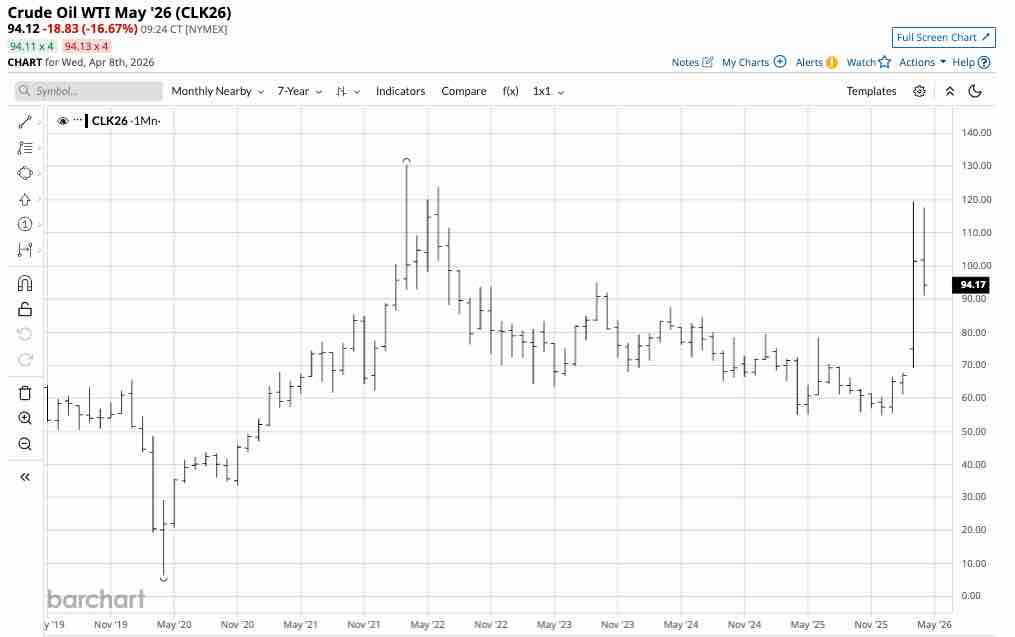
The chart shows that after trading below $60 per barrel in late 2025 and early 2026, NYMEX WTI crude oil futures rallied to over $94.50 per barrel on April 2, following a March 2026 explosive high of $119.48 per barrel.
Oil products, including gasoline and distillates, soared alongside crude oil, and ethanol became more expensive.
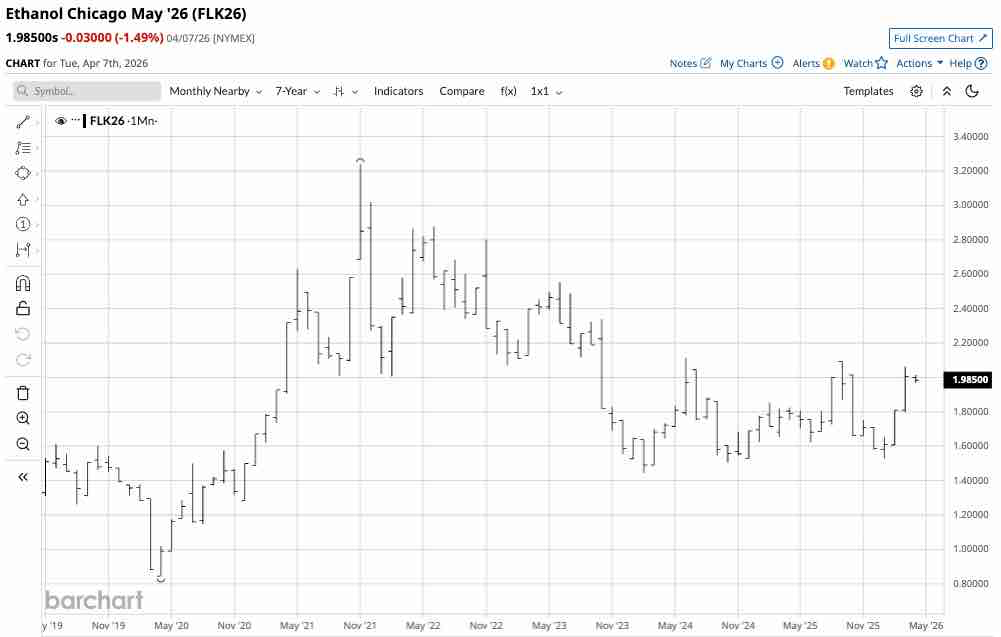
The monthly chart of Chicago ethanol swaps shows the rally from $1.53 per gallon in January 2026 to around $2 per gallon wholesale in March and April 2026.
World sugar futures have moved into a bullish trend since the mid-February low
World sugar futures have been under pressure, falling 52.6% from 28.14 cents in November 2023 to the latest low of 13.34 cents per pound in February 2026.
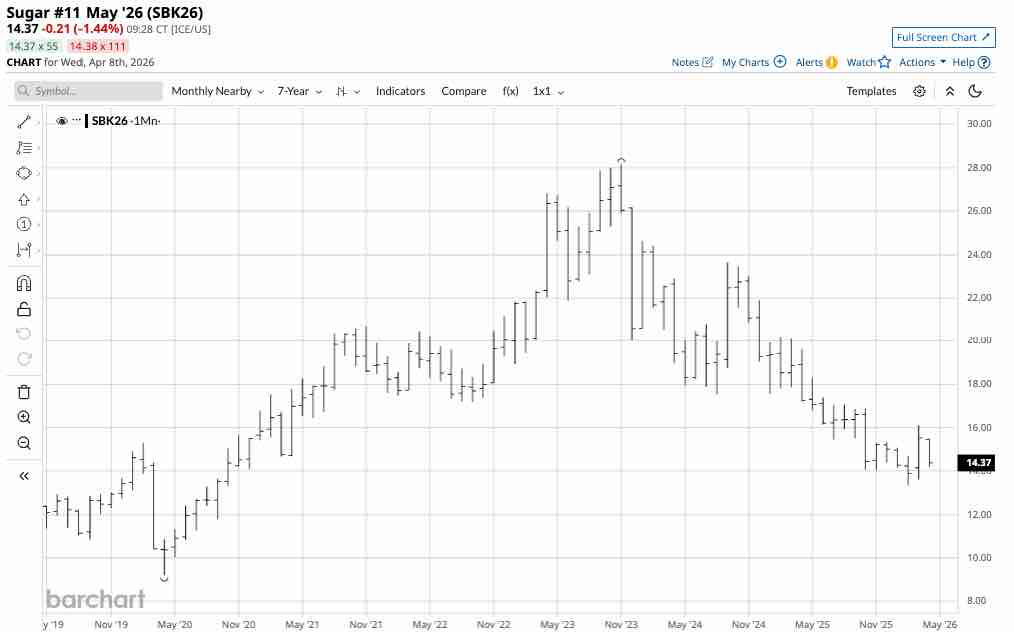
The monthly chart shows that world sugar futures rallied 20.7% from the February low to the most recent March high of 16.10 per pound. Rising oil and oil product prices have boosted Brazilian ethanol demand, in turn supporting higher sugar prices. Moreover, as I had mentioned in the late January 2026 Barchart article, “Commodity cyclicality suggests that sugar prices could be closer to a potential low than a high in 2026, making the risk-reward on a long position attractive.”
Levels to watch in the world sugar futures market
The one-year continuous contract ICE world sugar futures chart highlights the support and resistance levels to watch over the coming days and weeks.
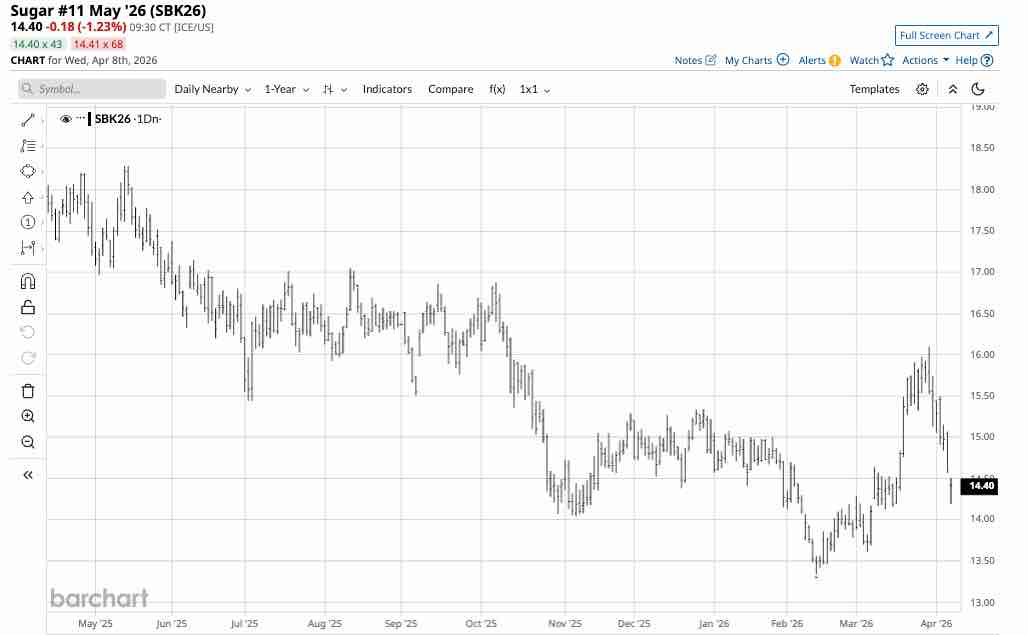
The first technical support level is at the March 5, 2026, low of 13.61 cents per pound. Below that, the February 12, 2026, low of 13.34 cents is critical technical support. The mid-February low was the lowest world sugar futures price since October 2020.
Technical resistance is at the recent 16.10-cent-per-pound high, the October 7, 2025, high of 16.88 cents, the August 12, 2026, high of 17.05 cents, and the May 13 and 14, 2025, high of 18.29 cents per pound. Oil prices have corrected over the past sessions, but if they rise again, sugar’s link to Brazilian ethanol will likely support higher world sugar futures prices.
CANE rallies with the sweet commodity
Sugar prices rallied 20.7% from 13.34 to 16.10 from the mid-February low to the late March high and corrected 11.9% to 14.19 on April 8. World sugar is the only soft commodity with an ETF product that tracks the futures performance. At $9.74 per share, the Teucrium Sugar ETF (CANE) had over $83 million in assets under management. CANE trades an average volume of over 740,000 shares per day and charges a 0.93% management fee.
CANE invests its assets in three liquidly traded ICE world sugar futures contracts, excluding the nearby contract, to mitigate roll risks. Since the most speculative activity tends to occur in the nearby contract, CANE tends to underperform the nearby contract on the upside and outperform it when the price moves lower.
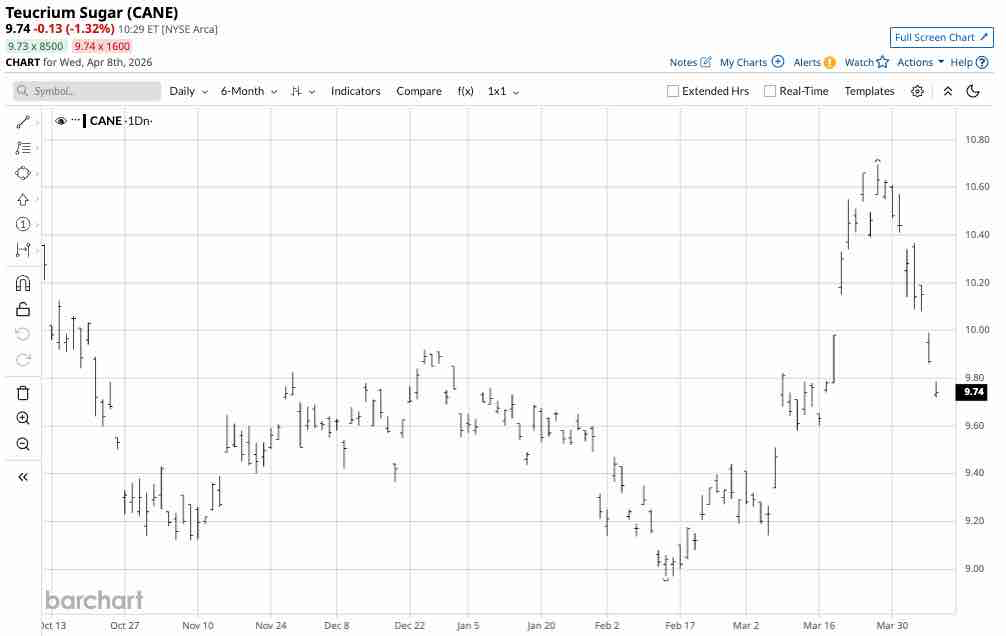
The daily chart shows that during the period, nearby sugar futures rose 20.7%, while the CANE ETF rose 19.3%, from $8.97 to $10.70 per share. CANE did an excellent job tracking nearby sugar futures as the deferred contracts rallied alongside the nearby contract. The recent correction took ICE May world sugar futures 11.9% lower. The CANE ETF dropped 9.2% to cents per pound, outperforming the sugar futures on the downside.
Due to their connection to ethanol, world sugar futures and the CANE ETF should continue to track volatile oil prices over the coming days and weeks. However, commodity cyclicality suggested that prices had declined to a level where production was no longer economically viable, inventories began to decline, and consumption increased, leading to a price bottom at 13.34 cents per pound. I remain bullish on the prospects for world sugar futures in early April, but would only add to long positions on price weakness.
On the date of publication, Andrew Hecht did not have (either directly or indirectly) positions in any of the securities mentioned in this article. All information and data in this article is solely for informational purposes. For more information please view the Barchart Disclosure Policy here.
More news from Barchart
Did Higher Oil Prices Send World Sugar Futures Higher? Do We Need to Fear a "Super El Niño"? Commodity Roundup- March’s Top Performers and Underperformers Why Sugar Prices Are Up on Oil Price Gains and How to Trade Sugar Futures Now