

Grocery Outlet Holding Corp. GO is drawing shoppers back with sharper value messaging and promotions, yet comparable sales remain pressured by smaller baskets and mix headwinds.
Understanding what drives traffic, ticket, and margins comes down to how GO sources product, how stores are run locally, and how quickly execution initiatives translate into better basket economics.
GO’s Treasure-Hunt Model and Why It Wins
GO’s “treasure hunt” model starts with extreme-value pricing in a small-box store format, typically about 14,000 to 18,000 square feet. The concept is designed to feel easy to shop while still offering surprise and discovery through a curated, fast-changing assortment.
The savings engine is opportunistic sourcing. GO buys discounted merchandise tied to order cancellations, manufacturer overruns, packaging changes, and product nearing “sell-by” dates. Those discounted closeouts appear as rotating “WOW!” deals that refresh the trip and reinforce the value perception that shoppers expect from the banner.
Management has clearly framed the model’s advantage: a typical basket is priced meaningfully below conventional grocers and leading discounters, with the best deals offering large savings compared with conventional retailers. That combination of everyday staples plus rotating WOW! deals is what support traffic and repeat visits.
Grocery Outlet’s IO Structure Powers Local Execution
A defining feature of GO is its Independent Operator (IO) structure. Each store is run by an Entrepreneurial Independent Operator under an Operator Agreement, which grants the IO meaningful authority over store-level execution. That includes merchandising and product selection, inventory management, local marketing, hiring and training, and day-to-day operations.
This decentralization is not just a cultural choice. It is a mechanical advantage for a business that relies on localized assortments and fast turns. IO autonomy helps stores tailor what they sell and how they present it to the customers walking through that specific door.
The incentive system matters too. GO shares store-level gross profits with Independent Operators, aligning motivation around selling through the mix, keeping the store shoppable, and engaging customers consistently. When the value story is clear and the deal flow is strong, the model can compound through higher trip frequency and stronger baskets.
Grocery Outlet Holding Corp. Price, Consensus and EPS Surprise
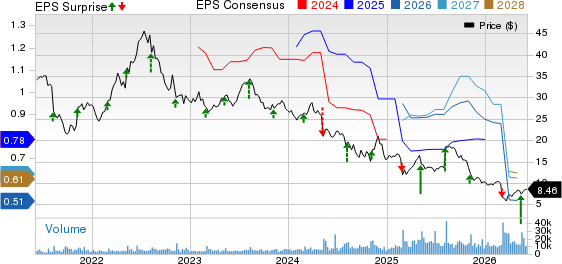
Grocery Outlet Holding Corp. price-consensus-eps-surprise-chart | Grocery Outlet Holding Corp. Quote
GO’s Product Mix Shift Is the Key Variable
The biggest swing factor in GO’s current performance is the opportunistic product mix. Opportunistically sourced products account for a substantial portion of the purchasing mix and are central to the WOW! deal promise that differentiates the chain.
Management has emphasized rebuilding that mix. In the first quarter of fiscal 2026, the company pointed to progress, with an opportunistic mix rising by nearly 2 percentage points since the start of the year, and noted that higher-value branded deals are resonating with customers.
When the opportunistic mix is not where it needs to be, the basket can soften. The business can still bring shoppers into stores, but a less compelling deal flow can reduce units per trip and dampen wallet share, making it harder to convert traffic gains into positive comparable sales.
Grocery Outlet’s Comps: Traffic Up, Basket Down
GO’s comparable-store sales picture is best explained by the math. In the first quarter, comparable sales declined 1% even as transactions increased 2.1%, because average transaction size fell 3.1%.
Management directly tied the ticket pressure to lower units per transaction and a reduced mix of opportunistic products. In other words, more shoppers are coming through the doors, but they are leaving with fewer items.
That pattern is also why the near-term cadence still looks uneven. Even with sequential traffic improvement, comps can stay negative if basket size does not recover alongside mix restoration. That is the critical bridge from traffic-led stabilization to healthier earnings leverage.
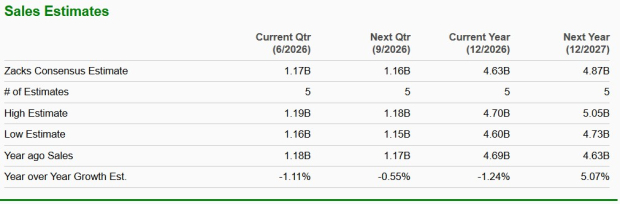
Image Source: Zacks Investment Research
GO’s Promotions Help Traffic but Squeeze Margins
To strengthen value perception and keep traffic moving in the right direction, GO has leaned into heavier promotions. Management has committed to sizable synthetic promotional support during fiscal 2026 to help bridge the opportunistic supply gap.
The trade-off is margin. In the first quarter, gross margin declined year over year, with part of the pressure tied to restructuring-related inventory markdowns and write-offs, and the rest linked to deliberate promotions used to support traffic and value perception.
This is where competitive intensity matters. Larger rivals like Walmart Inc. WMT and Costco Wholesale Corporation COST have the resources, brand recognition, and broad assortments that can intensify price competition, raising the bar for GO to defend its value message without giving up too much margin.
Grocery Outlet’s Store Actions: Refreshes and Closures
Beyond pricing, GO is trying to improve the in-store experience. The store refresh program is designed to improve layout, signage, and merchandising clarity, make stores easier to shop, improve in-stock consistency, and communicate savings more clearly. Management completed 34 refreshes in the first quarter and expects about 100 by year-end, with early feedback described as positive.
At the same time, the company is upgrading the store base through an Optimization Plan. GO is closing 36 underperforming stores, completing 27 closures in the first quarter and the remaining nine in April, with an expected $12 million of annualized adjusted EBITDA improvement once the actions are completed.
Taken together, refreshes aim to lift productivity in the core fleet, while closures are intended to improve earnings quality by pruning weaker assets and concentrating resources on better-return locations.
What to Watch Next for GO’s Sales Recovery
With transactions improving but ticket down, a sustained recovery requires units per trip to stabilize and the average transaction size to stop falling.
Second, monitor opportunistic mix restoration. Management’s progress on rebuilding the mix has been measurable, and continued improvement should help strengthen the WOW! deal promise that supports both traffic and basket.
Third, watch the pace and effectiveness of refreshes and whether in-stock consistency gains translate into better conversion. Finally, follow whether promotional intensity can normalize as the opportunistic supply gap narrows, helping comps stabilize without prolonging gross margin pressure. Currently, the stock carries a Zacks Rank #3 (Hold). You can see the complete list of today’s Zacks #1 Rank (Strong Buy) stocks here.
Research Chief Names "Single Best Pick to Double"
From thousands of stocks, 5 Zacks experts each have chosen their favorite to skyrocket +100% or more in months to come. From those 5, Director of Research Sheraz Mian hand-picks one to have the most explosive upside of all.
This company targets millennial and Gen Z audiences, generating nearly $1 billion in revenue last quarter alone. A recent pullback makes now an ideal time to jump aboard. Of course, all our elite picks aren’t winners but this one could far surpass earlier Zacks’ Stocks Set to Double like Nano-X Imaging which shot up +129.6% in little more than 9 months.
Free: See Our Top Stock And 4 Runners UpWant the latest recommendations from Zacks Investment Research? Today, you can download 7 Best Stocks for the Next 30 Days. Click to get this free report
Walmart Inc. (WMT): Free Stock Analysis Report
Costco Wholesale Corporation (COST): Free Stock Analysis Report
Grocery Outlet Holding Corp. (GO): Free Stock Analysis Report
This article originally published on Zacks Investment Research (zacks.com).