

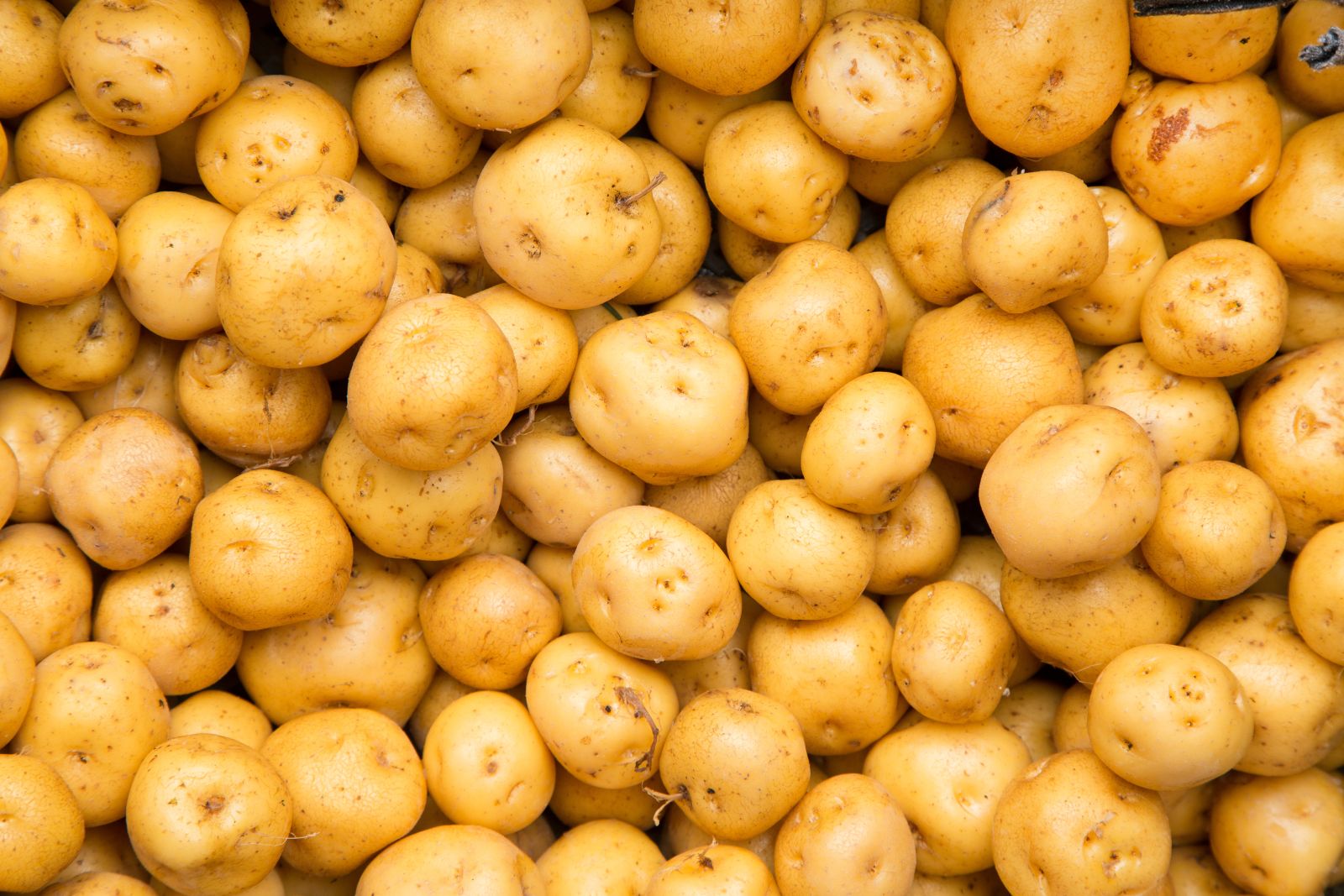
When somebody mentions market volatility, you probably think about meme stocks or speculative crypto. The absolute last thing on your mind is going to be potatoes.
But over the last couple of months, potato futures (GOM26) have delivered the wildest ride you’re ever going to find in financial markets. Prices exploded by around 700% in just a few weeks only to collapse more than 90% from that peak.
Don’t Miss a Day: From crude oil to coffee, sign up free for Barchart’s best-in-class commodity analysis.
For reference, we’re still only talking about highs of around $18.50. But that’s a huge move for spuds—especially bearing in mind that prices have now bottomed out at just $1.40. That’s the kind of move you’d expect from a penny stock rather than an ancient agricultural commodity.
So, what gives?
The weird part of all this is that it hasn’t been driven by a sudden global shortage or some disruptive farming technology. It’s been driven by a perfect storm of bad speculative positioning and geopolitical anxiety—and even though you might not be in a rush to add potatoes into your asset mix, all of this boom-and-bust drama raises some fundamental questions about today’s markets.
Why Did Potato Prices Go Vertical?
Potato futures have spent years operating in obscurity. They don’t tend to attract as much investor attention as corn because trading volumes are thin and liquidity is normally limited. Most participants in this space aren’t spectators but commercial users.
That’s why nobody noticed the quiet rally going on with potato futures until prices surged in May. They shot up from $2.30 to around $18.50 per contract equivalent pricing, which is a gain of around 700%.
The rally even caught veteran commodity traders off guard because agricultural markets are super easy to predict. It’s just a matter of supply and demand, and price shifts evolve over months (not days).
If you’re looking for a little bit of context, that’s a bigger jump than Nvidia (NVDA) has posted as a result of the current AI boom. In fact, potatoes were outperforming almost every asset class on the planet—which is why traders started comparing it to meme stocks like GameStop (GME).
There are a couple of reasons potato prices went haywire, and it starts with the Iran war.
Whenever geopolitical tensions kick off, commodity markets get hypersensitive. Investors start trying to price in supply disruptions, inflationary pressures, and bottlenecks. Oil has been the most obvious victim since the U.S. started its war with Iran, but the ripple effects inevitably shift over to agricultural markets.
That’s because farmers rely on fertilizers, fuel, and global trade routes to bring up crops and ship them out. So when war rears its ugly head, traders will normally bid up agricultural commodities because they expect more disruption.
The reason potatoes were more vulnerable to all of this speculative excess is because the market is already traded really thinly. There’s not a lot of capital in potato futures, which means it only takes a small amount of money on contracts to cause enormous price swings. And once momentum traders saw potatoes rallying, more buyers jumped on the bandwagon.
Within days, prices had been pushed a zillion miles away from underlying fundamentals—all thanks to textbook speculation.
What Goes Up Must Come Down
If you trade in commodities, you know better than most that agriculture futures tend to overshoot in both directions. That’s precisely what’s happened to potatoes.
After riding high for a couple of weeks, everybody seemed to realize that fears around immediate supply disruption were wrong. Traders began taking profits, and the market started to unwind from there. Selling pressure appeared, and the rally totally reversed thanks to the lack of liquidity in spuds.
Over the course of just a few days, potato futures fell roughly 90% from their highs. That just about erased all the gains that were generated during the speculative frenzy and delivered a painful lesson to anyone who bought near the top: big commodity moves rarely end gently.
Unlike stocks, commodities don’t launch new products or generate earnings growth. Potatoes or corn can’t create shareholder value through innovation, either. No matter how batty their prices go, commodities always reconnect with physical supply and demand. That’s why the corrections can be brutal when their prices become detached from those fundamentals.
Even if your portfolio has never seen a single vegetable, this is a parable you need to pay attention to. Modern markets tend to amplify small catalysts—whether it’s AI equities earning insane valuations or meme stocks shooting up 1000%. Information moves instantly, and speculative traders are developing a bad habit of looking at that information and flooding capital into places they shouldn’t without thinking twice.
Sure, speculation creates a big opportunity. But this potato rally proves that sometimes narrative-driven trading can completely overwhelm fundamentals and confuse lasting value with excitement.
What Happens Now?
There’s always the possibility that potato futures will recover.
Agricultural commodities are reliant on harvest yields, weather patterns, and geopolitics. That means any hint of a supply shock can trigger volatility. But history tells us that markets rarely go running back to something after a collapse of this size. It could be months or even years before potato prices rally again.
So, the potato boom is over. Nevertheless, there’s a key takeaway here.
After watching this episode unfold, chances are you’re not going to run out and start trading potato futures. Please don’t. However, you should consider this a valuable insight into how markets are functioning in 2026.
Volatility has essentially become its own asset class because loads of investors are now betting on narratives and momentum. That creates huge gains for early entrants, but it also carries a high risk of violent reversals. This happens all the time—potatoes are just the latest (and a very extreme) example.
On the date of publication, Nash Riggins did not have (either directly or indirectly) positions in any of the securities mentioned in this article. All information and data in this article is solely for informational purposes. For more information please view the Barchart Disclosure Policy here.
More news from Barchart
Up 700% and Now Down 90%, the Iran War Made Potato Prices More Volatile Than Penny Stocks How to Play Sugar Prices Here Amid Global Surplus Panic Look Out Below! Grain and Cotton Prices Are on the Ropes Heading into Summer. May’s Top Performers and Underperformers