

In their latest quarterly earnings reports, oil majors ExxonMobil (XOM) and Chevron (CVX) both reported staggering profit growth.
During Q2 of 2026, profits at Exxon more than doubled, while Chevron’s profits more than quadrupled.
Don’t Miss a Day: From crude oil to coffee, sign up free for Barchart’s best-in-class commodity analysis.
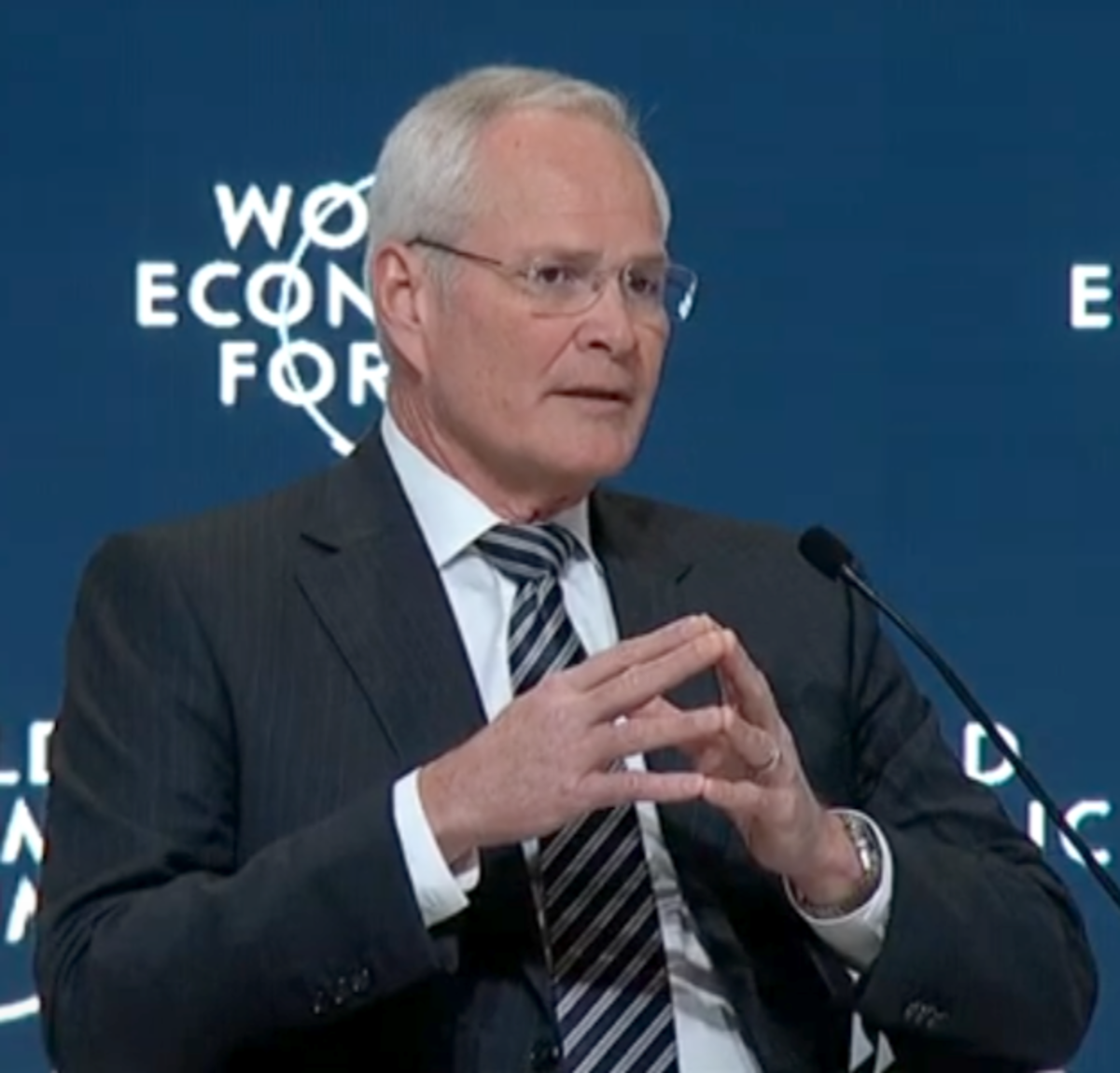
But while oil companies are raking in profits, ExxonMobil CEO Darren Woods warns that US consumers – who have been feeling the pinch of gas prices hovering around $4 per gallon – shouldn’t anticipate relief at the pump anytime soon.
"I wouldn't hold my breath here in the short term for that," said Woods in a post-earnings conversation with CNBC.
The “Disconnect” at the Gas Pump
Even though crude oil prices have retreated from their peak of $126 per barrel earlier in the spring to around $85-$90 per barrel, gasoline prices across the United States remain stubbornly above $4 per gallon.
During the July 31 interview, Woods explained that there is a “disconnect” between crude oil prices and what consumers are paying at the gasoline pump, and that this gap is unlikely to close quickly.
The core of his argument centers on global refinery constraints rather than the cost of raw crude itself being the primary driver of elevated fuel prices.
The US-Iran conflict, now in its sixth month, has severely disrupted oil flows through the Strait of Hormuz, which previously handled roughly one-fifth of global crude (CLU26) and natural gas (NGU26) shipments.
This disruption has caused a nearly 9% reduction in global refining capacity due to war-related dislocations, including damage to Middle Eastern refineries and reduced crude inputs to Asian facilities that previously depended on Gulf supplies.
The result is that refineries with adequate crude supply, particularly those in the US, are enjoying historically elevated crack spreads of $50-$60 per barrel compared to normal levels of $20-$25.
Woods indicated that even once a ceasefire or resolution is achieved, the normalization process will be slow because market participants will be reluctant to resume transit through the Strait of Hormuz immediately. He noted that the back-and-forth nature of disruptions and attacks creates lingering uncertainty that inhibits shipping confidence, meaning it will take considerable time for flows to ramp back to pre-conflict levels.
Industry analysts estimate full normalization of oil flows from the Gulf would require four to six months after a durable ceasefire, with a base case of full normalization not arriving until early 2027.
What Exxon’s Q2 Says About Gas Prices
ExxonMobil's own quarterly results underscore why the company sees no imminent relief for consumers.
The company's refining business earned $5.5 billion in the second quarter after posting a $1.3 billion loss in the first quarter, reflecting the extraordinary margin environment.
The oil giant reported record refining margins during the quarter alongside record production in the Permian Basin and its highest overall upstream output in more than two decades. Total company profits more than doubled year-over-year to $14.5 billion on revenue of $116 billion.
Why There’s No Relief Coming for Cash-Strapped Consumers
As Woods describes it, the structural nature of the problem suggests that gas prices will remain elevated regardless of where crude settles in the near term.
Global demand has been hit hard enough that recovery in fundamental consumption, apart from inventory restocking, looks unlikely in the short run – yet the supply deficit estimates for 2026 range from 1 million to 2.6 million barrels per day.
With American refineries already running at near-full capacity and no quick fix for damaged or inaccessible refining assets abroad, the bottleneck that Woods described will likely persist until significant new capacity comes online or the geopolitical situation stabilizes sufficiently to restore pre-war trade flows.
Although it’s not what anyone wanted to hear, this complex fundamental backdrop explains why the ExxonMobil chief executive effectively told consumers not to expect meaningful pump-price relief anytime soon.
This article was created with the support of automated content tools from our partners at Sigma.AI. Together, our financial data and AI solutions help us to deliver more informed market headline analysis to readers faster than ever.
On the date of publication, Sarah Holzmann did not have (either directly or indirectly) positions in any of the securities mentioned in this article. All information and data in this article is solely for informational purposes. For more information please view the Barchart Disclosure Policy here.
More news from Barchart
Visa Stock Looks Attractive After Layoffs, Strong Earnings Google Piles On Off-Balance-Sheet Risk to Fuel Its AI Chip Push Hoping for Lower Prices at the Gas Pump? After Exxon Doubles Profits, CEO Darren Woods Says ‘I Wouldn’t Hold My Breath.’ Why Investors Shouldn’t Sweat the Dip in Qualcomm’s Handset Revenue, According to Experts