


Constellation Energy (CEG) is turning its nuclear fleet into something rare in the power business. It has locked in decades of demand ahead of time. On its latest earnings call, the company said most of its generation output is now contracted through 2050 and beyond. For a sector where revenue usually swings with volatile wholesale prices, that kind of visibility is almost unheard of. It also comes at a time when artificial intelligence is driving the steepest jump in electricity demand in a generation.
The second quarter showed the strategy in motion. Constellation signed 920 megawatts of new long-term nuclear power agreements. These contracts run 15 to 20 years and start delivering power between 2029 and 2032. Among them is a 176-megawatt Walmart (WMT) deal, split across two 15-year contracts, that will help fund an expansion at the Dresden plant in Illinois. These sit on top of earlier 20-year agreements with Microsoft (MSFT) and Meta (META), tying some of the world’s largest firms to Constellation’s output well into the 2040s.
Don’t Miss a Day: From crude oil to coffee, sign up free for Barchart’s best-in-class commodity analysis.
Closing the Calpine Chapter
Alongside the contract wins, Constellation is wrapping up the reshaping of its fleet. It agreed to sell the Brazos Valley Energy Center in Texas to LS Power for $860 million. That was the last sale regulators required before its $16.4 billion purchase of Calpine could be fully completed. Together, the Calpine assets and the growing stack of nuclear contracts point to the same goal. Constellation wants large, long-term customers locked in, not revenue that rises and falls with short-term power markets.
There are some concerns worth addressing, though. Nuclear output has fallen, with the plants running below their usual levels. Adding Calpine to the mix also brings the usual strain of merging a large business. Moreover, the data center boom Constellation is counting on may not run smoothly. Texas recently paused new data center hookups until it works out whether its grid can handle the extra load and who should pay to upgrade it.
Even so, few power companies can point to revenue locked in as far out as Constellation now can.
About CEG Stock
Constellation Energy Corporation produces and sells energy products and services in the United States. It operates a diverse portfolio of power plants, including nuclear, wind, solar, natural gas, and hydroelectric facilities. The company has approximately 31,676 megawatts of generating capacity. Founded in 2021, the company is headquartered in Baltimore, Maryland.
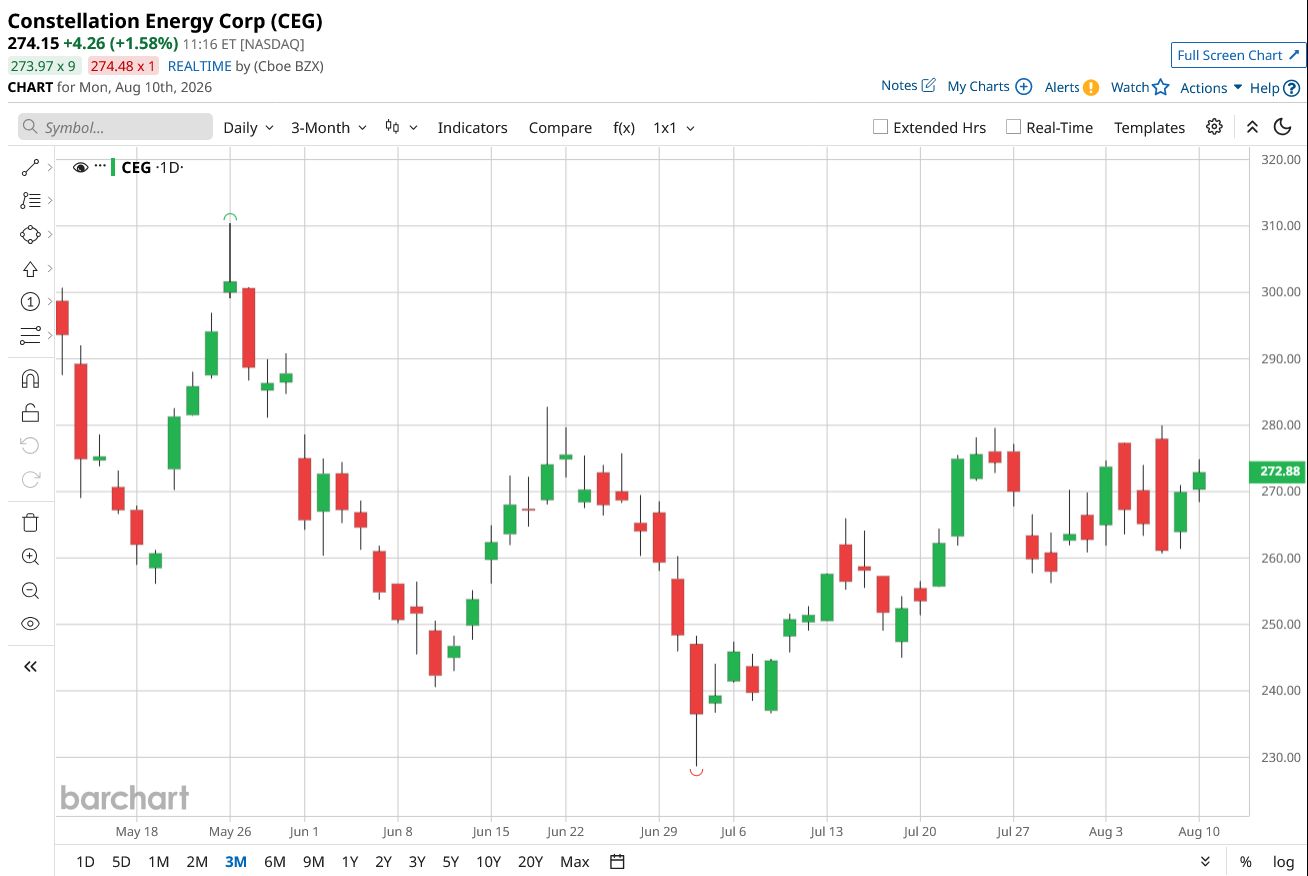
Over the past year, Constellation shares have fallen roughly 19%, dropping from above $331 to around $269. While the iShares US Utilities ETF (IDU) also did not see any impressive gains during the past year, it still outperformed CEG, gaining, an admittedly still measly but still green, 0.05% during the same period. The decline was due to a combination of a GAAP-based earnings decline, higher debt from the Calpine deal, net interest expense that jumped more than 70% year-over-year in first-quarter 2026, and regulatory concerns regarding the Calpine deal.
 www.barchart.com
 Constellation Energy’s valuation looks reasonable for a company with decades of locked-in demand. The forward price-to-earnings (P/E) of 21.16x and forward price-to-sales (P/S) of 2.64x suggest the stock isn’t overpriced. EPS outlook is decent, with analysts expecting earnings growth in the range of 13% to 27% through the end of the decade. The durable trajectory reflects long-term contracts now supporting its revenue.
The balance sheet is where investors’ main concern lies. Constellation holds just $697 million in cash against $24.7 billion in debt, leaving it in a considerable amount of net debt. The answer to that concern remains the strength of Constellation I have been highlighting in this article. Constellation has decades of contracted output, so paying the debt back seems far more likely than it would be for a debt-heavy company without that visibility. For investors, the appeal lies in growth backed by revenue that is already committed.
Constellation Energy Tops Q2 EPS Forecast, Raises Outlook
Constellation Energy reported its second-quarter fiscal 2026 earnings on Aug. 6. The company reported revenue of $7.5 billion, below the $7.94 billion analyst estimates. Adjusted operating earnings per share came in at $2.55, comfortably beating the Wall Street consensus of $2.41. Constellation signed about 920 megawatts of long-term nuclear contracts in the quarter. Its electricity output for the quarter was 40 terawatt-hours.
Looking forward, CEG raised its full-year adjusted operating earnings guidance to $11.50 to $12.50. The midpoint now stands at $12, up $0.50 from the prior midpoint. Management said the stronger outlook reflects commercial execution and disciplined capital allocation, including share repurchases. The company stated that it has deployed about $2.2 billion toward buybacks in the four months since its March business outlook and still has $2.8 billion remaining under authorization. It also pointed to several long-term growth drivers, such as continued interest from corporate customers and data center operators, more long-term nuclear power purchase agreements, and progress on the Crane nuclear restart.
What Do Analysts Expect for CEG Stock?
Following the earnings, Wall Street remained positive on CEG stock, with more than three analysts maintaining their “Buy” ratings. On Aug. 7, Evercore ISI analyst Nicholas Amicucci reiterated a Buy rating with a price target of $380. The analyst’s price target reflects an additional 41% upside from current levels. In addition, Scotiabank analyst Andrew Weisel also maintained a “Buy” rating and assigned a price target of $441.
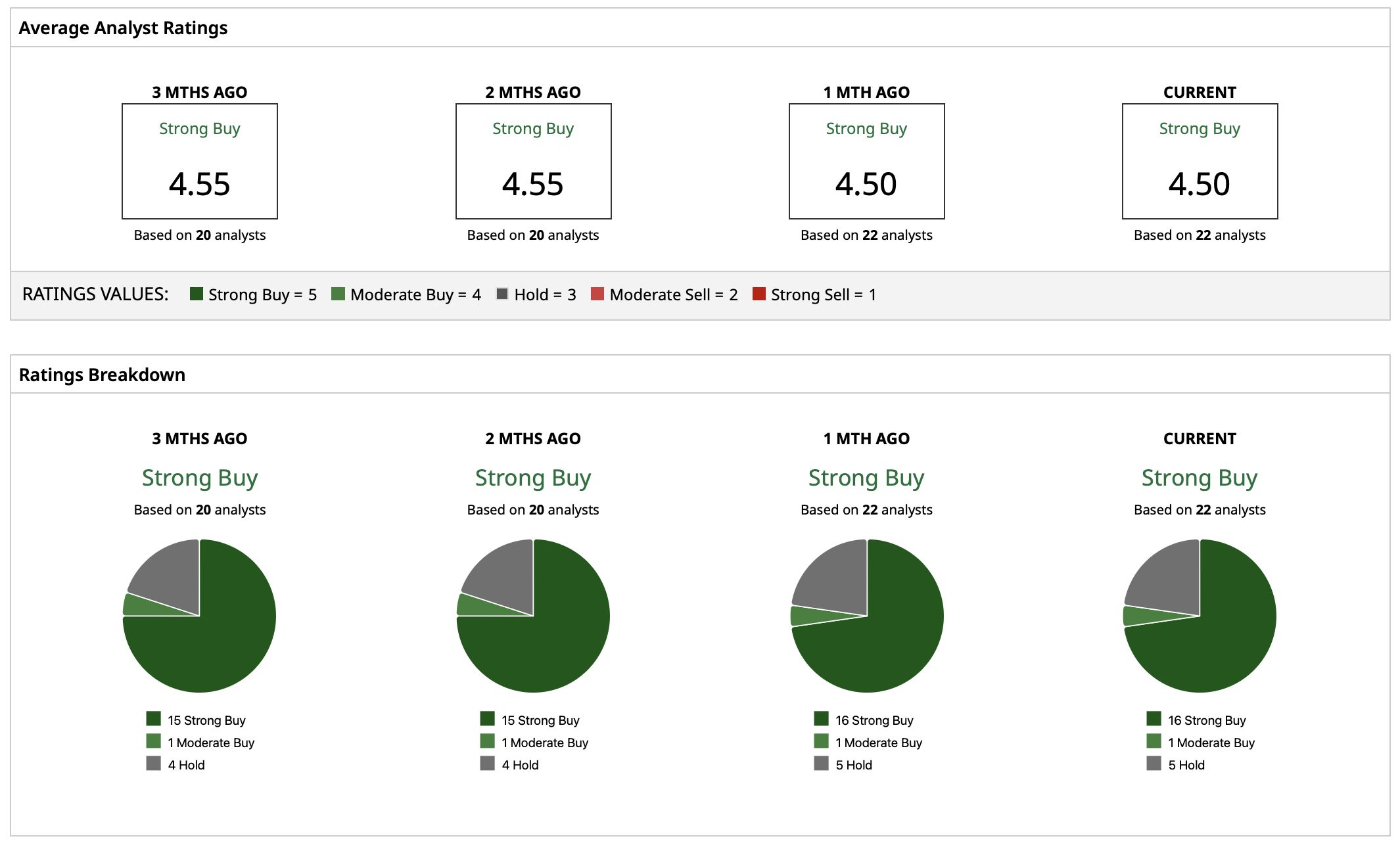
Based on 22 Wall Street analysts with coverage, CEG stock holds a consensus “Strong Buy” rating. Out of those, 16 have a “Strong Buy” rating, one has a “Moderate Buy” rating, and five have a “Hold” rating. The mean price target of $351.86 implies a further 28% upside from the current share price. The high price target of $462 reflects strong confidence in the company’s long-term growth prospects.
 www.barchart.com
 On the date of publication, Jabran Kundi did not have (either directly or indirectly) positions in any of the securities mentioned in this article. All information and data in this article is solely for informational purposes. For more information please view the Barchart Disclosure Policy here.
More news from Barchart
The Biggest AI Power Opportunity May Be Hiding in Constellation Energy Vistra Corp (VST) Stock’s Underperformance Could Open Up a Contrarian Options Trade What Was Driving Markets Early Monday Morning? Billionaire Ken Griffin Once Said 'If You Don't Like to Sell, Get Over It' - Here's What That Means for Traders Today