

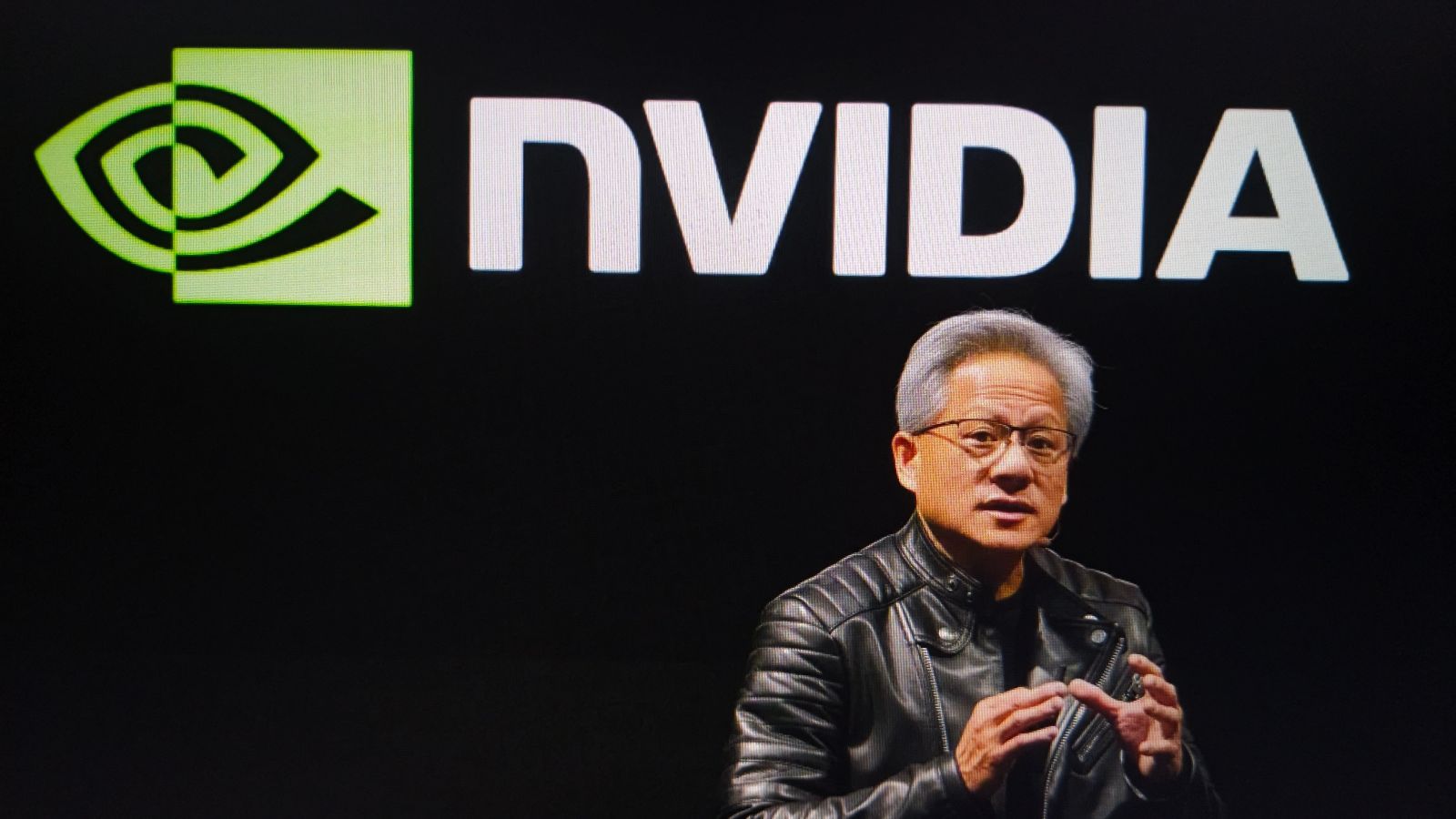
Nvidia (NVDA) has exploded in value over the last five years. The company has effectively solidified its role as the beating heart of the artificial intelligence (AI) arms race, becoming the world’s most valuable company somewhere along the way. But it looks like commanding just one AI giant is no longer enough for CEO Jensen Huang. He wants a seat at every other important table, too.
In a regulatory filing earlier this summer, Nvidia finally revealed the size of its monster equity portfolio. The company is sitting on around $63.44 billion worth of publicly traded stocks, and the strategy behind those investments tells us a lot about where Jensen Huang thinks the AI economy is heading.
More Top Stocks Daily: Go behind Wall Street’s hottest headlines with Barchart’s Active Investor newsletter.
Nvidia isn’t randomly buying shares and hoping for the best. Its key holdings are all deeply embedded around the AI infrastructure boom. The company is putting its money in the businesses helping to build and distribute the technology that put Nvidia on the map — covering everything from cloud computing and networking to data centers and semiconductor manufacturing.
If you’re already placing bets on the future of AI, or are unsure where to start, it is 100% worth taking a deeper dive into Nvidia’s enormous equity portfolio.
Nvidia’s $63 Billion Portfolio Is Really an AI Infrastructure Portfolio
Nvidia’s 13F filing on June 30 only contained eight publicly disclosed positions. But two of those positions effectively make up 80% of the company’s equity portfolio.
Nvidia’s shares in Intel (INTC) and SpaceX (SPCX) are worth a combined $51 billion. But Nvidia also owns around $4.7 billion of CoreWeave (CRWV), $3.1 billion worth of shares in Coherent (COHR), $2.2 billion of Nokia (NOK), and $2.2 billion of Synopsys (SNPS). Nvidia’s portfolio also includes smaller positions in Nebius (NBIS) and Generate Biomedicines (GENB).
Notice a theme yet? The concentration is striking, but it also makes perfect sense.
Intel provides essential foundry capabilities and semiconductor manufacturing, while SpaceX covers everything from AI and communications to satellites. CoreWeave’s business is AI cloud infrastructure that relies heavily on Nvidia’s GPUs. Then you’ve got Coherent providing the optical tech that data centers need, while Nokia and Synopsys operate in networking and chip design.
This isn’t your average Wall Street portfolio, and Jensen Huang couldn’t care less about diversification. This is Nvidia trying to build a self-contained ecosystem around itself, and it's the company’s three biggest positions that tell us the most about Huang’s strategic vision.
1. Intel
Intel is Nvidia’s biggest position by a long shot. The company's portfolio currently holds 214.8 million shares of Intel, which represents around $30 billion and 47% of Nvidia’s disclosed equity book. The strategy behind this one is simple: Nvidia can design all the AI chips its heart desires, but to actually produce those chips, it needs a massive manufacturing ecosystem.
That’s where Intel comes in. The company has spent years establishing itself as the leading U.S. foundry, which makes life a whole lot simpler for Nvidia in terms of supply-chain stability.
The United States' dependence on semiconductor manufacturing in Asia has become a political flashpoint and a strategic vulnerability. As the country's technology rivalry with China intensifies, investing in Intel allows Nvidia to simultaneously build a stronger domestic semiconductor supply chain and secure priority access to manufacturing capacity.
That’s a proverbial win-win for Nvidia. If you’re an Intel investor, it’s also a pretty big vote of confidence to see the world’s most valuable company pumping cash into your business.
2. SpaceX
SpaceX occupies the number two spot in Nvidia’s portfolio. Jensen Huang’s business now owns roughly 122.8 million shares of Elon Musk’s aerospace company, a stake worth just under $21 billion at the end of June.
As you can imagine, Huang didn’t just wake up one morning and impulsively decide to buy $21 billion worth of SPCX stock. In fact, Nvidia didn’t invest in SpaceX at all. It bought $10 billion in xAI in 2026. But when SpaceX bought xAI and subsequently went public in June, Nvidia’s existing interest effectively shifted over to a new company and then doubled in value.
That’s quite a result, and it means Nvidia now owns a massive financial stake in Elon Musk’s AI empire. It also means Nvidia has fresh exposure to data infrastructure, satellites, communications, and everything else that accompanies the rapidly evolving SpaceX universe.
Although this exposure was sort of unintentional, it has worked out pretty well and positioned Nvidia further downstream from the chips that it sells. Instead of relying on the value of its own hardware, Nvidia now has a greater stake in the infrastructure and businesses that consume the most computing power.
3. CoreWeave
Next, there’s CoreWeave. Nvidia is currently sitting on 47.2 million shares of the AI-focused cloud provider, which translates into a position of roughly $4.7 billion. This one’s probably the purest expression yet of Nvidia’s investment strategy.
CoreWeave’s success relies on renting out massive amounts of GPU capacity to companies that are building AI apps and models. That makes its relationship with Nvidia super simple: CoreWeave needs Nvidia’s chips, and Nvidia benefits whenever CoreWeave’s customers need extra compute.
Nvidia’s stake in CoreWeave is an important reminder that the AI boom isn’t all about selling GPUs. Somebody has to connect those GPUs, install them, power them, or rent them to customers. CoreWeave is perfectly positioned in that layer of infrastructure — and now Nvidia owns a big fat slice of it.
What Does This Mean for Investors?
At the end of the day, the most interesting thing about Nvidia’s equity portfolio isn’t its sheer magnitude. It’s the obvious pattern.
Nvidia is betting the big winners of this AI revolution won’t be limited to the companies creating AI models. They will be the semiconductor manufacturers, cloud providers, networking companies, optical-component manufacturers, and software companies that keep the system up and running. That’s an important distinction to make, and there’s an important lesson in there for market watchers.
Simply put, the AI trade shouldn’t revolve around buying shares of Nvidia. Even Jensen Huang recognizes that. There’s an enormous economic ecosystem developing alongside Nvidia, and these are probably the companies that will chalk up the greatest value hikes in the months and years to come.
Just remember to bet with caution, because concentration cuts both ways.
Intel and SpaceX make up about 80% of Nvidia’s portfolio. If the AI infrastructure boom continues to accelerate, those positions will gain value. But if (or when) that spending cycle slows, it will bite Nvidia’s humongous portfolio hard.
On the date of publication, Nash Riggins did not have (either directly or indirectly) positions in any of the securities mentioned in this article. All information and data in this article is solely for informational purposes. For more information please view the Barchart Disclosure Policy here.
More news from Barchart
Unusual Options Activity: NFLX, HONA, and MSFT Lead the Way With These 3 Options Strategies Nvidia’s Equity Portfolio Is Now Worth Over $63 Billion. 3 Top Stocks the Jensen Huang-Led Company Is Buying. ‘99¢ Still Matters’: AriZona’s Billionaire Founder Is Still Committing to $0.99 a Can Despite Absorbing Over $40 Million to Keep the Can Affordable Coinbase’s Billionaire CEO Says California’s Proposed Wealth Tax Is ‘The Kind Of Thing That Third World Countries Do’ and He May Leave Before New Year’s