


PPL Corporation (PPL) has been operating in the energy and utility business since 1920 and today serves approximately 3.6 million customers through its electricity and natural gas operations. The company’s activities cover the full electricity value chain, including generation, transmission, and distribution, alongside natural gas distribution.
The Allentown, Pennsylvania-based firm maintains a diversified generation portfolio spanning coal, natural gas, hydroelectric power, and solar. Its substantial customer base and broad operating footprint have helped the company build a market cap of nearly $25 billion, placing it above the $10 billion threshold associated with large-cap stocks.
More Top Stocks Daily: Go behind Wall Street’s hottest headlines with Barchart’s Active Investor newsletter.
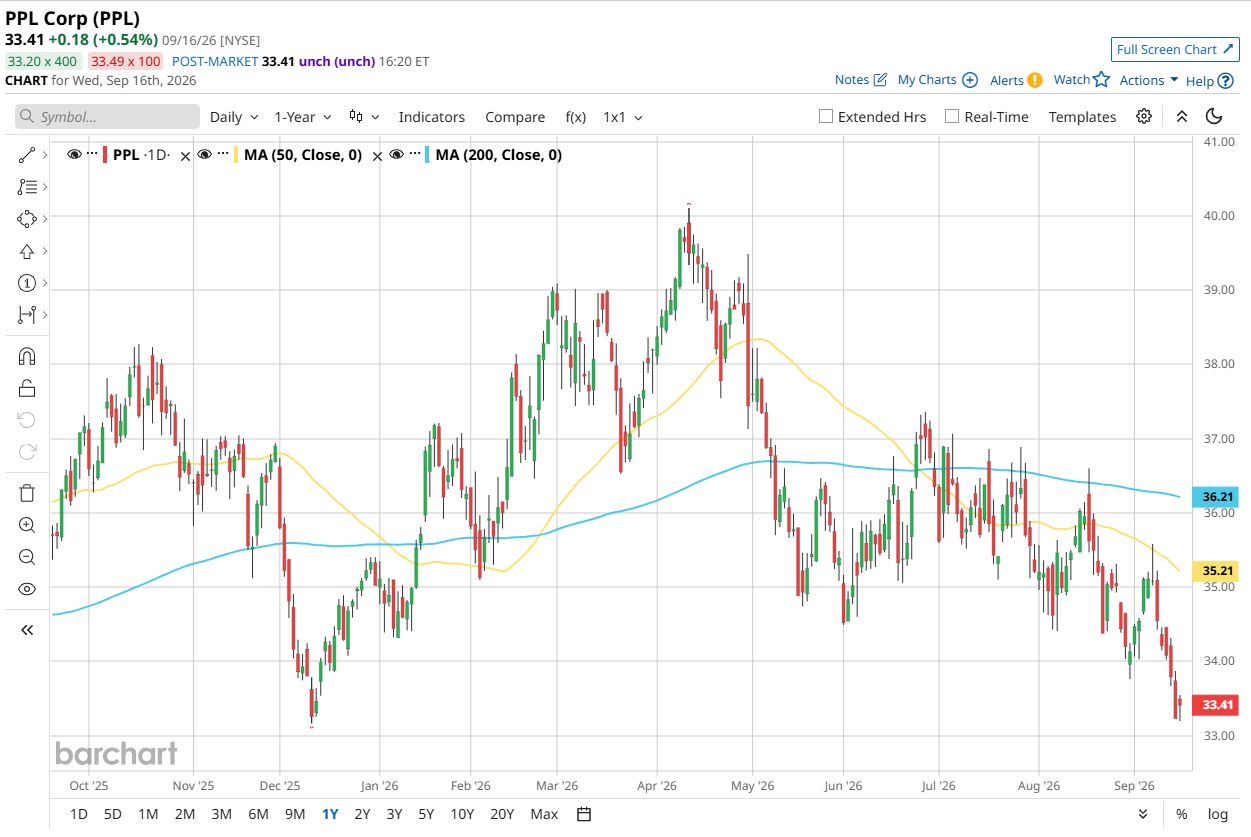
However, PPL Corporation’s large-cap status has not been reflected in its recent stock performance. The shares are currently 16.7% below their 52-week high of $40.10, which was reached in April.
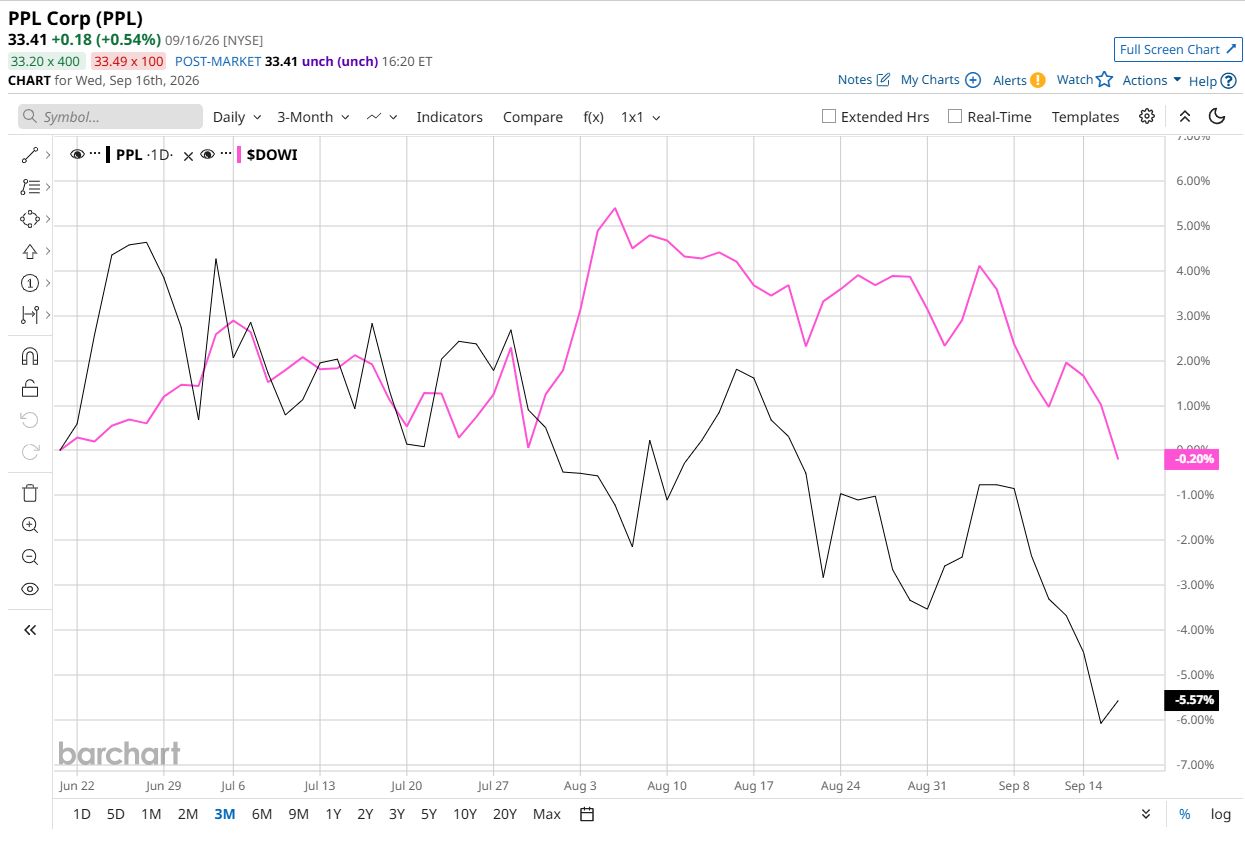
The weakness has also been evident over the shorter term. During the past three months, PPL stock declined roughly 8.2%, significantly underperforming the Dow Jones Industrial Average ($DOWI), which fell only 1% over the same period.
 www.barchart.com
 Looking at a 52-week horizon produces an even wider performance gap. PPL Corporation’s shares have plummeted 5.9%, while the index delivered an approximately 12.5% gain. The year-to-date (YTD) comparison is similarly unfavorable, with the stock down 4.6%, compared to the benchmark’s 7.1% climb.
The technical indicators also point to continued weakness. PPL stock has been trading below its 50-day moving average of $35.21 since approximately late August, after briefly moving above that level in July. The stock has also remained below its 200-day moving average of $36.21 since late July.
 www.barchart.com
 PPL Corporation’s recent underperformance largely reflects company-specific financial pressures. Higher operating, depreciation, and interest expenses have weighed on earnings, resulting in Q2 FY2026 adjusted EPS of $0.33, below the Street’s $0.35 forecast.
At the same time, its $23 billion capital investment program (2026–2029) is increasing financing needs, which in turn is pressuring free cash flow. These company-specific challenges have been amplified by an increasingly difficult backdrop for the broader utility sector.
Elevated Treasury yields, with the 10-year near multiyear highs, have reduced the relative appeal of dividend-oriented utilities while raising borrowing costs across the sector. The capital-intensive nature of infrastructure spending in a higher-rate environment has also weighed on sector sentiment, putting additional pressure on PPL Corporation’s shares alongside peers.
For additional context, PPL Corporation’s rival CenterPoint Energy, Inc. (CNP) has delivered somewhat better returns. CNP stock has gained 1.8% over the past 52 weeks but is marginally down YTD.
Despite PPL’s near-term share-price weakness, Wall Street remains bullish on its long-term outlook, citing expected earnings growth, continued infrastructure investment, and potential demand growth.
Among 15 analysts covering the stock, PPL has received an overall rating of “Strong Buy.” To that end, the average price target stands at $40.93, representing potential upside of 22.5% from current levels.
On the date of publication, Aanchal Sugandh did not have (either directly or indirectly) positions in any of the securities mentioned in this article. All information and data in this article is solely for informational purposes. For more information please view the Barchart Disclosure Policy here.
More news from Barchart
This High-Yield Tech Stock Just Raised Its Dividend by Nearly 8% SpaceX vs. Nvidia: 1 Stock Has More Upside After Elon Musk’s Orbital AI Bet Rum Roars on $13.7 Billion Compute Deal With Anthropic. How to Play RUM Stock Now. This Analyst Just Downgraded Expedia Stock. Here's Why.