

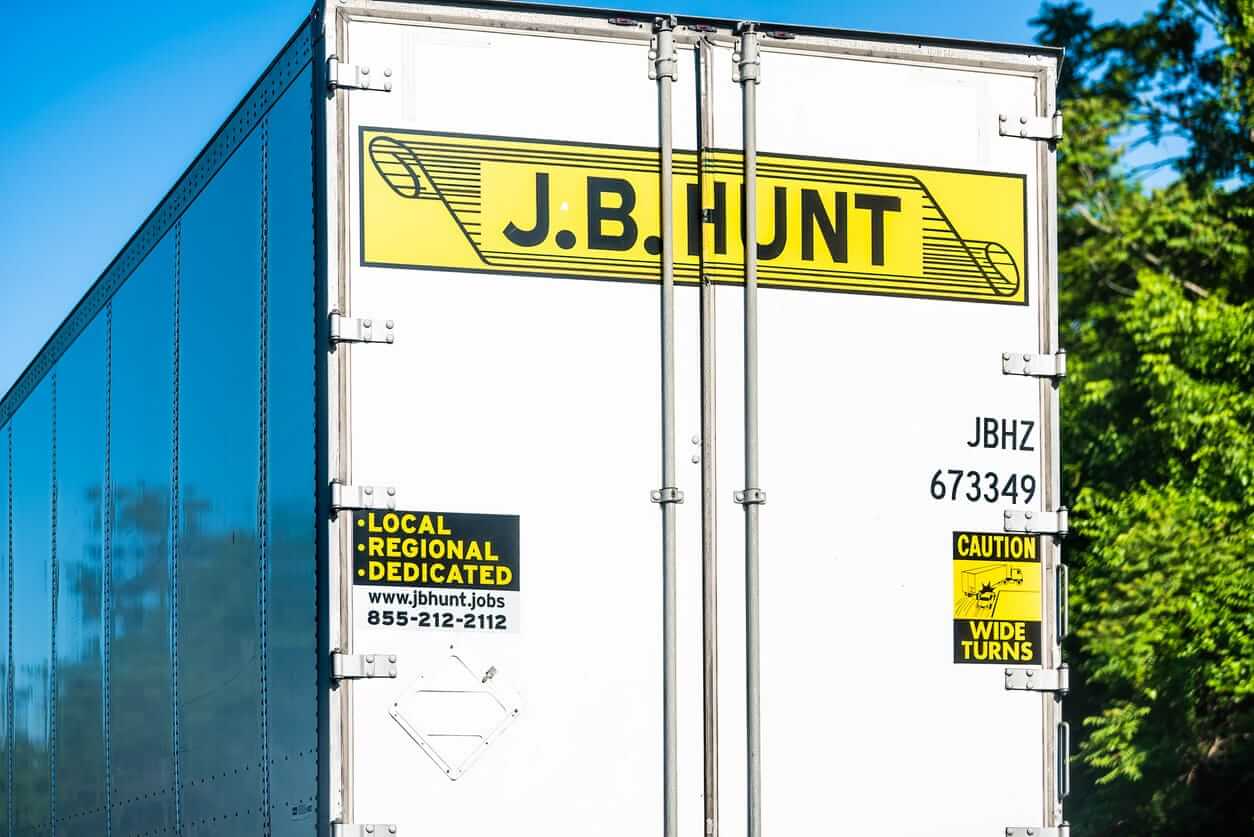
Lowell, Arkansas-based J.B. Hunt Transport Services, Inc. (JBHT) is a leading North American transportation and logistics company. It provides freight transportation, intermodal, truckload, dedicated, brokerage, and supply chain solutions, leveraging technology, capacity, and infrastructure to improve efficiency. The company has a market capitalization of approximately $22 billion.
Companies valued between $10 billion and $200 billion are generally classified as “large-cap stocks,” and J.B. Hunt Transport Services comfortably fits this category. Its substantial market capitalization reflects its size, influence, and established presence in the integrated freight and logistics industry. J.B. Hunt Transport Services’ edge comes from its broad transportation network, which serves customers through multiple business lines. Its mix of intermodal, dedicated trucking, truckload, final mile, and brokerage services reduces reliance on any one segment, while investments in technology, infrastructure, and network efficiency support operational performance and financial strength.
More Top Stocks Daily: Go behind Wall Street’s hottest headlines with Barchart’s Active Investor newsletter.
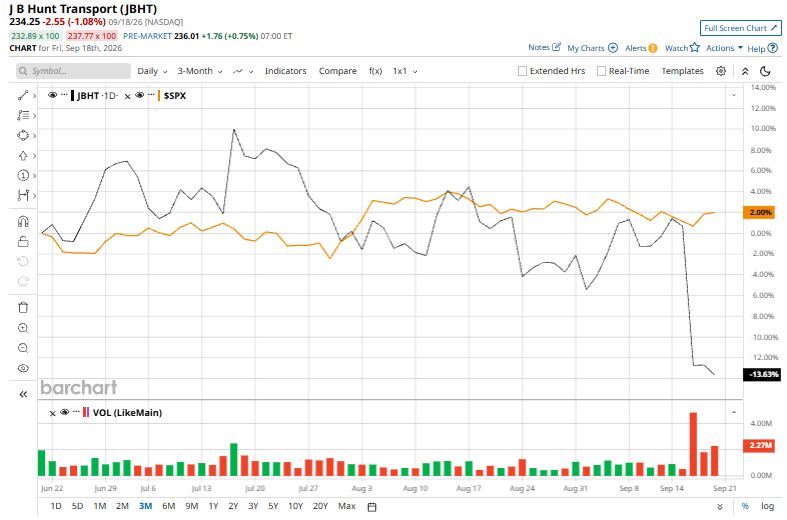
Despite these notable advantages, JBHT is currently 21.9% below its 52-week high of $299.76, reached on July 16, 2026. Over the past three months, JBHT shares have declined 13.6%, compared with the S&P 500’s ($SPX) 2% gain during the same time frame.
 www.barchart.com
However, shares of JBHT have gained 20.5% year-to-date and 73.4% over the past 52 weeks, outpacing the S&P 500’s 11.8% year-to-date gain and 15.4% return over the same period.
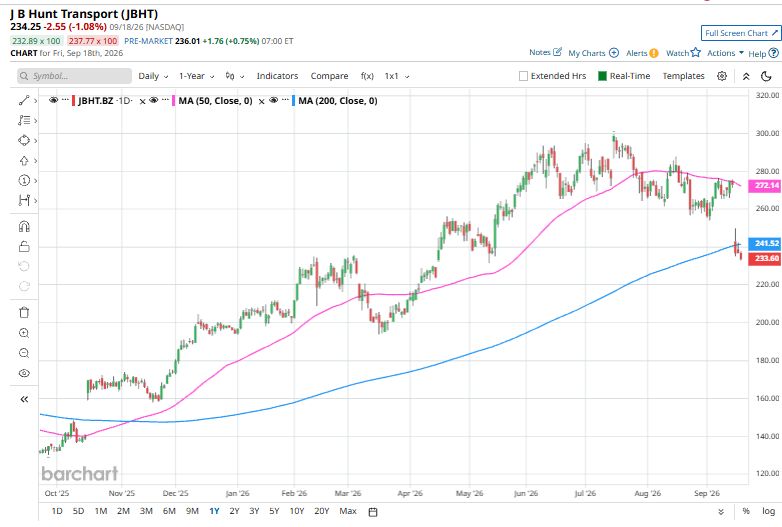
JBHT has traded below its 50-day moving average since mid-August and only recently slipped below its 200-day moving average in mid-September after a sustained period above it, pointing to emerging downward momentum.
 www.barchart.com
J.B. Hunt’s strong stock performance has coincided with robust operating growth, strength in its intermodal business, and significant cost reductions. On July 15, the company delivered better-than-expected second-quarter results, reporting net income of $181 million, or $1.91 per share, compared with Wall Street’s average estimate of $1.71 per share. Revenue reached $3.5 billion, also surpassing analysts’ expectations of $3.19 billion.
The strong quarter was driven by broad-based operating improvements. Revenue rose 19% year over year, marking the company’s fastest growth rate in nearly four years, while operating income increased 32%. Intermodal volumes reached a quarterly record of 578,000 loads, up 10% year over year. Meanwhile, J.B. Hunt reduced structural costs by $135 million over the past year, further improving operating leverage. The strong results also prompted multiple analyst upgrades and price-target increases, supporting positive investor sentiment.
Within the competitive integrated freight and logistics industry, top rival United Parcel Service, Inc. (UPS) has substantially trailed JBHT over both periods, declining marginally year-to-date and gaining 16.5% over the past 52 weeks.
Wall Street analysts remain somewhat bullish on JBHT’s prospects. The stock carries a consensus “Moderate Buy” rating from 25 analysts, while the mean price target of $305.25 implies 30.3% upside from current levels.
On the date of publication, Kritika Sarmah did not have (either directly or indirectly) positions in any of the securities mentioned in this article. All information and data in this article is solely for informational purposes. For more information please view the Barchart Disclosure Policy here.
More news from Barchart
Eli Lilly vs. Novo: The Obesity-Drug Battle Is Entering Its Next Round U.S. Stock Futures Climb as Oil Falls, Optimism Builds Ahead of Trump-Xi Summit Apple Wants to Enter the AI Inference Market. It Will Have to Swallow Its Pride First. A Longtime Bear on FuelCell Energy Stock Just Turned Bullish. Here’s What Changed.