

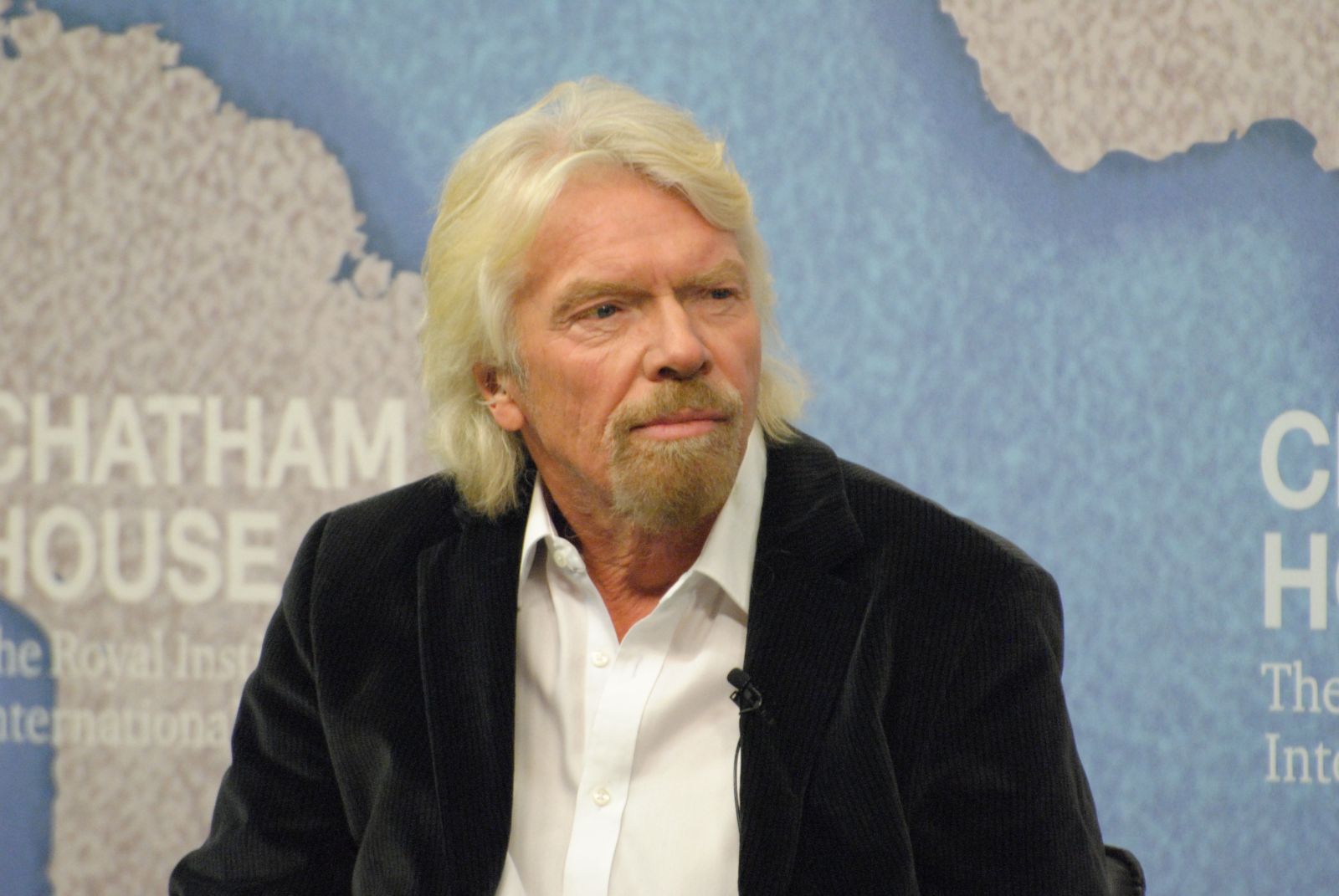
Richard Branson built Virgin into one of the world's most recognizable brands and, by his own account, reached his 50s without knowing which of two basic numbers was bigger. "When I was in my fifties, I was sat in a board meeting," he wrote in a blog post, recalling a discussion of Virgin's results. "I must admit I was quite confused — I didn't know if the results were good or bad news." Then came the sentence that gives the story away: "But I'd been rumbled. I couldn't tell the difference between net and gross."
None of this is new. The post is dated Jan. 9, 2019, and the meeting it describes happened years earlier, somewhere in the decade after 2000, roughly three decades after Branson started selling records under the Virgin name in the early 1970s. Branson had told a version of the story out loud before, on the Freakonomics Radio podcast in 2018, and CNBC wrote it up that October. In a genre built on the public's fascination with how the rich handle money, what sets this one apart is that the man who founded an airline wrote the admission down himself.
More Top Stocks Daily: Go behind Wall Street’s hottest headlines with Barchart’s Active Investor newsletter.
Branson's explanation for why it went unnoticed for so long appears earlier in the same post. "As a dyslexic, I thought I'd been hiding my muddling of words and numbers well for years," he wrote. The board meeting ended there.
Sponsored Content: A $9 Trillion Flying Car Market Is Taking Shape. This Company Is Open to Investors.
What happened next is the part people repeat. "One of the team kindly took me outside," Branson wrote. "After I admitted my mistake, he showed me a simple way to understand it." The colleague reached for paper. "He coloured a piece of paper blue, indicating the ocean, and put a net in the ocean with fish in it. He then explained that the fish in the net were the net profits and the rest of the ocean was our gross turnover."
The drawing did more than define two words. It changed Branson's picture of his own company. "I realised I was poorer [than] I thought," he wrote. "I always thought it was the other way around!" He had, in other words, been reading the big number — the total money flowing through the business — as if it were the money the business got to keep.
The distinction is worth spelling out, because the post itself uses "gross" loosely. A business has three numbers that matter here. Revenue, which Branson's colleague called gross turnover, is everything customers paid. Gross profit is revenue minus the direct cost of what was sold. Net profit is what is left after every other cost, including rent, wages, interest, and tax.
Take a $100 sale. If the product cost $60 to make or buy, gross profit is $40. If rent, salaries, interest, and tax on that sale come to another $25, net profit is $15. The $15 is the fish. The other $85 is the ocean, and it goes to suppliers, staff, landlords, lenders, and the government before it reaches the owner.
That gap is why analysts talk about margins rather than sales. A company can post enormous revenue and keep almost none of it, and a household can earn a large gross salary and take home far less once tax, insurance, and retirement contributions come out. Charlie Munger used to say the hard part of getting rich was the first $100,000. Branson's story is the other half of that advice, which is that you cannot know whether you have reached a number until you know which number you are counting.
There is no way to put a figure on how big the gap Branson discovered actually was. Virgin Group is privately held and publishes no consolidated profit figure that an outsider can check, and the blog post gives no numbers. The only Virgin name that trades publicly is Virgin Galactic (SPCE), the spaceflight company Branson founded, which reports revenue and net results every quarter in the same two columns its founder once couldn't tell apart.
Branson drew two lessons from the episode, and both are in his words. "Once I had some context that I was interested in, I could wrap my head around the concept easily enough," he wrote, adding that this "goes for most things — find what you're interested in and concentrate on that." The second lesson was shorter: "Like I did, you might find your perceived weaknesses become strengths." He said the fish in the net had worked for him. The admission that he needed them is what makes the story worth reading.
On the date of publication, Caleb Naysmith did not have (either directly or indirectly) positions in any of the securities mentioned in this article. All information and data in this article is solely for informational purposes. For more information please view the Barchart Disclosure Policy here.
More news from Barchart
Richard Branson Says He Sat in a Virgin Board Meeting in His 50s and ‘Didn’t Know If the Results Were Good or Bad News’ WMT Stock Alert: What to Know as Walmart Teams Up With Sam's Club U.S. Farm Debt Hits a Record $605 Billion — And an $8 Billion Bailout Covers Just 1.3% of the Tab Traders Are Heading to the Polls Early. Incumbent Mega-Cap Tech Stocks Are Still Winning the Race.