


AST SpaceMobile (ASTS) is back in focus after four of Europe’s largest mobile operators agreed to explore a joint bid for satellite spectrum. On Monday, shares of ASTS increased nearly 3%, as investors assess whether the plan would provide a new avenue for the direct-to-device technology that it involves.
Deutsche Telekom (DTEGY), Orange (ORANY), Telefónica (TELFY), and Vodafone (VOD) signed a letter of intent to form a joint bid for Mobile Satellite Services (MSS) spectrum. The vision is for improved coverage in unserved areas and more resilient networks. While the announcement does not name AST SpaceMobile anywhere, and there's no guarantee it will have a direct role or gain any new revenue streams, AST's previous partnerships with signers of the letter suggest it stands to benefit greatly from their expansion plans.
More Top Stocks Daily: Go behind Wall Street’s hottest headlines with Barchart’s Active Investor newsletter.
ASTS Valuation Leaves Little Room for Delays
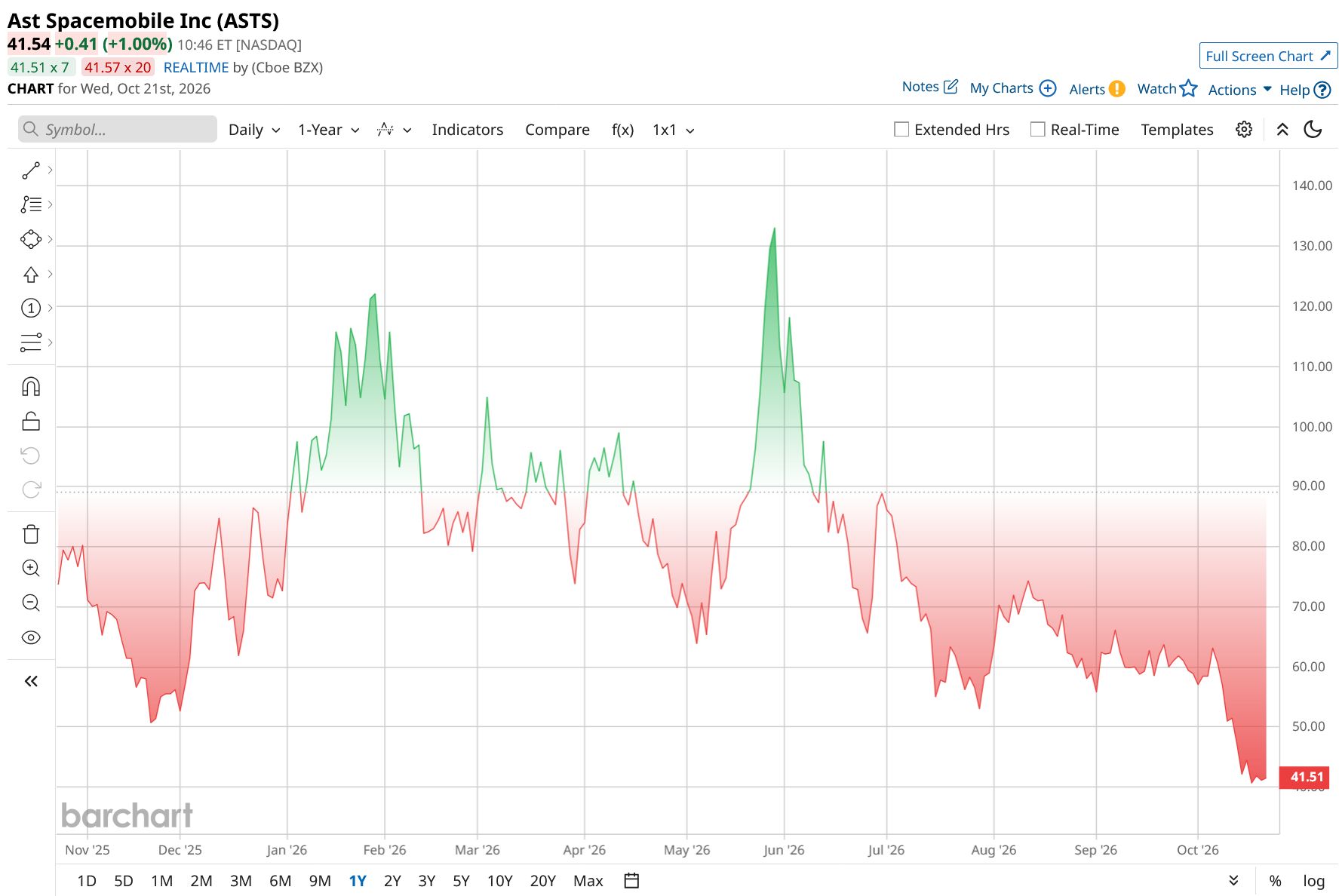
AST shares have been slumping over the past year. They reached a 52-week high of $133. In May, they fell to the low-$40 range by Oct. 19. The pullback reflects concerns about deployment timelines, competition, and the financing needed to build the constellation. In July, AST raised $1.15 billion through convertible notes to help fund satellites 17 through 46.
All that pain brings the stock down 43% year-to-date (YTD).
Even after the selloff, the valuation remains demanding. With a market value around $16 billion and roughly $115 million in trailing revenue, AST trades at about 140 times sales. That multiple assumes substantial growth well beyond its current revenue base. Delayed launches, slower service adoption, or an inability to secure attractive spectrum access could challenge that premium.
 www.barchart.com
Europe’s Spectrum Plan Creates an Opening
The earlier discussed proposed model would combine the carriers’ customer reach and ground infrastructure with a satellite operator’s constellation. That could give AST a path to reach more mobile users in remote locations and help European carriers develop an alternative to SpaceX’s (SPCX) growing satellite-to-phone ambitions.
This could be a game-changer if it becomes reality. The idea is to pool spectrum rights so the carriers can extend 4G/5G coverage by using AST’s satellites where there is no tower. AST is already part of the plan via its Satellite Connect Europe joint venture, which is building Europe‐based ground stations to hook AST’s BlueBird satellites into each carrier’s network. In theory, winning spectrum would allow AST’s partners to serve all 500+ million European mobile customers with “third-layer” coverage from space, boosting AST’s addressable market and giving Europe strategic control of its own networks.
Growth Is Accelerating, but Losses Remain Heavy
AST delivered a mixed second-quarter 2026, with revenue rising to $31.5 million from $1.2 million a year earlier, driven by gateway-station sales and milestone payments tied to a U.S. government contract.
Yet the company reported a $299.9 million net loss, including a $125.9 million loss related to launch insurance. AST continues to spend heavily on satellites and ground infrastructure as it prepares to scale service.
Chief Executive Abel Avellan said the network had grown to 13 spacecraft in orbit and the company was “preparing to initiate beta services with select strategic partners.” AST reiterated its 2026 revenue outlook of $150 million to $200 million.
The launch schedules and an expected commercial rollout will be closely watched by investors. AST has to monetize the deployment of this satellite and partnership, but the business plan needs to be one that will become a regular acquisition and one that will be expensive to meet.
Wall Street Sees Upside, but Opinions Diverge on ASTS Stock
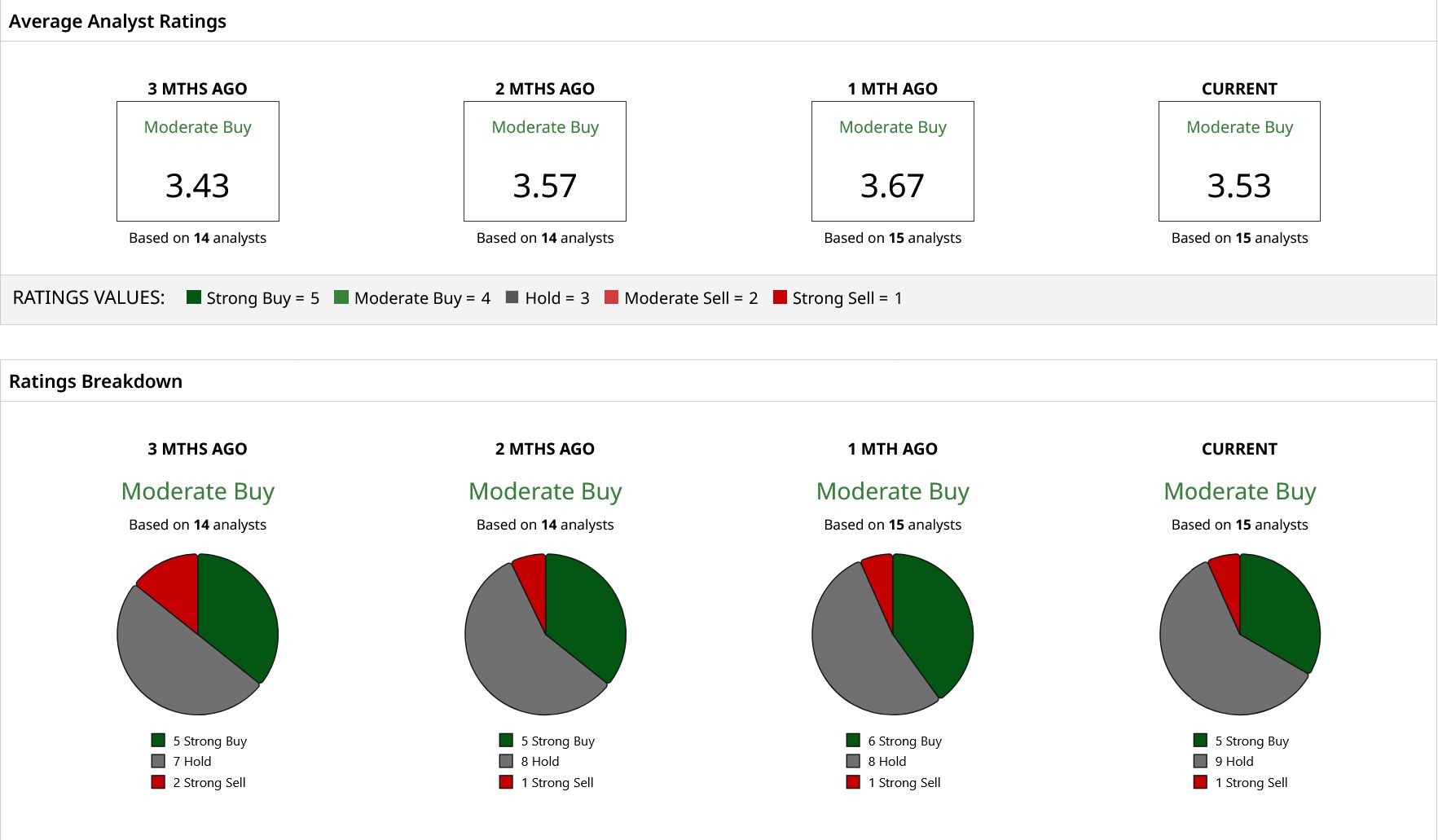
Wall Street lists ASTS stock at a “Moderate Buy” consensus based on 15 analyst recommendations. Barchart’s analyst tally shows an average price target of $79.29, roughly 93% above Tuesday's close.
Separately, Deutsche Bank analyst Bryan Kraft upgraded AST to “Buy” on Oct. 12, while keeping a $93 price target in place, as he believes that SpaceX's wireless products might spur traditional carriers to cooperate more closely with AST.
On the other hand, Piper Sandler analyst Alexander Potter took the bearish stance on Oct. 13 by downgrading from his $98 outlook to $54, as it pointed to a growing competitive landscape and access problems to the market.
In my view, the news being picked up in Europe is an opportunity for AST to grow, though it'll be in a speculative, indirect kind of way rather than having any “contracts” with them.
 www.barchart.com
On the date of publication, Nauman Khan did not have (either directly or indirectly) positions in any of the securities mentioned in this article. All information and data in this article is solely for informational purposes. For more information please view the Barchart Disclosure Policy here.
More news from Barchart
Ahead of Procter & Gamble Earnings, Here's What Barchart Data Says Comes Next for PG Stock Ahead of Spotify Earnings, Here's What Barchart Data Says Comes Next for SPOT Stock Electric Utility NiSource’s Data-Center Power Business Can Continue to Grow — And NI Stock Is Cheap AST SpaceMobile Stock Gets a New Catalyst. Wall Street Sees 93% Upside.