


Benjamin Franklin once said that the only things guaranteed in life are death and taxes. But as long as people are alive, healthcare will always be needed.
For investors, that makes pharmaceutical companies interesting, especially with the vast amount of discoveries that could be made - and how AI could be integrated with healthcare.
More Yield, Less Trap: Sign up free to get Barchart’s daily Dividend Investor newsletter straight to your inbox.
Among these healthcare companies, Pfizer (PFE) and AbbVie (ABBV) stand out. Both have something to offer, and they can deliver solid investment returns, too.
So, which one offers the better investment opportunity today?
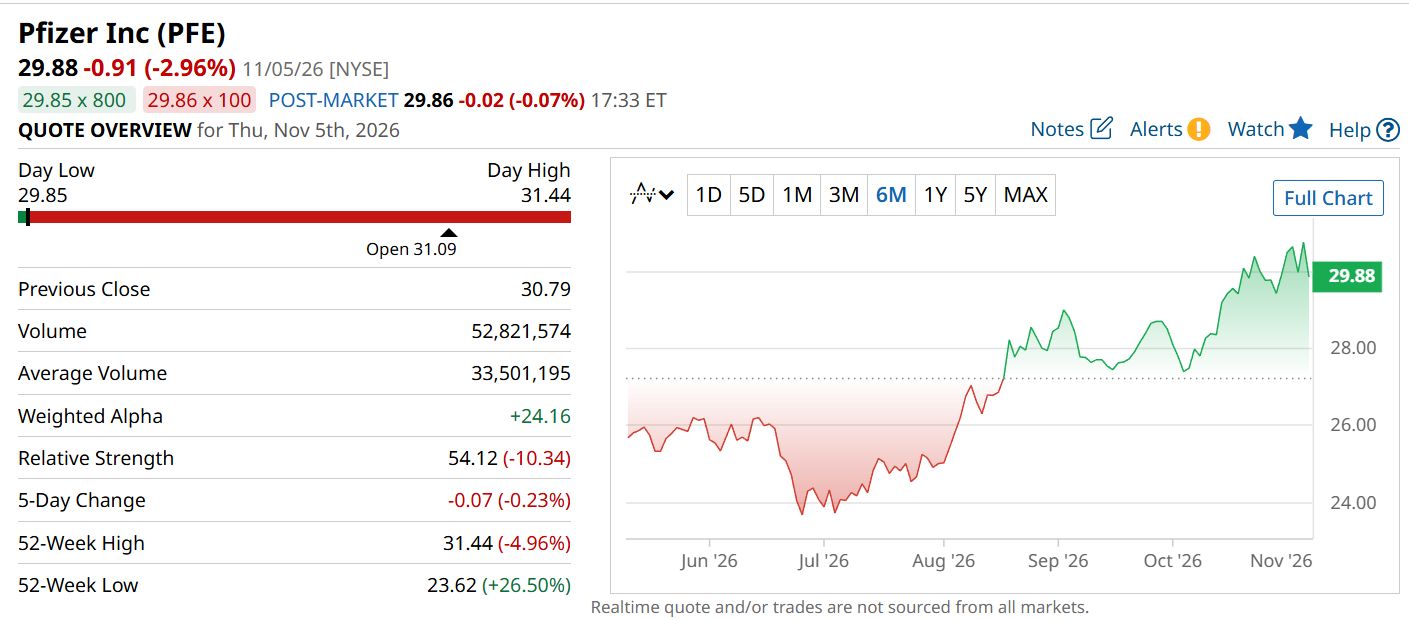
Pfizer Stock: A Familiar Name With a Growing Cancer Business
 Screenshot courtesy of www.barchart.com
Pfizer's buzz grew during the pandemic, as the company became one of the first to develop a COVID-19 vaccine available to the masses. But even before that, it was a pharmaceutical giant that treated a range of diseases and health conditions.
Today, Pfizer is looking to expand the use of its products, like its cancer drug ELREXFIO, after announcing positive late-stage trial results for treating a type of blood cancer. The drug outperformed existing treatments in delaying disease progression, potentially supporting broader use.
Overall, Pfizer's market cap is approximately $175 billion.
AbbVie Stock: Much More Than Botox
 Screenshot courtesy of www.barchart.com
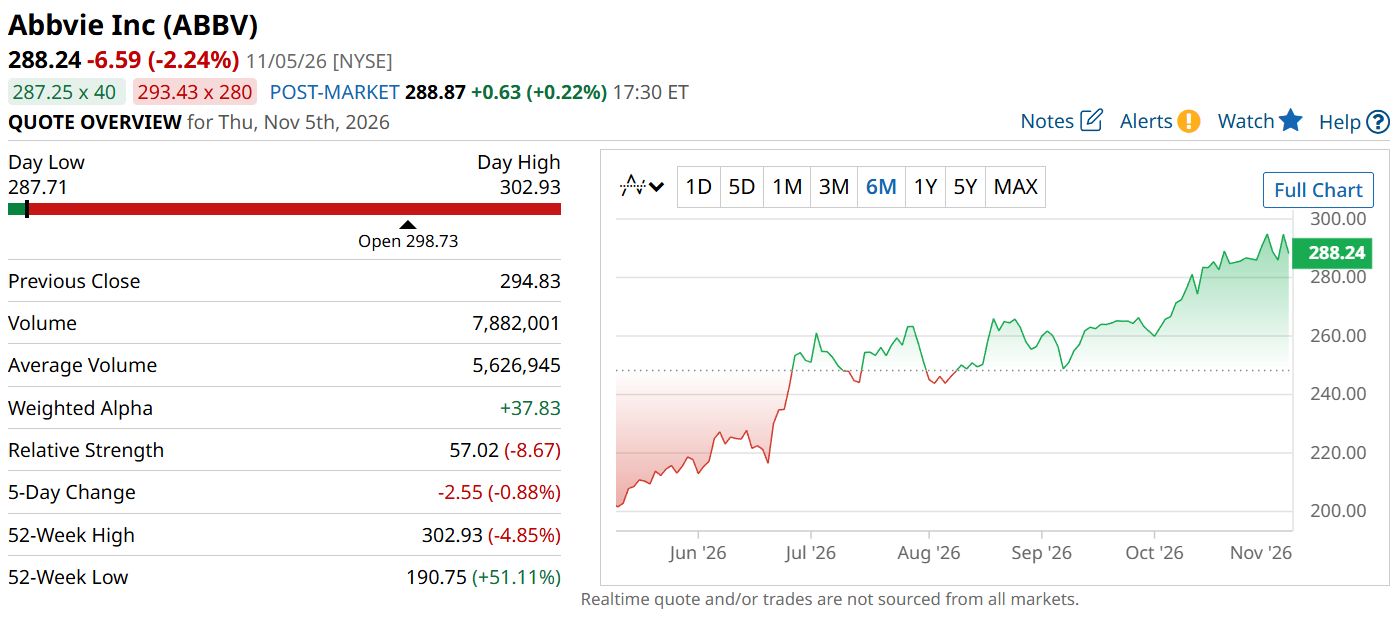
AbbVie is the company behind Botox, and I'd say it's probably less well-known than Pfizer, but it also offers treatments for conditions like psoriasis, arthritis, and Crohn's disease.
But here's where their paths intertwine. AbbVie is also advancing in cancer treatments. Coincidentally, it announced an FDA approval submission for Etentamig the same day as Pfizer's ELREXFIO announcement, and both drugs aim to treat the same type of blood cancer.
AbbVie may not be as in the spotlight as Pfizer, but it is the larger company, with a market cap north of half a trillion, nearly three times Pfizer's.
Different size and specialization. The question now is: how have global health trends affected these companies' financials?
PFE vs. ABBV: What the Latest Earnings Reveal
I compared these two companies using Barchart's Stock Comparison Tool:
 Screenshot courtesy of www.barchart.com
Both companies just announced their latest quarterly results, and AbbVie comes out ahead in sales. Its revenue grew 10.3% year over year (YOY) to $17.4 billion, while Pfizer’s revenue was essentially flat (down 0.4% YOY) at $16.6 billion.
The gap is wider in terms of net income. AbbVie’s net income jumped to $4.2 billion from $186 million a year ago, when acquired R&D charges weighed on results by $2.7 billion. Meanwhile, Pfizer’s net income fell 8% YOY to $3.2 billion.
But that’s only short-term. The long term reveals a different picture.
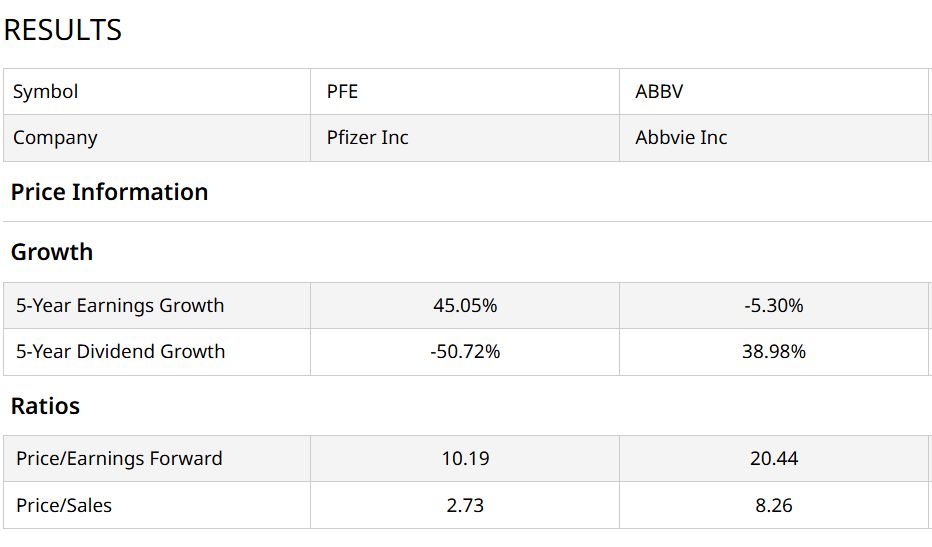
Over five years, Pfizer leads with 45% earnings growth, while AbbVie declined 5.3%. Based on their 2025 results, Pfizer also had a higher profit margin of 12.4% versus AbbVie’s 6.9%. But recent earnings momentum favors AbbVie, with adjusted EPS growth of 105% YOY, compared with Pfizer’s flat growth.
On valuation, Pfizer trades at about 10.2x forward earnings, about half of AbbVie’s 20x. It also trades at 2.7x sales versus AbbVie’s 8x, giving Pfizer a clear valuation advantage.
It’s a close call. Both companies have their strengths: AbbVie has stronger recent earnings momentum, while Pfizer offers higher five-year earnings growth and a deeper valuation discount.
Now, it all boils down to dividends.
Pfizer vs. AbbVie: Which Stock Offers the Better Dividend?
Here’s what investors can expect from these two companies:
Pfizer pays a forward annual dividend of $1.72, for a yield of about 5.7%. Its dividend payout ratio is 56%, suggesting more than half of its earnings go to investors.
Meanwhile, AbbVie pays $6.92 per share annually, which translates to a yield of about 2.4%, and a dividend payout ratio of 62%. However, AbbVie has a strong history of dividend increases, which could appeal to investors looking for growing income over time.
So, based on the numbers alone, Pfizer leads. But beyond the current yield, AbbVie's dividend growth history gives it a less obvious advantage worth considering.
PFE vs. ABBV: Wall Street Analyst Ratings and Price Targets
This is how Wall Street sees these two rivals:
 Screenshot courtesy of www.barchart.com
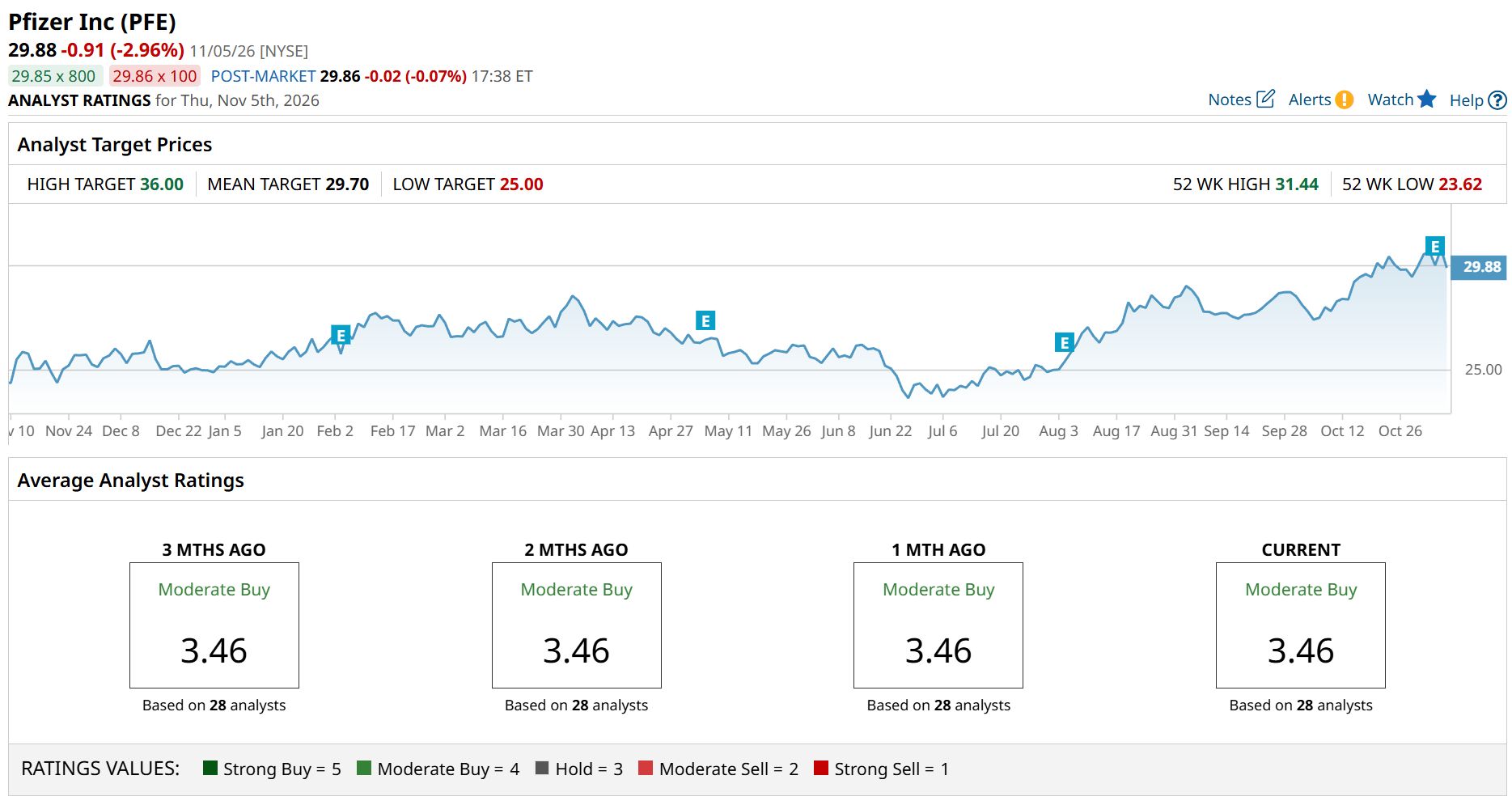
A consensus among 28 analysts rates PFE stock a “Moderate Buy”, with as much as 20% upside if it achieves its high target prices.
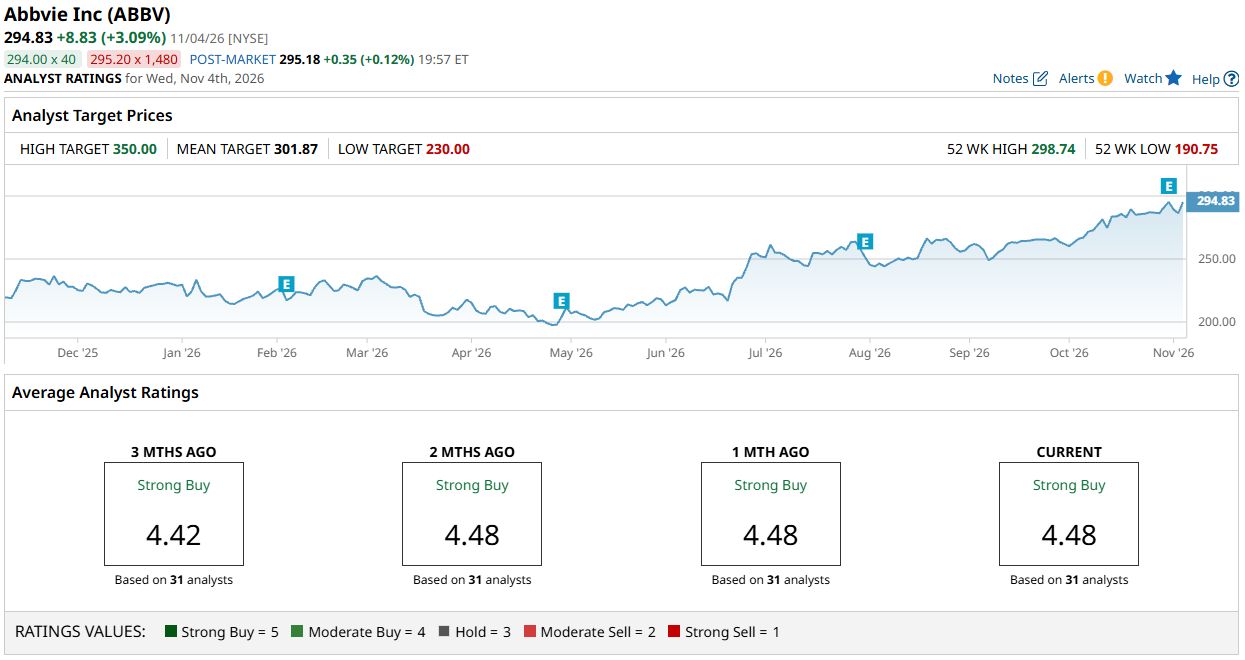 Screenshot courtesy of www.barchart.com
Meanwhile, a consensus among 31 analysts rates ABBV stock a “Strong Buy”, with high target prices suggesting 19% upside.
Pfizer vs. AbbVie: Which Dividend Stock Is the Better Buy?
Pfizer and AbbVie both have their strengths, but they appeal to different dividend investors.
Pfizer offers stronger long-term earnings growth, a cheaper valuation, and a higher dividend yield. AbbVie, meanwhile, has stronger recent momentum and a proven history of dividend increases.
For me, Pfizer has the edge today, especially for income investors seeking higher yields at a reasonable valuation.
On the date of publication, Rick Orford did not directly have a position in any of the securities mentioned in this article. All information and data in this article is solely for informational purposes. For more information please view the Barchart Disclosure Policy here.
More news from Barchart
Pfizer vs. AbbVie: Higher Yield and Cheaper Valuation Give One the Clear Edge This Insurance Stock Just Raised Its Dividend by Over 11% NextEra Energy vs. Duke Energy: Which Dividend Utility Wins the AI Power Boom? Nike’s Dividend Yield Is Still Attractive, But I Can’t Say the Same About NKE Stock