

Prior to the June 2026 public debut of Elon Musk’s SpaceX (SPCX), I wrote for Barchart that I was looking for ways to profit if the stock opened way up. Not from its trip to the proverbial moon, but from its eventual return to earth.
I did what I said I would, collaring SpaceX with an extra several dollops of put option exposure, and exited too early. Just as I’ve done way too many times in my investing career.
Can’t Get Enough Options?: Join the list for Barchart’s daily unusual options report, delivered free.
No complaints, but I did leave some meat on the bone. I’m ready to try this trade again with Anthropic (ANT) and am hoping to do even better this time around.
Next Up: Anthropic
Anthropic stock will start trading tomorrow, Nov. 19, and its debut comes at an interesting time in modern market history.
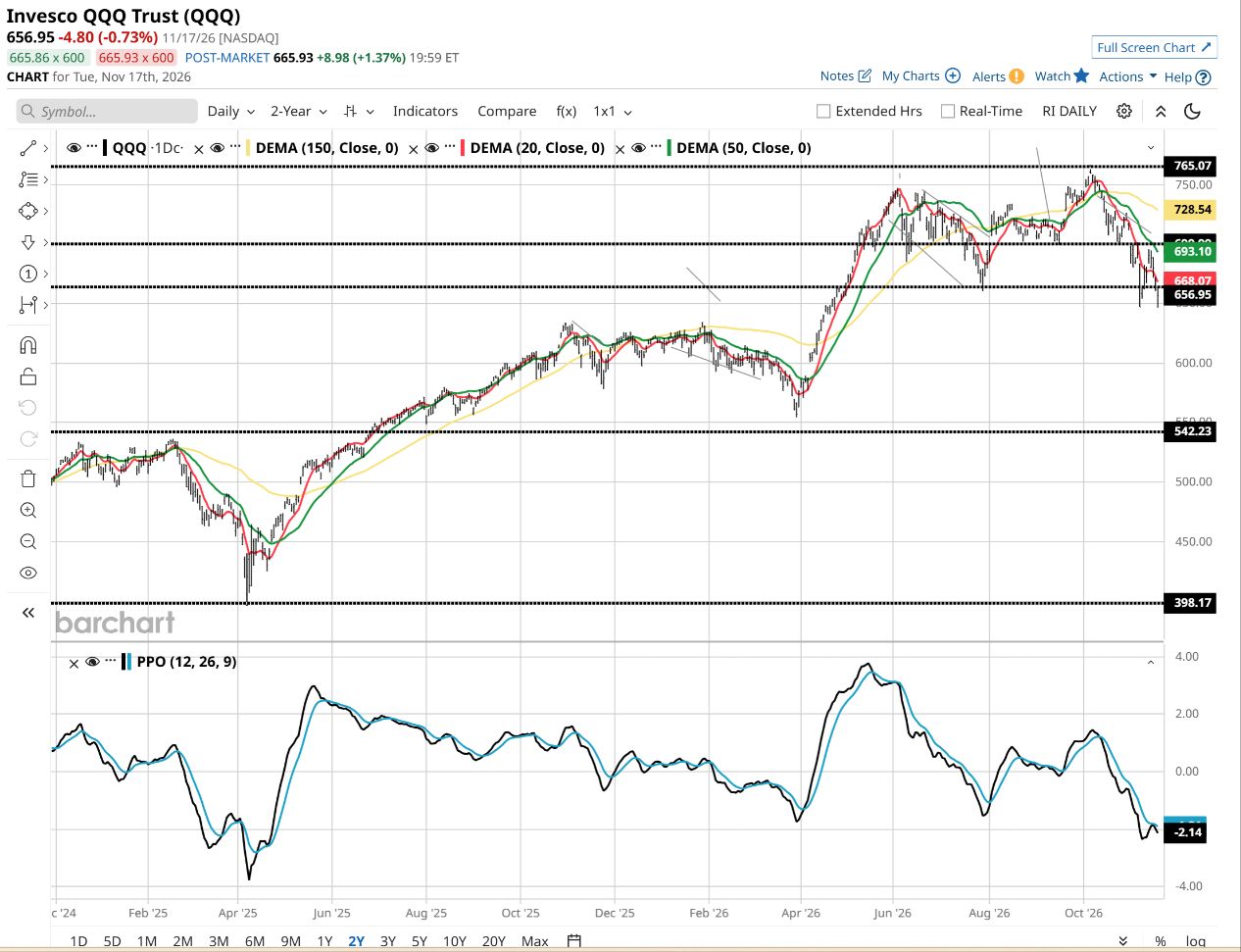
The Invesco QQQ ETF (QQQ) looks awful. It is teetering, based on my go-to indicators. The 20-day moving average is wilting, and the percentage price oscillator (PPO) at bottom just rolled over again. The last time that occurred, on the last day of October, the “cost” was a 5% decline in just over two weeks.
 www.barchart.com
Which brings us to Thursday’s big event. Anthropic won’t have options on it for a few days, but I can use my SPCX experience to present the approach.
Then, I can just plug in the appropriate numbers when options trading hits the market. That will likely be this coming Monday, Nov. 23, as it is typical for a stock to trade for two business days before options trading begins.
Using SpaceX as a Guide to Profit from Anthropic’s IPO
 www.barchart.com
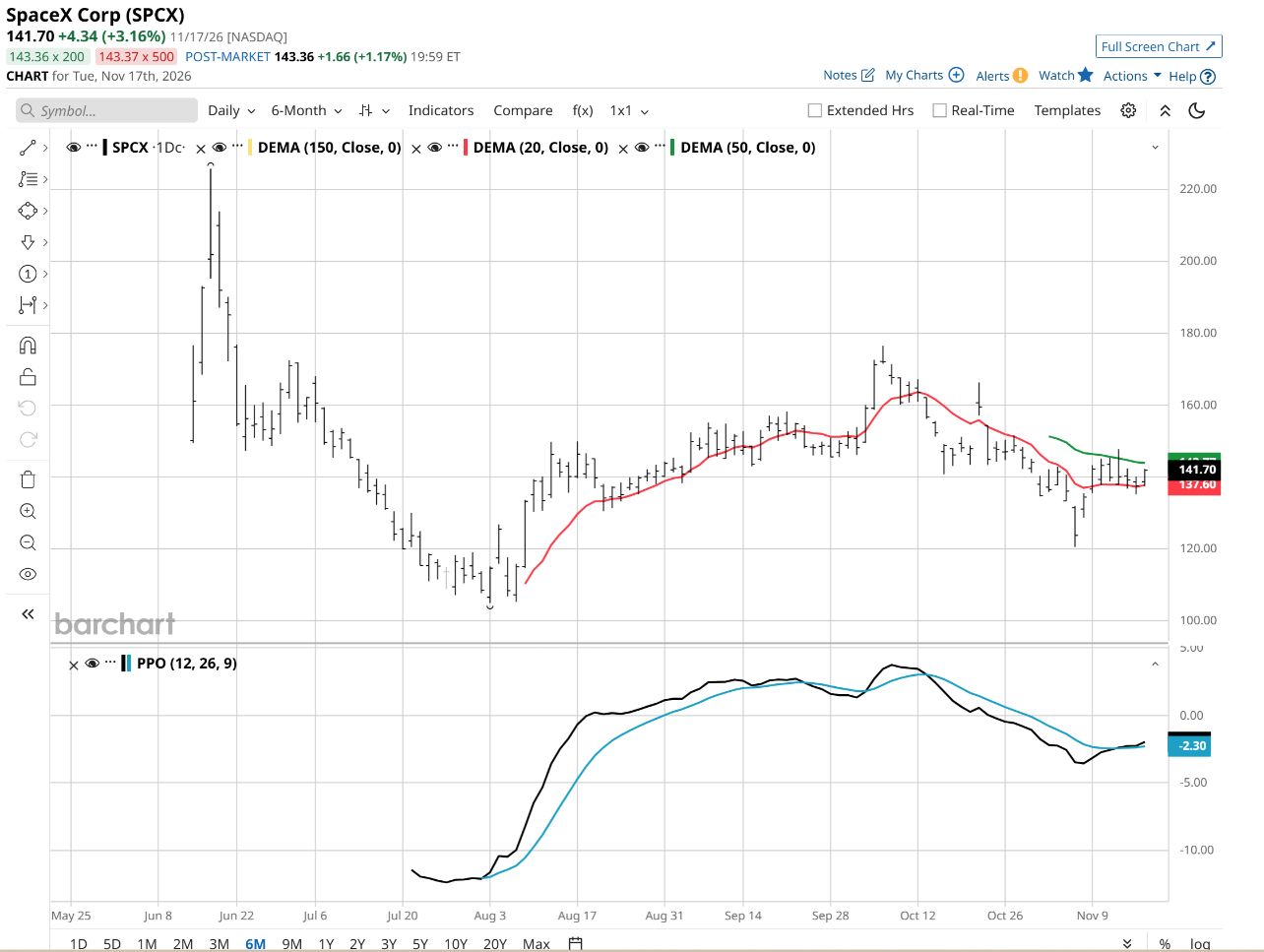
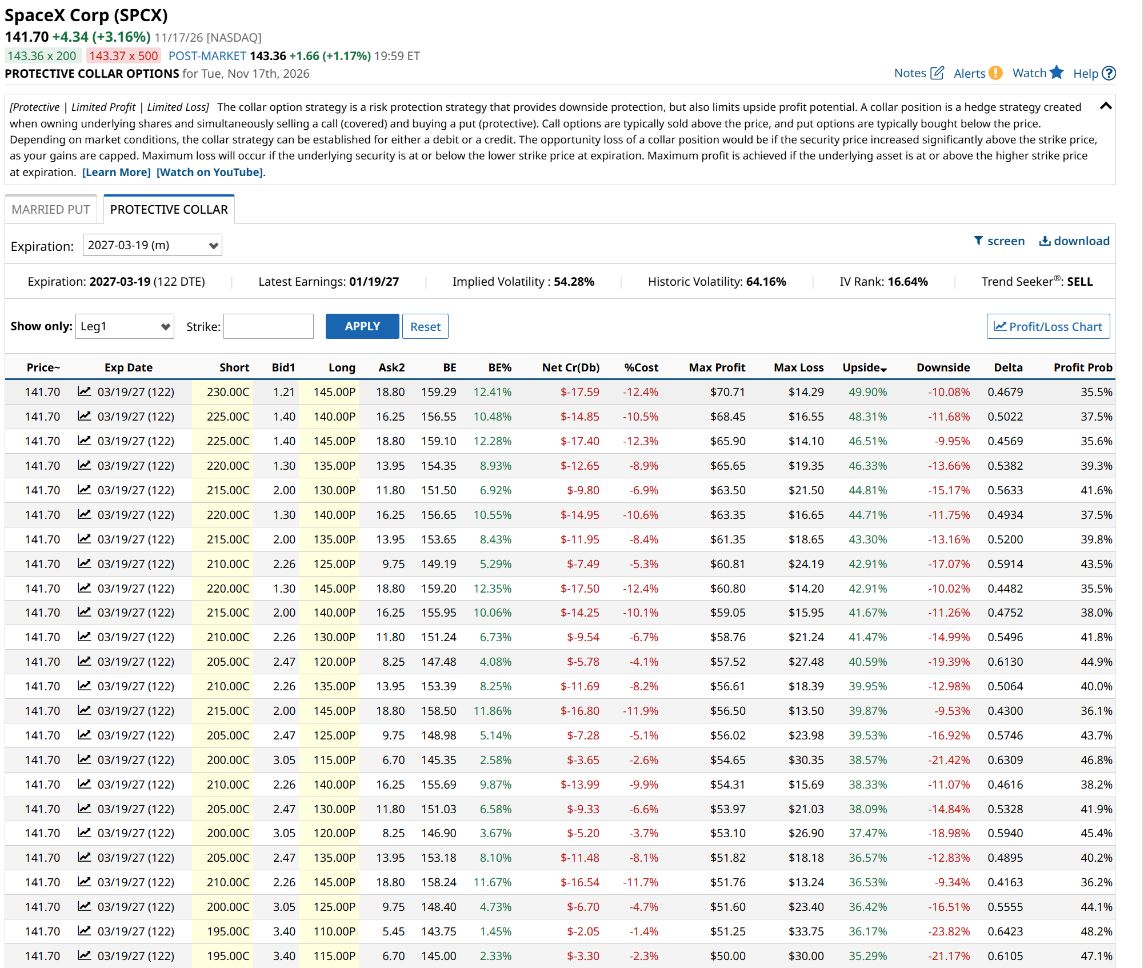
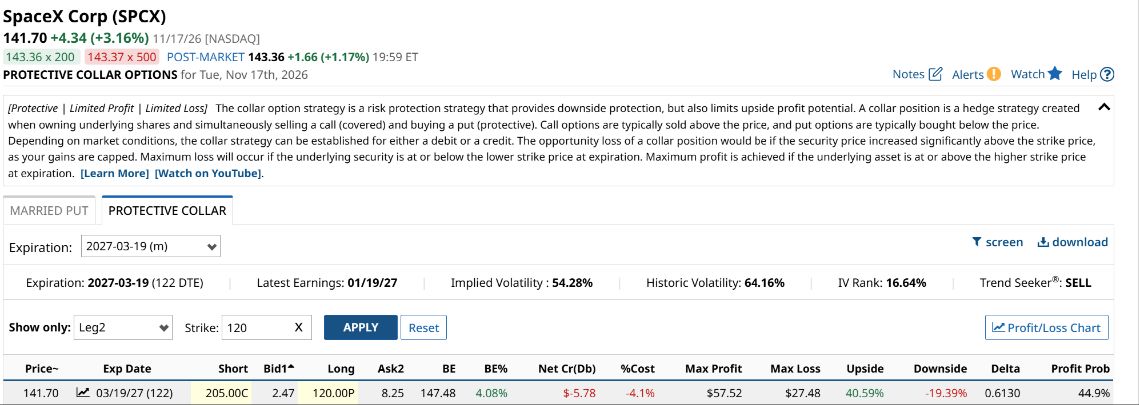
Above we see the SPCX chart for the albeit short period of its public life. The relevant part of the options table is shown below. This is just a fraction of the choices available, across different expiration dates, strike prices, prices of the put and call options, and resulting tradeoffs between upside and downside potential.
I kept it simple by assuming my puts to protect SPCX stock and my calls I’d write to help pay for that put protection will both expire on March 19, 2027, so I’m giving myself four months for this trade to work out. And I’m looking at strike prices in the neighborhood of the current price, particularly on the put side.
 www.barchart.com
My “back of the envelope” process is to assume the puts will be purchased at a strike price right around the current price of the underlying stock. SPCX closed Tuesday, Nov. 17 around $142, so that’s my reference point.
My goal here, which leads to the resulting “off-balance” structure of this option collar setup, is as follows:
If the stock flies higher, I want to participate to some degree. But I’ve determined that beyond 10%-15% upside, there’s not much left to earn over this time frame. If the stock treads water for a while, that will likely result in a modest loss on the options position, as time value evaporates with no decisive up or down move. In that case, I can revisit collaring the stock all over again. And I do not need to wait until expiration of the options. I can reset one side or both, any time I wish. If the stock really slides, THAT is the opportunity I am looking to exploit. The collar is OK, but the calls are really just there to lower the out-of-pocket cost of the puts because I’m going to buy a lot more put options than call options I write. And those puts will be way out of the money.If the stock dips a bit, I’ll probably lose a little. But if it truly tanks during this time, I win big. As I did with SPCX, in a single-day 15% plunge. That’s where I exited, took the win, then had a bit of FOMO as the stock continued lower for a little while longer.
The order of operations, and the blanks I need to fill here, are:
Buy 100 shares of the stock (or a multiple thereof). We’ll assume 100 for simplicity in this example. Sell 1 covered call option, ideally around 10%-15% above the current stock price. Buy more than 1 put option, struck at least 10%, but more like 20% out of the money.The key to this working on the downside is the concept of “convexity.” That’s where, regarding just the put options here, I can lose the value of the put options I buy, but no more than that. I own the options, and my maximum loss is equal to my investment. But my maximum gain is unlimited.
The pricing I picked out of that table above is as follows:
 www.barchart.com
So again:
Stock Price = $142
3/19/2027 expiration for calls and puts
Call Strike = $200 (brings in around $2.50 per share in premium)
Put Strike = $120 (costs $8.25 per share)
If I were doing a standard collar, I’d have an out of pocket cost of $5.75 per share, and that would provide a more than 2:1 upside to downside tradeoff. 40% up, 19% down.
But this is my way to try to get a piece of the pie after the Anthropic IPO, if the initial move is higher. Then, my goal over the next four months is to play the market’s bad habit. It runs an IPO price way up, then it rolls over and crashes. Like SPCX did.
To try to position for that, and again using SPCX just as a current, tangible example for what I’ll try to do for ANT soon, I would buy the 100 shares of stock, and sell 1 covered call option. I can’t and won’t sell more than 1, as that would essentially be a margin trade, which I’m against doing.
What is part of my investment “religion” is to take that setup, which does allow me upside all the way to $200, and kicks in a bit of cash for it, and let that be my best-case scenario if ANT goes way up, unlike the SPCX case.
But on the other side, I’m really trying to hit a home run. That $120 strike price is far enough out of the money to make it cheap. And if the stock falls toward there, especially before the end of this year or in January, I can make a nice profit by owning more than 1 put option contract. So I’ll fork over the extra cash, cutting into my upside potential, in order to own 3 or 4 of those March $120 puts.
That allows me to “control” what is essentially a short position of 300-400 shares. If the stock really implodes, that’s a small fortune.
And if the plan “fails” because the stock rises sharply, the investment in the puts will drop toward zero. The covered call money is mine to keep. And if the stock gets called away at $200, I’ve still made more than the puts cost. I’m a winner there.
And if the stock surges past $200, I could be forced to sell it, since I sold call options and that’s my obligation. In that case, if the stock seems unstoppable, there’s an easy decision: I can buy more shares. It might be 10, 20, 50, 100, or more. If that stock is unencumbered by covered call options, it is free to climb.
This strategy is clearly on the exotic side. But if applied to a stock you really believe can drop significantly, as many IPOs eventually do, I like this as a side approach to trying to cash in big on that post-IPO action while still reserving an upside consolation prize.
Rob Isbitts created the ROAR Score, based on his 40+ years of technical analysis experience. ROAR helps DIY investors manage risk and create their own portfolios. For Rob's written research, check out ETFYourself.com.
On the date of publication, Rob Isbitts did not directly have a position in any of the securities mentioned in this article. All information and data in this article is solely for informational purposes. For more information please view the Barchart Disclosure Policy here.
More news from Barchart
I Used This Options Strategy to Profit from the Post-IPO Plunge in SpaceX. Now I’ll Use It Again on ANT Stock After Anthropic Starts Trading. Carnival Corp Has Unusual Out-of-the-Money Put Options Volume - Is This a Signal CCL is Undervalued? A Strong Q3 Puts Nvidia (NVDA) Stock on Track for a Quick 194% Options Payout Turn Coca-Cola into an Income Machine with This Options Play