

On October 28, at its Investor Day, Oracle (ORCL) finally answered the biggest question around it: when will it stop burning cash? The company has been spending more on AI data centers than it earns. It burned $23.7 billion in negative free cash flow last fiscal year, and as I covered earlier, it has been borrowing heavily to pay for the spending. Oracle said it will start bringing in more cash than it spends by late fiscal 2028, with "positive free cash flow of at least $30 billion" in fiscal 2029. Analysts had estimated the figure to still be negative that year, so the forecast was better than expected. Oracle is also limiting how much more money it will raise. Additional fundraising for fiscal 2027-2030 is capped at $20 billion, with about $10 billion in equity and $10 billion in gross debt. That's on top of the $20 billion in stock it already sold earlier this fiscal year. This helped ease investor worries, since Oracle had earlier planned to raise about $40 billion in fiscal 2027 alone, and the new cap covers four years. The shares jumped over 10% that day.
But the rally didn't last long. On November 2, Oracle filed to sell up to $10 billion in stock and $10 billion in debt, in line with the cap it had just announced. The same day, Goldman Sachs cut the stock to Sell, and Morgan Stanley also downgraded it. Then, on November 5, AI stocks fell on fears that the midterm election results could bring tighter regulatory scrutiny. As a result, multiple sell-off days wiped out the entire Investor Day gain and more.
More Top Stocks Daily: Go behind Wall Street’s hottest headlines with Barchart’s Active Investor newsletter.
For the longest time, worries about Oracle stock have mostly been about its spending, which is expected to peak over the next two years. Management expects capital spending of up to $95 billion in fiscal 2027 alone. But the reason it is spending aggressively is to fulfill extraordinary demand. Oracle has a backlog of around $664 billion, one of the largest among tech firms. The company is aiming for revenue of at least $225 billion in fiscal 2030, up from about $90 billion expected this year. So while concerns around its borrowing make sense, its payoff in a few years looks very promising.
About Oracle Stock
Oracle is a technology company best known for its database software, and it has become a major builder of AI data centers in recent years. Its product portfolio includes Oracle Cloud Infrastructure, its database software, business applications like Fusion and NetSuite, and Oracle Health. Founded in 1977, it is headquartered in Austin, Texas. The company is led by co-CEOs Clay Magouyrk and Mike Sicilia, with co-founder Larry Ellison serving as chairman and CTO.
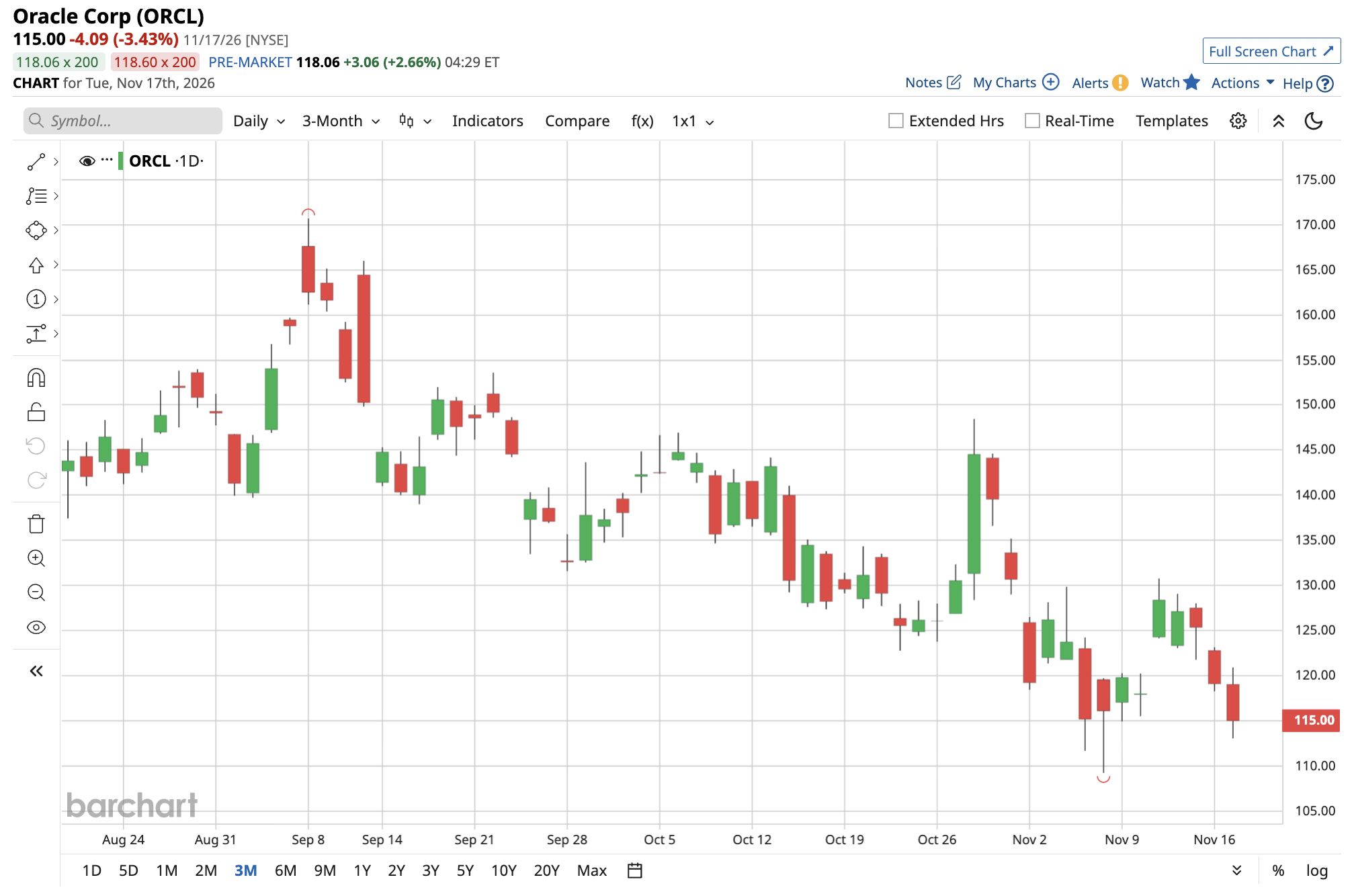
Oracle’s stock has had a rough year, down more than 40% year-to-date, well behind the iShares Expanded Tech-Software Sector ETF’s (IGV) 7% drop during the same period. The stock hit its 52-week high of $250.25 on June 1, after a strong March earnings report and broader excitement around AI. It has been cut by more than half since, as worries about Oracle's heavy borrowing, cash burn, and reliance on OpenAI weighed on the stock.
 www.barchart.com
After plummeting since its 52-week high, Oracle's stock trades well below its historical averages. The forward non-GAAP P/E of 14.61x sits about 34% below its five-year average of 22.04x. The forward price-to-sales ratio of 4.10x is also nearly 36% below its 5-year average of 6.39x. That's a steep discount for a company with one of the largest order books in AI. The EPS trajectory looks solid. Analysts expect earnings growth of under 7% in fiscal 2027, before jumping to nearly 36% in fiscal 2028 and over 45% in fiscal 2029. That acceleration is roughly in line with when Oracle expects its spending to slow down and cash to start coming in. The balance sheet remains the main reason why the market isn't paying up yet. Oracle holds $37.08 billion in cash against $169.14 billion in debt, leaving net debt of about $132 billion. Overall, though, I think the current discount could look like an opportunity in hindsight if Oracle actually delivers on its cash flow plan.
What Do Analysts Expect for Oracle Stock?
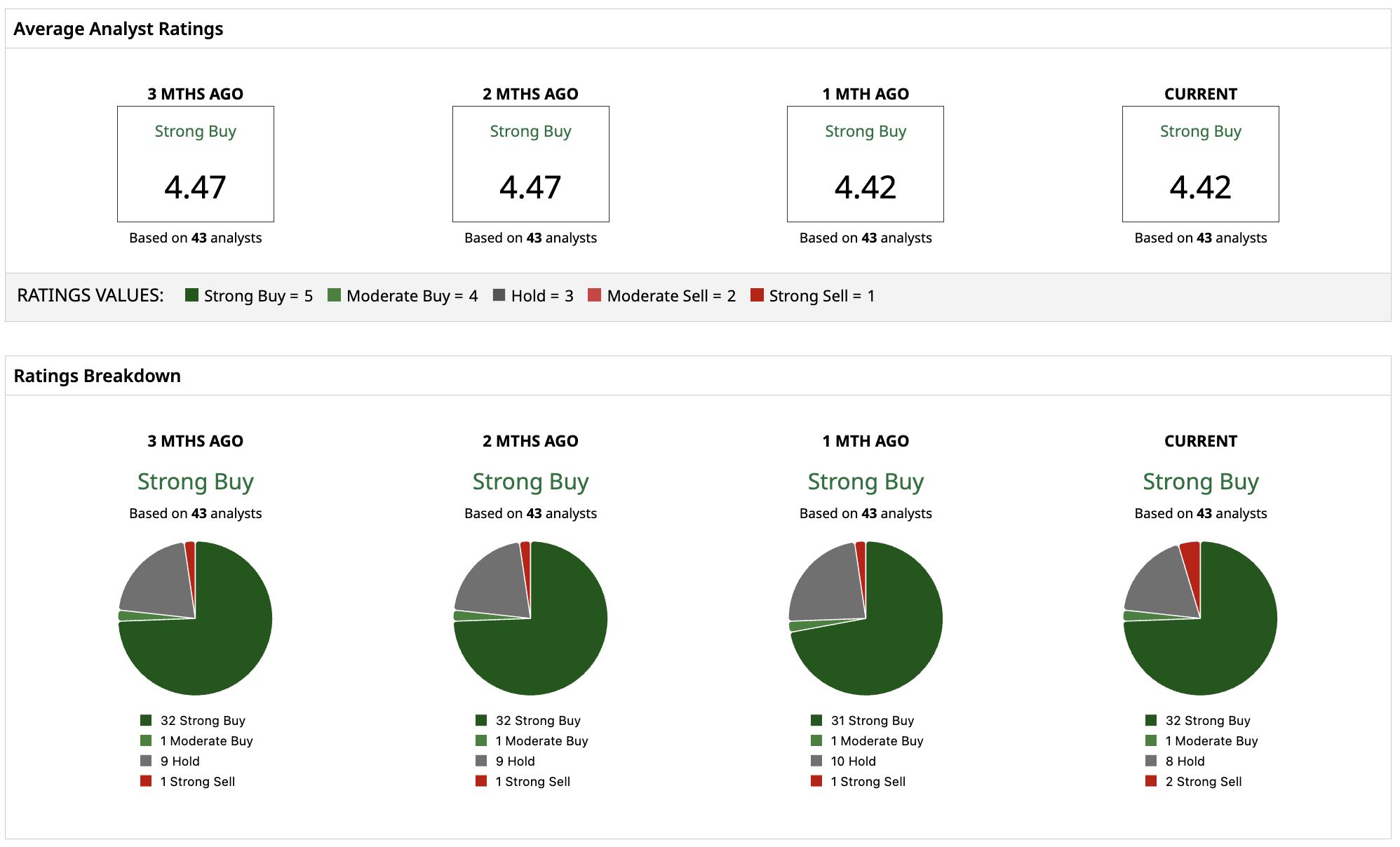
Based on 43 Wall Street analysts, Oracle holds a Strong Buy rating with a mean price target of $242.37, indicating a huge 111% upside. This suggests that analysts largely believe the stock has plenty of room to run from here. Given that the stock is down 41% this year and has an enormous backlog, the upside makes sense to me.
 www.barchart.com
On the date of publication, Jabran Kundi did not directly have a position in any of the securities mentioned in this article. All information and data in this article is solely for informational purposes. For more information please view the Barchart Disclosure Policy here.
More news from Barchart
Nvidia Without Jensen Huang: Strong Growth and Attractive Valuation Sustain the Bull Case Whale Rock Dumps Western Digital. Buy the AI Storage Dip for 113% Upside. Nvidia’s Board Shuts the Door on the Huang Comeback Trump Was Rooting For Why AMD Stock Could Hit $662 in 2027