


Choosing the right exploration and production (E&P) stock requires balancing growth potential, financial strength and resilience across commodity cycles. Crescent Energy Company CRGY and Magnolia Oil & Gas Corporation MGY have emerged as attractive independent U.S. producers, but they follow distinctly different strategies to create shareholder value. Crescent Energy has built its business through disciplined acquisitions, operational improvements and a diversified asset portfolio, while Magnolia emphasizes organic growth, capital discipline and a conservative balance sheet anchored by high-quality South Texas assets. Both companies generate healthy free cash flow and maintain shareholder-friendly capital allocation policies, yet they differ in their approaches to growth, leverage and risk management. This comparison evaluates their operational strengths, financial positioning, growth opportunities and key challenges to determine which stock offers the more compelling long-term investment opportunity.
The Case for Crescent Energy Stock
Crescent Energy's biggest strength lies in its disciplined, free cash flow-focused operating model and its ability to improve acquired assets. The company delivered record first-quarter 2026 production of 341,000 barrels of oil equivalent per day while generating $192 million of levered free cash flow. Management has also executed well on integrating the Permian acquisition, capturing $120 million in synergies from the Vital Energy acquisition — already exceeding its initial target — through lower well costs, faster drilling cycle times and operational efficiencies. A diversified asset base across the Permian, Eagle Ford, Uinta and minerals business, coupled with a lower-decline production profile, supports stable cash flows and reduces the capital required to sustain production.
The company also has multiple growth opportunities that could enhance long-term shareholder value. Crescent Energy continues to identify additional efficiency gains in the Permian, including longer laterals, optimized well spacing and lower service costs, indicating further synergy potential beyond current expectations. In the Uinta Basin, improving well economics and ongoing delineation of additional formations could expand the resource base. Its high-margin minerals and royalties portfolio is expected to generate approximately $200 million of EBITDA in 2026, while strong projected free cash flow provides flexibility to reduce debt, pursue value-accretive acquisitions, repurchase shares and maintain shareholder distributions.
Despite these positives, Crescent Energy faces several challenges that could affect future performance. The company remains exposed to commodity price volatility, inflation in oilfield service costs and evolving environmental and regulatory requirements that can influence drilling economics and profitability. Continued execution of its acquisition-led growth strategy also carries integration risks, as realizing expected synergies and maintaining operational performance across expanding assets remain critical. Additionally, Crescent Energy operates with significant debt, making sustained free cash flow generation essential for deleveraging and preserving financial flexibility. The business is further subject to reserve replacement risks, supply chain constraints, geopolitical uncertainty and dependence on external management arrangements — all of which could impact long-term growth and returns if market conditions weaken.
The Case for Magnolia Stock
Magnolia has built a differentiated business model around high-quality, low-risk assets in South Texas, disciplined capital allocation and consistent free cash flow generation. Its core positions in the Eagle Ford and Austin Chalk formations provide a strong production base with relatively low decline rates, enabling the company to sustain moderate production growth while maintaining a low capital reinvestment rate. Magnolia's conservative balance sheet, minimal leverage and focus on returning excess cash through dividends and share repurchases further strengthen its financial flexibility. Operational efficiencies, high working interests across its acreage and a disciplined approach to bolt-on acquisitions have helped the company improve returns while expanding its inventory of high-quality drilling locations.
Magnolia also has several attractive development opportunities that can support long-term growth. The company continues to expand its acreage through targeted bolt-on acquisitions within its existing operating footprint, allowing it to leverage its technical expertise while extending its development inventory at attractive costs. Recent acquisitions in the Karnes and Giddings areas added contiguous acreage, increased working interests and created opportunities for longer lateral drilling, which should improve well economics. Management also expects approximately 5% production growth in 2026 while preserving capital discipline. With substantial free cash flow, Magnolia retains the flexibility to pursue additional acquisitions, invest in high-return projects and continue rewarding shareholders.
Despite these strengths, Magnolia faces several challenges that investors should monitor. Like other upstream producers, its earnings remain highly sensitive to fluctuations in crude oil, natural gas and NGL prices. The company has chosen to keep production unhedged, allowing greater upside during strong commodity markets but exposing cash flows to periods of weaker pricing. Growth also depends on successfully integrating acquisitions, efficiently developing newly acquired acreage and consistently replacing produced reserves. Inflationary pressures, supply-chain disruptions, regulatory changes, geopolitical developments and cybersecurity risks could increase operating costs or delay development activities. Additionally, Magnolia's concentrated asset base in South Texas limits geographic diversification, making operational performance closely tied to conditions in its core producing regions.
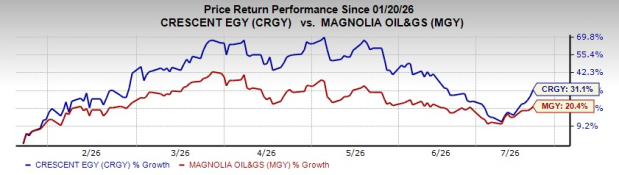
Price Performance Comparison
In the past six months, shares of CRGY and MGY have gained 31.1% and 20.4%, respectively.
Image Source: Zacks Investment Research
Valuation Comparison
From a valuation perspective — in terms of Enterprise Value to Earnings Before Interest, Taxes, Depreciation and Amortization (EV/EBITDA) ratio — Crescent Energy is trading at a discount of 3.85X compared with Magnolia’s 6.07X.
Image Source: Zacks Investment Research

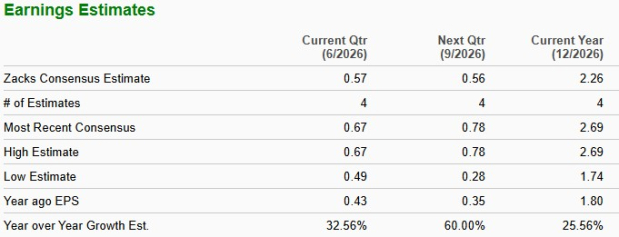
EPS Estimates
According to the Zacks Consensus Estimate, CRGY’s earnings are set to rise 25.6% in 2026.
Image Source: Zacks Investment Research
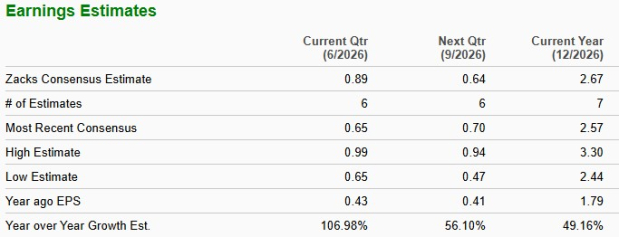
The same for MGY’s 2026 EPS indicates a year-over-year increase of 49.2%.
Image Source: Zacks Investment Research
Summing Up
While both companies present compelling investment cases, Magnolia appears better positioned for long-term investors, backed by its balanced combination of operational consistency, financial discipline and shareholder-friendly capital allocation.
While Crescent Energy offers attractive production growth and trades at a lower valuation, its acquisition-driven strategy and relatively higher debt profile introduce greater execution and financial risks, justifying its Zacks Rank #4 (Sell).
In contrast, Magnolia's low-leverage balance sheet, high-quality Eagle Ford and Austin Chalk assets, disciplined bolt-on acquisition strategy and strong free cash flow generation provide greater resilience across commodity cycles, supporting its Zacks Rank #3 (Hold). The company also expects stronger earnings growth in 2026, supported by efficient capital deployment and expanding high-return drilling opportunities.
Although Magnolia's concentrated asset base and unhedged production remain risks, its conservative operating model, financial flexibility and consistent shareholder returns make it the stronger and more dependable investment opportunity between the two.
You can see the complete list of today’s Zacks #1 Rank (Strong Buy) stocks here.
Radical New Technology Could Hand Investors Huge Gains
Quantum Computing is the next technological revolution, and it could be even more advanced than AI.
While some believed the technology was years away, it is already present and moving fast. Large hyperscalers, such as Microsoft, Google, Amazon, Oracle, and even Meta and Tesla, are scrambling to integrate quantum computing into their infrastructure.
Senior Stock Strategist Kevin Cook reveals 7 carefully selected stocks poised to dominate the quantum computing landscape in his report, Beyond AI: The Quantum Leap in Computing Power .
Kevin was among the early experts who recognized NVIDIA's enormous potential back in 2016. Now, he has keyed in on what could be "the next big thing" in quantum computing supremacy. Today, you have a rare chance to position your portfolio at the forefront of this opportunity.
See Top Quantum Stocks Now >>Want the latest recommendations from Zacks Investment Research? Today, you can download 7 Best Stocks for the Next 30 Days. Click to get this free report
Magnolia Oil & Gas Corp (MGY): Free Stock Analysis Report
Crescent Energy Company (CRGY): Free Stock Analysis Report
This article originally published on Zacks Investment Research (zacks.com).