


About the Industry
The Zacks HMO industry consists of entities (either private or public) that take care of subscribers’ basic and supplemental health services. Players in this space primarily assume risks and assign health and medical insurance policy premiums. Industry participants also provide administrative and managed-care services for self-funded insurance. Services are generally offered via a network of approved care providers (called in-network), which include primary care physicians, clinical facilities, hospitals and specialists. However, out-of-network exceptions are made during emergencies or when medically necessary. Health insurance plans can be availed through private purchases, social insurance or social welfare programs.
4 Trends Shaping the Future of the HMO Industry
Diversified Health Plans Support Membership Retention Amid Regulatory Headwinds: Health insurers continue to expand their membership base through diversified, cost-effective plans offering enhanced benefits tailored to different communities across the United States. These offerings support membership retention, recurring premium revenues and opportunities for government contract wins and renewals. However, gains from diversified products are expected to only partly offset the expected Medicaid membership declines resulting from growing regulatory challenges following the enactment of the One Big Beautiful Bill Act. Meanwhile, the expiration of enhanced Affordable Care Act (ACA) subsidies at the end of 2025 has already contributed to Marketplace enrollment losses, adding pressure on premium revenues. This has prompted insurers to focus more on higher-margin commercial plans, while finalized Medicare Advantage reimbursement rate increases for 2026 and 2027 may offer some relief.
Growing Senior Population Supports Medicare Demand: The rise in the senior population is expected to sustain demand for Medicare coverage, which primarily serves people aged 65 and above. As more baby boomers reach retirement age, insurers have opportunities to expand membership and premium collections, although higher medical utilization may temper profitability. To address seniors' healthcare needs, companies are developing extensive provider networks encompassing physicians, hospitals, pharmacies and other care facilities. Some insurers also invest in senior-focused clinics that coordinate preventive services, chronic disease management and personalized treatment. Such initiatives can improve access to care, strengthen member engagement and support long-term retention.
Technology Adoption Reshapes Healthcare Delivery: HMOs are adopting telehealth and digital tools to improve access and efficiency. AI-enabled virtual assistants, mobile health platforms, cloud systems and analytics help insurers streamline administrative functions, coordinate care and engage members remotely. These solutions may simplify consultations and reduce avoidable hospital visits, while analytics support targeted care. However, technology deployment entails upfront investment, cybersecurity requirements and ongoing system maintenance. Over time, effective adoption may improve cost management, member satisfaction, service consistency and scalability, supporting insurers' competitive position in a changing healthcare market.
Strategic M&A Strengthens Growth Opportunities: Mergers and acquisitions remain important growth catalysts for the U.S. health insurance industry, enabling insurers to expand their market reach, enhance service offerings and diversify revenue sources beyond conventional insurance products. Companies are increasingly pursuing acquisitions in healthcare delivery, pharmacy benefit management, specialty care and digital health solutions to strengthen their competitive positioning and broaden their capabilities. These strategic investments can support the development of integrated healthcare ecosystems, improve member access to medical services and create opportunities for cost efficiencies, operational synergies and long-term revenue growth.
Zacks Industry Rank Instills Optimism
The group’s Zacks Industry Rank, which is the average of the Zacks Rank of all the member stocks, indicates bright near-term prospects. The Zacks Medical-HMOs industry, which is housed within the broader Zacks Medical sector, currently carries a Zacks Industry Rank #31, which places it in the top 13% of more than 250 Zacks industries. Our research shows that the top 50% of the Zacks-ranked industries outperform the bottom 50% by a factor of more than two to one.
The industry’s positioning in the top 50% of the Zacks-ranked industries is a result of a positive earnings outlook for the constituent companies in aggregate.
Before we present a few stocks that you may want to buy or retain in your portfolio, let’s look at the industry’s recent stock-market performance and valuation picture.
Industry Outperforms S&P 500 & Sector
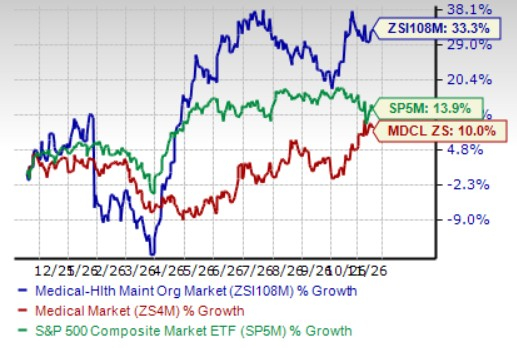
The Zacks Medical-HMO industry has advanced 33.3% in the past year compared with the Zacks S&P 500 composite’s 13.9% growth. The Zacks Medical sector rallied 10% in the same time frame.
One-Year Price Performance
Image Source: Zacks Investment Research
Industry's Current Valuation
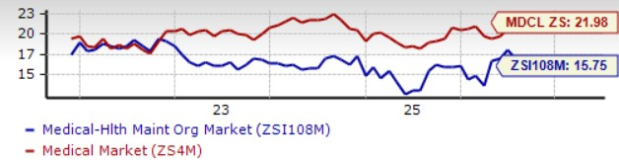
Based on the forward 12-month price-to-earnings (P/E) ratio, which is commonly used for valuing medical stocks, the industry trades at 15.75X compared with the S&P 500’s 18.67X and the sector’s 21.98X.
Over the past five years, the industry has traded as high as 19.64X and as low as 11.58X, with the median being at 15.95X, as the chart below shows.
Forward 12-Month Price/Earnings (P/E) Ratio
Image Source: Zacks Investment Research
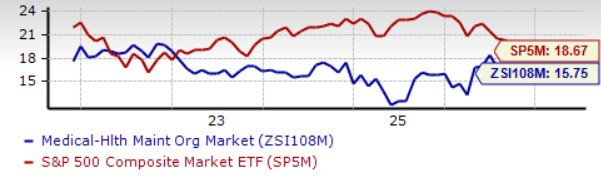
Image Source: Zacks Investment Research
5 Stocks to Keep a Close Eye On
We present five stocks from the space, either sporting a Zacks Rank #1 (Strong Buy), carrying a Zacks Rank #2 (Buy) or #3 (Hold). Considering the current industry scenario, it might be prudent for investors to buy or retain these stocks in their portfolio, as these are well-placed to generate growth in the long haul.
You can see the complete list of today’s Zacks #1 Rank stocks here.
Humana: Headquartered in Kentucky, Humana boasts an established Medicare franchise, national reach and an integrated healthcare delivery model. With more than 30 years of Medicare experience and plan offerings across all 50 states, the company benefits from a geographically diverse membership base and extensive provider relationships. Its CenterWell platform combines pharmacy services, senior-focused primary care and home health operations, supporting care coordination beyond traditional insurance coverage. This Zacks Rank #1 company also uses data analytics, chronic care management and value-based provider arrangements to improve member engagement and manage medical costs.
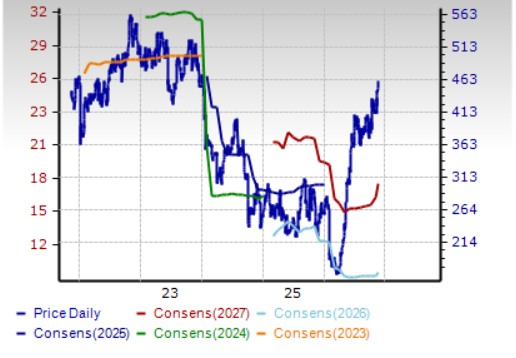
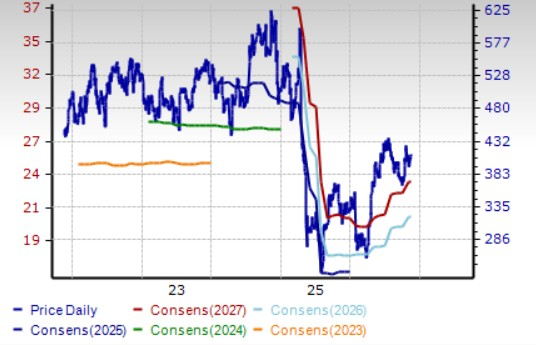
The Zacks Consensus Estimate for Humana’s 2026 earnings is pegged at $9.48 per share. The consensus mark for 2026 earnings has moved 4% north over the past 30 days. HUM’s earnings surpassed estimates in each of the last four quarters, the average surprise being 14.76%.
Price & Consensus: HUM
Image Source: Zacks Investment Research
UnitedHealth Group: Minnesota-based UnitedHealth Group comprises a diversified healthcare platform, combining UnitedHealthcare's broad insurance offerings with Optum's care delivery, pharmacy services, data analytics and technology capabilities. Its extensive provider relationships and nationwide distribution channels support access to care across commercial, Medicare and Medicaid markets. Optum Rx's large pharmacy network strengthens its ability to serve varied prescription needs. Additionally, continued focus on mergers and acquisitions, coupled with expanding telehealth capabilities, strengthens the nationwide footprint of this Zacks Rank #2 company.
The Zacks Consensus Estimate for UnitedHealth Group’s 2026 earnings is pegged at $20.61 per share, which implies 26.1% growth from the year-ago figure. UNH’s earnings beat estimates in each of the last four quarters, the average surprise being 13.97%.
Price & Consensus: UNH
Image Source: Zacks Investment Research
Cigna: Based in Connecticut, this Zacks Rank #3 company benefits from its extensive scale, diversified health services portfolio and integrated medical and pharmacy capabilities. Through Evernorth Health Services and Cigna Healthcare, it offers pharmacy benefit management, specialty pharmacy, care management and health insurance solutions tailored to employer and individual needs. Its broad provider network, spanning approximately 1.7 million physicians and more than 6,000 hospitals in the United States, supports access to care. Cigna further enhances its market position and growth prospects through strategic acquisitions and partnerships with leading healthcare organizations, while continuously expanding its product offerings.
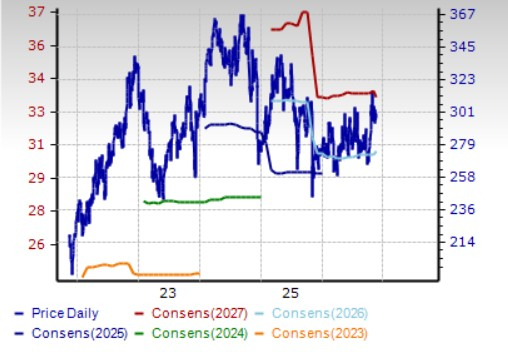
The Zacks Consensus Estimate for Cigna’s 2026 earnings is pegged at $30.69 per share, indicating 2.9% growth from the prior-year figure. CI’s earnings beat estimates in each of the last four quarters, the average surprise being 3.63%.
Price & Consensus: CI
Image Source: Zacks Investment Research
Centene: Based in Missouri, this Zacks Rank #3 company benefits from its extensive experience serving underserved populations and its leadership in Medicaid, Health Insurance Marketplace plans and stand-alone Medicare prescription drug coverage. Centene’s substantial presence in dual-eligible special needs plans strengthens its ability to coordinate care for members with complex needs. Strong provider and community partnerships support value-based care, while data-driven insights help identify care gaps and improve services. Management projects premium and service revenues within $173-$177 billion for 2026.
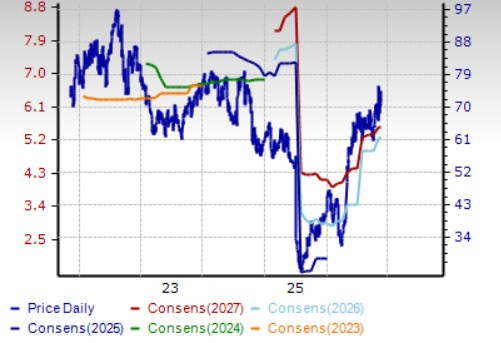
The Zacks Consensus Estimate for Centene’s 2026 earnings is pegged at $5.27 per share, which more than doubled from the year-ago figure. CNC’s earnings outpaced estimates in each of the last four quarters, the average surprise being 248.90%.
Price & Consensus: CNC
Image Source: Zacks Investment Research
Molina Healthcare: This California-based Zacks Rank #3 company benefits from its specialized focus on government-sponsored healthcare, serving approximately 4.9 million members across 21 states. Its established presence in Medicaid, Medicare and Marketplace programs provides scale and market expertise. Extensive provider networks, centralized administrative services and data-driven care management capabilities help enhance operational efficiency and care delivery. Additionally, strategic acquisitions, investments in Artificial Intelligence and established government relationships strengthen MOH's ability to pursue long-term growth opportunities. Management expects the 2026 premium revenue outlook to be approximately $42 billion.
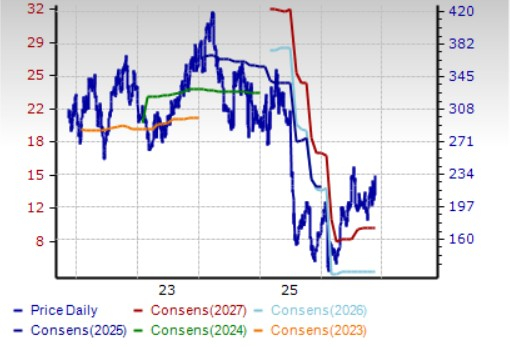
The Zacks Consensus Estimate for Molina Healthcare’s 2026 earnings is pegged at $5.30 per share. The consensus mark for MOH’s 2026 earnings has moved 0.4% north over the past 30 days. MOH’s earnings beat estimates in one of the last four quarters and missed the mark thrice.
Price & Consensus: MOH
Image Source: Zacks Investment Research
Beyond Nvidia: AI's Second Wave Is Here
The AI revolution has already minted millionaires. But the stocks everyone knows about aren't likely to keep delivering the biggest profits. AI’s second wave is moving from infrastructure to implementation and these companies are at the forefront of this transition, positioned to become what Amazon and Google were to the internet era.
See Stocks Now >>Want the latest recommendations from Zacks Investment Research? Today, you can download 7 Best Stocks for the Next 30 Days. Click to get this free report
UnitedHealth Group Incorporated (UNH): Free Stock Analysis Report
Humana Inc. (HUM): Free Stock Analysis Report
Molina Healthcare, Inc (MOH): Free Stock Analysis Report
Cigna Group (CI): Free Stock Analysis Report
Centene Corporation (CNC): Free Stock Analysis Report
This article originally published on Zacks Investment Research (zacks.com).