

On Thursday, Cerebras (CBRS) became the biggest IPO of 2026.
It’s already generated hundreds of headlines, but I’m not too excited.
More Top Stocks Daily: Go behind Wall Street’s hottest headlines with Barchart’s Active Investor newsletter.
Why isn’t this career investor waxing poetic about the earnings potential for CBRS, its disruption of AI chip production, or about the wonders of a dinner-plate-sized GPU, 50 times the size of a normal semiconductor, the biggest the world has ever seen?
Answer: Because I AM a career investor. One who’s seen every market cycle since 1986, every innovation, every investing era, and lived to tell about it.
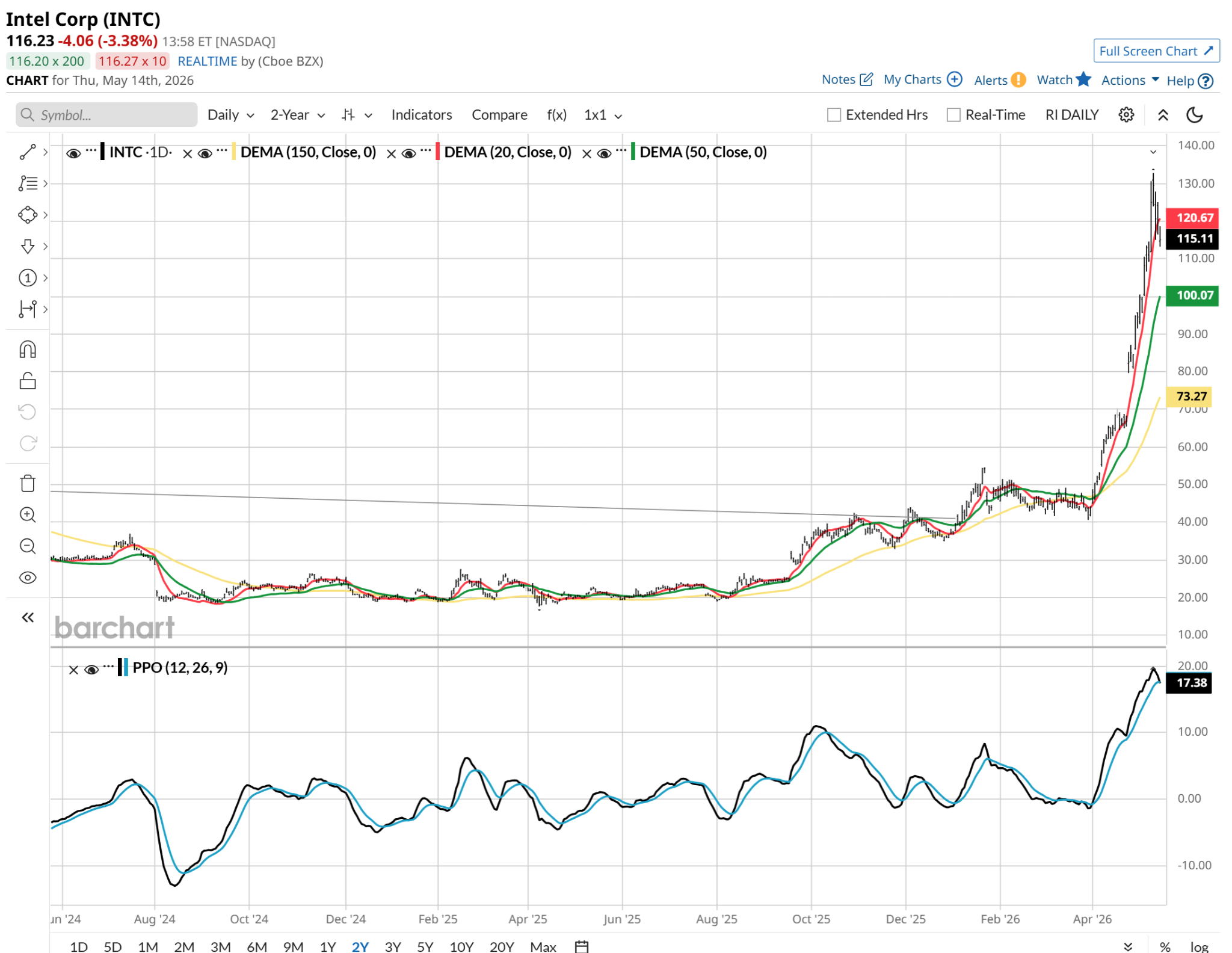 www.barchart.com
 Investing is about more than excitement. Investment sales is about excitement. At least nowadays. But investing itself isn’t. It is about ever-balancing return potential and risk of major loss. Every position, every day.
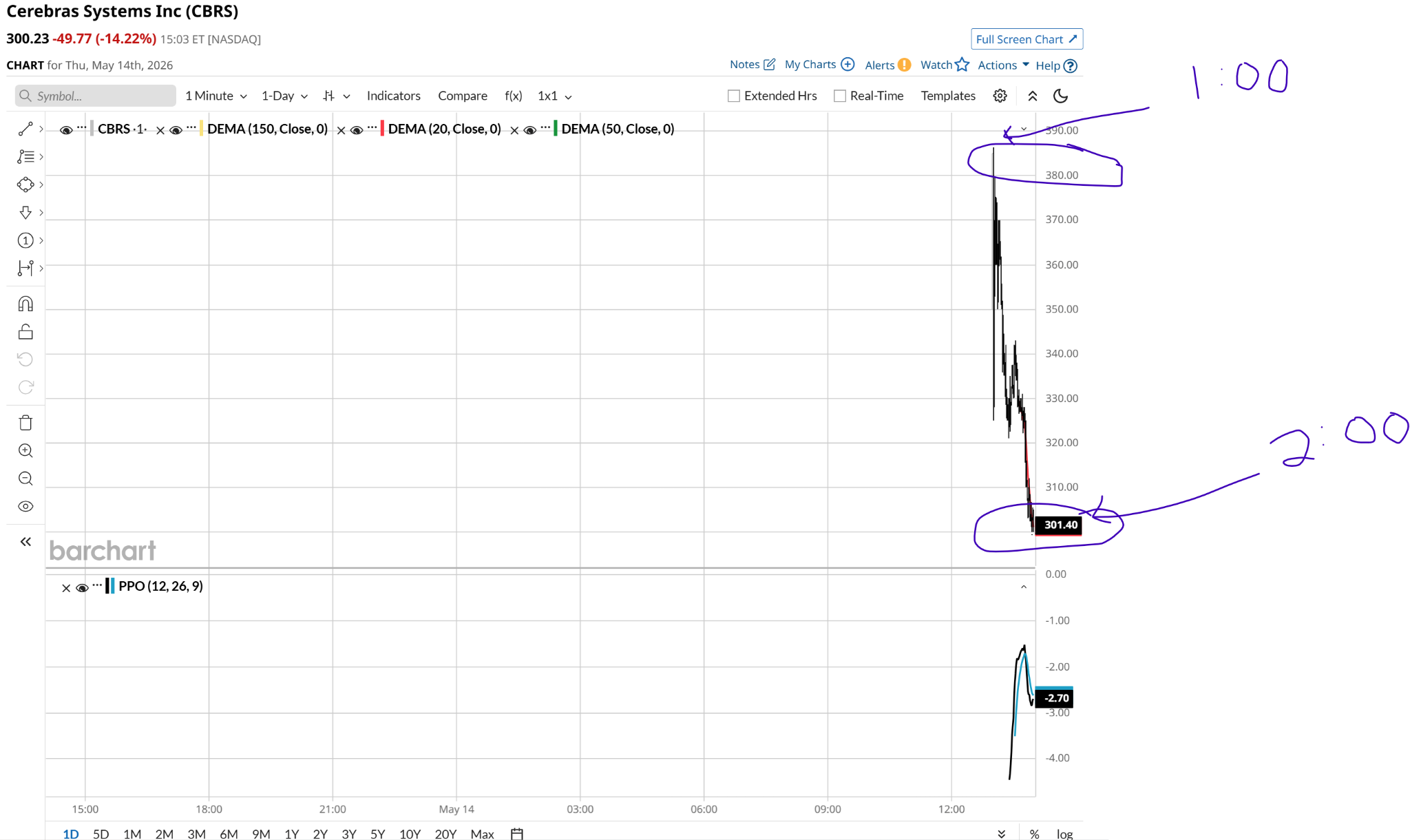
That’s why I talk constantly about position-sizing within a portfolio. First, you have to have a portfolio, not a collection of investments. If you do, and you took a shot with CBRS when it opened today at $385 a share, only to see it fall to $300 an hour later, that’s no big deal. Because you speculated with a few bucks, and didn’t bet the farm on this or any other “hot dot.”
 www.barchart.com
 And I just can’t help but see this “event” as one of those things we’ll look back at in a few years and say “we knew the market was getting too expensive.” That has little to do with CBRS and everything to do with the gamification of markets. Debuts like this one, and the expected IPOs of SpaceX, Open AI, and Anthropic later this year or next year, are all symptoms. And all I’m saying is: stay within yourself as an investor.
There’s too much evidence in this cycle, at this time, to make me think that the next few years are going to extend the picnic. And that makes this latest exercise in “financial eye candy” something to mark in our calendars. Along with $5 trillion market caps, stock market to GDP records, and a long list of macro maladies that the market has not yet truly confronted.
Cerebras was able to go public now because we have a stock market producing record profit margins, attracted to anything related to AI. But the market is too concentrated to not also be a double-edged sword.
More than 70% of the increase in 2026 earnings estimates is being driven by just six companies. This level of concentration creates a precarious over-concentrated scenario for index investors. It can endure. But that only makes the downside of the mountain steeper. That’s what I’ve seen for 40 years, embedded in market activity and operating as a price-driven type (technician).
Furthermore, the valuation gap has reached historic proportions. The S&P 500 Index ($SPX) is currently trading at a more than 40% premium relative to the rest of the world. While American exceptionalism is a powerful narrative, such a massive valuation spread leaves little room for error if the domestic macro environment shifts.
As seasoned investors know, strong earnings reports late in an economic cycle are rarely a reliable buy signal. Instead, they serve as a rear-view mirror. A description of the prosperity that has already occurred. Try to avoid the temptation to be a past performance-obsessed investor. It works until it doesn’t.
In this environment, the question for 2026 isn’t how far we’ve come, but rather how much of this perfection is already priced in. When the index is priced for a “one-way trade” scenario (you buy and never have to consider selling), any deviation, be it from a concentrated earnings miss or a shift in Fed policy, could trigger a long-overdue revaluation.
That’s not being bearish. It is being realistic. And being aware of a wide range of possible outcomes, rather than assuming the most recent narrative is the only one.
Rob Isbitts created the ROAR Score, based on his 40+ years of technical analysis experience. ROAR helps DIY investors manage risk and create their own portfolios. For Rob's written research, check out ETFYourself.com.
On the date of publication, Rob Isbitts did not have (either directly or indirectly) positions in any of the securities mentioned in this article. All information and data in this article is solely for informational purposes. For more information please view the Barchart Disclosure Policy here.