


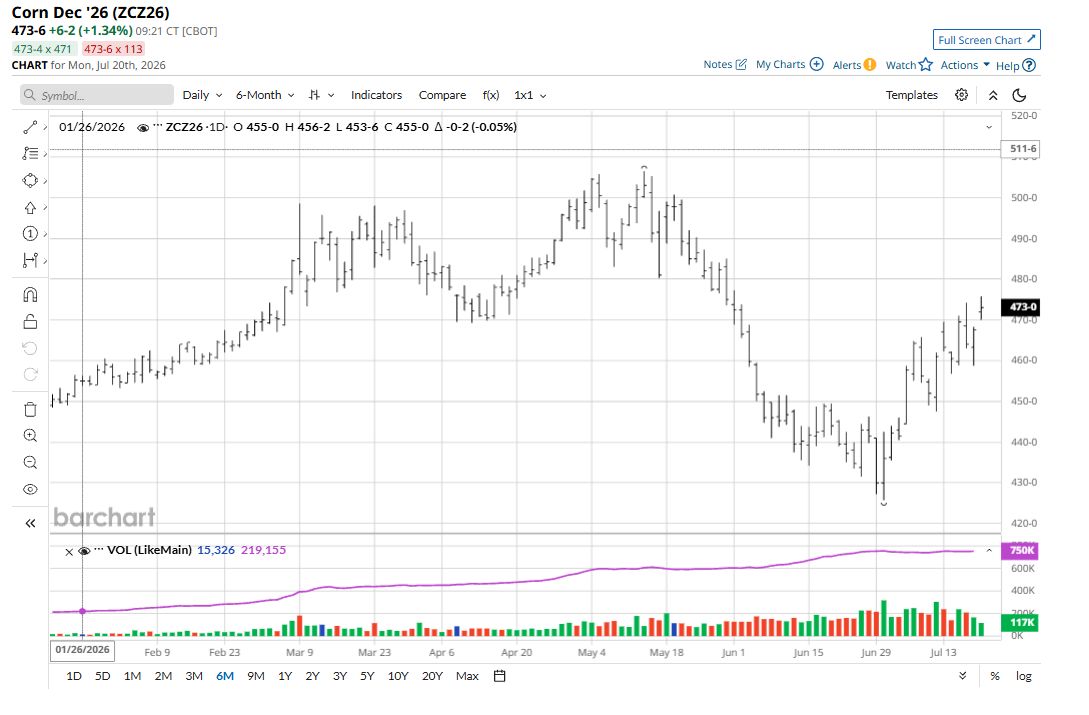
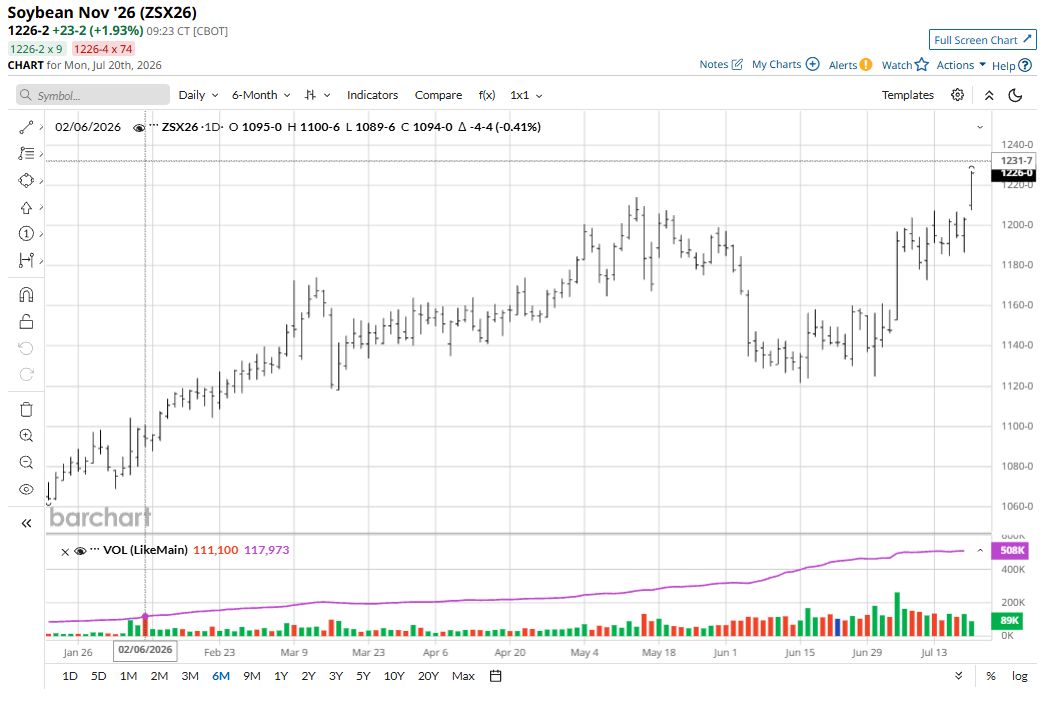
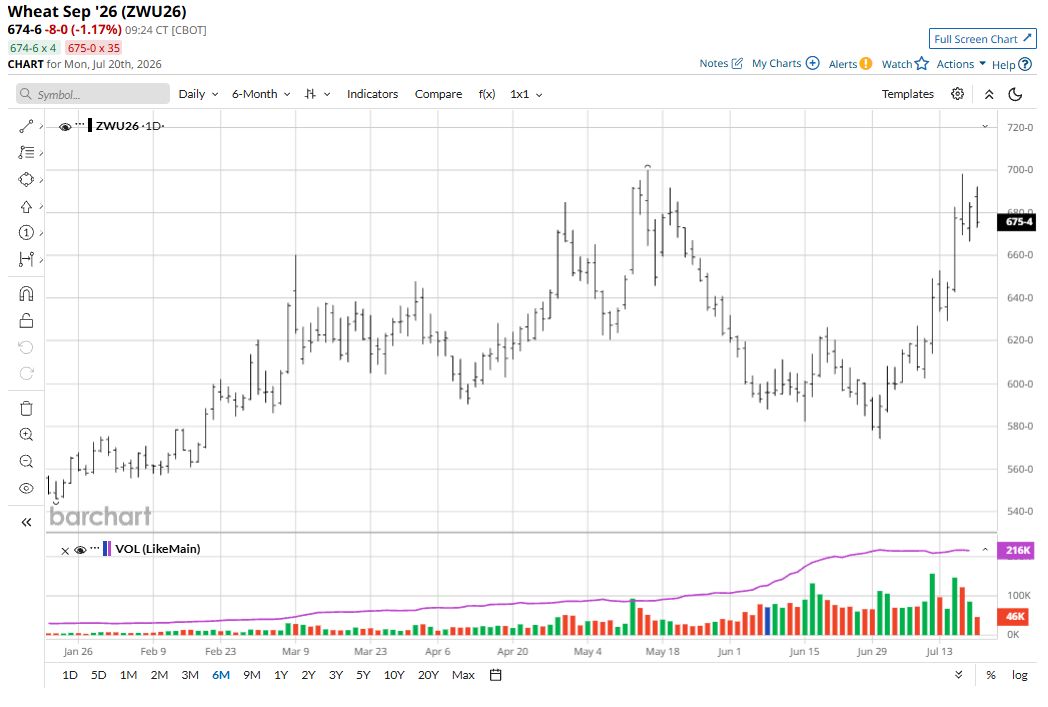
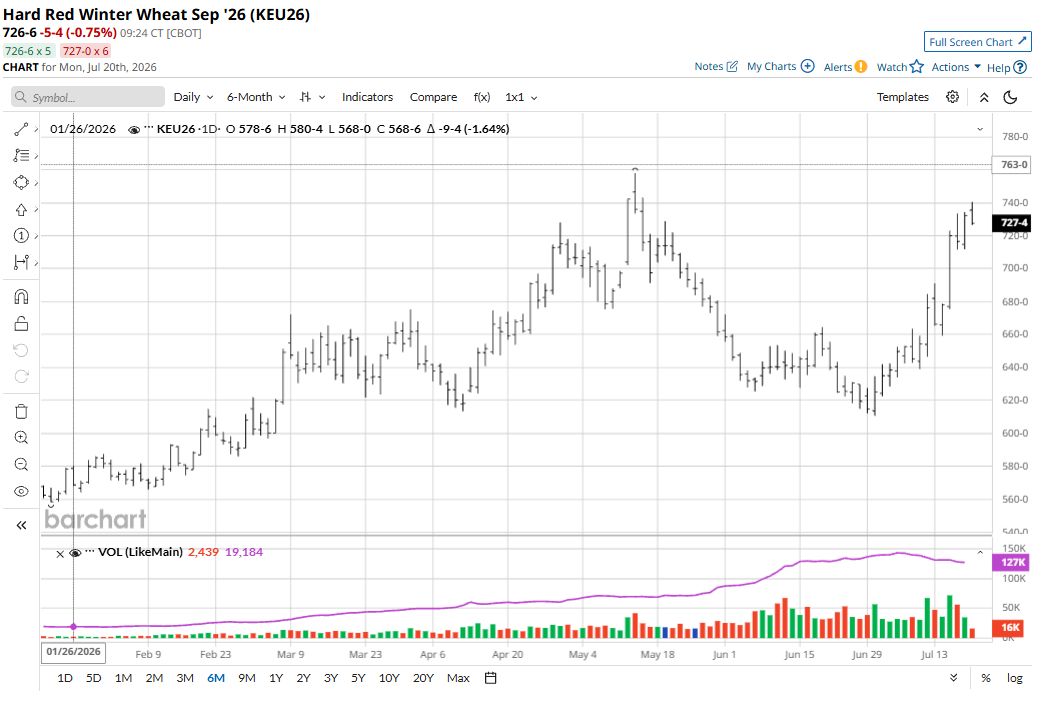
December corn (ZCZ26) futures on Friday rose 3 1/2 cents to $4.67 1/2 and for the week were up 6 1/2 cents. November soybeans (ZSX26) rose 8 cents to $12.03, closed at a two-month high close, and for the week gained 12 1/4 cents. September soft red winter wheat (ZWU26) futures gained 8 cents to $6.82 3/4 and for the week were up 42 1/2 cents. September hard red winter wheat (KEU26) futures rose 15 3/4 cents to $7.32 1/4, hit a seven-week high, and for the week were up 56 cents.
The grain futures markets on Friday posted good rebounds from early session lows as the bulls stepped in to buy the dips. Grain futures prices are still trending up on the daily charts, which means the path of least resistance for prices in the near term will remain sideways to higher.
Don’t Miss a Day: From crude oil to coffee, sign up free for Barchart’s best-in-class commodity analysis.
Corn Gains Traction from Deteriorating European Maize Crop
The condition of France’s grain maize crop deteriorated again last week, FranceAgriMer said on Friday, as exceptionally dry and hot weather continues to cut into production from the European Union’s largest grain producer. Ratings showed that 41% of the French maize crop was in good or excellent condition by July 13, down from 47% a week earlier and 72% a year ago.
 www.barchart.com
Weather forecasters late Friday were saying some heat in the western U.S. early this week and drier weather in much of the Midwest over the next two weeks will still leave moist soil for most of Corn Belt. Plus, the lack of significant heat in most areas through at least the next week will allow corn pollination to occur favorably in much of that region. Exceptions are eastern South Dakota and eastern Nebraska, where soils are drier. By early August, a larger part of the Midwest will need rain to maintain the best possible yield potential for corn and soybeans.
The Pro Farmer crop tour in late August will be coming into corn and soybean trader focus as the month of July ends.
Soybeans Supported by Fresh Chinese Demand for U.S. Beans
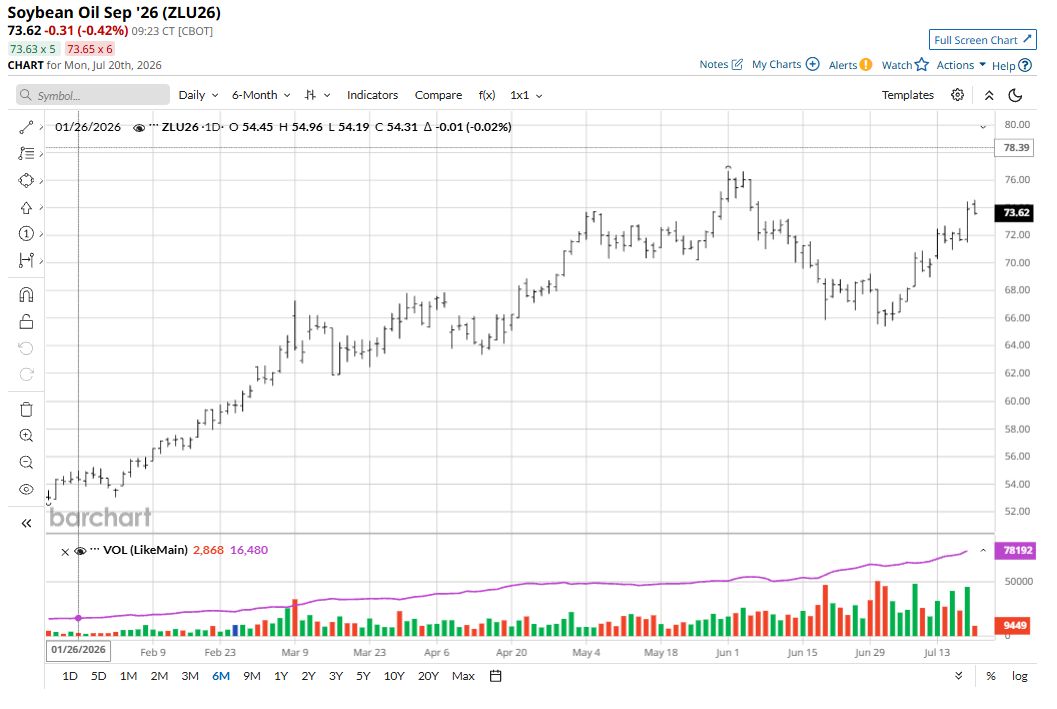
The soybean and bean oil (ZLU26) futures got support Friday from the USDA reporting daily U.S. soybean sales of 340,000 MT to China, 256,634 MT to Mexico, and 110,000 MT to unknown destinations during 2026-27. Daily flash sales last week were reported on four consecutive market days with China purchasing just over 1 million metric tons in total. Traders are wondering how long China will keep up its buying of U.S. beans —especially after President Donald Trump accused China of meddling in the 2020 U.S. election on Thursday.
In the meantime, NOPA soybean crush reports continue to show demand is red-hot at the domestic level. The organization last week reported 214 million bushels were crushed in June, surpassing all analyst estimates and rebounding sharply from the May maintenance window.
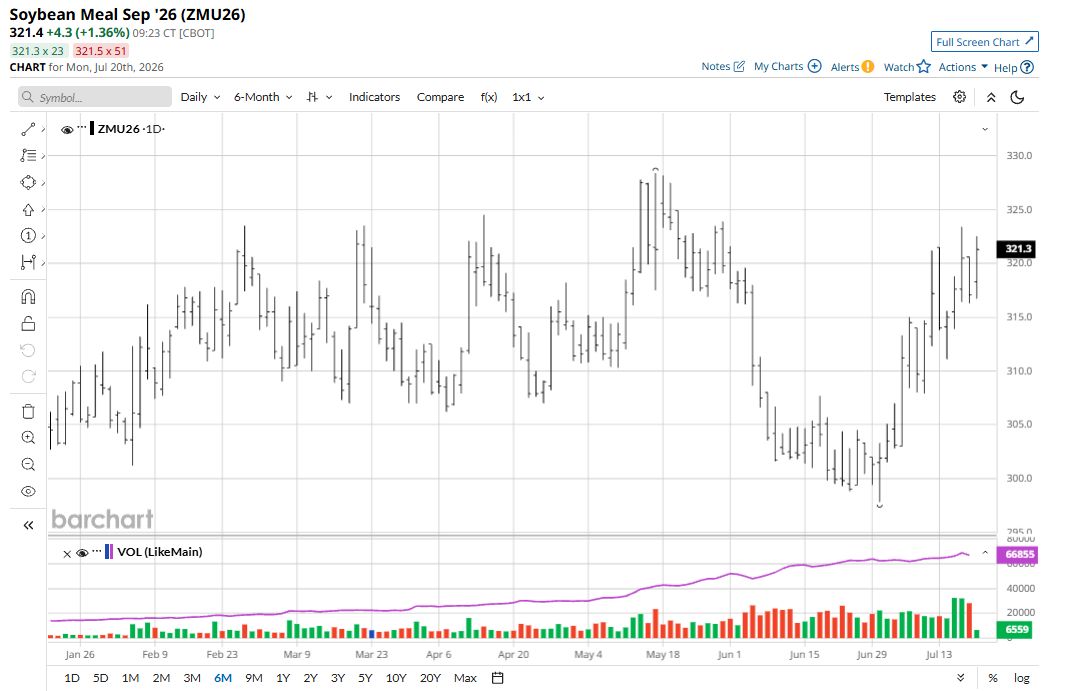
Solid gains in crude oil (CLQ26) prices on Friday helped to boost soybean oil futures. Spreaders were also buying bean oil and selling meal futures on Friday.
Weather models for August will begin to come into clearer focus over the next week and be a key driver of soybean complex futures price action ahead of the USDA’s initial survey-based yield forecast on Aug. 12. August is arguably the most important growing month for most of the U.S. soybean crop.
 www.barchart.com
 www.barchart.com
 www.barchart.com
Wheat Futures Boosted by Worries of Global Supply Disruptions
The winter wheat futures markets on Friday saw renewed technical buying interest after a pause last Thursday. Bulls have technical momentum heading into trading this week, following Friday’s technically bullish weekly high closes in SRW and HRW wheat.
 www.barchart.com
 www.barchart.com
An industry group late last week reported it expects the wheat crop in Australia’s largest grain-exporting state to shrink by almost 30% year-on-year, due to hot and dry conditions forecast over the next few months, Bloomberg reported. In its first survey of production for the 2026 crop, the Grain Industry Association of Western Australia forecast that the state will harvest 9.5 million tons of wheat. That’s down from 13.3 million tons in 2025.
At the same time, Russian Agriculture Minister Oksana Lut said on Friday that prospects for this year’s harvest are good, but she acknowledged that there were fuel concerns in all regions. Andrey Sizov from the SovEcon Black Sea research consultancy told Reuters: “If there is no military solution to open up the Sea of Azov, and the situation drags on for most of the second half of the year, Russia could fall short of supplying the global market by 5 million to 10 million tons of wheat.”
Monday afternoon’s weekly USDA crop progress reports and the U.S. crop condition ratings will be closely scrutinized by grain traders.
Let me know what you think. I enjoy hearing from my valued Barchart readers all around the globe. Email me at jim@jimwyckoff.com.
On the date of publication, Jim Wyckoff did not have (either directly or indirectly) positions in any of the securities mentioned in this article. All information and data in this article is solely for informational purposes. For more information please view the Barchart Disclosure Policy here.