

Vanguard’s launch of the BondBuilder Target Maturity ETF suite, charging an expense ratio of 0.08% or $8 on an initial $10,000 investment, just added fuel to the fire of the next hot investing trend.
Bond investing isn’t something that new generations have had to bother much with, and even older generations of investors have had 15-20 years to forget about it. With a new opportunity brewing, there’s an excellent chance investors will be looking to simplify it.
Join 200K+ Subscribers: Find out why the midday Barchart Brief newsletter is a must-read for thousands daily.
Defined-maturity bond ETFs, now a $70 billion market, could be just the vehicles for them to do so.
These are ETFs that act a lot like bonds do. They exist until they are closed down by the issuer, which is at a pre-determined future date. They own bonds maturing in the same year, such that investors can create their own “bond ladder” with them.
For many bond investors, the biggest hurdle hasn’t been finding attractive yields. It has been managing duration risk without taking on the burden of buying and tracking bonds maturing annually, or even quarterly.
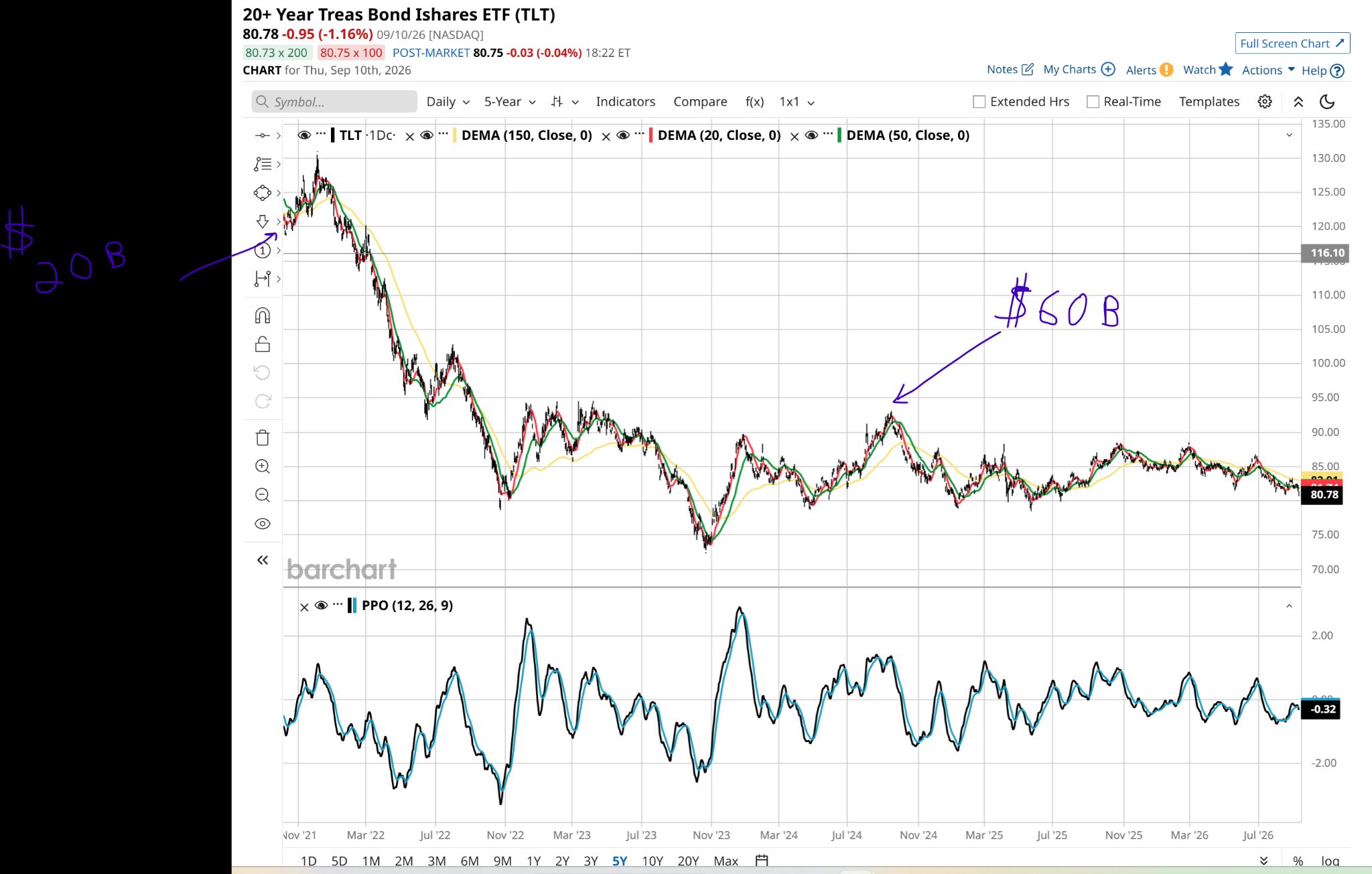
Don’t believe me? Consider the case of the iShares 20+ Year Treasury Bond ETF (TLT), which became the favorite bond ETF of just about everyone earlier this decade. It tracks 20-30-year U.S. Treasury bond prices.
 www.barchart.com
 But look at the chart above. The ETF’s price has dropped by one-third of its value in under two years, but as I drew above, the assets invested in it tripled from $20 billion to $60 billion during that time.
My conclusion is that there are a lot of people walking around thinking that rising rates cause bond prices to rise. But it works the opposite way, in fact.
So with the sudden influx of ETFs targeting maturity dates… which to be clear I absolutely love… I do wonder if their accurate story will be told.
We’ll do our best here to talk to you straight about it. Bond learning curves do not have to be steep. In fact, if you learned how to trade stocks, options, and crypto, bond investing and even trading around interest rate movements is a relative cinch.
Defined-Maturity Bond ETFs Are Not Perfect
While defined-maturity bond ETFs make portfolio construction much more efficient, they are not risk-free substitutes for bank CDs or individual U.S. Treasuries.
Corporate target-maturity funds hold investment-grade corporate debt. While defaults among investment-grade issuers are historically low, the fund’s final liquidation value depends on net asset performance rather than a guaranteed principal return. And if you sell a defined-maturity ETF prior to its liquidation date during a rate spike (like we’re having right now), you can still realize capital losses. The structure delivers its primary benefit when it is through to maturity.
Still, securing 5%-plus yields with capital upside during a rougher era for equities, like the one we might be headed for, is a rare opportunity in my book. When I created my new Hedged Bond model portfolio using only ETFs, I laddered (using iShares’ competing product to Vanguard’s new offerings), I did not set it and forget it. I have an arsenal of additional bond ETFs which are built to profit from falling, rising, or rangebound periods for interest rates. But that defined maturity starting point is like the star player you build a team around. Except that the team in this case is a bond portfolio. One that, if managed carefully, with a predetermined strategy for a wide range of market conditions, might just be an S&P 500 outperformer over the next 5-10 years.
Rob Isbitts is a semi-retired CIO, former fiduciary investment advisor, and Barchart columnist. Check out his other work at ETFYourself.com (featuring the Fresh Charts weekly trading post), and ROAR.PiTrade.com, helping investors to better-manage their own portfolios.
On the date of publication, Rob Isbitts did not have (either directly or indirectly) positions in any of the securities mentioned in this article. All information and data in this article is solely for informational purposes. For more information please view the Barchart Disclosure Policy here.
More news from Barchart
Mark Cuban Says He Was Dizzy for Months, So He Built a VR Fix That Does at Home ‘Much Of What A 180k Machine’ Does How Defined-Maturity Bond ETFs Could Help You Outperform the S&P 500 Over the Next 5-10 Years Make This Trade Now That the Fed Has Hiked Rates Bank of America Just Declared a ‘Generational Entry Point’ in U.S. Bonds. Why Investors Should Be Backing Up the Truck on Treasuries Here.