

Tesla (TSLA), Meta Platforms (META), and Broadcom (AVGO) are at the bottom of the trillion-dollar club year-to-date, making them prime candidates for put selling.
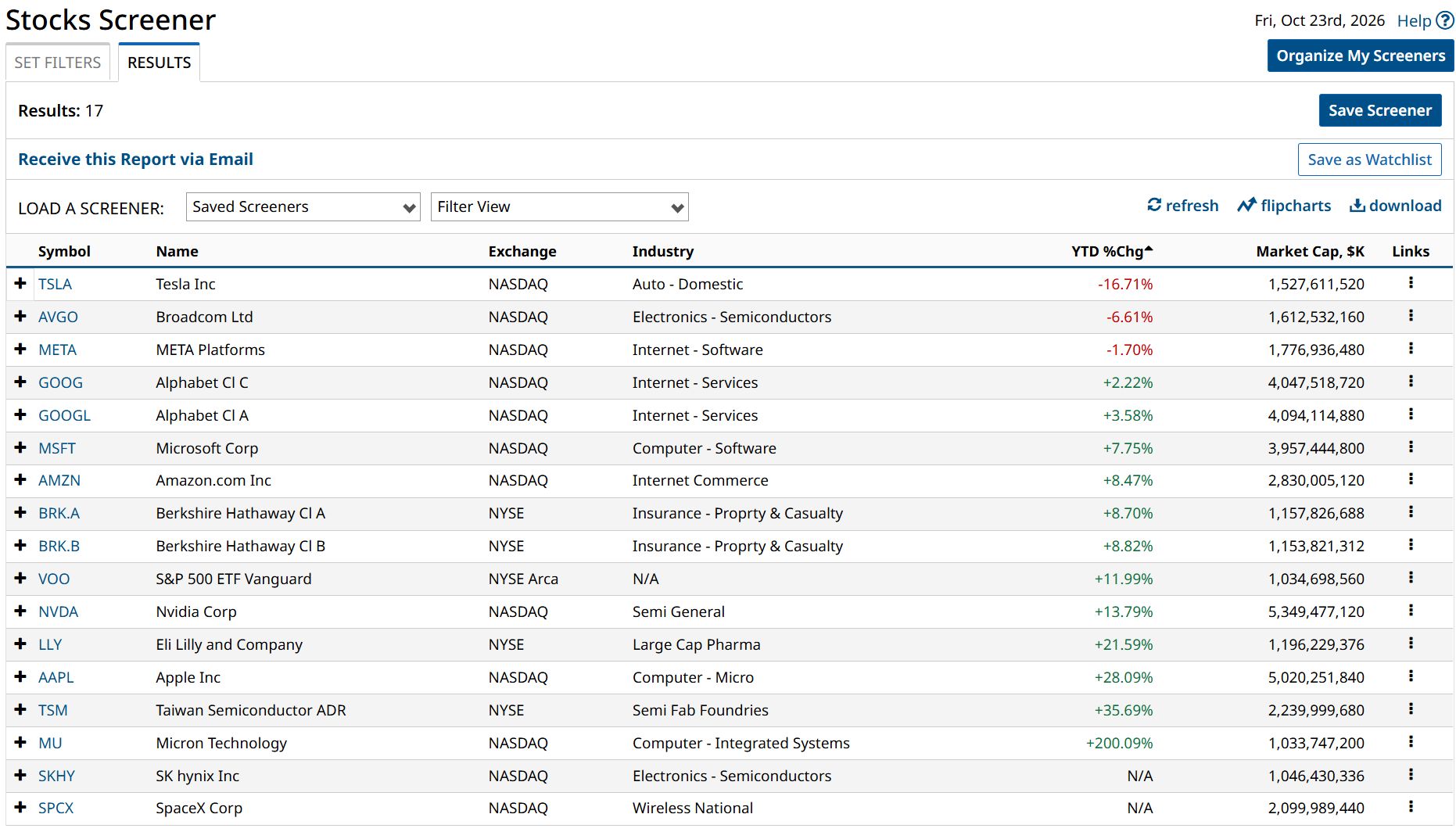 Screenshot courtesy of www.barchart.com
But if you could choose only one, which stock would it be, and how would you pick the trade?
Can’t Get Enough Options?: Join the list for Barchart’s daily unusual options report, delivered free.
Here’s the catch: the juiciest premium or the cheapest stock isn’t always the best deal.
So to find out, let’s run these three stocks through a few simple checks, from what the market is paying for the risk to how much cushion a strike really gives investors.
Spoiler: it’s Meta, and I’ll show you the 595-strike trade I’d use.
What Is a Short Put?
But first, definitions.
A short put is an options trade where an investor sells a put contract and collects cash, called the premium, up front. In exchange, the investor agrees to buy 100 shares of the stock at a set price, the strike, if the buyer chooses.
So there are two ways this plays out.
If the stock stays above the strike through expiration, the contract expires worthless, and the investor keeps the premium. That's the goal.
But if the stock falls below the strike at expiration, the investor buys the shares at the strike price, even if the stock is trading for less.
That means the premium is the most an investor can make, while the downside can be much larger. That’s why picking the right stock and the right strike matters so much.
With that being said, let’s move to the actual choice between the three.
Why Tesla is Immediately Out
Even though Tesla has a “Moderate Buy” rating from Wall Street, the actual scores are rather divided. That’s why I’m sticking with the other two, both of which still have a “Strong Buy” consensus rating and more favorable splits.
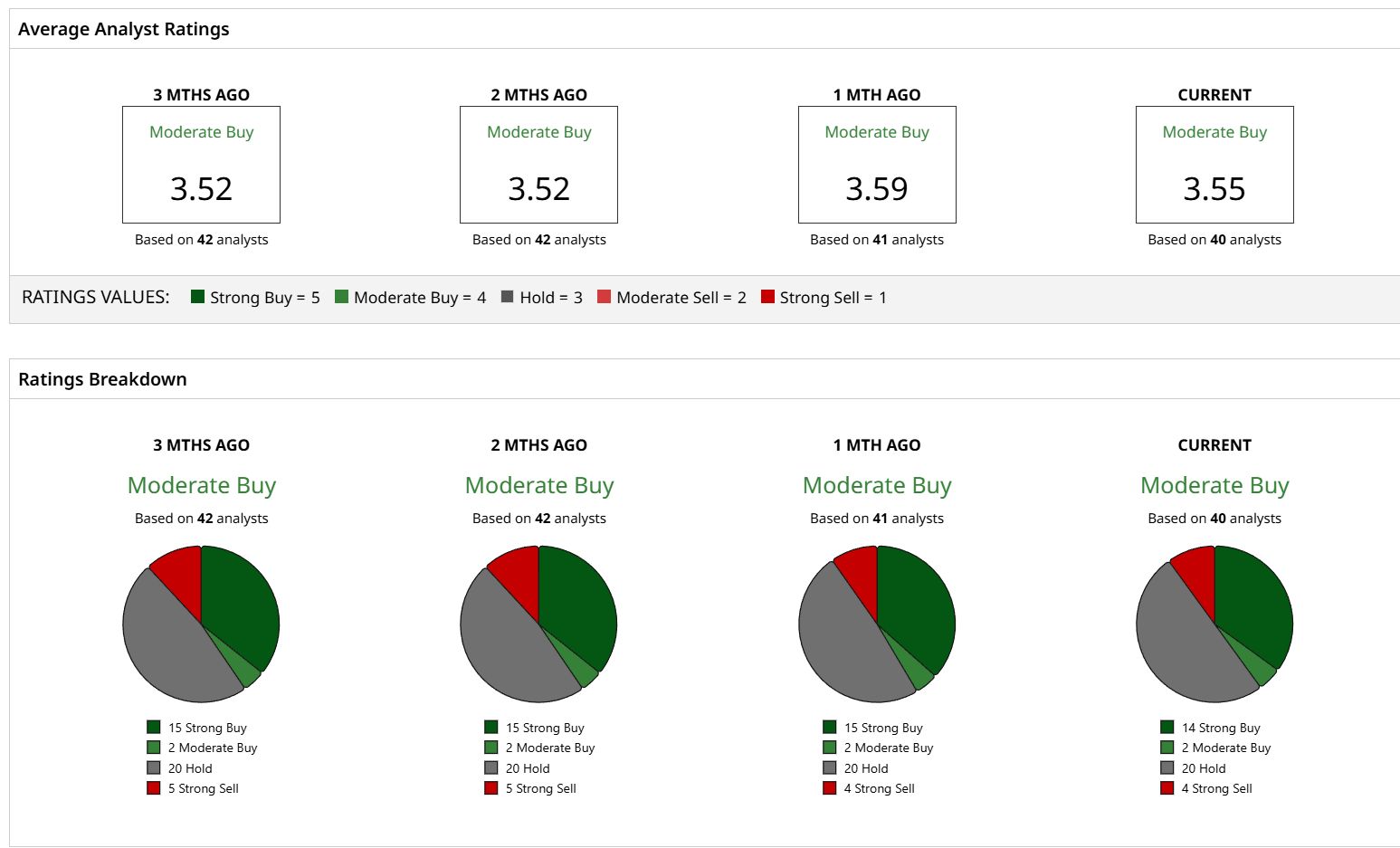 Screenshot courtesy of www.barchart.com
Also, Tesla currently has a low IV rank of 12%. For those unfamiliar, IV rank measures where a stock’s current implied volatility sits relative to its range over the past year. It’s like relative temperature; if Tesla’s IV rank is 12%, it’s like a relatively cold day compared to the temperatures it’s seen over the past year, meaning options are relatively cheap compared to their historical range.
For option sellers, a severely low IV rank generally means lower premiums, so you collect less when selling covered calls or cash-secured puts. That’s not usually worth the risk.
META vs AVGO: Which One Offers The Better Deal
So now let’s switch over to Broadcom and Meta. As mentioned, both stocks have a “Strong Buy” rating. But that’s not enough to decide, so let’s dive deeper into the numbers.
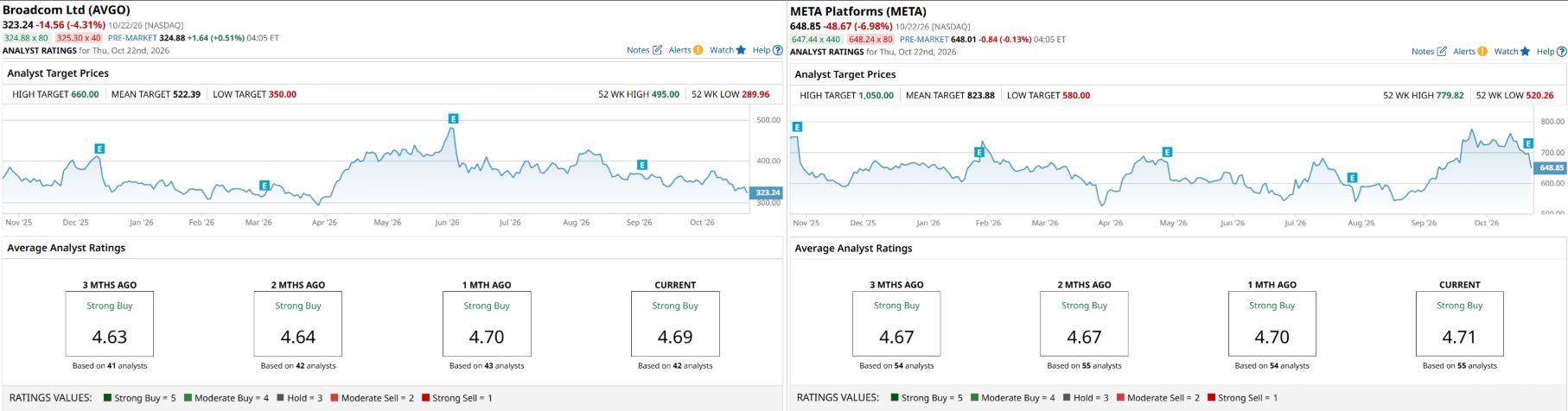 Screenshot courtesy of www.barchart.com
Broadcom Dashboard
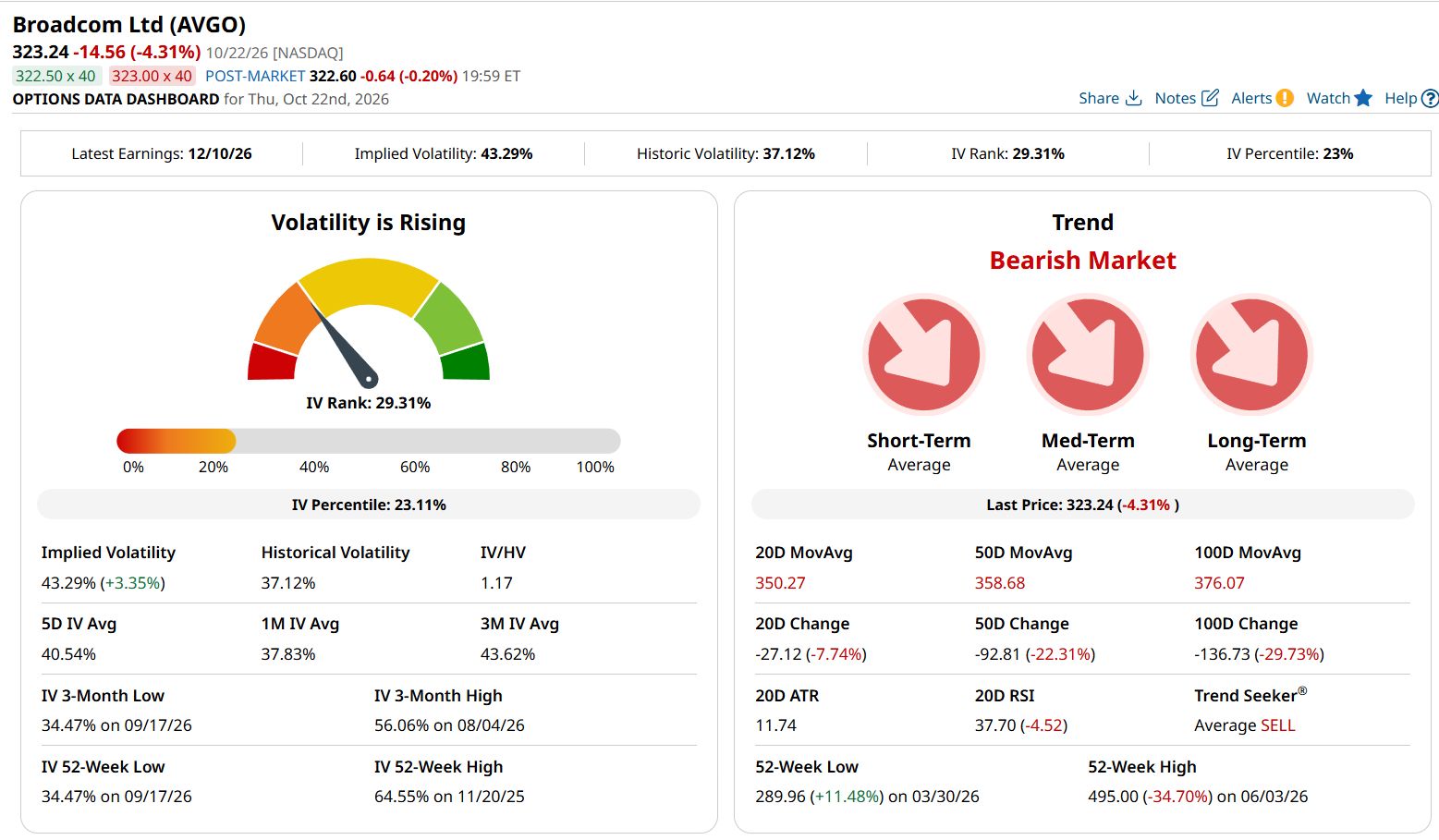
To expand the dataset, let’s look at both companies’ Option Data Dashboards, starting with Broadcom.
 Screenshot courtesy of www.barchart.com
Right now, Broadcom’s IV rank is rising but still below the halfway mark, so premiums are low for the risk. Another concern is that Broadcom’s trading is in a clear downtrend. It’s below its 20-, 50-, and 100-day moving averages, and it's just 11% from its 52-week low.
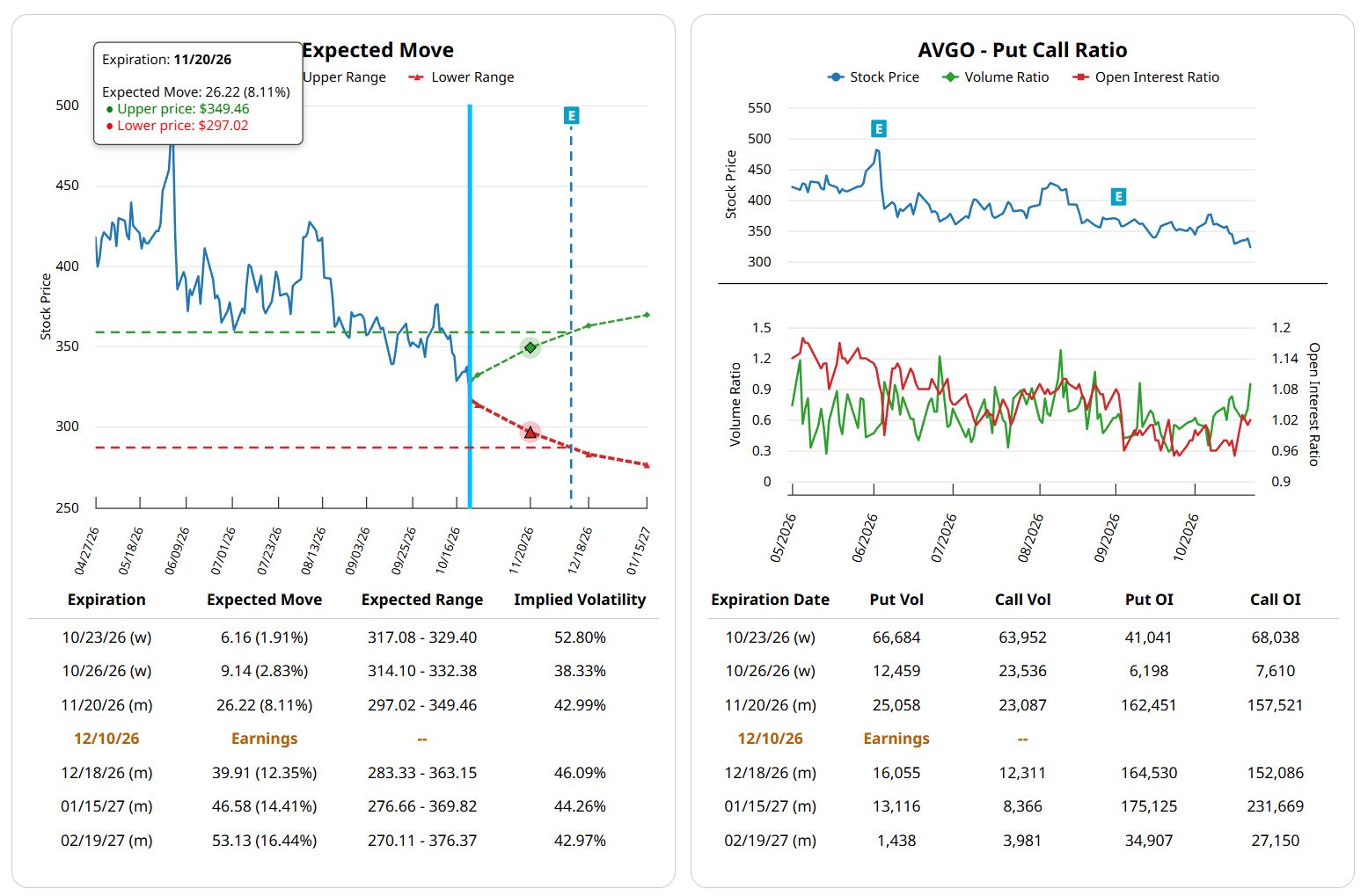
The Expected Move section adds another wrinkle. The options market prices AVGO to finish between about $297 and $349 by Nov. 20, roughly a month away, and the lower bound sits close to the stock’s 52-week low of $290.
In other words, the market is already pricing a wide cushion, so investors collect less premium for safer strikes and take on more risk for higher ones.
 Screenshot courtesy of www.barchart.com
Meta Dashboard
Now, Meta Platforms seems better positioned - but only just.
 Screenshot courtesy of www.barchart.com
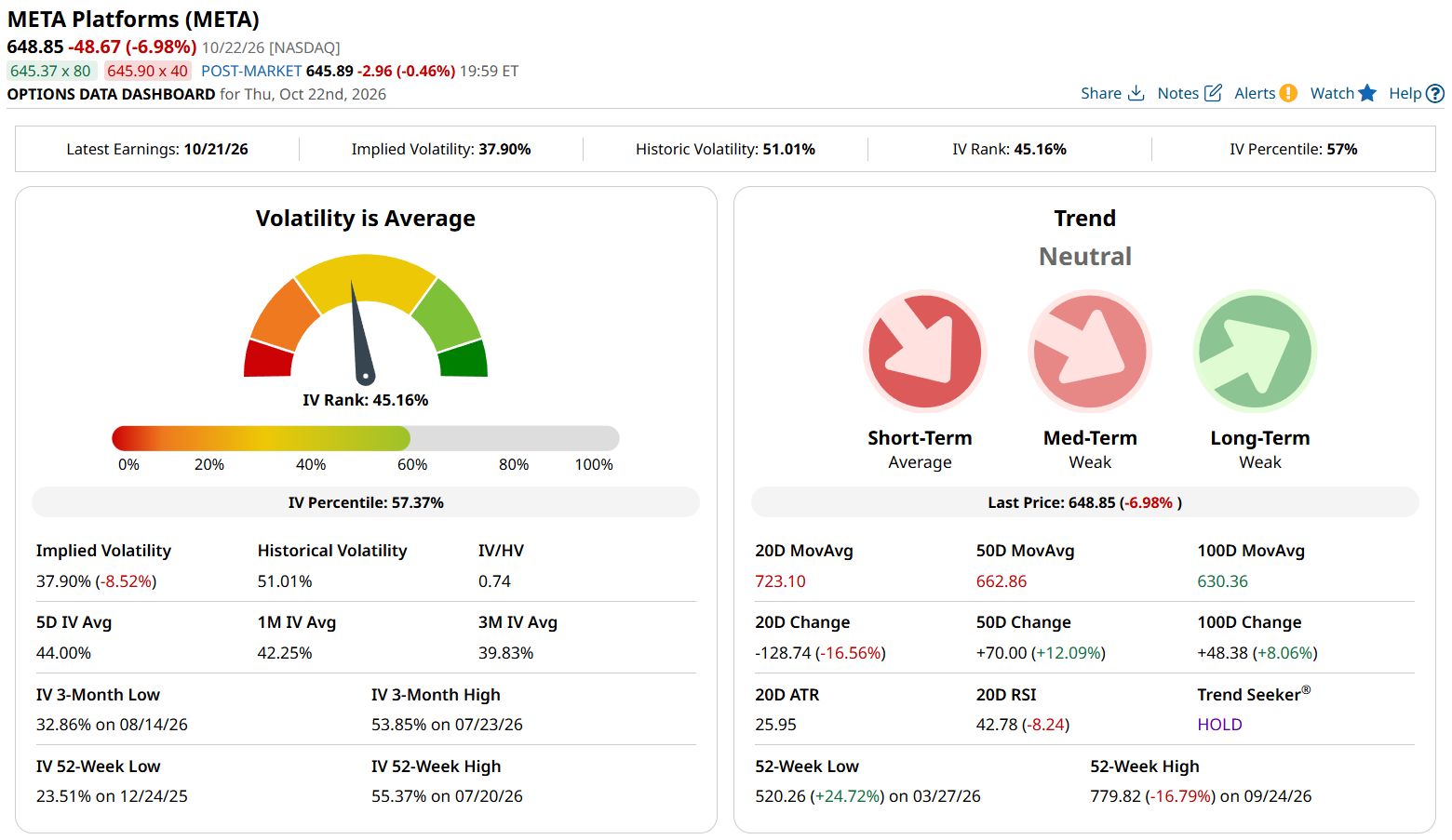
Its latest earnings came out two days ago, so volatility is already crushed. However, it is still trading at average IV, so selling puts on Meta might get you fairly priced premiums instead of Broadcom’s low but rising prices. Ideally, when selling options, IV rank is high but falling.
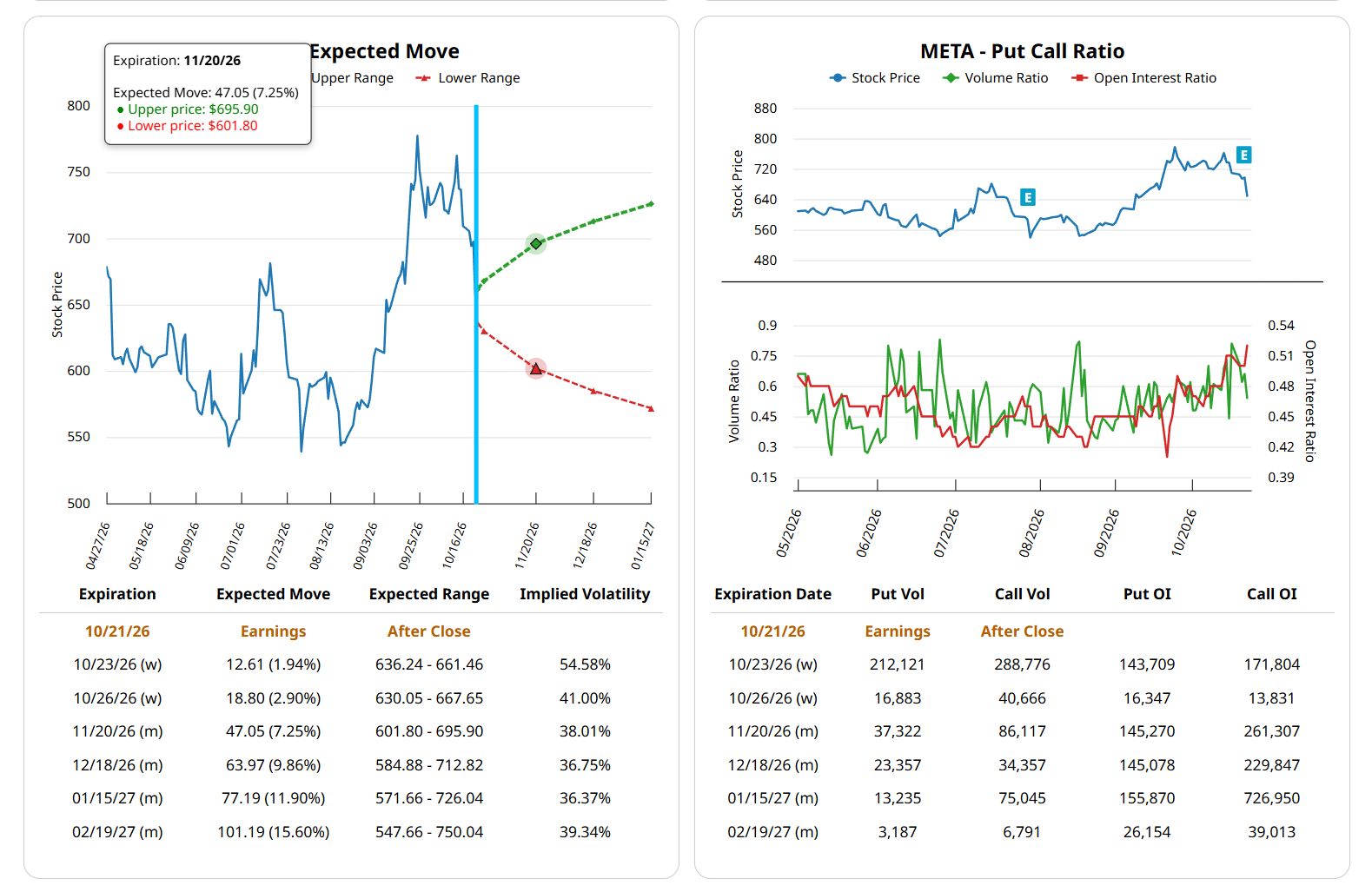
Meta also has a more balanced Trend outlook, and it’s still trading above its 100-day moving average of $630. Its Nov. 20 range is also reasonable, between $602 and $696.
 Screenshot courtesy of www.barchart.com
Even at the bottom of that range, about $602, it would still sit nearly 16% above META’s 52-week low of $520.26, while AVGO’s expected low of about $297 is only about 2% above its own 52-week low of around $290. So a put seller who picks a strike near the bottom of META’s range has far more room for error than one doing the same on AVGO.
That makes META the clear winner.
Now, let’s look for a trade.
Choosing The Expiration Date And Strike Price For The Meta Short Put
First, I typically sell options that expire in 30 to 45 days. That way, I have time to adjust the trade and collect slightly higher time-value premiums than shorter-dated trades.
So, jumping onto Meta’s Naked Put screener, I’ll change the expiration date to November 27, 2026, 36 days away from the time of publication.
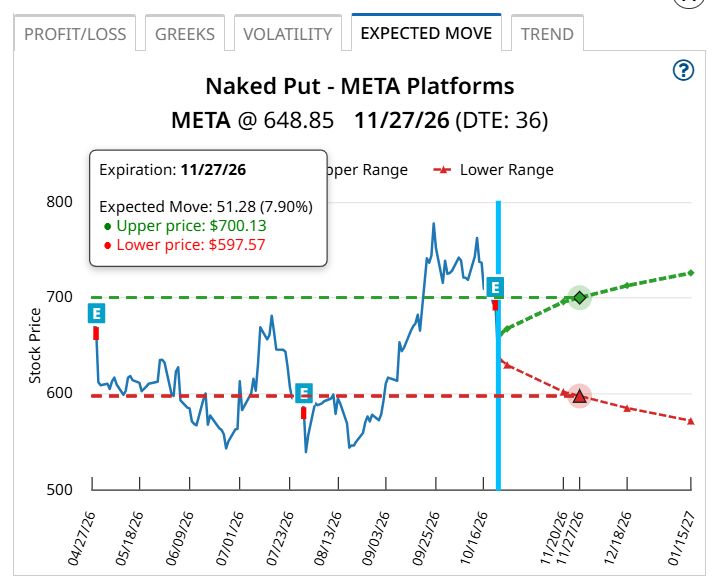
Then, since the Options Dashboard only showed Nov. 20, I’ll quickly check the Expected Move for this period.
 Screenshot courtesy of www.barchart.com
The expected move range has now moved to $597-$700. For a higher chance of success, I typically sell puts below the lower end of the expected move range. Remember, we want the stock to finish above the strike at expiration.
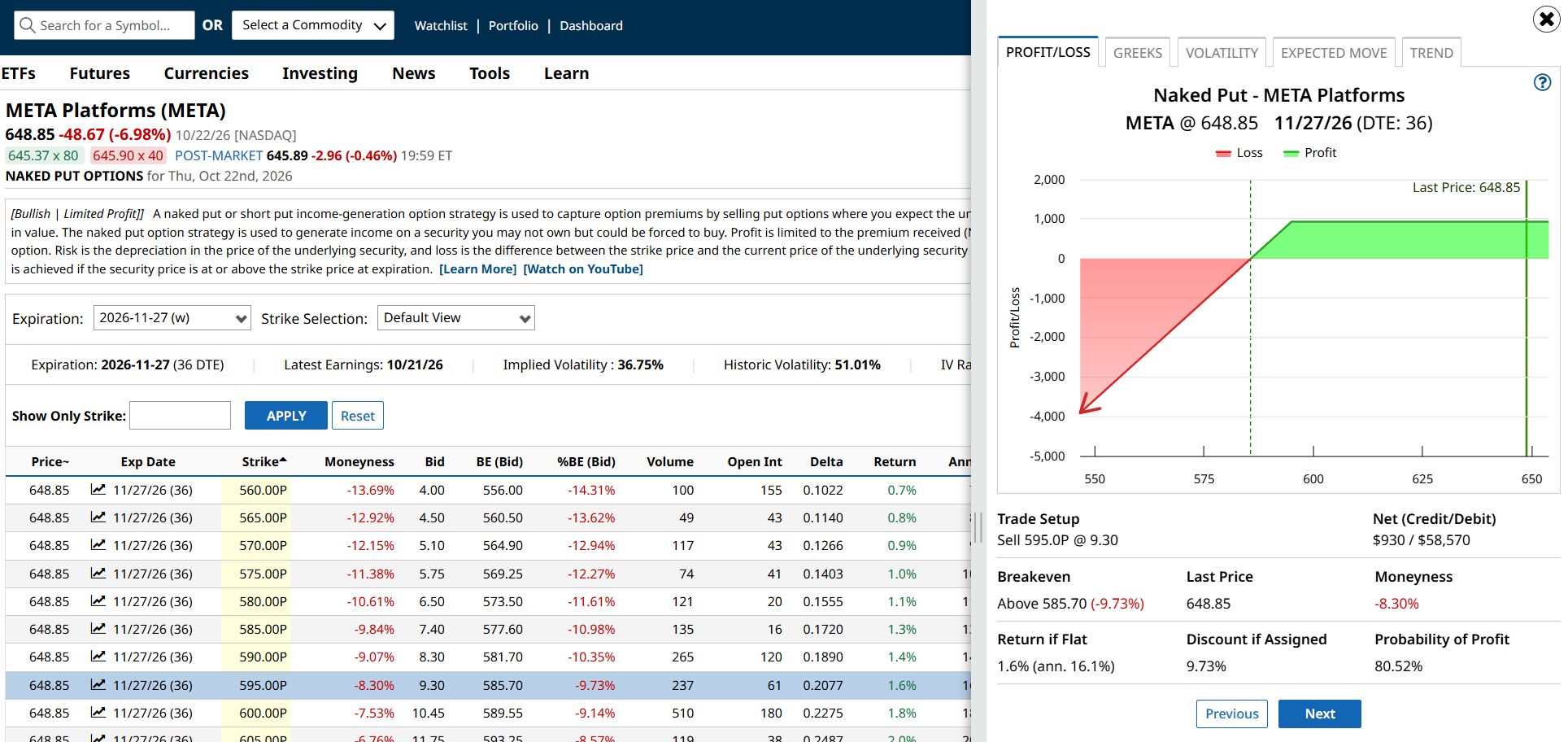
So, in this case, I’ll pick the 595-strike put.
 Screenshot courtesy of www.barchart.com
According to the screener, I can sell a 595-strike put on Meta for $9.30 per share or $930 total. The option expires on Nov. 27, 36 days away, and the trade has an 80% chance of profit.
If the trade goes south and Meta falls below my strike price, I get to buy 100 shares at $595 each, a discount from today’s price of $649. In my mind, that’s a pretty decent deal, but that’s mainly because I want to own Meta stock in the first place.
Conclusion
So after running Tesla, Meta, and Broadcom through the same checks, Meta comes out on top. Tesla’s low IV rank meant thin premiums, Broadcom’s downtrend left little room for error, and Meta offered fair premiums, a more balanced trend, and the most cushion below its expected move. That’s why I’m going with the 595-strike put expiring Nov. 27, which pays $930 and, according to the screener, has an 80% chance of profit.
But no trade is risk-free. The biggest risk here is that the AI spending worries that sent Meta lower don’t fade. Free cash flow turned negative last quarter, so if investors keep punishing big spenders, the stock could slide through my strike. My breakeven is $585.70, the strike minus the premium, so a drop of just under 10% from today’s price would put the trade in the red. Still, I’d be buying shares I wanted to own anyway, which is why I’m comfortable with that risk.
On the date of publication, Rick Orford did not have (either directly or indirectly) positions in any of the securities mentioned in this article. All information and data in this article is solely for informational purposes. For more information please view the Barchart Disclosure Policy here.
More news from Barchart
The Best Trillion-Dollar Stock To Sell Puts On Isn’t Tesla Or Broadcom Unusual Options Activity: LEAPS Offer Low-Cost Rebound Bets on 2 Beaten-Down Consumer Stocks Get Paid to Wait: Buy NU Holdings at a Discount or Earn Options Income Unusually Heavy Options Trading in UBER Ahead of Earnings - Are Investors Bullish on UBER?