


CoreWeave (CRWV) investors have spent much of 2026 worrying about whether the artificial intelligence infrastructure company can build data centers fast enough to satisfy its customers. Now they have another problem—a lot of people don’t want those data centers built in the first place.
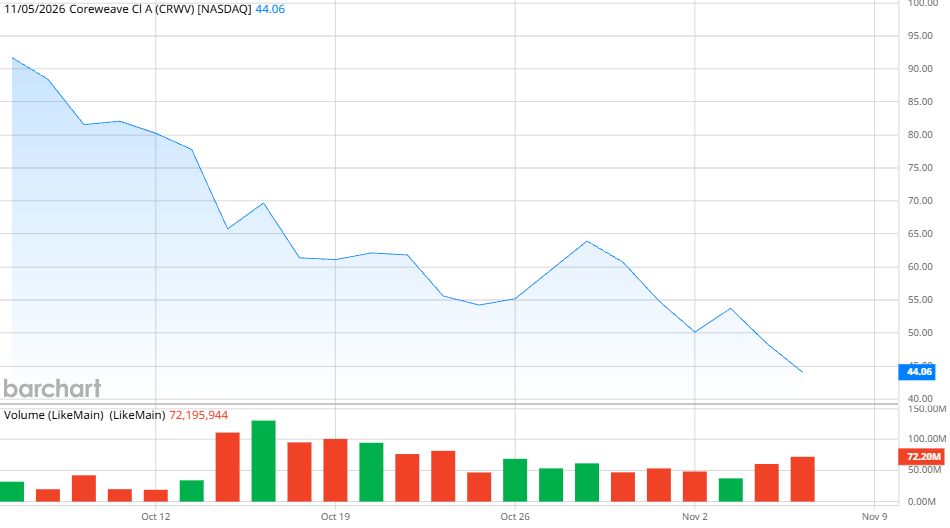
CRWV stock fell nearly 10% Wednesday after Democrats captured both houses of Congress in Tuesday's midterm elections. Notably, for CoreWeave, Democrat Gina Hinojosa defeated incumbent Republican Gov. Greg Abbott in Texas. Hinojosa has called for a moratorium on new data center projects until protections are established for electricity supplies, water resources, and local communities.
More Top Stocks Daily: Go behind Wall Street’s hottest headlines with Barchart’s Active Investor newsletter.
And Texas isn't alone.
According to CNBC, voters faced 41 local ballot measures involving data centers across 10 states. Of the measures with results available Wednesday, voters rejected data center development or supported restrictions in all but one.
That's a potentially expensive development for CoreWeave, which has been borrowing billions of dollars to build the computing infrastructure that powers AI.
 www.barchart.com
CoreWeave Has Plenty of Customers, but That's Not the Problem
CoreWeave rents access to high-performance computing systems, particularly Nvidia (NVDA) GPUs, to companies developing and operating AI models.
And business has been booming. CoreWeave’s revenue in the second quarter was $2.58 billion, more than double the $1.21 billion generated a year earlier. The revenue backlog was $104 billion as of June 30, and CoreWeave disclosed more than $25 billion in additional net customer commitments secured early in the third quarter.
That's a whopping amount of contracted business for a company that generated approximately $4.65 billion in revenue during the first six months of 2026.
But those contracts don't automatically become revenue. CoreWeave must first deliver the computing capacity its customers have agreed to purchase.
That's where the election results could become a problem.
At the end of June, CoreWeave had 1.5 gigawatts of active power capacity and approximately 3.7 gigawatts under contract. But to expand that infrastructure, the company will need access to electricity, suitable facilities, and, critically, government approvals.
A prolonged permitting delay could push back the date when new capacity begins generating revenue, even if customer demand remains strong.
The Financing Makes Delays Particularly Painful
CoreWeave's aggressive expansion comes with an enormous price tag.
The company spent approximately $9.4 billion on capital expenditures during the second quarter alone. In August, it raised its full-year 2026 capital expenditure forecast to between $35 billion and $39 billion.
Much of that expansion is financed with borrowed money. CoreWeave reported $640 million in net interest expense during the second quarter, compared with $267 million a year earlier. Its GAAP net loss widened to $626 million from $290 million.
Those numbers explain why permitting delays matter so much. When CoreWeave borrows money to finance new computing infrastructure, the interest expense doesn't necessarily wait until that infrastructure begins producing revenue. If construction takes longer than expected, the company could face additional financing costs while waiting to collect payments from customers.
That's a different problem from weak demand. And it could be just as damaging to shareholders.
How Much Damage Could the Elections Do?
Texas is particularly important because it accounts for roughly one-quarter of planned U.S. data center capacity, according to industry estimates reported following the election.
But Hinojosa's proposed moratorium isn't law, and its eventual scope remains unclear. Existing facilities, projects already under construction, and developments awaiting approval could face different treatment.
There are also limits to what Democrats can accomplish in Washington. President Donald Trump remains in office, meaning major federal legislation would generally require his signature or enough congressional support to override a veto.
Still, the local election results suggest that opposition to data centers isn't confined to one political party or one state.
CoreWeave CEO Michael Intrator has said he doesn't expect the political changes to affect existing customer commitments or the company's backlog. That's encouraging, but it doesn't resolve the question of how quickly CoreWeave can bring new facilities online.
And here’s another possibility—if computing capacity becomes strained because of government restrictions, existing facilities may become more valuable as customers compete for limited resources. CoreWeave already has substantial operating capacity. That could provide some protection against restrictions impacting future development.
What Do Analysts Say About CRWV Stock?
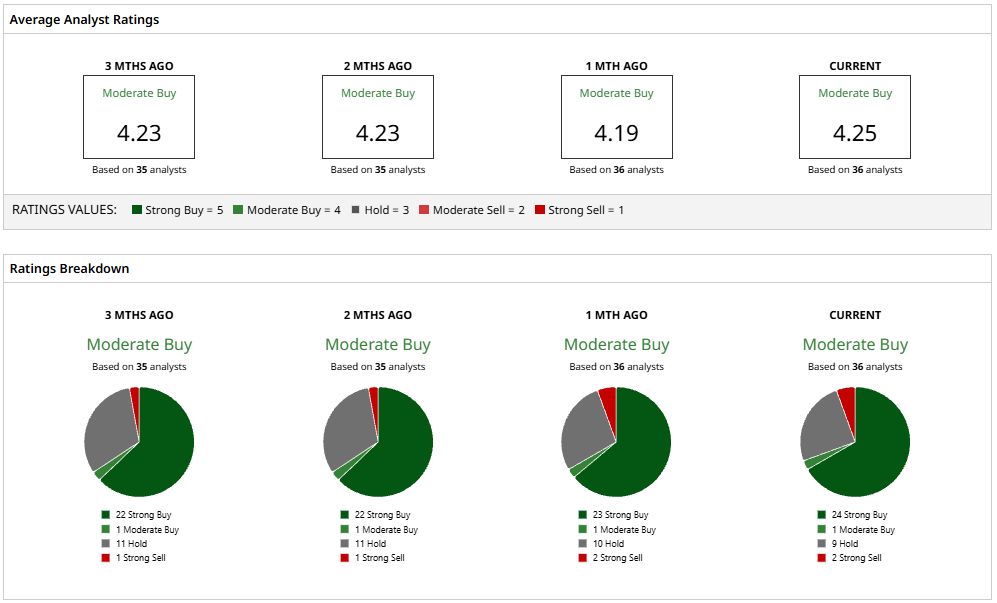
Analysts who follow CRWV are largely bullish on the stock, with 36 experts providing a consensus “Moderate Buy” rating. The mean price target of $126.40 suggests a potential upside of about 175%. That’s worth paying attention to.
 www.barchart.com
And remember, Intrator also made news recently with a somewhat defiant statement that the market doesn’t yet understand CoreWeave and its potential.
The bottom line is that CoreWeave's business hasn't suddenly lost its customers because Democrats won an election. Its enormous backlog demonstrates that demand for AI computing remains strong. But it also has questions about borrowing costs that were straining the stock even before Tuesday’s midterms.
CoreWeave is scheduled to report third-quarter earnings on Nov. 10. Investors should pay particular attention to updates on contracted power, deployment schedules, capital expenditures, and financing costs.
CRWV stock's decline may eventually create an opportunity. But a lower share price doesn't eliminate the risks associated with building an extraordinarily expensive business on borrowed money.
On the date of publication, Patrick Sanders had a position in: NVDA . All information and data in this article is solely for informational purposes. For more information please view the Barchart Disclosure Policy here.
More news from Barchart
CoreWeave Has a $104 Billion Backlog. Now It Also Has a Political Problem. Oracle Just Walked Away From a $7 Billion Tencent Deal. Here’s What It Means for ORCL Stock. Nvidia Is Now Down for the Year After a Sharp Selloff. You Can Buy NVDA Stock Gradually, but Don’t Rush In. Meta Stock Dips Towards $600 But Don’t Load Up Just Yet