


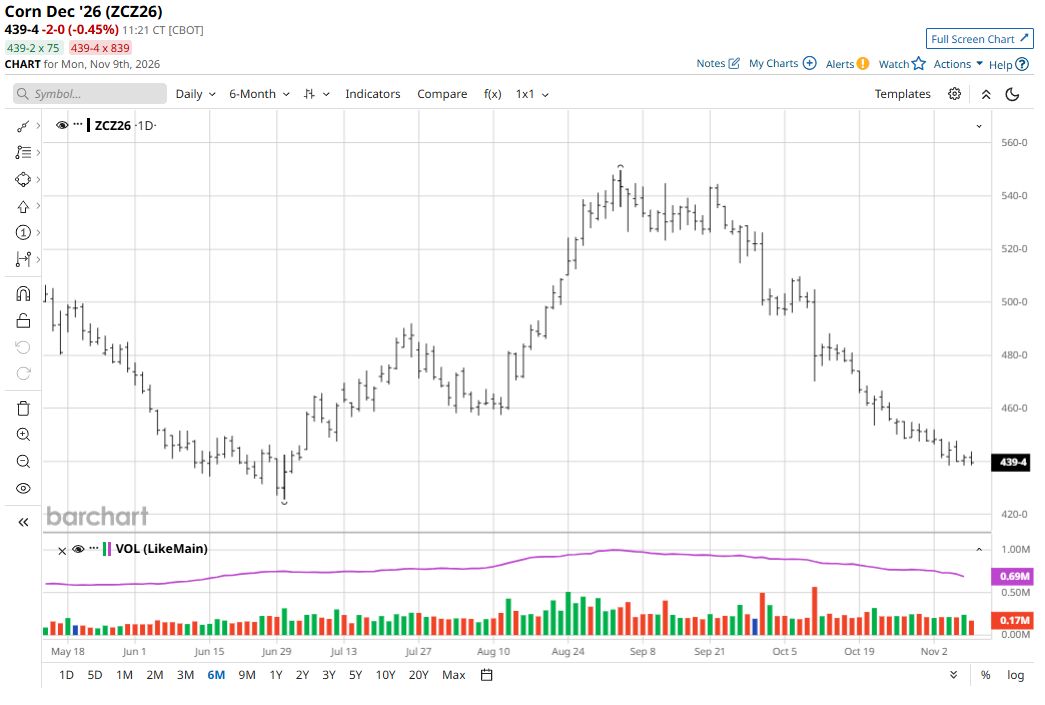
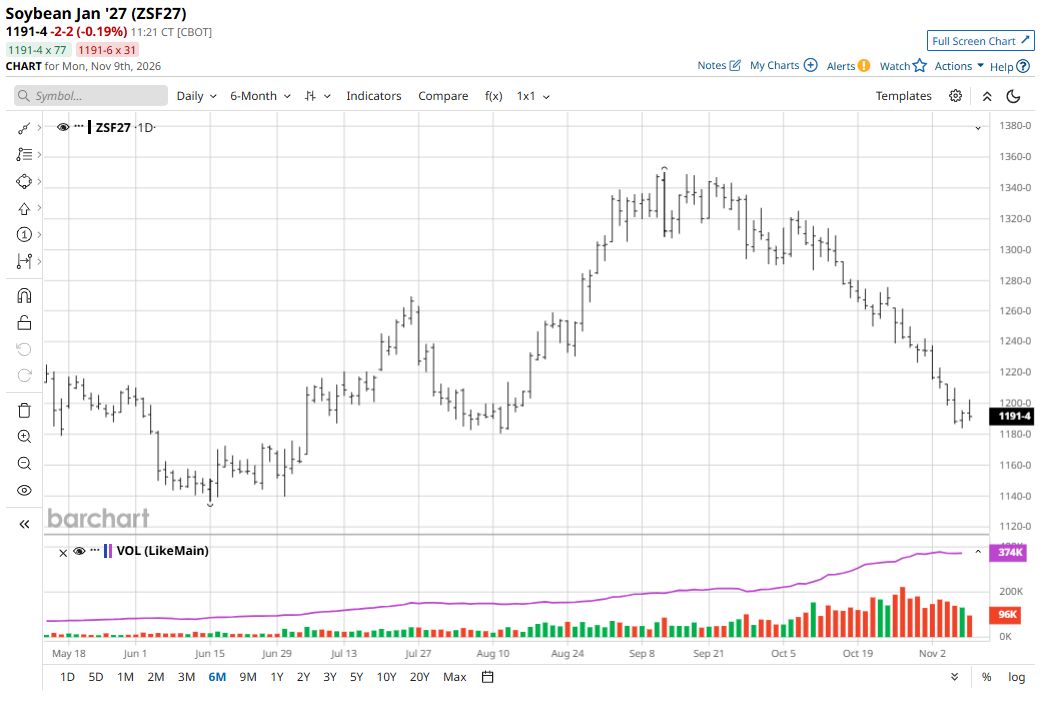
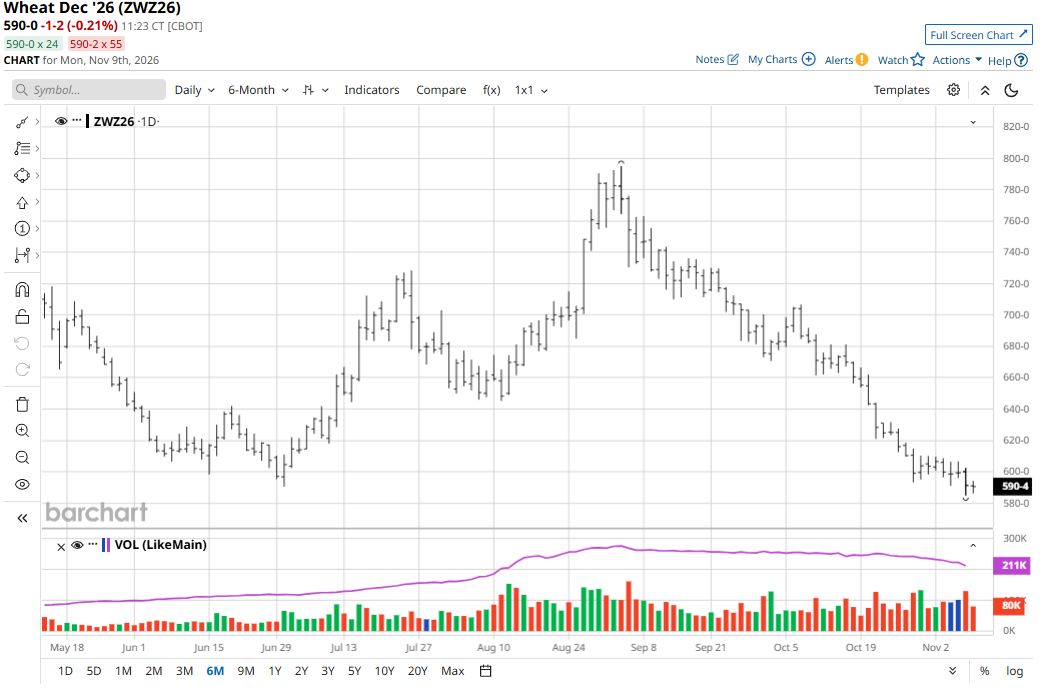
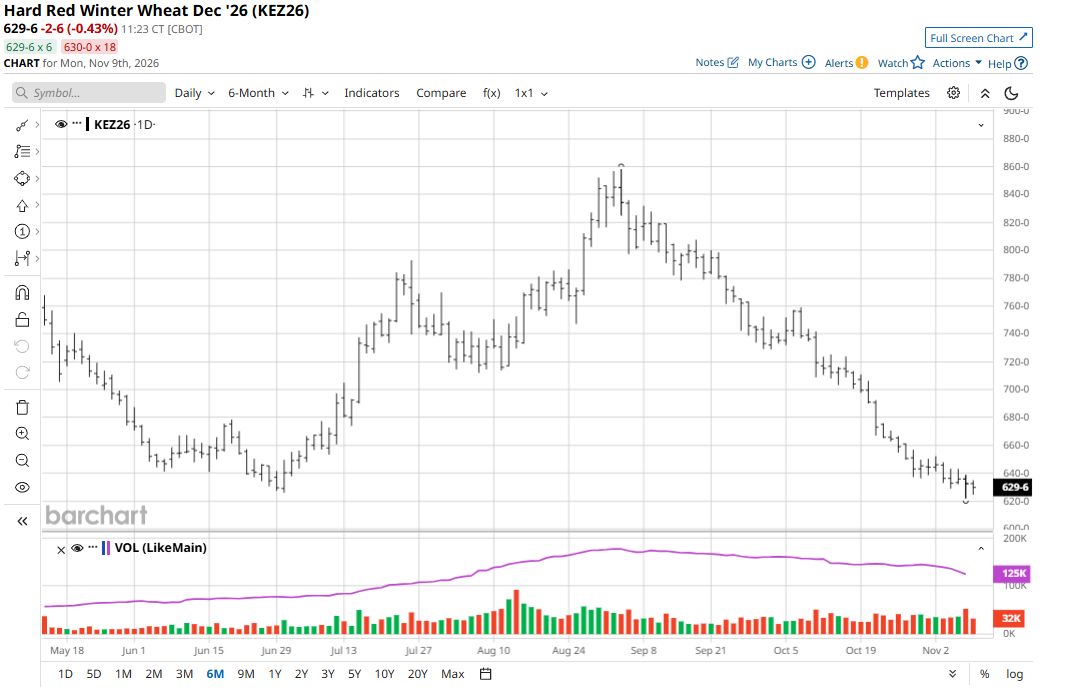
Corn, soybeans, soybean meal, soybean oil, soft red winter, and hard red winter wheat markets are all presently trapped in price downtrends in place on their daily bar charts.
December corn (ZCZ26) futures last week lost 6 1/2 cents from the week prior. January soybeans (ZSF27) on Friday hit an 11-week low early on and for the week were down 40 1/2 cents. December soybean meal (ZMZ26) futures lost $5.40 and December bean oil (ZLZ26) futures on Friday hit a six-week low and for the week were down 364 points. December soft red winter (SRW) wheat (ZWZ26) futures on Friday hit a four-month low and on the week lost 12 1/4 cents. December hard red winter (HRW) (KEZ26) futures also notched a four-month low and for the week were down 11 3/4 cents.
Don’t Miss a Day: From crude oil to coffee, sign up free for Barchart’s best-in-class commodity analysis.
The grain bulls have been squelched by the major selloff in the U.S. stock market over the past couple weeks. If the stock indexes continue to deteriorate, grain bulls may also stay mostly on the sidelines.
Tuesday near midday comes the latest USDA monthly supply and demand report (WASDE) for November. Analysts expect the average U.S. corn yield and production numbers to downtick slightly from the October report.Analysts expect the average U.S. soybean yield and production numbers to uptick just slightly from the October WASDE report.
Positives for the grain futures markets in trading this week are that the U.S. corn and soybean harvests are winding down, which means commercial hedge selling pressure from farmer selling in the cash markets will subside. Also, seasonality studies for both corn and beans show that futures prices trend to bottom out in the November timeframe and then trend higher well into the new year.
 www.barchart.com
 www.barchart.com
Attention of the grain futures markets is turning from U.S. supplies to U.S. export demand in the coming months. Demand for U.S. corn abroad has been decent in recent weeks. China last week said the purchase of further U.S. agricultural goods outside of soybeans hinges on the implementation of a reciprocal agreement to lower tariffs, which puts a damper on hopes for a sizable Chinese entrance to the U.S. feed grains markets in the near term. The South American growing season and weather patterns there will also move closer to the front burner of the corn futures market for the next few months. Brazil and Argentina show no major problems looming for the corn and soybean crops.
Winter wheat futures prices have been trending lower since early September. A stronger U.S. dollar index ($DXY) over the past few months has limited buying interest in wheat futures. Still, more technical selling may resume this week amid the bearish chart postures for SRW and HRW futures. Any fresh news on the proposed Russia-Ukraine ceasefire talks among Presidents Donald Trump, Vladimir Putin and Xi Jinping will be market-sensitive for wheat futures in the near term.
 www.barchart.com
 www.barchart.com
Also bearish for the wheat futures markets has been the recharging of soil moisture in U.S. wheat regions. Weather forecasters say U.S. hard red winter wheat is expected to establish more favorably because of recent rain and the continuation of mild to warm temperatures.
Cotton Bulls Work on Forging a Price Bottom
December cotton (CTZ26) futures last week rose 128 points. December cotton also saw a technically bullish weekly high close on Friday, setting the stage for some follow-through buying interest from the chart-based speculators early this week. Traders will also focus on Tuesday’s USDA monthly supply and demand report.
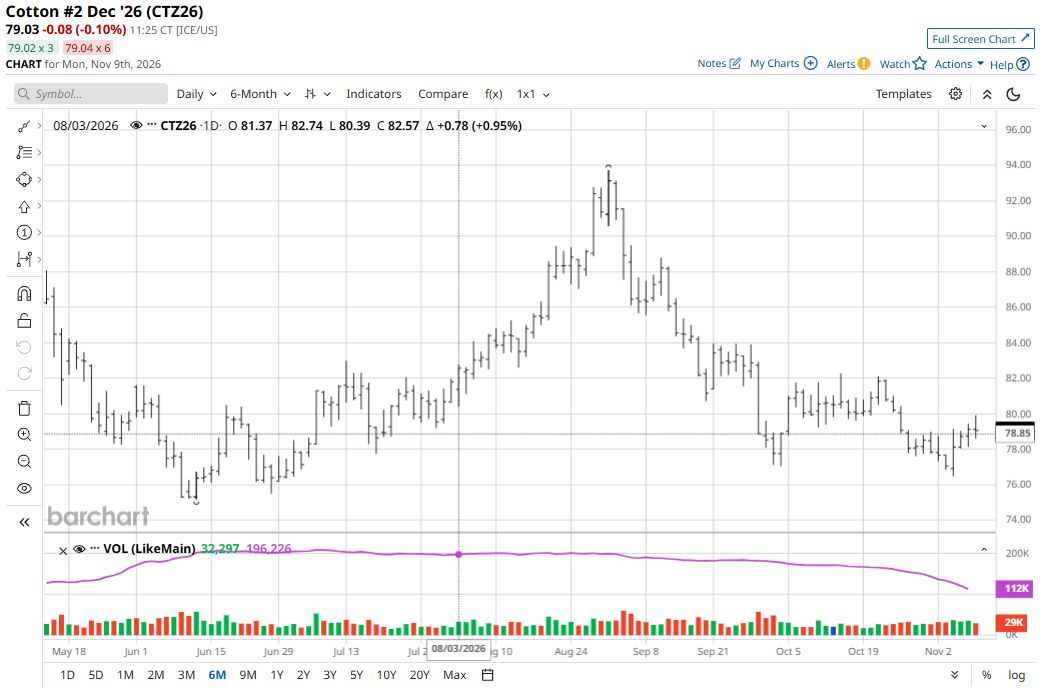 www.barchart.com
Cotton traders on Friday got a double-edged sword with the monthly U.S. jobs report that came in stronger than expected. The stronger reading suggests the U.S. economy and businesses remain resilient. However, the stronger data also makes odds better that the Federal Reserve will raise interest rates in December. Cotton traders will be watching for signs of better export demand for U.S. cotton and weather impacts on remaining crop quality.
The approaching holiday season and better demand for apparel may offer some support to cotton futures in the coming weeks.
However, the recent downdraft in the U.S. stock market likely spooked many consumers. Sustained selling pressure in the stock market into the end of the year would very likely dent holiday apparel demand.
Let me know what you think. I enjoy hearing from my valued Barchart readers all around the globe. Email me at jim@jimwyckoff.com.
On the date of publication, Jim Wyckoff did not directly have a position in any of the securities mentioned in this article. All information and data in this article is solely for informational purposes. For more information please view the Barchart Disclosure Policy here.
More news from Barchart
Grain Prices Are Stuck in Downtrends as the Next USDA Report Looms What Were 3 Key Market Takeaways from This Past Week? Wheat Prices Look Set to Keep Heading Lower. Sell Now. Is a Hot Dog a Sandwich?