


Arthritis remains a significant public-health challenge, creating sustained demand for treatments that can relieve pain, control inflammation and preserve joint function. According to the U.S. Centers for Disease Control and Prevention, 21.1% of American adults had diagnosed arthritis in 2025. The World Health Organization also identifies musculoskeletal conditions, including osteoarthritis and inflammatory joint diseases, as major contributors to disability worldwide.
Although arthritis encompasses several conditions, treatment needs vary considerably. Rheumatoid arthritis (RA) and psoriatic arthritis (PsA) often require therapies that target the immune system and underlying inflammation. On the other hand, osteoarthritis management frequently focuses on pain relief, maintaining mobility and addressing risk factors such as excess weight. Advances in biologics, targeted therapies and clinical research are creating opportunities for pharmaceutical companies, although competition, safety considerations and regulatory uncertainty remain important risks.
Against this backdrop, Eli Lilly LLY, Novartis NVS, Johnson & Johnson JNJ and AbbVie ABBV merit investors' attention. These large-cap pharmaceutical companies run diversified businesses, with arthritis treatment as one revenue and growth driver. Their established medicines provide commercial foundations, while label expansions and clinical development programs could broaden their addressable markets. However, investors should assess arthritis-related opportunities alongside each company's overall financial performance and competitive position. LLY and NVS currently carry a Zacks Rank #3 (Hold) each, while ABBV and JNJ have a Zacks Rank #4 (Sell).
You can see the complete list of today’s Zacks #1 (Strong Buy) Rank stocks here.
Eli Lilly
Eli Lilly's arthritis portfolio includes Taltz (ixekizumab), approved for active PsA, ankylosing spondylitis and non-radiographic axial spondyloarthritis. Taltz generated first-half sales totaling $1.59 billion. The figures indicate relatively flat revenues from this established product, despite strong company-wide growth. Taltz's immediate investment case rests more on maintaining its established market and potential clinical developments than on strong recent sales growth. Lilly also markets Olumiant (baricitinib) for eligible adults with moderately to severely active RA, providing another source of arthritis-related revenue. The company does not report the drug’s sales separately.
Eli Lilly and Company Price and Consensus
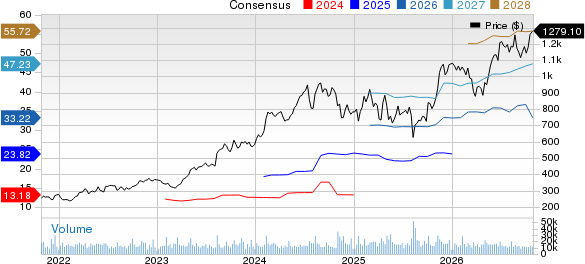
Eli Lilly and Company price-consensus-chart | Eli Lilly and Company Quote
Beyond its marketed arthritis therapies, Lilly is advancing an investigational candidate, retatrutide, that could expand its presence in the joint-health market. Retatrutide is an investigational triple hormone receptor agonist being evaluated in phase III studies for obesity and related complications, including knee osteoarthritis pain. In June 2026, the company reported results from the phase III TRIUMPH program showing that retatrutide reduced knee osteoarthritis pain by up to 4.3 points, or 73.1%, alongside substantial weight loss. Lilly subsequently reported positive results from additional phase III studies and said its clinical data package supports planned regulatory submissions for obesity, knee osteoarthritis pain and obstructive sleep apnea. The company expects to submit a biologics license application to the FDA in the first quarter of 2027. If approved, the medicine could provide Lilly with an additional growth opportunity at the intersection of obesity treatment and joint health.
Novartis
Novartis offers arthritis exposure primarily through Cosentyx (secukinumab), which treats PsA, ankylosing spondylitis and non-radiographic axial spondyloarthritis, among other inflammatory conditions. The company's Ilaris (canakinumab) also treats systemic juvenile idiopathic arthritis, an inflammatory disease affecting children. Cosentyx generated first-half 2026 sales of $3.39 billion, up 7% year over year, driven by growth in the United States, Europe and most emerging markets, partly offset by lower sales in China. Ilaris sales reached $1.03 billion in the first half, up 14%, adding another revenue source from immune-mediated conditions.
Novartis AG Price and Consensus
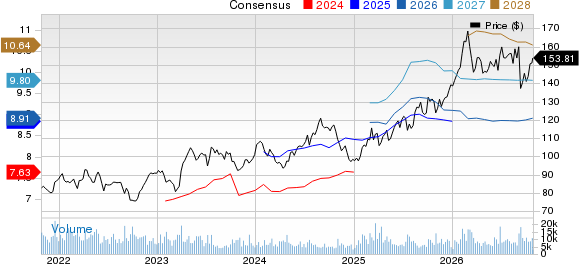
Novartis AG price-consensus-chart | Novartis AG Quote
Cosentyx has also delivered a significant recent regulatory milestone beyond its established arthritis indications. Last week, the European Commission approved Cosentyx for adults with polymyalgia rheumatica (PMR) who have an inadequate response to glucocorticoids or relapse during steroid tapering. The approval was supported by phase III REPLENISH study data, in which Cosentyx doubled sustained remission rates versus placebo at week 52 while reducing cumulative glucocorticoid exposure. Additional regulatory reviews for PMR are ongoing in the United States and Japan. This expansion could broaden Cosentyx's commercial reach into another inflammatory rheumatic disease with limited advanced treatment options.
Johnson & Johnson
Johnson & Johnson's arthritis-related portfolio includes Tremfya (guselkumab), approved for active PsA, Simponi and Simponi Aria (golimumab), approved for RA, PsA and ankylosing spondylitis, and Remicade (infliximab), approved for RA, PsA and ankylosing spondylitis. These medicines have additional approved indications beyond those highlighted here. In the first half of 2026, Tremfya generated $3.65 billion in worldwide sales, up 70.6% year over year, reflecting strong growth across its approved indications. Tremfya's robust growth highlights its increasing contribution to J&J's immunology business and its potential to support future revenue growth. Simponi and Simponi Aria combined generated $1.27 billion, while Remicade sales amounted to $760 million.
Johnson & Johnson Price and Consensus
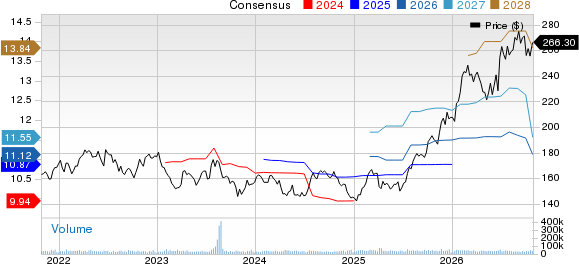
Johnson & Johnson price-consensus-chart | Johnson & Johnson Quote
Tremfya's expanding evidence base provides a potentially important catalyst. In May 2026, the FDA expanded its label to include evidence that the drug inhibits the progression of structural joint damage in adults with active psoriatic arthritis, following clinical evidence from the phase IIIb APEX study. In September, Johnson & Johnson reported positive top-line results from the phase IV STAR study, which evaluated Tremfya in adults with active PsA involving the spine. The medicine met the primary endpoint at week 24 and demonstrated improvements in axial symptoms and MRI-assessed inflammation. These findings could strengthen Tremfya's competitive positioning if supported by further evidence and translated into clinical adoption.
AbbVie
AbbVie markets several treatments for inflammatory arthritis, including Rinvoq (upadacitinib) for RA, PsA, ankylosing spondylitis and non-radiographic axial spondyloarthritis. Humira (adalimumab) is approved for RA, PsA, active ankylosing spondylitis and polyarticular juvenile idiopathic arthritis. Skyrizi (risankizumab) is also approved for adults with active PsA. AbbVie’s immunology portfolio delivered strong first-half 2026 growth, with global Skyrizi sales rising 27.3% year over year to $9.99 billion and Rinvoq sales increasing 24% to $4.64 billion. Their growth reflects expanding demand across multiple approved indications, including inflammatory diseases beyond arthritis. Humira generated $1.44 billion in first-half sales.
AbbVie Inc. Price and Consensus
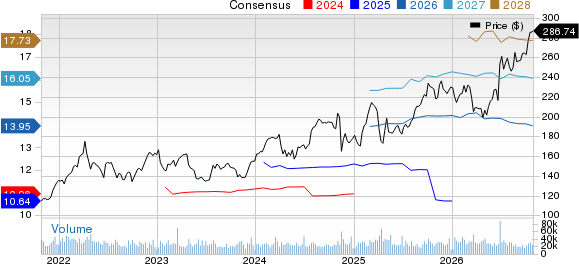
AbbVie Inc. price-consensus-chart | AbbVie Inc. Quote
AbbVie's recent arthritis-related regulatory progress centers on expanding the reach of an established medicine. In June 2026, the FDA approved Skyrizi for children aged six years and older with active PsA. The approval was supported by the phase III OptIMMize pediatric psoriasis clinical program, along with population pharmacokinetic modeling based on well-controlled adult PsA studies. The expansion extends the treatment's addressable patient population and provides another avenue for long-term immunology growth. Rinvoq already has an established presence across several inflammatory joint conditions, making continued uptake and lifecycle management important investment considerations.
Radical New Technology Could Hand Investors Huge Gains
Quantum Computing is the next technological revolution, and it could be even more advanced than AI.
While some believed the technology was years away, it is already present and moving fast. Large hyperscalers, such as Microsoft, Google, Amazon, Oracle, and even Meta and Tesla, are scrambling to integrate quantum computing into their infrastructure.
Senior Stock Strategist Kevin Cook reveals 7 carefully selected stocks poised to dominate the quantum computing landscape in his report, Beyond AI: The Quantum Leap in Computing Power .
Kevin was among the early experts who recognized NVIDIA's enormous potential back in 2016. Now, he has keyed in on what could be "the next big thing" in quantum computing supremacy. Today, you have a rare chance to position your portfolio at the forefront of this opportunity.
See Top Quantum Stocks Now >>Want the latest recommendations from Zacks Investment Research? Today, you can download 7 Best Stocks for the Next 30 Days. Click to get this free report
Novartis AG (NVS): Free Stock Analysis Report
Johnson & Johnson (JNJ): Free Stock Analysis Report
Eli Lilly and Company (LLY): Free Stock Analysis Report
AbbVie Inc. (ABBV): Free Stock Analysis Report
This article originally published on Zacks Investment Research (zacks.com).