


Altimmune ALT is pushing pemvidutide into one of biotech’s most competitive indications: metabolic dysfunction-associated steatohepatitis (MASH). The company argues its balanced 1:1 glucagon/GLP-1 dual receptor agonist can deliver liver-directed benefits plus meaningful weight loss, supported by a tolerability strategy designed to keep patients on therapy.
For investors, 2026 is the hinge year. The timeline stacks a phase III MASH start with a major alcohol use disorder (AUD) data readout and continued progress in alcohol-associated liver disease (ALD), all against rising cash needs and an increasingly crowded field.
ALT’s Place in a Crowded MASH Field
MASH is described as “highly competitive and crowded,” with fierce competition across multiple mechanisms. ALT is up against large metabolic franchises and well-funded development machines, alongside MASH-focused biotech peers advancing liver-specific approaches.
The competitive set spans GLP-1 drugs, dual and triple incretin combinations, FGF-21 therapies, and newer approaches such as THR-β agonists. On the big-pharma side, Novo Nordisk NVO and Eli Lilly and Company LLY are called out as GLP-1 giants, and Roche is also cited among major companies with MASH programs.
Among MASH-focused developers, Madrigal Pharmaceuticals MDGL and Viking Therapeutics are referenced in the THR-β class. This matters because ALT’s pathway bet is not just about being “in MASH,” but about proving its biology can compete against several credible routes to efficacy.
Altimmune’s Differentiation Claim Beyond GLP-1 Alone
ALT’s differentiation case starts with mechanism. Pemvidutide combines equal glucagon and GLP-1 activity in a single molecule. The company frames glucagon as working directly on the liver, with potential to reduce liver fat, inflammation, and scarring (fibrosis). GLP-1 contributes weight loss through appetite reduction and may also carry anti-inflammatory benefits. Together, ALT argues the dual activity can address multiple dimensions of liver disease.
Tolerability is the second pillar. Pemvidutide uses EuPort technology to slow absorption, which is intended to improve tolerability and reduce common gastrointestinal issues. ALT links that to longer time on therapy, which can be critical in chronic liver disease treatment.
Positioning-wise, the company suggests pemvidutide’s efficacy plus safety and tolerability could matter for MASH patients who “need better results than GLP-1 drugs alone.” It also argues the drug may offer higher-quality weight loss compared with some other classes referenced in the landscape, including FGF-21 therapies and resmetirom.
ALT’s Phase III Design and Accelerated Approval Path
ALT expects its global phase III MASH program to begin in 2026 in patients with moderate-to-severe liver fibrosis. The stated intent is to pursue accelerated approval using week 52 biopsy co-primary endpoints, with continued follow-up designed to support full approval.
The plan calls for about 1,800 patients across biopsy and non-invasive cohorts. Dosing is set up with titration to 1.8 mg and 2.4 mg, aligning the pivotal strategy with the dose levels already established in the company’s narrative around weight-loss and liver marker improvements. ALT has also said it has secured manufacturing supply for a global phase III study, with a process that can be scaled further if required.
Altimmune’s 2026 Data Flow in Alcohol-Related Disease
The “pipeline in a product” pitch depends on more than MASH. ALT is also running mid-stage studies in AUD and ALD, two areas described as having significant unmet need and commercial potential.
In AUD, the phase II RECLAIM study was initiated in May 2025 and completed enrollment in November 2025, several months ahead of schedule. Top-line data is expected in the third quarter of 2026, and the readout is framed as an important stock catalyst.
In ALD, the phase II RESTORE study began in July 2025, with enrollment expected to complete later in 2026. Management has noted that ALD enrollment is harder, which is an execution variable investor will track. Importantly, AUD decisions are expected to follow the RECLAIM top-line data without waiting for ALD.
ALT as a Licensing or Takeover Candidate Thesis
ALT explicitly frames pemvidutide’s multi-indication potential and the clustering of 2026 catalysts as factors that could make the company attractive for licensing or a takeover. The logic is straightforward: one drug with relevance across MASH, AUD, and ALD offers multiple shots at value inflection, and a phase III-ready MASH program raises strategic visibility.
Regulatory posture adds to that narrative. Pemvidutide has FDA Fast Track designations in MASH and AUD and Breakthrough Therapy Designation in MASH, reinforcing the seriousness of the indications and the unmet need backdrop.
Altimmune’s Core Investment Debate Into 2026
The bull case centers on strong phase II signals in MASH, the differentiated dual-pathway rationale, and a 2026 calendar with multiple meaningful catalysts across liver and alcohol-related diseases. ALT also highlights a cash position it expects will support operations into 2028 under current plans, while noting it has manufacturing readiness for a global phase III start.
The bear case is concentrated risk. ALT is heavily dependent on one asset, and a phase III MASH failure would likely hurt shares significantly. Competitive pressure is intense across MASH, AUD, and ALD, with both established options and a broad pipeline of innovative therapies.
Financing is the third axis. Management has indicated additional capital will likely be needed to fully fund phase III, with cash use expected to rise in 2026 and uncertainty around the timing and form of financing. That dilution overhang can weigh on sentiment even as clinical milestones approach.
Altimmune has a Zacks Rank #3 (Hold) at present. You can see the complete list of today’s Zacks #1 Rank (Strong Buy) stocks here.
Altimmune, Inc. Price and Consensus
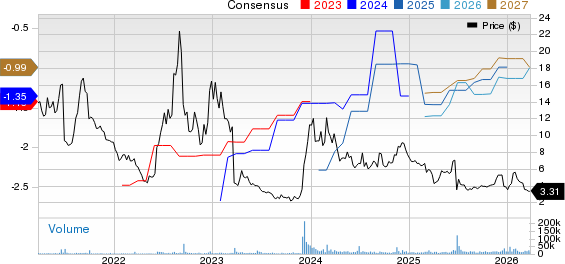
Altimmune, Inc. price-consensus-chart | Altimmune, Inc. Quote
Research Chief Names "Single Best Pick to Double"
From thousands of stocks, 5 Zacks experts each have chosen their favorite to skyrocket +100% or more in months to come. From those 5, Director of Research Sheraz Mian hand-picks one to have the most explosive upside of all.
This company targets millennial and Gen Z audiences, generating nearly $1 billion in revenue last quarter alone. A recent pullback makes now an ideal time to jump aboard. Of course, all our elite picks aren’t winners but this one could far surpass earlier Zacks’ Stocks Set to Double like Nano-X Imaging which shot up +129.6% in little more than 9 months.
Free: See Our Top Stock And 4 Runners UpWant the latest recommendations from Zacks Investment Research? Today, you can download 7 Best Stocks for the Next 30 Days. Click to get this free report
Novo Nordisk A/S (NVO): Free Stock Analysis Report
Eli Lilly and Company (LLY): Free Stock Analysis Report
Altimmune, Inc. (ALT): Free Stock Analysis Report
Madrigal Pharmaceuticals, Inc. (MDGL): Free Stock Analysis Report
This article originally published on Zacks Investment Research (zacks.com).