


A Bitcoin wallet paid 1.60 BTC in network fees, worth roughly $102,778, and delivered exactly zero coins to anyone. The transaction was confirmed on August 12 inside block 962,142.
Chain records show a single input of 160,343,885 satoshis. Miners took every one of those satoshis, while the lone output carried no value at all.
How the Bitcoin Fee Spiraled Out of Control
The sender ran an automated script that leaned on Replace-by-Fee, or RBF. That feature lets a user resubmit an unconfirmed Bitcoin transaction with a higher fee to jump the mempool queue.
RBF exists for good reason. Fee estimates go stale within minutes, and a stuck payment can sit in the queue for hours.
However, the loop broke. Rather than stopping at a sensible ceiling, the bot raised its bid once per second. Each new version chewed deeper into the wallet balance.
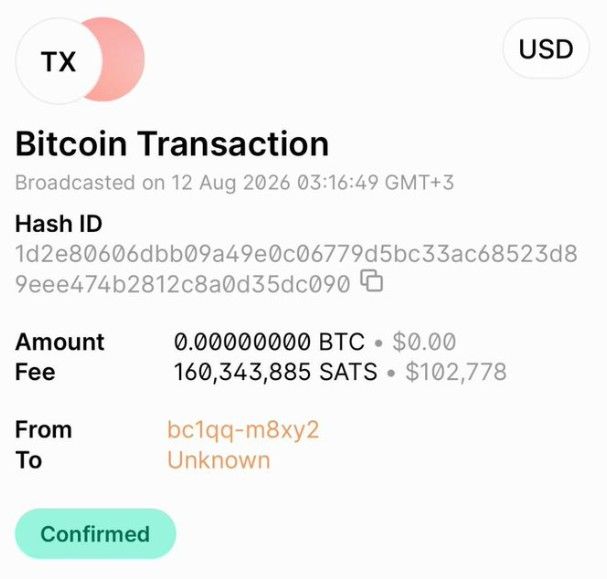 Bitcoin Transaction. Source: Blockchain
 Eventually the Bitcoin fee swallowed the whole input. The final version left nothing for the recipient, so the payment landed at zero. Bitcoin nodes accepted it anyway, because the protocol never caps what a sender may hand miners.
SpiderPool mined the block and pocketed the windfall. Fees across that block totaled about 1.82 BTC, meaning this one error supplied 88% of them. Such luck arrives at a useful moment for pools, since a former leader filed for bankruptcy in July.
Three Settings That Stop a Runaway Fee
First, switch off automatic RBF bumping. Manual approval forces a human to review each increase before it reaches the network.
Second, set a hard fee ceiling. Most modern wallets accept a maximum sat-per-byte value, and that cap alone would have killed this loop within seconds.
Third, always send a test payment. A few thousand satoshis prove that a bot behaves properly before real money moves. Traders who batch payouts should repeat that check after every software update.
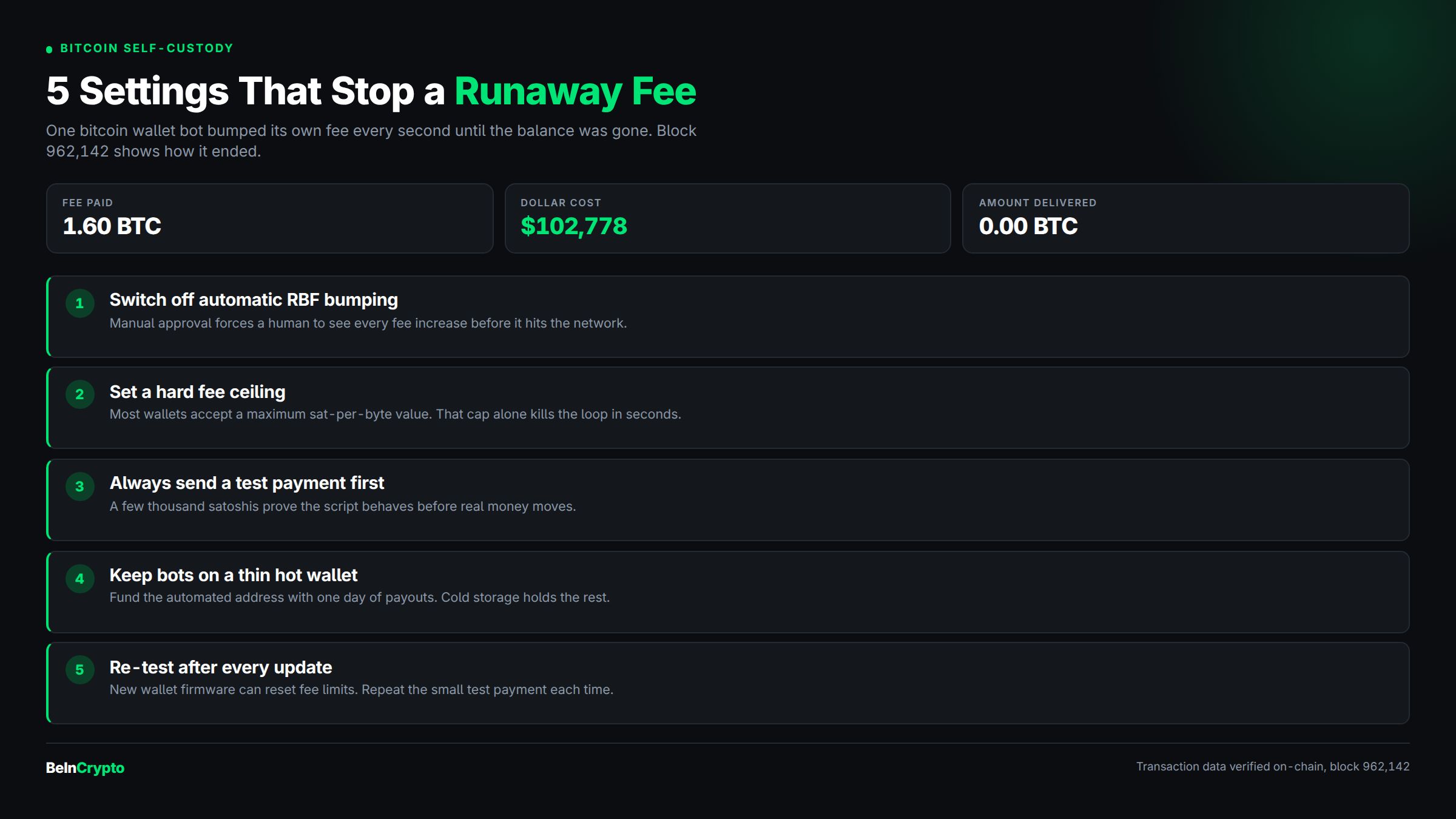 RBF Safety. Source: BeInCrypto
 Meanwhile, the episode echoes a familiar theme in self-custody. Victims of the recent Coldcard wallet hack followed good practice, too, yet they still lost everything. Binance founder Changpeng Zhao made a similar point afterward, arguing that no wallet is bulletproof.
Therefore, automation deserves the same scrutiny as a seed phrase. A script that runs unsupervised can drain a balance faster than any attacker.
BTC currently trades near $63,770, down 0.2% over the past day. At current market prices, the mistake still costs over $102,200, resulting in a devastating loss with absolutely zero capital reaching its intended destination.
Bitcoin Miners will hardly complain. Revenue has slumped for months, with Bitcoin miners leaving the network at a record pace, so a stray six-figure fee counts as a genuine gift. Still, the wider question sits with wallet builders. Should any consumer tool let a single transaction spend an entire balance on fees without a confirmation prompt?
Read the Original story Bitcoin User Pays 1.6 BTC Fee Worth $102,778. Don’t Make the Same Mistake by Phil Haunhorst at beincrypto.com