


As negotiations and a temporary ceasefire between the United States and Iran continue, and the Strait of Hormuz begins to reopen after a period of disruption, shipping companies are facing a new threat linked to crypto fraudsters.
Greek maritime risk management firm MARISKS says it has received warnings about messages being sent to shipping operators whose vessels are currently stranded to the west of the waterway, offering “safe passage” through the strait in return for crypto payments.
Hormuz Ceasefire Push Meets Crypto Scam
During the same window of ceasefire talks, Iran—because it controls the chokepoint—has also proposed crypto toll arrangements for vessels seeking transit.
The scam, according to Reuters, appears to mimic those discussions while steering targets toward fraudulent transfers rather than legitimate payment channels.
According to the warning, the scammers demand transit fees paid in Bitcoin (BTC) or in Tether’s USDT stablecoin, in exchange for what they describe as “clearance” to pass through the strait.
MARISKS reports that the messages are not vague: they include a structured demand for crypto payments designed to pressure operators quickly and out of normal procedures.
Iran’s proposed legitimate system, as described through reporting and officials’ comments, could involve payments that start at roughly $1 per barrel—an amount that can translate into millions of dollars per voyage depending on the cargo and shipment size.
Hamid Hosseini, a spokesperson for Iran’s Oil, Gas and Petrochemical Products Exporters’ Union, described an operational outline in which, after email documents from a ship are received, Iran completes an assessment and then gives vessels only seconds to make the payment in Bitcoin .
The purpose, he said, is tied to sanctions risk: completing transactions rapidly is intended to help prevent payments from being traced or seized under sanctions-related enforcement regimes.
Alleged Firing On Vessels
These scams unfold against a broader backdrop of persistent tensions. Even while the US has kept its blockade of Iranian ports in place, Iran has reimposed its own blockade on the Strait of Hormuz.
The strait remains a critical passageway: Reuters has noted that it carries about one-fifth of the world’s oil and liquid natural gas. That scale and importance help explain why operators under pressure may respond quickly to communications that appear to offer an end to delays.
On Saturday, attempts to move through the strait reportedly ran into violence. Reuters reported that ships tried to pass, and at least two vessels claimed Iranian boats fired at them.
In its warning, MARISKS suggested that at least one of those vessels may have been a casualty of the crypto scam—raising the possibility that fraudulent “clearance” arrangements may be contributing to dangerous outcomes at sea, not just financial losses.
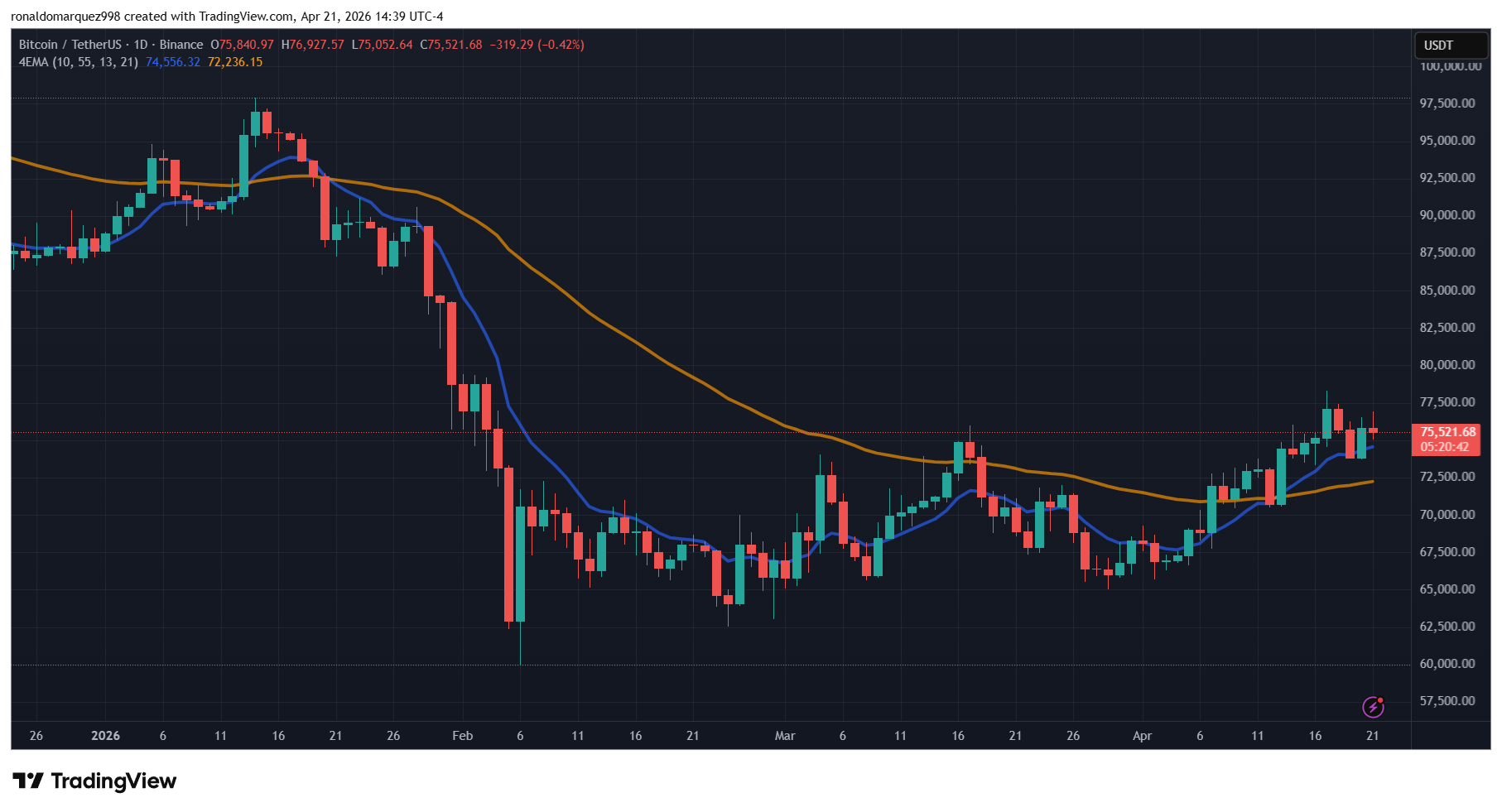
Bitcoin has retreated to $75,520 after starting above $77,000 on Tuesday. The cryptocurrency is consolidating between these levels as it has been unable to break above the immediate resistance at $78,500.
Featured image from OpenArt, chart from TradingView.com