

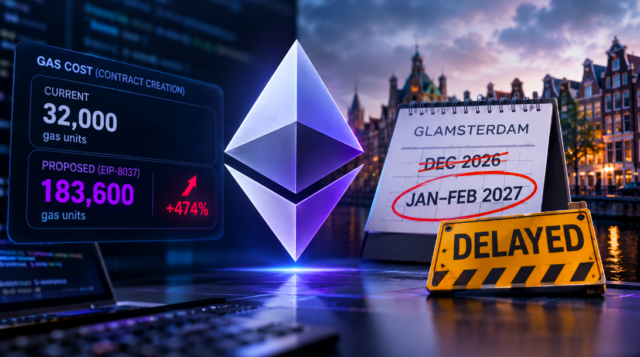
Ethereum’s next major network upgrade, Glamsterdam, is facing a potential delay into 2027 as developers investigate whether proposed gas-pricing changes could disrupt thousands of existing smart contracts.
The development adds a new challenge to Ethereum’s ambitious scaling roadmap, which aims to increase transaction capacity while maintaining the security of decentralized applications.
The latest discussions suggest that a January or February 2027 activation is more realistic than the previously anticipated December timeline. However, developers have not confirmed a new mainnet launch date.
The concerns center on two proposals, EIP-8037 and EIP-8038, which could significantly change how Ethereum charges for certain blockchain operations.
Ethereum Developers Face A Major Glamsterdam Decision
According to the Ethereum Foundation’s official update , security researchers identified compatibility problems involving existing smart contracts during testing.
The proposals introduce changes to the cost of creating blockchain state and accessing stored information.
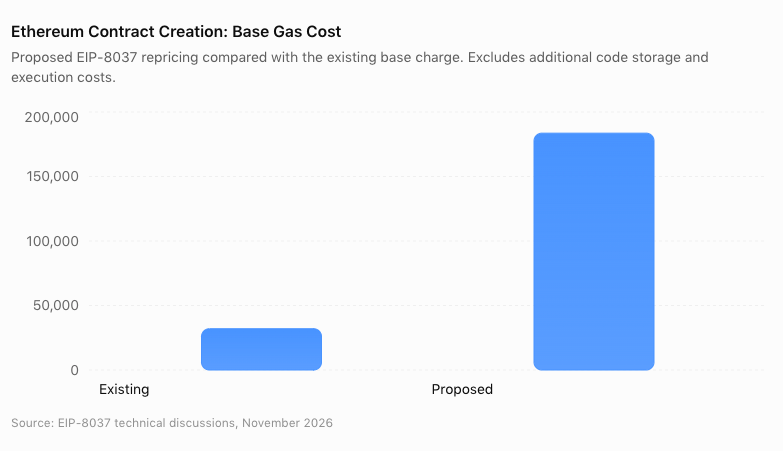
One particularly significant adjustment would increase the base gas charge associated with creating a smart contract from 32,000 to 183,600 units.
That represents an increase of approximately 474%, before additional execution and code-storage costs.
For developers, the problem extends beyond higher gas requirements.
Some deployed smart contracts rely on assumptions about gas consumption that could become invalid after the upgrade. These contracts might fail to execute correctly under the new rules.
Ethereum Foundation developer Marius van der Wijden has warned that as many as 15,000 programs could potentially be affected.
Why Glamsterdam Could Be Delayed Until 2027
The concerns have already affected Ethereum’s upgrade schedule.
The Glamsterdam activation originally planned for the Hoodi test network on October 26 was postponed while developers investigated the compatibility issues.
Following additional audits and discussions, developers are considering a revised testing schedule.
A tentative Hoodi activation during the week of December 14 has been discussed, while the mainnet upgrade could arrive in late January or February 2027 if testing and application fixes proceed successfully.
The next developer meeting, scheduled for November 26, could provide greater clarity.
This is not the first technical challenge surrounding Glamsterdam.
Bitcoinist previously reported that Ethereum developers fixed a critical Glamsterdam vulnerability involving validator deposits.
The latest concerns are different because they involve compatibility with applications already operating on Ethereum.
What The Upgrade Means For Ethereum’s Scaling Plans
Despite the uncertainty, Glamsterdam remains an important component of Ethereum’s long-term development.
The upgrade is designed to increase network capacity through improvements to transaction processing, block validation, and gas accounting.
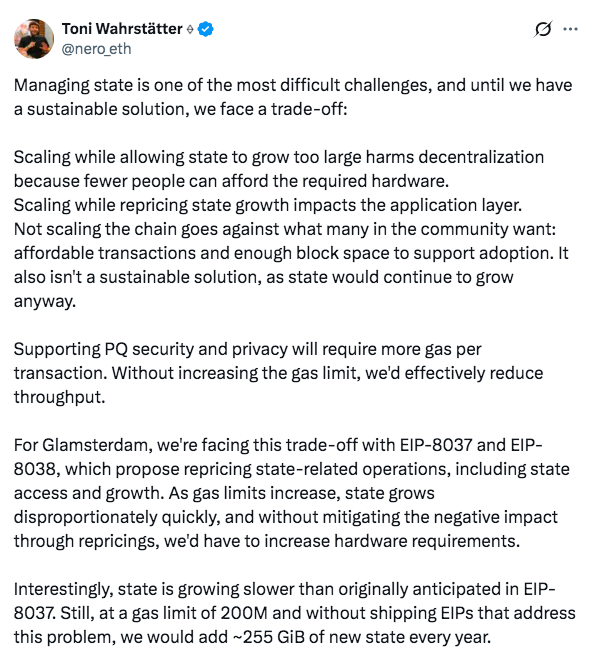
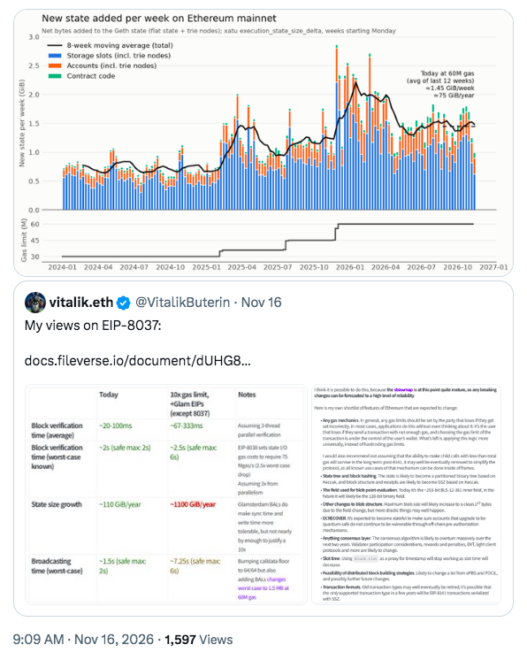
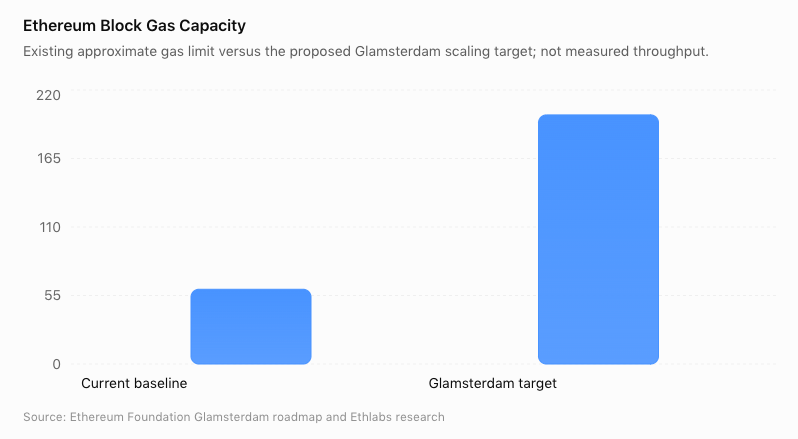
One major objective is to support a substantial increase in the network’s gas limit, potentially expanding capacity from approximately 60 million to 200 million gas per block.
That would represent more than a threefold increase in theoretical gas capacity.
As Bitcoinist previously explained when examining Ethereum’s changing layer-2 strategy , expanding mainnet capacity has become an increasingly important part of the network’s scaling vision.
However, higher throughput must be balanced against the risk of disrupting existing applications.
Developers therefore face a difficult decision: preserve the proposed gas changes and allow affected projects time to adapt, or revise the specifications and potentially introduce additional testing requirements.
Could The Delay Affect Ethereum’s Long-Term Outlook?
A delayed upgrade would not automatically mean Ethereum’s scaling strategy has failed.
Instead, the additional testing could help prevent compatibility problems from reaching the main network.
Ethereum has already experienced the benefits and challenges of expanding blockchain capacity.
Bitcoinist previously examined how Ethereum’s scalability upgrades have influenced transaction fees and network activity.
Glamsterdam represents another step in that evolution.
For investors, the important developments to monitor are the November 26 developer discussions, progress on affected smart contracts, and confirmation of a revised Hoodi activation.
A successful resolution could strengthen confidence in Ethereum’s ability to introduce substantial technical improvements without compromising existing applications.
Ultimately, Glamsterdam’s long-term significance may depend less on when it launches and more on whether developers can deliver the upgrade safely.