통화

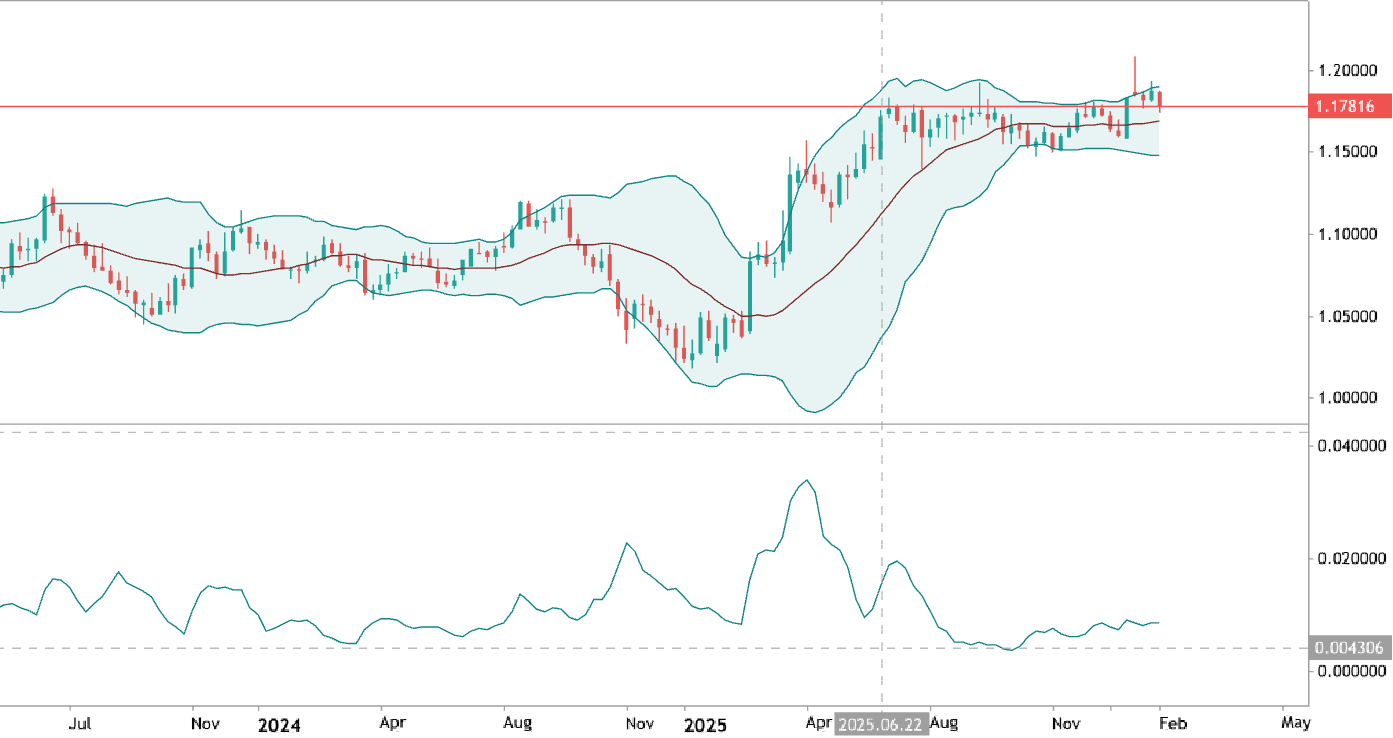
Standard Deviation - traditional general approach EURUSD
Standard Deviation - traditional general approach
Standard deviation is frequently used to measure the volatility: higher standard deviation indicates greater variability, and lower standard deviation is related the less variability. "Standard deviation is a key tool for traders to quantify the uncertainty and risk in the market. It allows us to better understand the potential variability of returns and make informed decisions to manage our portfolios effectively." – John Bollinger. We can use standard deviation to place stop loss and take profit levels: a wider stop loss with the high standard deviation for example. 0
newdigital Sergey Golubev 2026.02.22 08:34
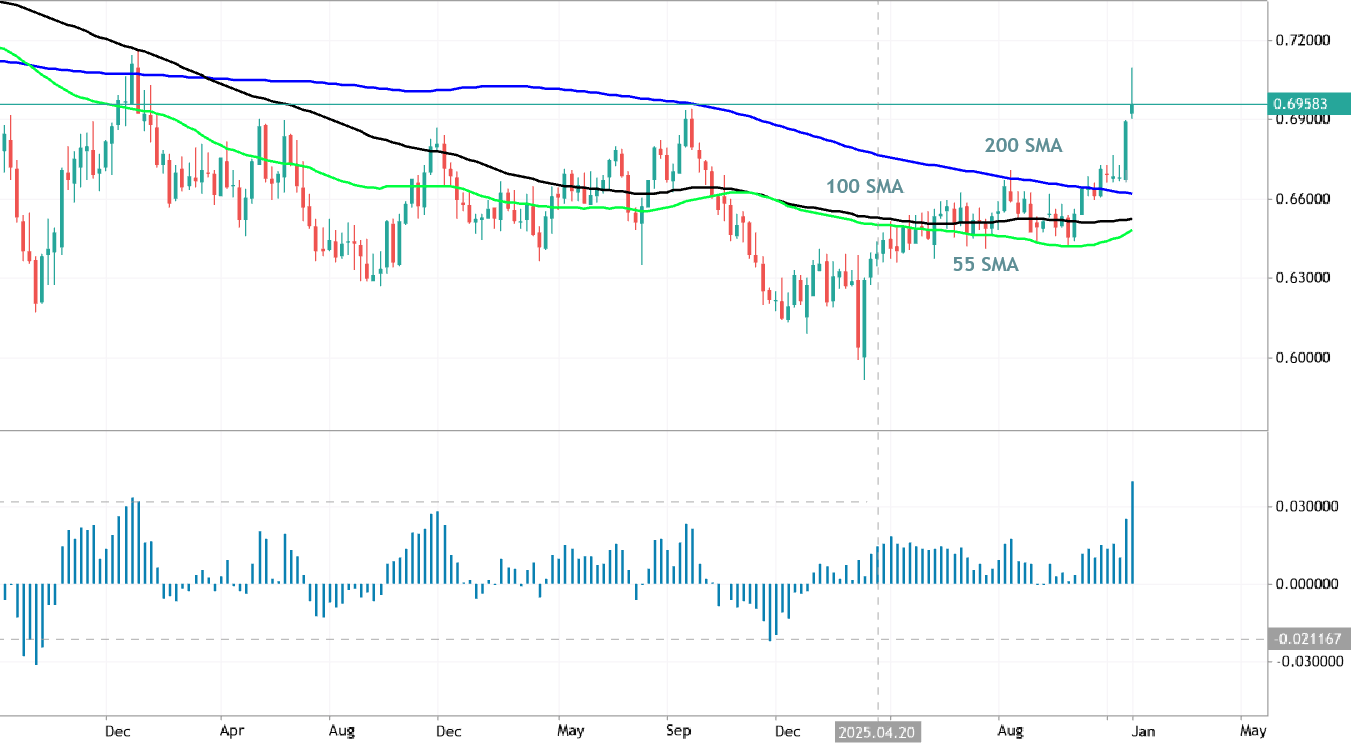
Bulls Power - traditional general approach AUDUSD
Bulls Power - traditional general approach
<p>Bulls Power is used to estimate power of the Bulls (Buyers). Bulls Power estimates the balance of power between the bulls and bears. This indicator aims at identifying if a bullish trend will continue or if the price has reached a point where it might reverse. A buy signal is generated when the Bulls Power oscillator moves above Zero. In an up trend, the HIGH is higher than EMA, so the Bulls Power is above zero and Histogram/Oscillator is located above zero line. Exit Signal: if the HIGH falls under EMA then it means that price are starting to fall, the Bulls Power histogram fall below the zero line.</p> 0
newdigital Sergey Golubev 2026.02.01 06:17
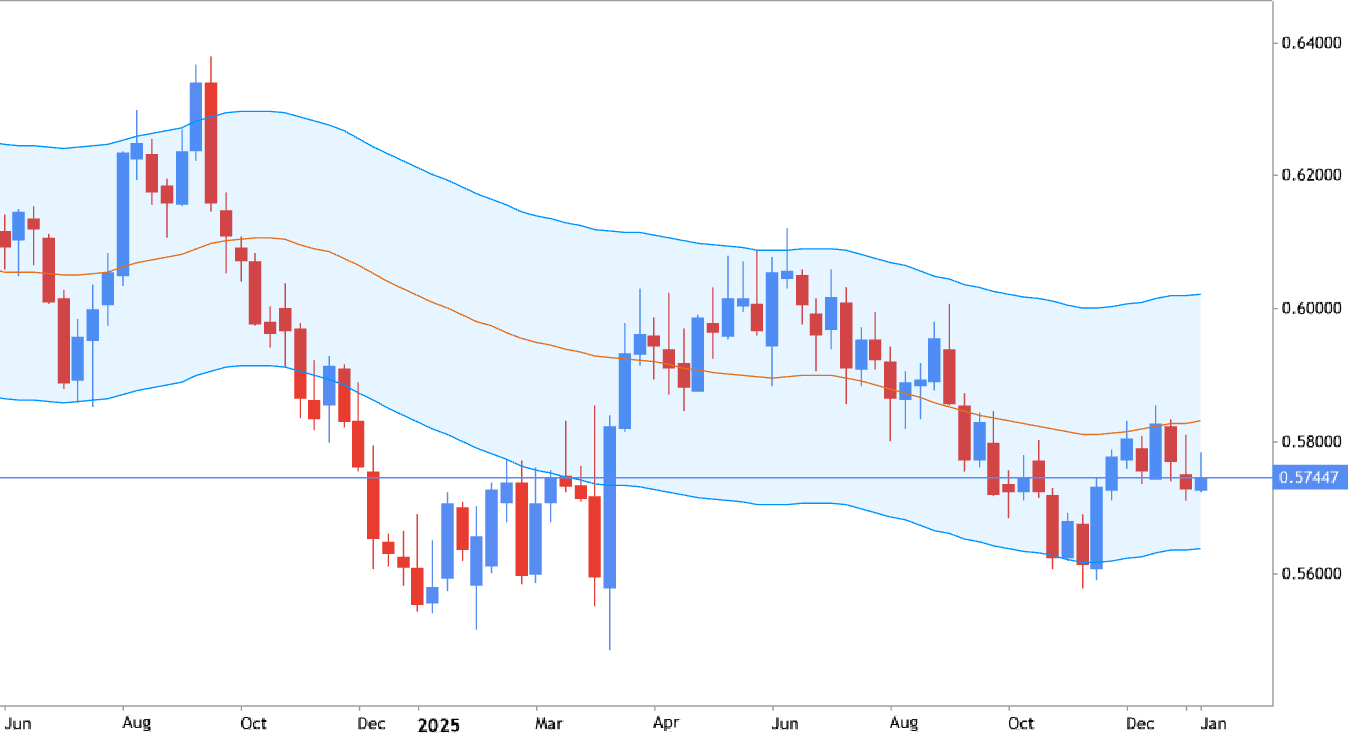
Envelopes - traditional general approach NZDUSD
Envelopes - traditional general approach
Envelopes indicator consists of a moving average plus and minus a certain defined percentage deviation. The Envelopes indicator serves as an indicator of overbought or oversold conditions, visual representations of price trend, and the indicator of the detection of the price breakouts. Buy when price penetrates (or bounced to above) the lower envelope and closes back inside the envelope. Sell when the price penetrates (or bounced to below) the upper envelope and then closes back down inside the envelope. 0
newdigital Sergey Golubev 2026.01.15 17:19
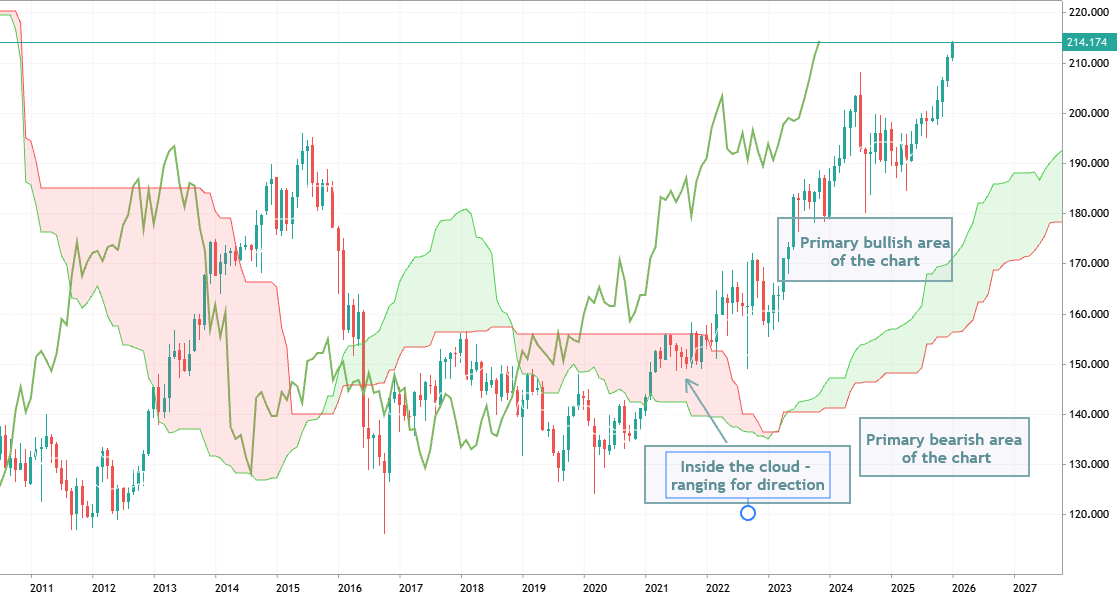
Ichimoku Cloud: identify the trend, helps you to place stops and recognize when should be bullish or bearish (and why) GBPJPY
Ichimoku Cloud: identify the trend, helps you to place stops and recognize when should be bullish or bearish (and why)
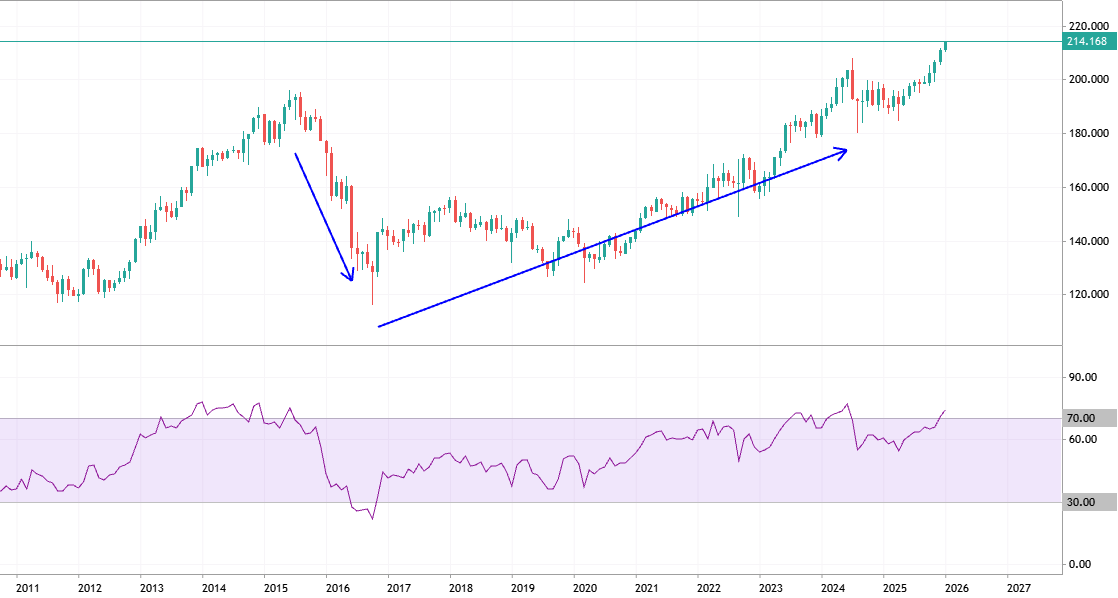
Ichimoku is the indicator which is also well-known trading system by itself.. The creator of the indicator (Goichi Hosada) introduced Ichimoku in the beginnig as the indicator which is having the ability to determine whether a tradable trend is present or we should wait for for direction. And the one of the main component of Ichimoku indicator is the Cloud. To make it shorter - the traders should always look at the price (as the main indicator in this case) to be above/below or inside the cloud to understand the market condition in general: if the price is above the cloud so it is for primary bullish market condition, if the price is below the cloude - it means that the price is located in the primary bearish area of the chart, and if the price is inside the cloud so it is for the secondary ranging condition waiting for the direction. 0
newdigital Sergey Golubev 2026.01.13 10:13
How to estimate the valid condition for buy position just plotting two SMA indicators to the chart USDJPY
How to estimate the valid condition for buy position just plotting two SMA indicators to the chart
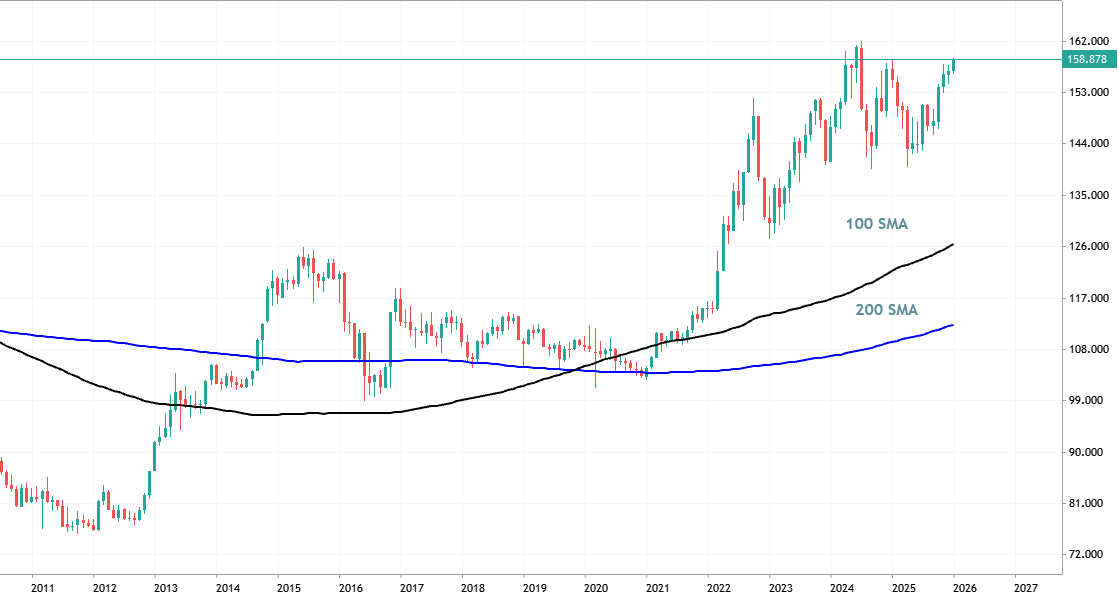
When plotting two SMA indicators to the chart (SMA with the period of 100 and SMA with 200) so we can look at the price - about the location of the price cmpare with 100 SMA/200 SMA. If 100 SMA is located above 200 SMA and the price is above 200 SMA so it means that the price is located in the primary bullish area of the chart. But there is the ranging zone between 100 SMA and 200 SMA, so the valid condition for buy order in this case is the following: if the price breaks 100 SMA to above on close bar so we may consider to open buy trade. Recommendation: please confirm any possible buy position with some other indicators. 0
newdigital Sergey Golubev 2026.01.13 09:48
Alligator - traditional general approach AUDUSD
Alligator - traditional general approach
<p>The alligator was first described by Bill Williams in his book New Trading Dimensions. There are three smoothed moving averages using 13, eight, and five periods and shift them by eight, five, and three bars into the future. The longest period line is blue (the alligator's jaw), the middle one is red (the alligator's teeth), and the shortest one is green (the alligator's lips). According to Williams, when these three moving averages are twisted together, it means the alligator indicator rests, and so we also rest. But the longer the alligator sleeps, the hungrier it is. So when the alligator awakes after a good, long rest it is very hungry to hunt for food. And its food is price. For example: when all three lines are aligned, going up one after another with the green being greater than red being greater than blue, prices are in an uptrend. You need to look into the possibility of buying (opposite to sell).</p> 0
newdigital Sergey Golubev 2026.01.13 05:53
Moving Averages - traditional general approach EURUSD
Moving Averages - traditional general approach
Moving Average (MA for short) is a technical tool that averages a currency pair’s price over a period of time. The smoothing effect this has on the chart helps give a clearer indication on what direction the pair is moving either up, down, or sideways. There are a variety of moving averages to choose from. Simple Moving Averages and Exponential Moving Averages are by far the most popular. The traders are usually using SMA indicators with the period of 100 and 200 to estimate the market condition, and with the periods of 55 and 11 for intra-day trading for example. 0
newdigital Sergey Golubev 2026.01.13 05:33
Stochastics - traditional general approach USDJPY
Stochastics - traditional general approach
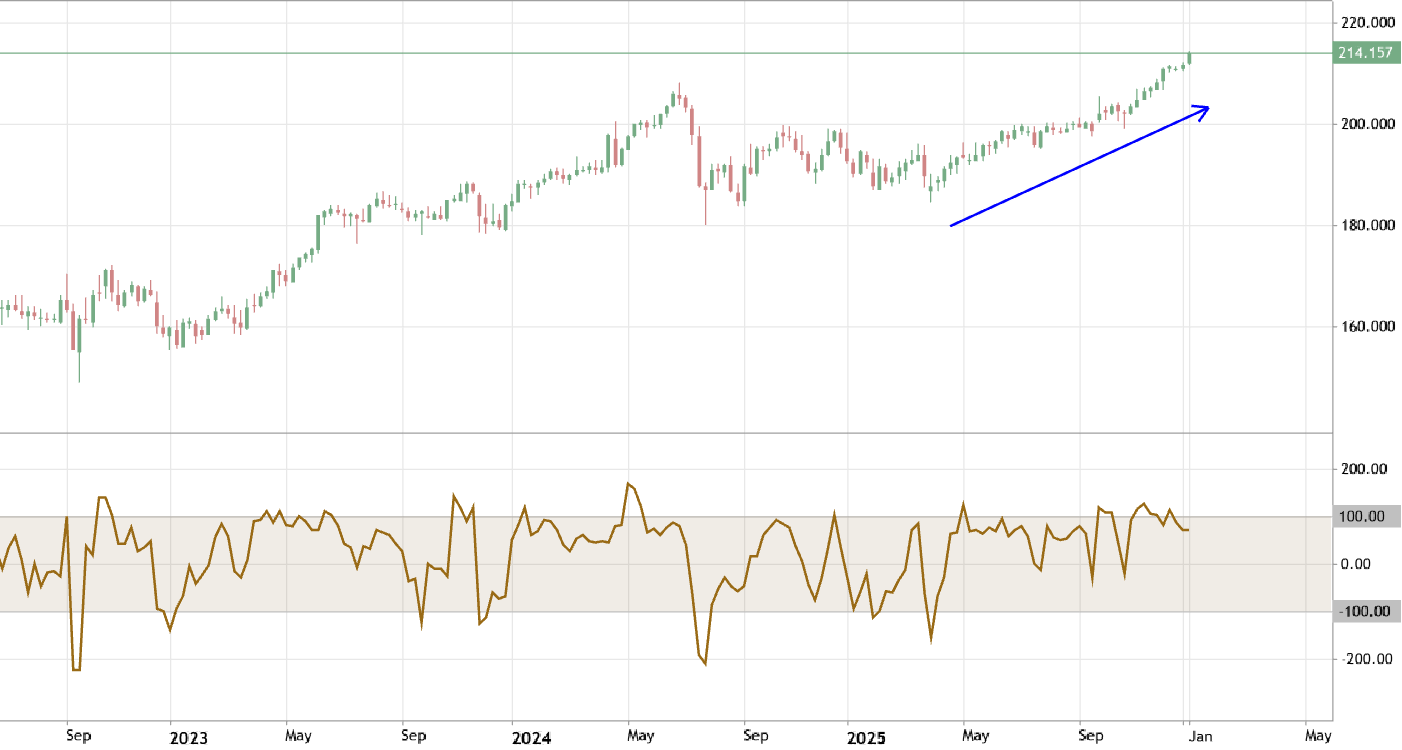
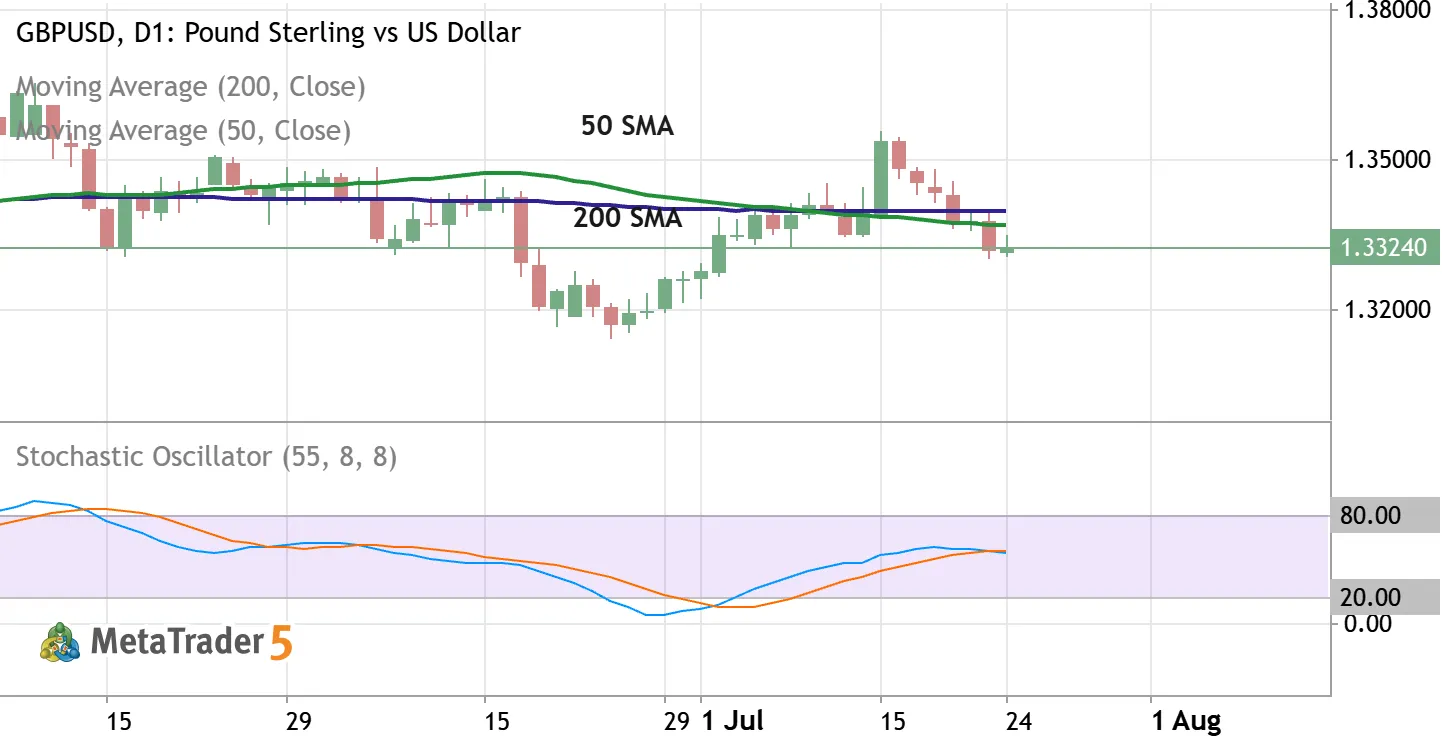
Stochastics offer traders a different approach to calculate price oscillations by tracking how far the current price is from the lowest low of the last X number of periods. This distance is then divided by the difference between the high and low price during the same number of periods. The line created, %K, is then used to create a moving average, %D, that is placed directly on top of the %K. The result is two lines moving between 0-100 with overbought and oversold levels at 80 and 20. Traders can wait for the two lines to crosses while in overbought or oversold territories or they can look for divergence between the stochastic and the actual price before placing a trade. 0
newdigital Sergey Golubev 2026.01.10 07:44
Scalping: Multiple Time Frame confirmation with 55-SMA on higher timeframe EURCHF
Scalping: Multiple Time Frame confirmation with 55-SMA on higher timeframe
Scalping is the very complicated but very profitable technique in trading. Multiple Time Frame analysis can be helpful in case of long or short position to ne confirmed. The most populat confirmation method is 55-SMA on H1 timeframe: when the price is below this SMA so the short position only should be considered (on M1 timeframe for example), and if H1 price is above 55-SMA - the long position should be taken into consideration. And it will help to reduce the number of fase signals/trades on M1 timeframe for example. 1
newdigital Sergey Golubev 2025.12.17 08:19